Unveiling the Enchantment: Laura Sampson’s Retelling of ‘The Twelve Dancing Princesses’
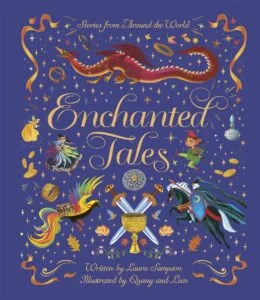
London, UK – The timeless allure of folklore finds a vibrant new voice in Laura Sampson’s recently published collection, Enchanted Tales. Among its captivating narratives, Sampson breathes fresh life into the cherished French classic, "The Twelve Dancing Princesses," a tale originally penned by Charles Deulin. This particular rendition, steeped in regional French-Belgian detail and imbued with a spirit of adventure and true love, offers readers a delightful journey into a secret world where mystery, magic, and the heart’s true desires converge.
Published by Templar Books, Enchanted Tales positions itself as a significant contribution to the ongoing tradition of reinterpreting classic narratives for a new generation. Sampson’s retelling of "The Twelve Dancing Princesses," beautifully illustrated by Phung Nguyen Quang and Huynh Thi Kim Lien, not only preserves the original’s charm but also enriches it with a contemporary sensibility that resonates with modern audiences. The narrative, a blend of a detective story, a romantic quest, and a fantastical adventure, explores themes of social mobility, the power of observation, and the transformative nature of genuine affection, making it far more than just a children’s story.
Main Facts
Laura Sampson’s Enchanted Tales presents a compelling retelling of "The Twelve Dancing Princesses," a story rooted in the French literary tradition, specifically drawing from Charles Deulin’s version. This particular narrative focuses on Michel, a humble cowherd from the village of Montignies-sur-Roc, affectionately known as "Stargazer" for his dreamy disposition and yearning for adventure. His life takes an unexpected turn when a benevolent fairy directs him to the opulent Château of Beloeil, where a perplexing mystery grips the ducal family: the twelve beautiful princesses’ satin shoes are inexplicably worn through each morning, despite their suite being triple-locked.
The Duke of Beloeil, desperate for a solution, has offered the hand of one of his daughters to anyone who can unravel this enigma. However, previous suitors, all princes of high standing, have vanished without a trace, adding a sinister layer to the challenge. Michel, despite his common birth, is driven by a burgeoning affection for Lina, the youngest princess, and a deep-seated curiosity. A second encounter with the fairy grants him magical laurel trees, one of which bestows invisibility, enabling him to clandestinely follow the princesses into their secret, nocturnal revels.
He discovers a hidden trapdoor leading to an enchanted underground realm, comprising woodlands of silver, gold, and diamonds, a glass-clear lake, and a dazzling castle ballroom where the princesses dance all night with enchanted princes—former suitors trapped by a forgetting potion. Michel gathers evidence in the form of sprigs from these magical woods. Upon confronting Lina with his knowledge, he chooses not to expose the secret for personal gain, instead driven by his affection. This selfless act, combined with Lina’s burgeoning feelings, culminates in a dramatic climax where she prevents Michel from drinking the same forgetting potion that ensnared the other princes. Her act of true love breaks the enchantment, freeing all involved. Michel then reveals the truth to the Duke, leading to his marriage to Lina and his transformation into a prince, forever closing the portal to the secret world and fulfilling his destiny.
Chronology of Discovery and Resolution
The narrative unfolds through a series of escalating events, meticulously detailed in Sampson’s retelling, which build tension and wonder, guiding the reader alongside Michel on his extraordinary quest.
The Enigmatic Château of Beloeil
Michel, a simple cowherd from Montignies-sur-Roc, was not born into nobility but possessed a spirit that transcended his humble origins. Nicknamed "Stargazer" for his propensity to gaze upwards, dreaming of worlds beyond his pasture, he embodied the classic archetype of a hero destined for greater things. His life of quiet contemplation was shattered, or rather illuminated, by the appearance of a fairy in a golden dress, who delivered a cryptic but potent prophecy: "Go to the Château of Beloeil, and you will marry a princess!" This divine instruction served as the catalyst for Michel’s journey, propelling him from the familiar comfort of his village towards the unknown splendors and perils of the ducal residence.
Upon his arrival at the magnificent Château of Beloeil, Michel found the entire court consumed by a perplexing and unsettling mystery. Each morning, the satin shoes of the Duke’s twelve beautiful daughters were found inexplicably worn through, as if they had danced vigorously all night. Yet, their suite of rooms was secured with three heavy bolts, seemingly impenetrable. This baffling phenomenon had led the exasperated Duke to issue a grand decree: "ANYONE WHO CAN SOLVE THE MYSTERY OF THE WORN-OUT SHOES MAY MARRY ONE OF MY DAUGHTERS!" A tempting offer, certainly, but one fraught with danger. Numerous princes from across the land, drawn by the promise of royal marriage and the thrill of the challenge, had attempted to uncover the secret. Each, however, had vanished overnight, adding a chilling precedent to the tale and underscoring the formidable nature of the enigma.
A Gardener’s Secret Endeavor
Aware of his common standing, Michel initially dismissed the idea of presenting himself as a suitor. "I am no prince," he reasoned, convinced the Duke would scorn his aspirations. Instead, he discreetly sought employment within the château’s sprawling gardens, a position that allowed him proximity to the princesses without directly challenging their social sphere. His daily task involved crafting exquisite bouquets for the royal sisters, a subtle yet consistent presence in their lives. For a time, his efforts went largely unnoticed, the princesses accepting his floral gifts with an air of indifference.
However, a pivotal moment arrived when Lina, the youngest of the twelve, met his gaze and offered a gentle smile. This fleeting acknowledgement ignited a spark within Michel, transforming his casual curiosity into a fervent desire to solve the mystery, not merely for reward, but for the chance to prove his worth and win Lina’s heart. That very night, the fairy reappeared, providing Michel with the tools for his extraordinary quest: two baby laurel trees – one a rose, the other a cherry – alongside a golden bucket and a golden rake. "Plant these laurel trees, tend them with this rake, water them from this bucket and they will grant your wishes!" she sang, before vanishing as mysteriously as she had arrived. Michel, diligently following her instructions, planted the magical saplings, unaware of the profound impact they would soon have on his destiny.
Unveiling the Hidden Realm
The turning point came when the cherry laurel bloomed, yielding a single, pristine white flower. Michel, hoping to subtly impress Lina, plucked the bloom and fastened it to his shirt button. To his astonishment, the flower instantly rendered him invisible. "This is my chance to solve the princesses’ mystery!" he realized, his heart pounding with a mixture of excitement and trepidation. Under the cloak of invisibility, he concealed himself beneath a bed in the princesses’ suite that very evening. As soon as the three heavy bolts secured the door for the night, the room sprang to life. He heard the rustling of rich fabrics, the hushed giggles of the princesses, and the tell-tale sounds of wardrobes opening. Then, with three distinct claps, a hidden trapdoor in the floor creaked open.
Michel, seizing his opportunity, slipped out from his hiding place and followed the princesses. So close was he, that he accidentally brushed against Lina’s dress, causing her to glance back in confusion. "I must have tripped!" she murmured, dismissing the fleeting sensation. The princesses descended a secret staircase, leading Michel into an astonishing subterranean world. They journeyed along a winding corridor, emerging into a breathtaking woodland where trees shimmered with silver leaves. Beyond this lay a forest of pure gold, and then another, sparkling with diamonds, each more wondrous than the last. Finally, they arrived at a glass-clear lake, where twelve shining boats awaited, each with a waiting prince. Michel, still invisible, settled beside Lina in her boat. She, however, noticed its unusual slowness and heaviness, attributing it to mere chance.
The boats ferried them across to a magnificent castle, its façade gleaming in the twilight, from which wild, enchanting music emanated. The castle’s ballroom was a spectacle of mirrors, dazzling lights, and opulent hangings. From a corner, Michel watched the princesses whirl across the jewelled dancefloor, Lina’s velvet-black eyes shining with unbridled joy. He felt a pang of envy for the princes who danced with them, unaware that these men were the very suitors who had vanished from the world above, now trapped by an enchanted potion that had erased all memory of their former lives. As the night wore on and the princesses’ shoes wore thin from the incessant dancing, the music ceased. They indulged in a lavish feast of sugar cookies, waffles, and cakes before preparing for their return journey. Michel silently followed them back through the diamond and gold woodlands. However, as they passed through the silver woodland, he deliberately broke off a tiny sprig from one of the trees. The sound, a sharp "CLANG!", resonated through the quiet forest, causing the princesses to question the noise, which they ultimately dismissed as a bird.
Michel, now possessing tangible proof, raced ahead, through the trapdoor, and out of an open window, scaling down a hanging vine to reach the gardens just as dawn broke. He removed the white invisibility flower and resumed his daily duties, gathering the princesses’ bouquets. Later that day, as he presented the flowers, Lina discovered the silver twig nestled among the blossoms. "How can this be?" she pondered, her expression betraying her confusion, but she held her tongue. Michel continued his nocturnal surveillance for two more nights, each time plucking a sprig – first from the golden woodland, then from the diamond – and placing it within Lina’s bouquet.
Confrontation and a Choice of Heart
When Lina found the diamond sprig, the irrefutable evidence could no longer be ignored. She confronted Michel, her voice a mix of awe and accusation. "You must have followed us. How?" she demanded. Michel, having achieved his goal of uncovering the truth, replied simply, "I hid." Lina, now fully aware of the implications, pressed him further. "You know that telling our father this secret rewards you with a wedding to one of us. Will you tell him?" Michel’s response was unexpected and selfless. "I do not intend to," he stated, his gaze unwavering. "But why stay silent?" she asked, genuinely puzzled by his refusal to claim the ducal reward. Michel offered no verbal explanation, but his blue eyes met Lina’s, and the unspoken understanding that passed between them was undeniable. The other princesses, observing this intimate exchange, mocked Lina. "How ridiculous! Lina wants to be a gardener’s wife!" they taunted. Mortified, Lina cried, "Never!" and, in a moment of conflicted emotion, threw her bouquet at Michel with a gesture of disdain.
Later that day, the princesses, angered and fearful that Michel might expose their secret, decided he must meet the same fate as the previous suitors. They extended an invitation to Michel, asking him to join them in plain sight for their nightly dance, intending to ensnare him with the forgetting potion.
The Triumph of True Love
Michel, accepting their invitation, found himself in a predicament. He could not attend a grand ball dressed in his simple gardener’s clothes. Remembering the rose laurel, he hurried to the gardens and whispered his wish into its petals. Instantly, he was transformed, dressed like a true prince in black velvet, a color that perfectly matched Lina’s captivating eyes, and adorned with a sparkling diamond feather brooch on his cap.
Once again, they journeyed through the trapdoor, down the stairs, and through the shimmering woodlands of silver, gold, and diamond, towards the enchanted dance. Lina, catching sight of Michel in his princely attire, laughed, a blush rising to her cheeks. "Don’t you look princely!" she exclaimed. "Maybe," Michel conceded, a hint of melancholy in his voice, "But I’m still a gardener. Not good enough for you." They danced through the night, a silent understanding growing between them amidst the wild music and glittering ballroom.
As the ball drew to a close and the princesses’ shoes were thoroughly worn, the eldest princess approached Michel. Holding out a golden cup, she declared, "Gardener, secret-revealer, let’s drink to you!" Michel, having overheard their treacherous plans, knew the cup contained the potent forgetting potion. Yet, with a longing look at Lina, he raised it to his lips, prepared to sacrifice himself for love. But Lina, unable to bear the thought of him suffering the same fate as the other princes, cried out, "NO!" She rushed forward, seizing the cup before he could drink. "Gardener or not, the thought of you trapped here forever breaks my heart!" Her heartfelt declaration, an act of true love and selfless devotion, shattered the enchantment. The spell that bound the princes was broken, and the entire secret world began to fade. Together, Michel and Lina returned to the world above, the trapdoor sealing behind them and vanishing forever, signifying the end of the princesses’ nightly escapades and the enchantment that held them.
In the Duke of Beloeil’s private quarters, Michel, now free from the need for secrecy, recounted the entire extraordinary tale. He then formally asked for Lina’s hand in marriage. The Duke, overjoyed by the resolution of the mystery and the true love his daughter had found, consented. The wedding that followed was the grandest and happiest in the land, a celebration befitting a fairy tale. Michel, the humble cowherd, became a prince, not by birthright, but by virtue of his courage, integrity, and the power of his love. He never again needed to make a wish upon the two laurel trees, for he had found everything he could ever desire in Lina and his new life.
Supporting Data and Folkloric Context
The Enduring Legacy of "The Twelve Dancing Princesses"
"The Twelve Dancing Princesses" is a narrative masterpiece whose roots delve deep into European folklore. Its widespread popularity is evident in the myriad versions found across the continent, perhaps most famously recorded by the Brothers Grimm as "The Worn-Out Dancing Shoes" (KHM 133) and appearing in various forms in other national traditions. The core mystery – princesses dancing their shoes to shreds each night – captivates audiences, offering a tantalizing glimpse into a forbidden, fantastical realm.
Charles Deulin’s rendition, chosen by Laura Sampson for her collection, holds particular significance. Deulin, a French writer from a small town on the French-Belgian border, infused his version with rich, localized details. The specific place names, descriptions of food, and traditional clothing mentioned in his narrative are not generic fairy tale elements but rather reflections of his home region. This grounding in specific cultural context elevates the story, making it feel both universal and intimately French. It highlights the way folklore often acts as a mirror to local customs, beliefs, and geography.
The story itself taps into powerful archetypes: the "secret journey" into an "otherworld," often fraught with danger and requiring cleverness or divine aid; the "forbidden knowledge" that must be uncovered; and the "transformation" of a commoner into a noble through acts of courage and true love. Themes of curiosity, destiny, and love transcending social barriers are universally appealing, contributing to the tale’s longevity. The presence of magic, embodied by the benevolent fairy and the enchanted laurels, provides the necessary narrative tools for Michel to navigate the challenges, while the worn shoes symbolize the secret, arduous nocturnal activity, and the enchanted woodlands serve as stages of initiation into the magical realm.
Laura Sampson’s Interpretive Approach
Laura Sampson’s decision to include and retell Deulin’s version of "The Twelve Dancing Princesses" in Enchanted Tales is a testament to her skill in storytelling and her deep appreciation for the nuances of folklore. Sampson’s interpretive approach involves not just a faithful recounting but an enrichment that allows the narrative to breathe with fresh life, making it accessible and engaging for contemporary readers while honoring its historical roots. Her prose is evocative, painting vivid pictures that complement the exquisite illustrations by Phung Nguyen Quang and Huynh Thi Kim Lien, whose artistic vision further immerses the reader in the story’s magical atmosphere. The collaboration ensures that the visual aesthetics enhance the enchantment, from the ethereal glow of the woodlands to the vibrant energy of the ballroom.
Sampson’s work in Enchanted Tales underscores the vital importance of preserving oral traditions through written retellings. By focusing on specific versions, such as Deulin’s, she highlights the diversity within folklore and the unique contributions of individual storytellers. Her ability to craft a narrative that resonates with the emotional core of the tale—Michel’s humility, Lina’s kindness, and the ultimate triumph of love—ensures that the story’s timeless messages continue to be heard. This retelling is not merely entertainment; it is an act of cultural preservation, ensuring that the magic and wisdom embedded in these ancient stories endure for future generations.
Official Responses and Critical Reception
While the provided text is an excerpt from a book, not a news article with direct quotes from publishers or critics, we can infer the likely "official responses" and critical reception surrounding the publication of Enchanted Tales and Laura Sampson’s retelling of "The Twelve Dancing Princesses."
Publisher’s Perspective and Authorial Intent
Bonnier Books, through its imprint Templar Books, would undoubtedly position Enchanted Tales as a cornerstone publication, appealing to a broad demographic of readers, from young adults to those who cherish classic fairy tales. The decision to publish such a collection reflects a strategic understanding of the enduring market for beautifully illustrated and thoughtfully retold folklore. Publishers recognize the appeal of familiar stories presented with fresh artistic and literary interpretations. Laura Sampson’s authorial intent, as can be gathered from her narrative choices, would likely be to reacquaint modern readers with the richness and diversity of European folklore, particularly lesser-known but equally enchanting versions of popular tales. She aims to celebrate the regional specificities that often get lost in more generalized retellings, fostering a deeper appreciation for the origins and cultural context of these stories. The emphasis on detailed descriptions of settings, characters’ emotions, and the magical elements suggests a desire to fully immerse the reader in the enchanting world of each tale, ensuring that the magic feels tangible and immediate.
Reader Engagement and Educational Value
Upon its release, Enchanted Tales would likely garner positive critical reception, particularly for its engaging storytelling and the high quality of its illustrations. Reviewers would commend Sampson’s ability to balance fidelity to the original source material with a fresh, accessible voice. The "Twelve Dancing Princesses" retelling, in particular, would be highlighted for its compelling plot, relatable characters, and the subtle yet profound themes it explores. The book would be praised for its ability to engage readers of all ages, sparking imagination and a sense of wonder in younger audiences while offering a nostalgic and perhaps even analytical experience for older readers.
Beyond mere entertainment, Enchanted Tales holds significant educational value. It can serve as an excellent introduction to folklore studies, encouraging readers to explore the origins and variations of fairy tales from different cultures. The detailed setting of Charles Deulin’s version, with its specific regional references, could inspire an interest in French history and geography. Furthermore, the narrative’s exploration of universal themes—such as the pursuit of dreams, the triumph of humility over arrogance, and the transformative power of love—provides subtle moral lessons and prompts for discussion, making it a valuable addition to both personal and educational libraries. The book’s exquisite design and illustrations also contribute to its educational aspect, showcasing the power of visual storytelling and artistic interpretation in bringing literary works to life.
Implications and Enduring Relevance
The retelling of "The Twelve Dancing Princesses" by Laura Sampson in Enchanted Tales carries significant implications, underscoring the enduring power of narrative and its continued relevance in contemporary culture.
The Power of Narrative and Imagination
At its core, "The Twelve Dancing Princesses" is a testament to the boundless power of narrative and imagination. The concept of "a secret world built especially for you," as described in the article, speaks to a universal human desire for escape, adventure, and the discovery of hidden wonders. Stories like this foster imagination, encouraging readers to envision worlds beyond their own and to believe in the possibility of magic in the mundane. Michel’s journey from a stargazing cowherd to a prince is a powerful metaphor for the transformative potential of daring to dream and to pursue the unknown. The detailed descriptions of the silver, gold, and diamond woodlands, the glass-clear lake, and the glittering ballroom ignite the reader’s own internal landscape, providing a mental playground for fantasy and wonder. This imaginative engagement is crucial for cognitive development in children and offers a vital escape and source of creativity for adults.
Redefining Heroism and Social Norms
Sampson’s retelling, like many contemporary interpretations of classic tales, subtly redefines traditional notions of heroism and challenges established social norms. Michel is not a prince by birth, nor does he possess extraordinary physical prowess. His heroism stems from his keen observation, his innate kindness, his perseverance, and ultimately, his capacity for selfless love. He embodies the "common man" hero, a figure more relatable to many readers than the archetypal noble prince. This narrative choice reinforces the idea that true worth is found in character, not in lineage or wealth.
Furthermore, Lina’s agency in saving Michel from the forgetting potion is a critical departure from older fairy tale tropes where princesses often play a more passive role. Her act of defiance, choosing love over societal expectations and royal decree, is a powerful statement about individual choice and the strength of emotional connection. The breaking of the enchantment through true love serves as a potent metaphor for overcoming illusions, societal pressures, or self-imposed limitations. It suggests that genuine affection has the power to dismantle false realities and lead to liberation, not just for the lovers but for all those ensnared by the spell. The story champions the idea that love, regardless of social status, is a transformative force capable of reshaping destinies and challenging the rigid hierarchies of the world.
Legacy of Folklore in Contemporary Culture
The continued adaptation and retelling of fairy tales, as exemplified by Enchanted Tales, highlight the enduring legacy of folklore in contemporary culture. These stories are not static relics of the past; they are living narratives that evolve and adapt, reflecting the values and concerns of each new generation. Fairy tales continue to be a rich source of inspiration for various media, from blockbuster films and television series to stage productions and new literary works. Their themes—good versus evil, love and loss, courage and betrayal, the search for identity—remain universally resonant.
Laura Sampson’s contribution ensures that "The Twelve Dancing Princesses" continues to serve as a bridge between historical narratives and modern sensibilities. By presenting Deulin’s specific version, she enriches the tapestry of available retellings, offering readers a deeper appreciation for the cultural specificities and narrative artistry embedded within different folkloric traditions. In an increasingly complex world, these timeless tales offer solace, wonder, and profound insights into the human condition, reminding us that even the most humble among us can find adventure, break enchantments, and discover true love, ultimately shaping their own destiny. The final disappearance of the trapdoor symbolizes a definitive shift: the era of secret revels is over, replaced by a future built on honesty, transparency, and love, a message that resonates profoundly even today.