Unveiling the Enigma: Laura Sampson Reimagines "The Twelve Dancing Princesses" in "Enchanted Tales"
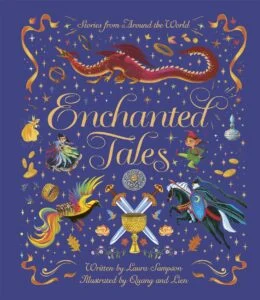
London, UK – The allure of secret worlds, forbidden adventures, and the triumph of true love over enchantment continues to captivate audiences across generations. In a masterful retelling, author Laura Sampson breathes new life into one of folklore’s most beloved and mysterious narratives, "The Twelve Dancing Princesses," as featured in her captivating new collection, Enchanted Tales, published by Templar Books. Sampson’s rendition draws specifically from the rich and evocative version penned by French writer Charles Deulin, offering readers a journey steeped in regional charm and timeless magic. Illustrated with exquisite detail by Phung Nguyen Quang and Huynh Thi Kim Lien, Enchanted Tales promises to be a cherished addition to any library, inviting readers to step through a literary doorway into a realm where dreams and reality intertwine.
Main Facts: A Modern Echo of an Ancient Mystery
Laura Sampson’s Enchanted Tales presents a vibrant reinterpretation of "The Twelve Dancing Princesses," a tale whose origins stretch back through various European traditions. At the heart of this particular adaptation lies the version by Charles Deulin, a 19th-century French writer whose work often drew inspiration from his native region along the French-Belgian border. Sampson’s storytelling captures the essence of Deulin’s narrative, which is notable for its intricate details regarding local customs, geography, and atmosphere. The central enigma revolves around twelve beautiful princesses who, despite being locked securely in their chambers each night, emerge every morning with their satin shoes mysteriously worn through, as if they had danced until dawn.
The Duke of Beloeil, their father, issues a decree: any man who can solve this baffling mystery will be rewarded with marriage to one of his daughters. However, a grim fate awaits those who fail, as numerous princes who have attempted the feat have inexplicably vanished. The protagonist, Michel, a humble cowherd known as "Stargazer" for his dreamy disposition, is guided by a benevolent fairy to the Château of Beloeil. Armed with magical laurel trees that grant wishes, Michel embarks on a clandestine investigation. He discovers a secret trapdoor leading to an enchanted underground world, complete with shimmering woodlands of silver, gold, and diamonds, a glass lake, and a grand castle where the princesses dance nightly with enchanted princes.
The climax of the story sees Michel, initially an invisible observer, reveal his knowledge and ultimately break the enchantment that holds the princesses and their dance partners captive. Through an act of genuine love and courage from the youngest princess, Lina, the spell of forgetfulness is shattered, freeing all involved. Michel, a cowherd by birth, ultimately marries Lina and ascends to the status of a prince, proving that true worth transcends social standing. The book is published by Templar Books, a division of Bonnier Books, known for its high-quality children’s and illustrated titles. The stunning visuals by Phung Nguyen Quang and Huynh Thi Kim Lien further enhance the magical experience, making Sampson’s Enchanted Tales a significant contribution to contemporary folklore retellings.
Chronology: A Journey into the Enchanted Realm
The narrative unfolds with a meticulous sequence of events, building suspense and wonder with each turn. Sampson’s retelling, anchored in Deulin’s specificity, provides a rich tapestry of settings and character development.
The Genesis of a Classic: Charles Deulin’s Vision
The story begins by grounding itself in the real-world locale that inspired Charles Deulin. Born in the mid-19th century, Deulin was a French novelist and folklorist with a profound connection to his homeland. His version of "The Twelve Dancing Princesses" is particularly noteworthy for its infusion of regional flavour, drawing from the quaint village of Montignies-sur-Roc and the majestic Château de Beloeil, both situated near the French-Belgian border. This geographical specificity enriches the fantastical elements, making the secret world feel more plausible and the characters more relatable. Deulin’s commitment to incorporating local food, clothing, and place names into his tales speaks to a broader tradition of grounding folklore in the lived experiences of a community, preserving cultural nuances within a universal story.
The Humble Beginnings of a Hero: Michel the Stargazer
Our hero is introduced as Michel, a young cowherd from Montignies-sur-Roc, affectionately nicknamed "Stargazer." His curly hair, blue eyes, and constant upward gaze signify a soul yearning for something beyond the mundane pastures. His dreams of adventure are not mere childish fancy but a premonition of the destiny that awaits him. A pivotal moment arrives one summer’s day when a radiant fairy, adorned in gold, appears to Michel, delivering a prophecy that will change his life: "Go to the Château of Beloeil, and you will marry a princess!" This divine intervention sets Michel on his extraordinary path, transforming a simple cowherd into a potential solver of mysteries and a suitor for royalty.
Unveiling the Mystery at Beloeil: A Royal Conundrum
Eagerly following the fairy’s counsel, Michel arrives at the Château de Beloeil, a grand estate buzzing with an inexplicable mystery. The duke, father to twelve exceptionally beautiful princesses, is in a state of bewilderment and desperation. Each night, his daughters are securely locked within their suite of rooms, secured by three formidable bolts. Yet, every morning, their delicate satin shoes are found utterly worn through, bearing testament to an entire night of strenuous dancing. The duke, at his wits’ end, has issued a desperate proclamation: "ANYONE WHO CAN SOLVE THE MYSTERY OF THE WORN-OUT SHOES MAY MARRY ONE OF MY DAUGHTERS!" This enticing reward, however, comes with a perilous catch: numerous princes from across the land have attempted to unravel the secret, only to vanish without a trace, adding a chilling layer to the enigma.
The Gardener’s Gambit: A Seed of Hope
Initially, Michel, acutely aware of his humble origins, believes himself unqualified for such a grand pursuit. "I am no prince," he muses, "the duke will laugh at me if I come forward." He wisely chooses a less conspicuous path, securing work in the château gardens. His daily task involves crafting exquisite bouquets for the princesses, which they accept with polite indifference, never acknowledging his presence. This period of quiet observation allows Michel to acclimate to his surroundings and, more importantly, to catch the eye of the youngest princess, Lina. Her fleeting glance and warm smile ignite a spark in Michel’s heart, transforming his abstract desire for adventure into a concrete longing to unravel the mystery, not just for the reward, but for her.
That night, the benevolent fairy reappears, bestowing upon Michel two miraculous baby laurel trees – one a rose, the other a cherry – along with a golden bucket and a golden rake. "Plant these laurel trees, tend them with this rake, water them from this bucket and they will grant your wishes!" she sings before vanishing. Michel dutifully follows her instructions, unknowingly cultivating the instruments of his destiny.
The Invisible Spy and the Secret World: A Nocturnal Revelation
The turning point arrives when the cherry laurel blooms, yielding a single white flower. Michel, hoping to impress Lina, plucks the blossom and places it in his shirt button. Miraculously, the flower renders him instantly invisible. This magical gift is his chance to penetrate the princesses’ secret. That evening, concealed beneath a bed in their suite, Michel witnesses the princesses’ nightly ritual. As soon as the door is secured, wardrobes open, clothes rustle, and laughter fills the air. Then, with three distinct claps, a trapdoor in the floor creaks open, revealing a hidden passage.
Michel, still invisible, slips out and follows them, so closely that he accidentally steps on Lina’s dress. Lina glances back, attributing the sensation to a stumble. The princesses descend a winding staircase, traverse a long corridor, and enter a succession of breathtaking woodlands: first silver, then gold, and finally, sparkling diamonds. Each forest shimmers with its unique ethereal light, leading them to a glass-clear lake. On the lake, twelve shining boats await, each with a prince ready to ferry a princess across to a magnificent castle, glowing in the twilight. Michel, invisible, shares Lina’s boat, making her ponder, "Why is my boat so slow and heavy?" The wild, enchanting music emanating from the castle, however, soon distracts her.
Upon docking, everyone rushes into the castle’s grand ballroom, a dazzling space adorned with mirrors, sparkling lights, and rich hangings. From a corner, Michel observes the princesses, particularly Lina, whose velvet-black eyes shine as she whirls across the jewelled dancefloor. He envies the princes, unaware that they are the very suitors who had previously vanished, now held captive by an enchanted potion that has erased all memory of their former lives and the world above.
Gathering Evidence and Confrontation: Seeds of Truth
As the princesses’ shoes wear through, signalling the end of the night’s revelry, the music ceases, and they feast on sugar cookies, waffles, and cakes. Michel silently follows them back, across the lake and through the diamond and gold woodlands. However, in the silver woodland, he deliberately breaks off a tiny sprig from one of the trees. A loud "CLANG!" echoes through the wood, startling the princesses. "What was that?" one asks. "Probably just a bird," another dismisses. Michel races ahead, returning to the princesses’ suite via the trapdoor, and then out an open window, scaling down a hanging vine to the gardens just as dawn breaks. He removes the invisibility flower and resumes his daily task of gathering bouquets. Later, when he presents the flowers, Lina discovers the silver twig nestled within hers. How can this be? she ponders, but remains silent.
For the next two nights, Michel repeats his surveillance, each time plucking a sprig – first from the golden woodland, then from the diamond – and placing it in Lina’s bouquet. When Lina finds the diamond sprig, she can no longer contain her astonishment and confronts Michel directly: "You must have followed us. How?" Michel simply replies, "I hid." Lina, understanding the implications, then asks, "You know that telling our father this secret rewards you with a wedding to one of us. Will you tell him?" Michel, with a gaze that speaks volumes, declares, "I do not intend to." Puzzled, Lina presses, "But why stay silent?" Michel offers no verbal explanation, but his blue eyes meet Lina’s, and the other princesses witness her heart visibly melt. "How ridiculous! Lina wants to be a gardener’s wife!" they taunt, but Lina, caught between her feelings and her sisters’ derision, cries "Never!" and hurls her bouquet at Michel in a display of feigned disdain.
A Prince’s Disguise and True Love’s Triumph: The Spell Broken
Later that day, the jealous and fearful sisters conspire, agreeing that Michel must meet the same fate as the previous suitors. They invite him to join them openly that night, intending to force the forgetting potion upon him. Michel accepts, but immediately faces a dilemma: he cannot attend a grand dance in his simple gardener’s clothes. Remembering the rose laurel, he whispers a wish into its petals. Instantly, he is transformed, dressed like a prince in black velvet, matching Lina’s eyes, and a sparkling diamond feather brooch adorning his cap.
Once again, they descend through the trapdoor, down the stairs, and through the luminous woodlands towards the dance. Lina, upon seeing Michel, laughs, a mix of embarrassment and admiration. "Don’t you look princely!" she exclaims. "Maybe. But I’m still a gardener," he retorts, a hint of vulnerability in his voice, "Not good enough for you." They dance all night, their connection undeniable. As the ball concludes, the eldest princess, holding a golden cup, addresses Michel with a deceptive smile: "Gardener, secret-revealer, let’s drink to you!" Michel, having overheard their plot, knows the cup contains the potion of forgetfulness. Yet, with a longing glance at Lina, he raises it to his lips.
"NO!" Lina cries, her heart breaking at the thought of him trapped forever. She rushes forward, seizing the cup before he can drink. "Gardener or not, the thought of you trapped here forever breaks my heart!" This powerful declaration of true love shatters the enchantment, freeing not only Michel but also the twelve enchanted princes. Together, they return to the world above, and the secret trapdoor, its purpose fulfilled, vanishes forever.
A Royal Resolution: A Dream Realized
In the Duke of Beloeil’s private quarters, Michel recounts the entire mystery, presenting the sprigs as irrefutable evidence. He then humbly asks for Lina’s hand in marriage. The duke, overjoyed that the mystery is solved and his daughter has found true love, grants his blessing. The wedding that follows is the grandest and most joyful in the land, a testament to courage, truth, and love. Michel, the once-humble cowherd, becomes a prince, and never again needs to wish upon the two magical laurels, for he has found everything he could ever desire in Lina and their shared future.
Supporting Data and Context: The Fabric of Folklore
Laura Sampson’s retelling of "The Twelve Dancing Princesses" not only brings a captivating story to new readers but also highlights the enduring significance of folklore as a cultural artifact.
The Enduring Allure of "The Twelve Dancing Princesses"
The tale type, known in the Aarne-Thompson-Uther Index as ATU 306, "The Danced-Out Shoes," is a perennial favourite across Europe and beyond, existing in countless variations. Its universal appeal lies in several key motifs: the creation of a secret, fantastical world as an escape from reality; the allure of forbidden adventures; and the classic quest to unravel a mystery under perilous conditions. Psychologically, the story resonates with themes of adolescent autonomy and the yearning for freedom from parental constraints. The princesses, while outwardly obedient, assert their independence through their nightly escapades, creating a space for self-expression and youthful revelry.
Symbolism abounds within the narrative: the worn shoes are tangible proof of secret activities, representing the hidden lives and desires of the princesses. The magical trees, particularly the laurels, are classic symbols of wishes granted and transformation. Michel’s invisibility flower signifies the power of truth and observation, allowing him to penetrate secrets unseen. Deulin’s version, with its specific geographical markers and cultural details, grounds this universal fantasy in a distinct regional identity, making it feel both otherworldly and intimately familiar. While the Grimm Brothers’ version is perhaps the most widely known, Deulin’s focus on a commoner hero and specific Belgian locales offers a unique perspective that Sampson skillfully preserves.
Laura Sampson’s Artistic Vision and the Power of Illustration
Laura Sampson’s role as a reteller extends beyond merely recounting the plot. Her craft lies in enriching the narrative with vivid language, emotional depth, and a pace that keeps readers engrossed. The original article notes her ability to "retell the enchanting story," implying a focus on maintaining the tale’s inherent magic and wonder. A good retelling makes a classic accessible to contemporary audiences while preserving its core spirit. Sampson’s choice to focus on Deulin’s version, which features a less commoner hero than some other versions, also speaks to a desire to explore diverse interpretations within the vast landscape of folklore.
The visual artistry of Phung Nguyen Quang and Huynh Thi Kim Lien is integral to the success of Enchanted Tales. Illustrations in folklore collections are not mere decorations; they are active participants in the storytelling process, guiding the reader’s imagination, establishing atmosphere, and bringing characters and fantastical settings to life. Their work likely captures the shimmering beauty of the magical woodlands, the opulence of the castle ballroom, and the emotional nuances of characters like Michel and Lina, enhancing the enchantment for readers of all ages.
Folklore and Regional Identity: The Deulin Legacy
Charles Deulin’s particular adaptation of "The Twelve Dancing Princesses" underscores the profound connection between folklore and regional identity. By weaving in details like "food, clothes and place names inspired by his home region," Deulin transforms a generic European fairy tale into a distinctly French-Belgian narrative. This specificity is crucial for folklorists and cultural historians, as it preserves local colour and historical context within a broader oral tradition. Montignies-sur-Roc and the Château de Beloeil become more than just settings; they become characters in their own right, lending an authentic charm and depth that resonates with readers who appreciate the grounding of fantasy in reality. This approach allows the story to function not only as an entertaining narrative but also as a subtle cultural document.
Official Responses and Scholarly Perspectives
While the original text does not provide direct "official responses" from critics or institutions, we can infer the kind of scholarly and critical engagement such a work would evoke, particularly in the context of a contemporary retelling.
Critical Acclaim and Interpretations
Scholars and literary critics would likely praise Sampson’s Enchanted Tales for its contribution to keeping classic folklore alive and relevant. A retelling like Sampson’s can be critically examined for how it interprets themes such as female agency, the quest for truth, social mobility, and the transformative power of love. The choice of Deulin’s version, with its emphasis on Michel’s humble origins and Lina’s pivotal role in breaking the spell, offers fertile ground for discussing the narrative’s progressive elements, particularly the idea that inner worth and courage can triumph over inherited status.
Folklorists would appreciate the careful preservation of Deulin’s regional specificities, viewing it as a valuable act of cultural stewardship. Literary analyses might focus on Sampson’s prose, her ability to create atmosphere, and the emotional resonance she brings to the characters. The "moral" or lessons embedded in the tale – the importance of honesty, perseverance, and the ultimate victory of true affection over superficial grandeur – would undoubtedly be highlighted as timeless messages for contemporary audiences. Sampson’s retelling likely contributes to a broader trend of re-examining traditional narratives through a modern lens, making them accessible and engaging without stripping them of their historical or thematic weight.
The Publisher’s Perspective: Templar Books’ Mission
From a publishing standpoint, Enchanted Tales aligns with Templar Books’ broader mission to produce high-quality, beautifully illustrated books that inspire and educate young readers, and often adult readers, too. The decision to publish such a collection reflects a recognition of the enduring market for classic stories, particularly when presented with fresh, engaging retellings and captivating artwork. Publishers like Templar aim to introduce these foundational narratives to new generations, fostering a love for reading and an appreciation for cultural heritage. The investment in detailed illustrations by artists like Phung Nguyen Quang and Huynh Thi Kim Lien further underscores a commitment to creating aesthetically rich and immersive reading experiences, elevating the book beyond mere text.
Implications and Lasting Legacy
Laura Sampson’s Enchanted Tales and its vibrant retelling of "The Twelve Dancing Princesses" carry significant implications for the future of storytelling and the preservation of cultural narratives.
The Power of Storytelling: Keeping Traditions Alive
The act of retelling is fundamental to the survival of folklore. Each new version, whether oral or written, breathes new life into ancient tales, ensuring their continuity and relevance across different eras. Sampson’s work exemplifies this power, transforming a centuries-old narrative into a captivating experience for contemporary readers. Such books serve as crucial conduits for transmitting cultural heritage, shaping imagination, and providing moral and ethical frameworks for young minds. They remind us that stories are not static relics but living entities that adapt and evolve while retaining their core truths.
Modern Resonance: Timeless Themes for a New Age
Despite its fantastical elements, "The Twelve Dancing Princesses" resonates deeply with modern audiences. Its themes of yearning for freedom, the quest for identity, and the triumph of inner qualities over outward appearances are timeless. In an age often defined by superficiality, the story’s emphasis on true love, courage, and perseverance offers a refreshing and enduring message. Michel’s journey from humble cowherd to prince, earned through his wit and integrity, provides an inspiring narrative of social mobility and the idea that true worth is not dictated by birthright. The princesses’ secret world, while magical, can also be interpreted as a metaphor for the private spaces individuals create for themselves, away from societal expectations and scrutiny.
A Gateway to Further Exploration: The World of Folklore
Ultimately, Enchanted Tales serves as more than just a single book; it is a gateway. It invites readers to delve deeper into the vast and varied world of folklore, to explore other versions of "The Twelve Dancing Princesses," and to discover the countless other tales that form the bedrock of human culture. Such collections encourage curiosity, foster critical thinking about narrative structures and symbolism, and connect readers to a shared global heritage of storytelling. For both children and adults, Sampson’s retelling is a reminder of the magic that exists within the pages of a book and the enduring power of a good story to enchant, inspire, and enlighten. The collaboration of author and illustrators ensures that this particular journey into the enchanted realm will be remembered and cherished, much like the timeless tale it so beautifully retells.