Journeying Through Time with Amanda Edmiston’s "The Time Traveller’s Herbal"
Unearthing Ancient Wisdom in a Modern World
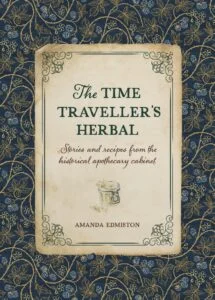
In an era increasingly detached from the natural world and the wisdom of past generations, a new literary journey invites readers to bridge this divide. Herbal storyteller Amanda Edmiston, through her acclaimed work The Time Traveller’s Herbal: Stories and recipes from the historical apothecary cabinet, offers a captivating expedition into the forgotten realms of traditional knowledge. Edmiston, the creative force behind Botanica Fabula, masterfully weaves together history, folklore, and the enduring power of plants, revealing the profound legacy of those who first understood the Earth’s profound pharmacy.
Her book is more than a collection of recipes; it is an invitation to step into a "time spiral," a concept that allows for immersion in the seasonal and historical changes of landscapes, connecting the reader to the subtle whispers of ancient wisdom embedded in our environment. By exploring the stories, folklore, and herbal remedies that have vitally shaped human culture, Edmiston positions early herbalists not as mere practitioners of quaint traditions, but as true pioneers of science and invaluable fountains of traditional knowledge.
The Ancient Roots of Healing: Herbalists as Pioneers
Throughout history, those who delved into the medicinal properties of plants have been known by many names: cunning woman, wise woman, or even, pejoratively, witch. These labels, often steeped in societal fear and misunderstanding, frequently obscured the fundamental truth of their roles. Far from practitioners of arcane arts, these figures were, in essence, the earliest scientists, botanists, and physicians, operating within the constraints and understanding of their respective eras.
Long before the advent of modern pharmacology, these individuals possessed an intricate, empirical knowledge of local flora. They observed, experimented, and meticulously passed down generations of plant-based remedies, understanding their effects on the human body, their preparation, and their seasonal availability. Their wisdom was holistic, encompassing not just the physical ailments but also the psychological and spiritual well-being of their communities. The "cunning woman" might have been sought for a fever, the "wise woman" for childbirth complications, and even the "witch" – a term often applied to those with profound, sometimes unsettling, knowledge – for remedies that transcended simple physical cures.
This ancestral wisdom, often oral and experiential, formed the bedrock of early medicine. It represented a sophisticated, albeit pre-scientific, understanding of chemistry, botany, and human physiology. The Time Traveller’s Herbal seeks to reclaim and honour this legacy, positioning these historical figures as the unsung heroes of health, whose contributions laid foundational stones for many modern medical advancements. Edmiston’s work encourages a re-evaluation of these historical roles, recognizing the profound intelligence and dedication required to cultivate and maintain such a vital body of knowledge.
A Scottish Landscape: The Genesis of Stories
Amanda Edmiston’s methodology for connecting with these ancient traditions is deeply rooted in place. Many of her stories, and the accompanying recipes and tastes, originate directly from the landscapes she traverses. Her process is one of patient observation: stopping, sitting, and absorbing the surroundings, noticing the subtle shifts in plant life dictated by both seasonal cycles and historical echoes. This contemplative approach allows her to delve into the history of a location, ponder the transformations it has undergone, and connect with the rich tapestry of folklore associated with the plants that thrive there.
One particular site holds significant sway in her narratives: a wild floodplain meadow in Scotland, nestled behind a venerable castle where two rivers converge. This ecologically important and historically resonant location frequently becomes the canvas for her tales. The confluence of rivers, the ancient castle, and the untamed meadow create a layered environment, rich with stories waiting to be unearthed. It is a place where the unchanging elements – the rivers’ flow, the contours of the land – offer a geographical certainty, a constant anchor in the spiral of time. This particular meadow, a vibrant ecosystem in its own right, provides a tangible link to the past, an open book for those willing to read its botanical and historical narratives.
Edmiston often visualises inviting fellow travellers to journey back into this meadow’s past, to explore the plants it nurtures and the stories it silently tells. This immersive technique forms the core of her storytelling, drawing the reader into a vivid, multi-sensory experience that transcends mere historical recounting.
A Glimpse into 200 AD: Encountering Meadow Phantoms
To illustrate the immersive experience offered by The Time Traveller’s Herbal, Edmiston transports us to a specific moment in history: 200 AD. This temporal leap lands us in a world where the familiar architectural constructs of our time – the castle, the well-trodden paths – are either absent or barely recognisable. The landscape, though geographically constant in its rivers and hills, is sculpted differently by nature and time. Where modern larch plantations might now stand, ancient oaks dominate the skyline. The familiar tunnel of blackthorn, a seemingly constant feature, stretches further, with young saplings replacing the gnarled, ancient forms we know, their branches untamed by mechanical pruning.
This journey is a sensory immersion. We find ourselves on a rocky outcrop overlooking the confluence of the two rivers, the very spot that defines the expansive meadow. The future site of the castle lies behind us, a mere shadow, while on the opposite bank, a bustling Pictish village thrives, its inhabitants living lives largely untouched by the Roman presence further south. The air is different, carrying the scents of wilder growth, the sounds of untamed nature.
As we descend towards the flower-strewn field, a distinctive scent beckons – the faintly medicinal, partially sweet, partially antiseptic allure of salicylates. It’s an olfactory cue, a whisper from the past, guiding us towards a significant botanical encounter.
The Scent of Salicylates: Discovering Meadowsweet
Reaching the first dip towards the river, the landscape transforms into a creamy expanse of flowers. These ethereal blooms appear to blur the view of the bank, creating an illusion, as if a spectral queen were cloaked within their delicate embrace, shying away from mortal eyes. Edmiston describes the urge to step closer, brushing past the blossoms, scattering petals in pursuit of this elusive vision. Yet, the shimmering regal figure remains just beyond grasp, a trick of the light or perhaps, a manifestation of a powerful imagination.
The river ripples, reflecting the tremble of something silvery slipping downstream. Perhaps eyes watch from the nearby woods, or a young bullock grazes serenely on the clover across the water. Yet, the phantom queen remains unseen, leading Edmiston to ponder if her imagination has been seduced by the "Queen of the Meadows," or if she might be running a fever herself.
A practical herbalist, she instinctively checks for fever and then adds a few heads of the creamy blossoms of Meadowsweet (Filipendula ulmaria) to her flask of hot water. As she sips the resulting tisane, a memory stirs, a story whispers – and the penny drops. They are not merely in the presence of a beautiful plant, but within the domain of the Morrigan, the phantom queen herself.
Meadowsweet, with its distinctive scent and striking appearance, has long been associated with powerful, mystical figures. Its creamy white flowers, often found in damp meadows and along riverbanks, create a striking visual impact, often appearing as misty, almost otherworldly clouds against the green. Botanically, it is known for its high content of salicylates, compounds closely related to aspirin, giving it its characteristic medicinal aroma and its historical use as a pain reliever and fever reducer. This plant, therefore, stands as a tangible link between ancient folklore and rudimentary pharmaceutical science.
The Morrigan’s Tale: Mythology and Medicine Intertwined
The revelation of the Morrigan’s presence transforms the meadowsweet from a beautiful plant into a potent symbol, deeply embedded in Celtic mythology. The Morrigan, often translated as "Phantom Queen" or "Great Queen," is a complex and formidable figure in Irish lore. She is a goddess of war, fate, and death, frequently appearing on battlefields as a harbinger of doom or an instigator of conflict. However, her domain extends beyond the battlefield; she is also a shapeshifter, capable of transforming into various animals – a crow, an eel, a wolf, or a heifer – and can appear as a beautiful young woman or an ancient crone. She represents the fierce, transformative, and often challenging aspects of the feminine divine, a guardian of the liminal spaces between worlds.
Edmiston recounts a powerful tale from Celtic mythology that intricately links Meadowsweet with the Morrigan and the legendary warrior Cu Chulainn. The story begins with Cu Chulainn, sent to the Isle of Skye to master combat under the warrior maid Sgathaich. During his training, he falls in love with her daughter, Uathach, and they become betrothed. Yet, Cu Chulainn’s life is defined by violence and temper, his heroic journeys often fraught with dubious encounters.
It is during one such battle at a ford that Cu Chulainn encounters the mighty Morrigan, who appears to him as a beautiful young woman. She offers him aid in battle in exchange for his love. When he, perhaps unwisely, rebuffs her, claiming his heart belongs to Uathach, the Morrigan transforms. First, she becomes an eel, attempting to entwine around his ankles as he crosses the water. Cu Chulainn, in his warrior’s fury, wrenches her off, injuring her. Undeterred, she transforms again, this time into a huge grey wolf, terrifying a herd of cattle and inciting a stampede towards the warrior. Again, Cu Chulainn responds with violence, striking her hard with his slingshot, wounding her badly in the leg. Finally, she takes the form of a white heifer, leading the stampede directly at him. With a spear, he injures her one last time, and she vanishes, mist-like, into the river.
As the battle concludes, a weary, cut, and bruised Cu Chulainn makes his way along the riverbank. He prays to avoid the ominous Bean nighe (washerwoman of the shrouds) or the folkloric Caointeach, both harbingers of death. Eventually, he encounters an old woman, not washing winding cloths, but milking a deer. Her body bears familiar injuries – the very wounds he had inflicted upon the eel, the wolf, and the heifer. Sore and thirsty, he asks her for a drink. With each cup she offers, he blesses her. With each blessing, her injuries heal. As the third blessing leaves his lips, he finally realises who she is.
In an act of profound reconciliation, she bestows upon him a gift: Meadowsweet. Though some tales suggest he later regretted healing her, the story insists he carried it on his belt from that day forth. He learned from her to rely on it, bathing in a handful of fresh blossoms or a palmful of dried flower heads encased in a muslin bag, to heal his wounds, reduce his fevers, and cool his legendary temper.
This myth vividly illustrates the complex interplay between the natural world, divine power, and human experience. Meadowsweet, in this context, becomes more than just a plant; it is a symbol of transformation, healing, and the unexpected consequences of both conflict and compassion. It represents the potential for peace and restoration even after profound strife, a gift from a powerful, often misunderstood, feminine deity.
Meadowsweet: A Gift of Healing and Reconciliation
The story of Cu Chulainn and the Morrigan not only elevates Meadowsweet to legendary status but also underscores its enduring practical applications. The creamy stems of the flower are known in Gaelic as crios Chu-chulainn (Cu Chulainn’s belt), a direct nod to the warrior’s use of it for healing. Historically, it was also referred to as bride-wort, owing to its popularity as floral confetti, a testament to its beauty and perhaps its symbolism of peace and new beginnings.
Beyond its mythological and ceremonial significance, Meadowsweet’s medicinal properties are well-documented throughout history. Its primary active compounds are salicylates, which are chemically related to acetylsalicylic acid, the active ingredient in aspirin. This explains its traditional use as a pain-reliever (analgesic), anti-inflammatory agent, and fever-reducer (antipyretic). However, unlike synthetic aspirin, Meadowsweet contains other compounds that buffer the effects of salicylates on the stomach lining, making it gentler on the digestive system – a significant benefit for those prone to indigestion or heartburn. It also possesses mild astringent and diuretic properties.
Edmiston’s work not only highlights the mythological connection but also inspires readers to explore these practical applications, encouraging a deeper understanding of how our ancestors leveraged the natural world for their well-being.
Crafting Ancient Remedies for Modern Living
Inspired by the Morrigan’s gift and Cu Chulainn’s subsequent reliance on Meadowsweet, The Time Traveller’s Herbal provides accessible recipes for incorporating this powerful plant into modern life, bridging the gap between ancient wisdom and contemporary wellness.
Soothing Meadowsweet Bath
Following the warrior’s example, a Meadowsweet bath offers a gentle yet effective remedy for various discomforts.
- Ingredients: Three or four fresh or dried Meadowsweet flower heads, enclosed in a muslin bag (or similar permeable fabric). For added skin soothing, oats can also be included in the bag.
- Preparation: As bathwater runs, place the muslin bag containing the Meadowsweet and optional oats into the tub. Allow the warm water to infuse the botanical properties.
- Benefits: This bath helps reduce fevers, soothes irritated or inflamed skin, and can ease muscle aches and tension, much as it did for Cu Chulainn after battle. The aromatic compounds also contribute to a calming, therapeutic experience.
Herbal Tisane for Internal Comfort
Meadowsweet also makes an excellent herbal infusion, or tisane, for internal use, offering relief for common ailments.
- Ingredients: A few heads of fresh or dried Meadowsweet flowers.
- Preparation: Place the Meadowsweet into a cup and pour freshly boiled water over it. Steep for three to four minutes.
- Benefits: This tisane is a valuable remedy with mild pain-relieving properties, making it effective for headaches or general aches. Crucially, it is also highly regarded for soothing indigestion and heartburn due to its gentle, stomach-protective salicylate compounds. It serves as a gentle anti-inflammatory, promoting overall comfort.
A Cordial for a Phantom Queen to Ease Tempers, Fevers, and Heartburn
For a more celebratory and potent preparation, Edmiston offers a recipe for a Meadowsweet cordial, a beverage fit for royalty and equally capable of easing discomforts.
-
Ingredients:
- 30 heads of Meadowsweet blossoms, in full flower.
- Juice of one unwaxed, freshly squeezed lemon, plus a little grated rind.
- 300 grams of blossom honey (locally produced honey often carries additional beneficial enzymes and pollen).
- 1 litre of filtered water.
-
Preparation:
- Bring the filtered water to a boil.
- Dissolve half of the honey into the boiling water, stirring until fully incorporated.
- Once the honey has dispersed, add the Meadowsweet blossoms, lemon juice, and grated rind.
- Allow the mixture to simmer gently for a further three minutes.
- Remove from heat and allow to rest overnight, or for at least one to two hours, to ensure the Meadowsweet infuses thoroughly.
- Strain the mixture, discarding the spent plant material.
- Return the strained liquid to the heat and add the remaining honey.
- Bring to a boil again, then reduce heat and allow to simmer for approximately five more minutes, or until the mixture begins to reduce and takes on the consistency of a cordial. More honey can be added at this stage if a sweeter, thicker cordial is desired.
- Carefully bottle the cordial in sterile glass jars or Kilner-style bottles.
- If kept cool, the cordial will last for up to three months.
-
Serving Suggestion: Mix with still or sparkling water for a refreshing, therapeutic drink. For a special occasion, it can also be combined with sparkling wine. The cordial’s properties will help dissipate heat, soothe the digestive system, and calm frayed nerves, offering a tangible connection to the ancient remedies.
The Enduring Legacy: Reconnecting with Our Herbal Heritage
As the mist of ancient times dissipates and the sun lifts higher in the metaphorical sky, the journey with The Time Traveller’s Herbal leaves a lasting impression. It encourages us to gather our own armful of Meadowsweet, or any local herb that calls to us, and begin our own exploration into the historical apothecary’s cabinet. Edmiston’s work is a powerful reminder that the twist in time, the feeling of being pulled into a tide of years ebbing and flowing, is a visceral experience accessible to all who choose to look closely at the natural world around them.
The broader implications of Edmiston’s work extend beyond personal wellness. It underscores the critical importance of preserving folklore and traditional knowledge, not as quaint relics of the past, but as living, breathing guides for the future. By understanding the historical context of herbalism, we gain a deeper appreciation for the ingenuity of our ancestors and the intricate relationship they fostered with their environment. In a world grappling with ecological crises and a disconnect from nature, The Time Traveller’s Herbal offers a pathway to reconnect, to listen to the stories the land tells, and to integrate this ancient wisdom into our modern lives. It is an invitation to join Amanda Edmiston on a continuous herbal storytelling journey through time, fostering a renewed sense of place, history, and healing.
If you are inspired to continue this captivating journey with Amanda Edmiston, The Time Traveller’s Herbal is available in all good bookshops and via the Botanica Fabula website.
Important Disclaimer
FolkloreThursday and this article do not take responsibility for folklore practices listed on the website. Information is provided for entertainment and educational purposes only. FolkloreThursday does not offer medical advice, and recommends that you consult a medical professional or qualified herbalist before trying out any remedies or practices listed.