The Tactile Impossible: How a SoHo Puppet Studio is Redefining Modern Surrealism
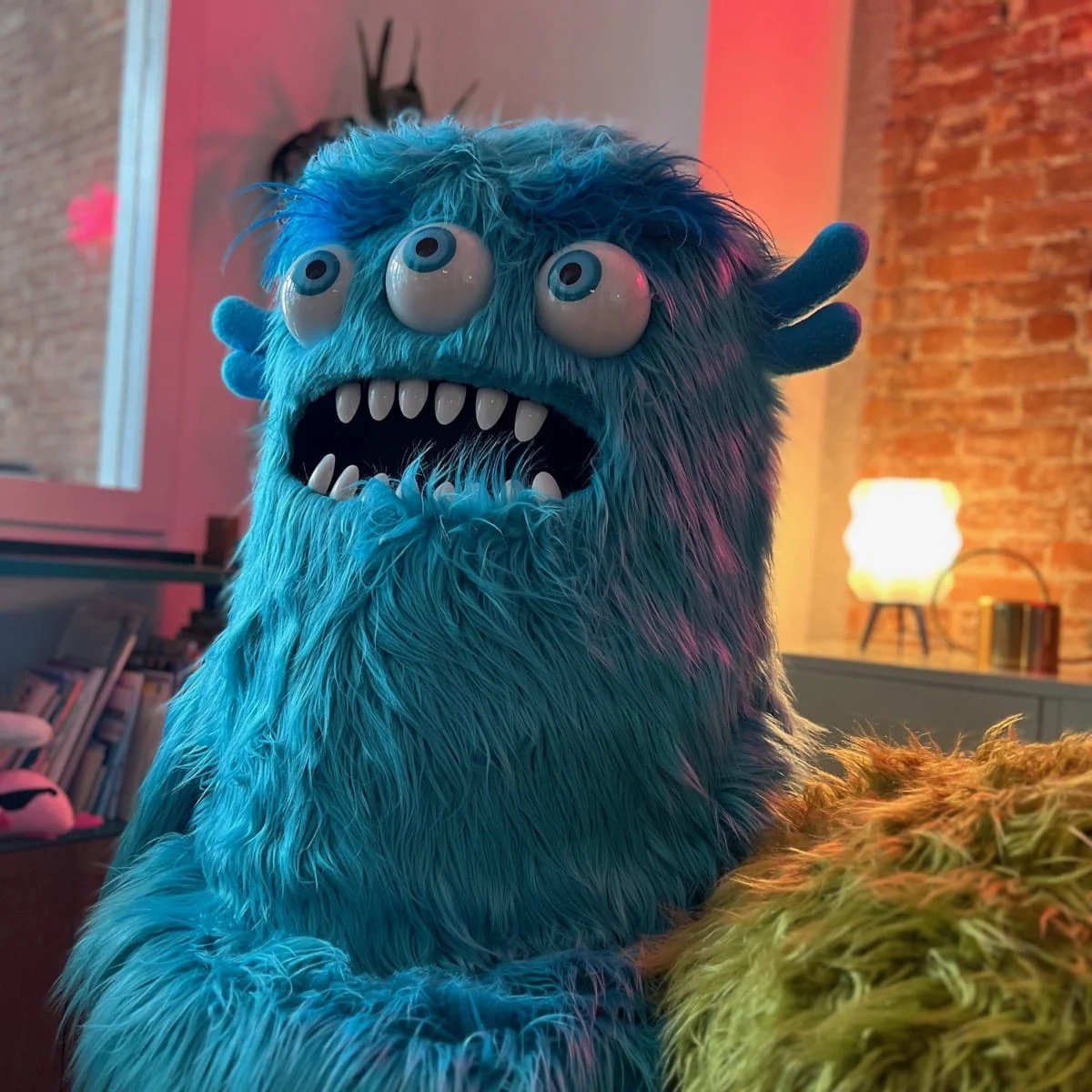
In an era dominated by pixel-perfect CGI and generative artificial intelligence, a quiet revolution in the "uncanny" is taking place within a sun-drenched workshop in SoHo, Manhattan. Furry Puppet Studio, a design house specializing in the hand-carved fabrication of custom puppets and creatures, has emerged as a primary custodian of a specific, tactile form of surrealism. While the public often associates puppetry with children’s education or whimsical entertainment, the work produced by this studio—and the lineage it draws from—suggests a much more profound artistic mission: the pursuit of the "impossible object" made manifest in the physical world.
Main Facts: The Intersection of Foam and the Fantastic
Furry Puppet Studio does not describe itself as a toy manufacturer or a traditional theater shop. Instead, its mission statement is deceptively simple: "We do pretty unusual work." Led by founder Zack Buchman, the studio operates at the intersection of high-concept design, mechanical engineering, and avant-garde art.
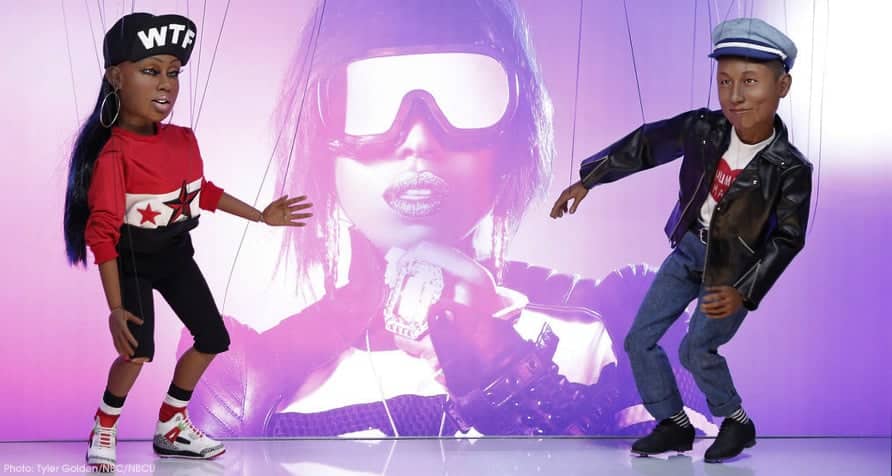
The studio’s output is characterized by a rejection of digital shortcuts. Every creature begins as a solid block of industrial foam, which is then hand-carved by artisans. These figures are eventually wrapped in "dream fleece," a proprietary fabric manufactured in-house to achieve a texture that defies standard textile categories. This commitment to physical presence has attracted a high-profile clientele, ranging from Academy Award-winning actors like Jon Hamm and Matt Damon to musical innovators like Missy Elliott and Pharrell Williams, and even global tech giants like Apple.

The core of Furry Puppet’s philosophy is the belief that puppetry and surreal art are chasing the same objective: to place a being in front of an audience that has no biological right to exist, and then convince that audience, through movement and "weight," that the being is alive. This is not merely entertainment; it is a manifestation of the "marvelous"—a concept central to André Breton’s Surrealist Manifesto—inserted into the mundane fabric of daily life.
Chronology: From the Avant-Garde to the Modern Workshop
To understand why a SoHo puppet studio belongs in the conversation of contemporary surrealism, one must trace the medium’s evolution from experimental film to the modern "creature dance party."
1965: The Henson Precedent
The lineage begins not with Sesame Street, but with Jim Henson’s 1965 short film Time Piece. Before he became a household name, Henson was a recognized avant-gardist. Time Piece, which received an Academy Award nomination and was screened at the Museum of Modern Art (MoMA), is a dialogue-free exploration of associative logic. It features clocks, a cowboy shooting the Mona Lisa, and a gorilla on a pogo stick. This early work established the puppet—and the puppet-maker—as an instrument of the avant-garde, a tool for breaking the boundaries of reality.
1982–1986: The Expansion of the Uncanny
In 1982, Henson pushed the boundaries of the "creature" with The Dark Crystal, a film so tonally dark and visually strange that he reportedly had to buy the rights back from the studio to prevent them from "sanding the weirdness off." Shortly thereafter, in 1986, the movement moved into the streets. Erminio Pinque, a RISD-trained illustrator, founded Big Nazo in Providence, Rhode Island. Pinque’s goal was to create "a puppet show without a stage." By creating nine-foot-tall foam aliens that roamed public festivals, Big Nazo practiced a form of "public ambush surrealism," bringing the dream state into the daylight of the city street.
The Modern Era: The Rise of Furry Puppet
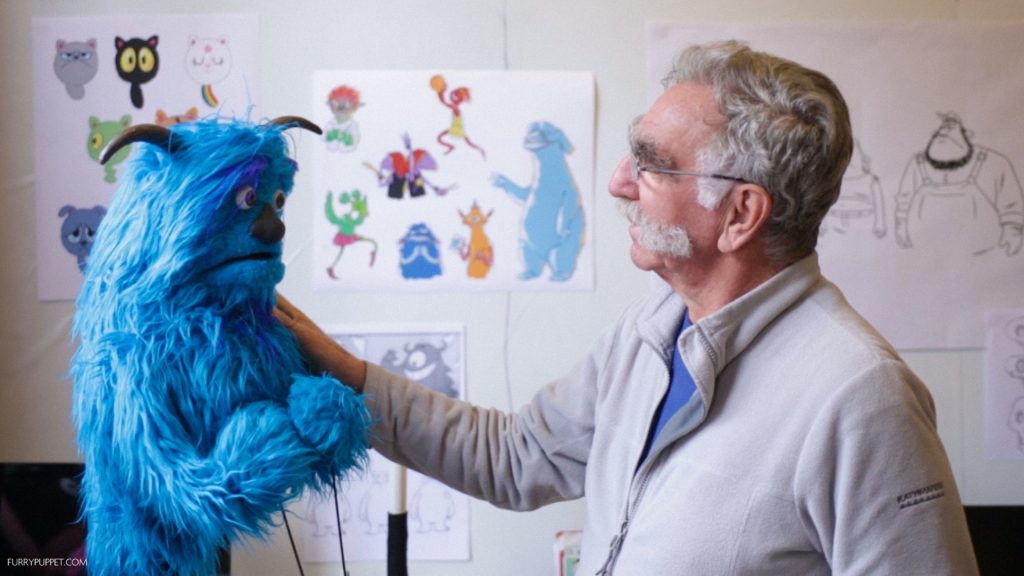
Zack Buchman founded Furry Puppet Studio with an "outsider’s angle," having bypassed formal collegiate training in favor of direct experimentation. By the 2010s, the studio had refined the "Henson lineage" into a high-end fabrication process. They moved beyond the stage and the screen, creating doppelgängers for live television (CNN’s New Year’s Eve) and high-fashion marionettes for music videos that blended street dance with mechanical engineering.
Supporting Data: The Mechanics of the "Marvelous"
The effectiveness of Furry Puppet’s work is supported by a rigorous, multi-disciplinary fabrication process. The studio’s team is a testament to the "high-low" nature of the craft, featuring a lead foam carver whom Buchman likens to a "real-life Edward Scissorhands," mechanical engineers, and Polly Smith—a legendary costume designer and the co-inventor of the sports bra.
The Materials of Belief
The technical data behind a Furry Puppet build reveals why these objects trigger a different psychological response than digital renders:
- The "No Undo" Policy: Unlike digital modeling, hand-carving foam is a subtractive process with no "undo" command. Every cut is permanent, requiring a level of confidence and "automatism" (the surrealist practice of letting the hand lead the mind).
- Dream Fleece: The studio manufactures its own textiles to ensure that the "skin" of the creature does not look like something bought at a craft store. This material is designed to catch light in a way that suggests organic depth.
- The "Hinge" of the Eye: Buchman notes that the placement of the eyes is the final and most critical step. A fractional shift of a millimeter can alter a creature’s entire psychological profile—turning it from suspicious to approachable, or from lifelike to menacing.
Case Studies in Surrealism
The studio’s portfolio serves as a catalog of surrealist motifs:
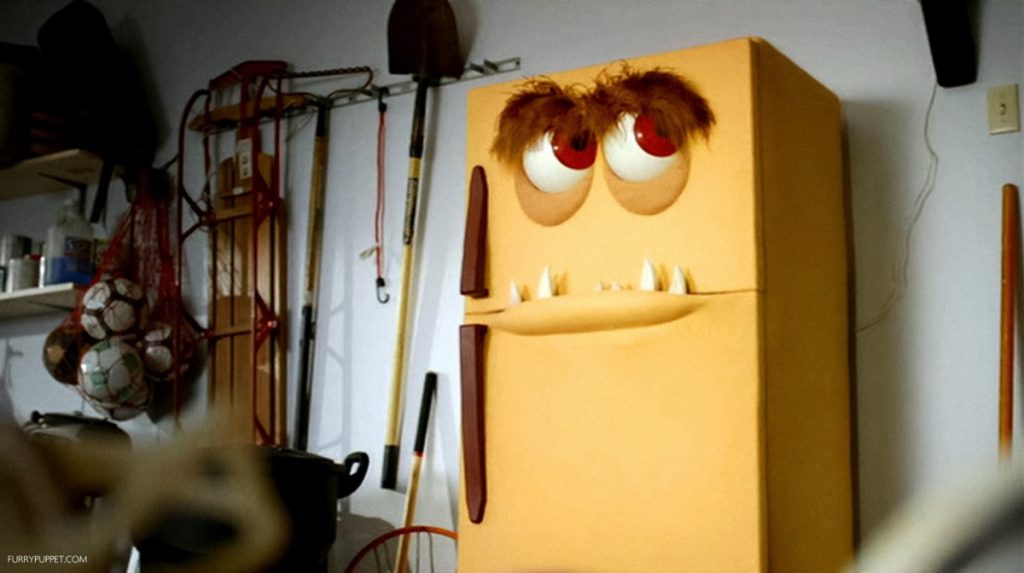
- The Animated Everyday Object: A refrigerator built for a commercial project features heavy eyelids and a full set of teeth. This mirrors the work of René Magritte or Meret Oppenheim, where the ordinary world is caught in the act of being alive.
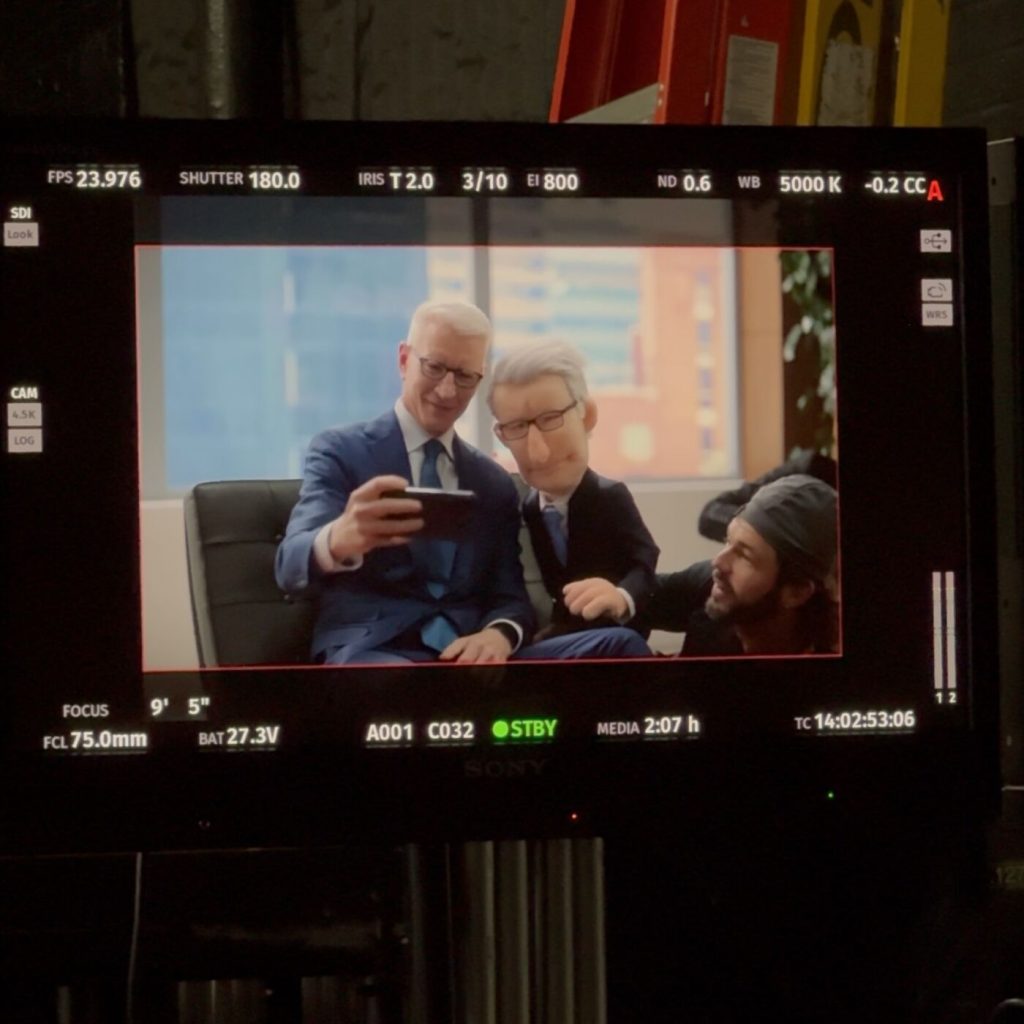
- The Doppelgänger: For a CNN broadcast, the studio created puppet doubles of Anderson Cooper and Andy Cohen. This taps into the "uncanny" motif identified by Sigmund Freud, where the replica of a human creates a profound sense of psychological unease and fascination.
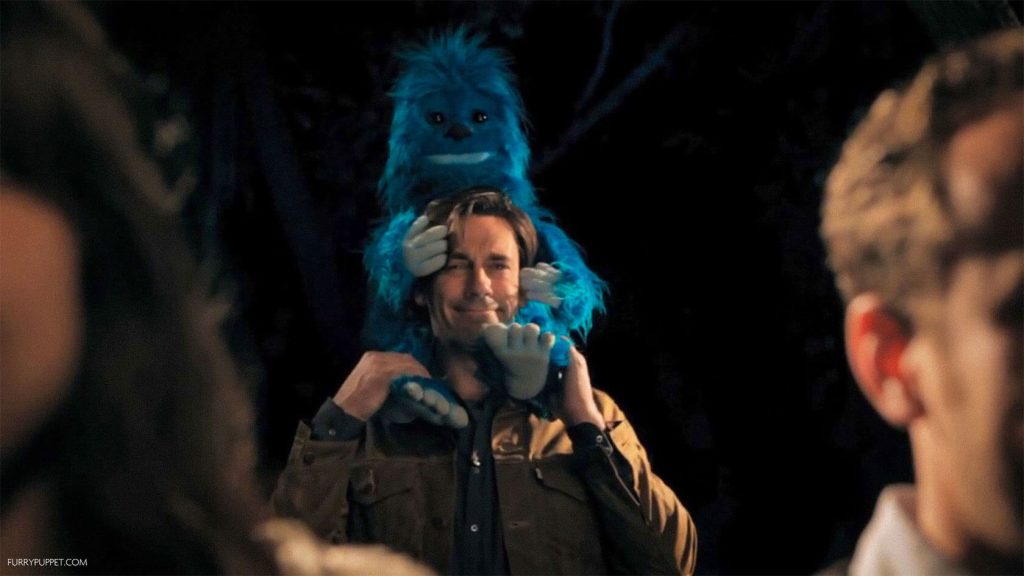
- The Displaced Creature: In a music video for Herman Düne, a blue yeti (a Furry Puppet build) hitches a ride with Jon Hamm. The surrealism here lies in the "unremarkable" treatment of the marvelous; the yeti is treated as a standard passenger, bridging the gap between the mythic and the mundane.
Official Responses: Insights from the Workshop
Zack Buchman has been vocal about the philosophy that separates his studio from a standard prop house. He views the moment of "disbelief clicking off" as the ultimate goal of his work.
"We want the brain to stop hunting for the rods and the strings," Buchman has noted in various reflections on the craft. "The moment the viewer simply accepts that what they are seeing is alive—that’s the hinge."
This perspective aligns with the "outsider" status Buchman embraces. By not following a traditional academic path, he treats puppetry not as a set of rules to be followed, but as a problem of physics and psychology to be solved. He describes the goal as creating "surrealism you can walk up to."
Similarly, the influence of Polly Smith brings a level of structural integrity to the work. Her background in functional garment design (the sports bra) informs the "wearable" nature of the studio’s larger mascots, such as the shaggy green creature worn by Matt Damon on Jimmy Kimmel Live!. The response from the industry has been clear: when the world’s largest brands (Apple, CNN) want to create a "human" connection, they are increasingly turning away from the digital and toward the physical "weight" of the puppet.
Implications: The Future of the Tactile in a Digital World
The continued success of Furry Puppet Studio and the Big Nazo troupe suggests a significant shift in how we value "the real." As AI-generated imagery becomes ubiquitous, the "Uncanny Valley"—a term coined by roboticist Masahiro Mori in 1970 to describe the dip in human empathy for objects that look "almost" human—is becoming a primary battlefield for artists.
The Value of Physical Weight
The psychological implication of a Furry Puppet build is that "weight" equals "belief." A rendered monster on a screen lacks the physical presence, the warmth of the fleece, and the subtle imperfections of a hand-carved object. In an increasingly virtual world, the "surrealism you can hold" provides a grounding experience that digital media cannot replicate.
The Avant-Garde Instrument
The studio’s work also reclaims the puppet as an avant-garde instrument. By placing these creatures in high-fashion contexts, music videos, and national news broadcasts, Buchman is moving the medium away from the "children’s entertainment" silo. The implication is that the puppet is a sophisticated tool for exploring the human condition, the uncanny, and the boundaries of reality.
Conclusion: The Room in SoHo
Somewhere on Broadway in SoHo, a room exists filled with foam shavings, 3D-printed eyeballs, and bolts of dream fleece. It is a laboratory of the impossible. The work being done there serves as a reminder that the most effective "special effects" are often those that have a physical mass—those that occupy the same air as the viewer.
Furry Puppet Studio is not merely a vendor of oddities; they are practitioners of a 21st-century surrealism. They prove that with enough foam, nerve, and a pair of perfectly placed eyes, the ordinary world can be tricked into admitting that the marvelous is real. For anyone interested in the future of the image—whether they work in oil paint, film, or code—the lessons being learned in this SoHo workshop are essential. The puppet makers have spent decades learning exactly when a made thing starts to breathe; it is time the rest of the art world looked over their shoulder.