The Architecture of Absence: Sandra Wollner’s ‘Everytime’ and the New Language of Grief
The landscape of contemporary cinema is frequently populated by stories of loss, yet few filmmakers manage to dissect the anatomy of mourning with the clinical precision and ethereal beauty of Sandra Wollner. Following her provocative previous works, the German filmmaker has returned with Everytime, a feature that secured the prestigious Un Certain Regard prize at the 2026 Cannes Film Festival. The film, which is currently in limited release ahead of a wider rollout in February 2027, serves as a profound meditation on the "elasticity" of grief, blending the visceral reality of a family tragedy with the haunting, pixelated world of digital memorials.
Main Facts: A Bold Reimagining of the Grief Narrative
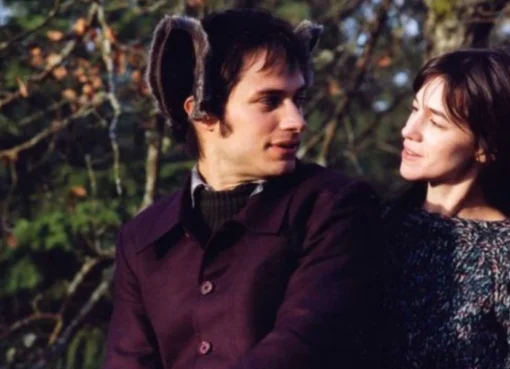
Everytime centers on the aftermath of a sudden tragedy: the death of a teenager named Jessie (Carla Hüttermann). The narrative follows the three people left in the wake of her absence—her mother, Ella (Birgit Minichmayr); her younger sister, Melli (Lotte Shirin Keiling); and her boyfriend, Lux (Tristán López). Together, they form a fragile, unconventional family unit, attempting to navigate a world that has been fundamentally altered by a single, silent void.
The film distinguishes itself from traditional "grief dramas" through its structural innovation. Rather than focusing on the immediate, histrionic explosion of loss, Wollner chooses to set the majority of the action one year after Jessie’s death. This temporal distance allows the film to explore the "messy" middle ground of mourning—the stage where the initial shock has subsided, leaving behind a persistent, quiet ache that manifests in mundane routines and digital echoes.
Critically acclaimed for its "infinitely beguiling" nature, the film has been praised for its refusal to provide easy catharsis. Instead, it offers a look at how memories can be both a sanctuary and a haunting, and how the modern world provides new, perhaps unsettling, ways to keep the dead among the living.

Chronology: From Tragedy to the Digital Afterlife
The narrative arc of Everytime is deliberately paced, mirroring the slow, uneven process of healing. It begins by establishing the "hole" left by Jessie, not through flashbacks of her life, but through the specific sounds and sights of her absence.
The Immediate Aftermath and the Year of Silence
The film opens with the weight of a year already passed. We see Ella, Melli, and Lux attempting to "do the right thing," as Wollner puts it. Their relationships are defined by a mutual, almost parasitic need: Ella requires Lux’s presence to maintain a physical connection to her daughter’s life, while Lux seeks Ella’s forgiveness to alleviate his own crushing guilt. This "weird dependent relationship" forms the emotional backbone of the film’s first act.
The Digital Memorial: ‘Vintage Story’
A pivotal element of the film’s middle section is the introduction of Jessie’s digital footprint. In a departure from typical cinematic tropes, Jessie’s legacy is found within the world of Vintage Story, a sandbox survival game similar to Minecraft. Melli begins to inhabit the digital world Jessie left behind, interacting with the structures her sister built and the avatar that remains. This "memorial of pixels" represents a new frontier in human mourning—the idea that a person’s presence can be indefinitely sustained in a virtual space.
The Tenerife Pivot
The final act of the film sees the trio traveling to Tenerife, Spain. This holiday is not a vacation in the traditional sense but a pilgrimage. They return to the quiet spaces baby Jessie once occupied, seeking a physical connection to a past that feels increasingly distant. It is here that the film transitions from a grounded drama into something more surreal and "backroom-esque," as the boundaries between memory, reality, and the uncanny begin to blur.

Supporting Data: The Technical Mastery of ‘Everytime’
Sandra Wollner’s vision for Everytime was executed through a series of highly specific technical choices that emphasize the distance and intimacy of grief.
The 3,000-Millimeter Perspective
One of the most talked-about sequences in the film is the depiction of Jessie’s death. To capture her fall from a high-rise building, Wollner and her crew used a 3,000-millimeter consumer camera lens from a distance of half a mile.
"It feels really not OK to point it at people," Wollner admitted in a recent interview. "But I wanted that length… that feels kind of forbidden to be so close and too far away at the same time." This choice creates a "universal perspective," where the viewer witnesses the tragedy with voyeuristic clarity but is rendered completely powerless to intervene. The fall itself was a composite of location shots and studio work, meticulously blended by visual effects supervisor Kariem Saleh.
Sound Design as Presence
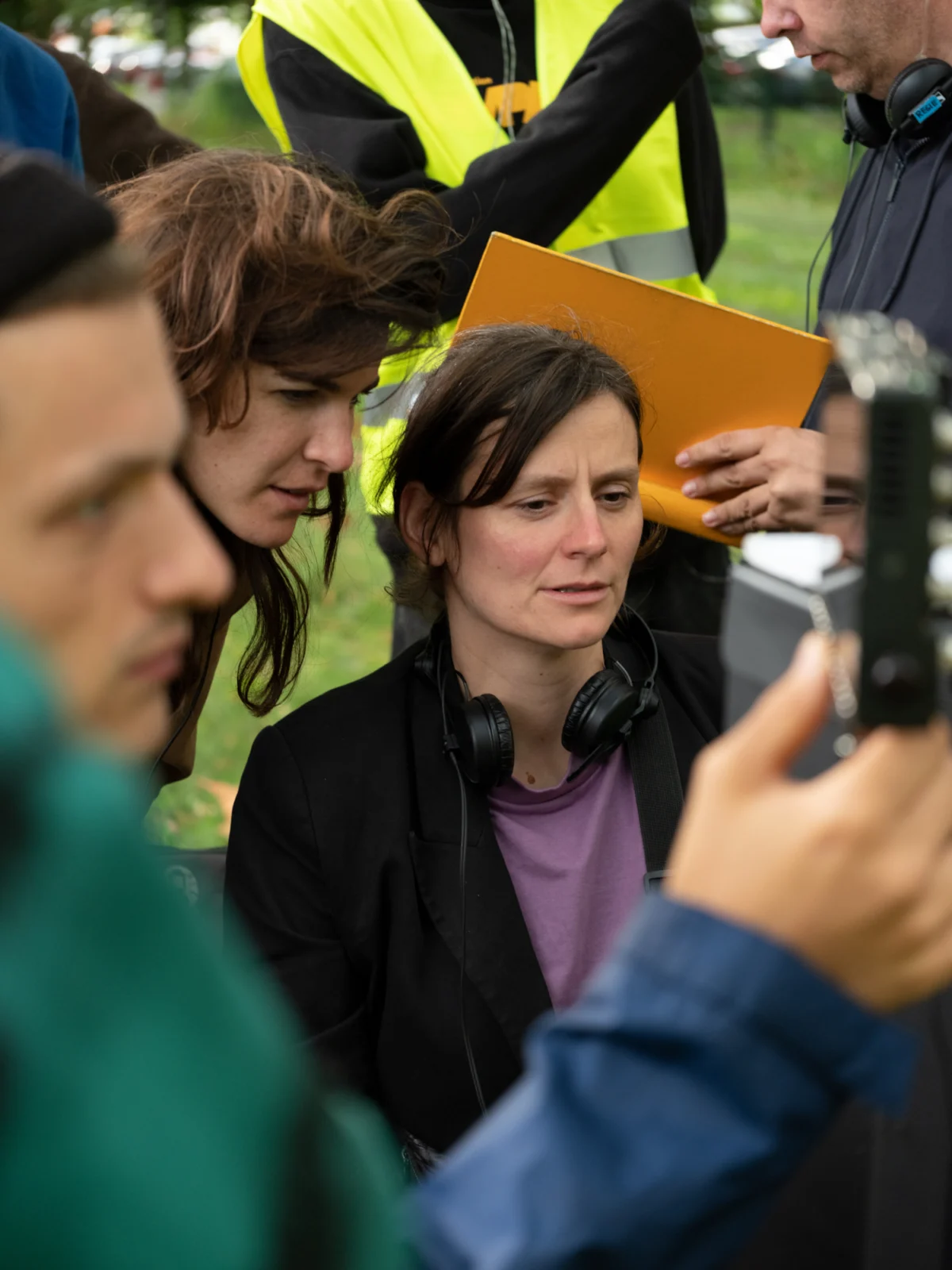
The auditory landscape of the film is as crucial as its visual one. Wollner focused on "banal" sounds—the specific rhythm of a person running down stairs or the "tink" of a falling object—to trigger emotional responses. On the set and in the editing room, Wollner and her partner, cinematographer Timm Kröger, spent hundreds of hours perfecting the sound levels to ensure that the absence of Jessie felt audible.

The Casting of Lotte Shirin Keiling
Working with children requires a delicate touch, and Wollner’s collaboration with Lotte Shirin Keiling (Melli) was built on play rather than performance. Assisted by "kids’ coach" Juli Neuhaus, Keiling was encouraged to draw the scenes before acting them. This allowed the young actress to understand the emotional context without being burdened by the "heavy weight" of grief acting. The result is a performance that feels authentically curious rather than performatively sad.
Official Responses: Wollner on Motherhood and Memory
The development of Everytime was deeply influenced by Wollner’s personal life. She was editing the film when her daughter was born, an experience that fundamentally shifted her understanding of the maternal grief depicted on screen.
The Parental Lens
"When I had the baby… you still sometimes have the feeling, ‘where does it come from?’" Wollner explained. This sense of wonder and sudden "personhood" informed the Tenerife sequence, where Ella encounters a baby that mirrors her lost daughter. "I always understood what that scene meant for me, but there, we really felt it for the first time, being a parent."
The Unpredictability of Memory
Wollner also addressed the "neat boxes" that society often tries to fit grief into—the five stages of loss. She rejected this model in favor of something more "messy." Drawing from the memory of her father’s death, she noted that memories are often "intrusive" and uncontrollable. "We never know if maybe the weird place where we saw our baby sitting… is the one that haunts us the most."

The Cannes Reception
Reflecting on the film’s premiere at Cannes, Wollner noted that she didn’t truly "feel" the impact of the film’s most harrowing moments until she sat with an audience. Hearing the collective gasp during the fall sequence provided a sense of validation for her technical and emotional risks. "I felt the first time that it actually worked," she said.
Implications: Grief in the Age of the Avatar
Everytime raises significant questions about the future of human mourning in a digital-first world. As we spend more of our lives in virtual spaces, our "avatars" become more than just digital skins; they become vessels for our identity that can outlive our physical forms.
The Permanence of the Digital Ghost
The film suggests that the "Backrooms" phenomenon—the idea of infinite, eerie, yet soothing digital spaces—is the new graveyard. For characters like Melli, the game Vintage Story is not an escape from reality but a continuation of it. The implication is that we are entering an era where "letting go" is complicated by the fact that the dead never truly leave our hard drives.
The Elasticity of Genre
By blending elements of the "grief tale" with video game aesthetics and surrealist holiday drama, Wollner has expanded the boundaries of what a tragedy can look like. Everytime proves that the most effective way to explore universal emotions is through highly specific, even "banal" details.

Final Perspective
Ultimately, Everytime is a film about the "groundedness" of the impossible. While the final act ventures into territory that some might call "dreamy," Wollner insists that everything the audience sees is "true at the same time." It is a testament to the fact that grief is not just a period of time to be moved through, but a new room that one enters and must learn to live within.
As the film moves toward its wide release in early 2027, it stands as a landmark work in contemporary European cinema—a haunting, technically masterful exploration of what it means to remain behind when the world has moved on.