
The Unyielding Spear: Unpacking the Martial Foundations of Germanic Society
FOR IMMEDIATE RELEASE
[City, State] – [Date] – In the annals of early European history, few societal structures proved as potent and enduring as the martial traditions of the Germanic peoples. Far from a collection of disparate, disorganized tribes, Germanic society was a complex tapestry woven with threads of valor, loyalty, and an unyielding commitment to battle. Success in combat was not merely a path to glory; it was the surest route to wealth, elevated status, and formidable power, profoundly shaping their political landscape and ultimately influencing the fate of the Roman Empire and the emergence of medieval Europe.
The Core of Power: The Comitatus and the Imperative of War
At the heart of Germanic societal and military organization lay the comitatus, a Latin term describing the personal retinue or war band that formed the bedrock of any aspiring king or chieftain’s authority. This institution was far more than a simple bodyguard; it was a voluntary association of elite warriors bound by sacred oaths of loyalty to their leader, and to each other. Every chieftain sought to attract and maintain the largest, most formidable comitatus possible, as it directly translated into military might, political influence, and the ability to project power.
The very existence and cohesion of these war bands dictated the intricate politics of early Germanic chiefdoms and nascent kingdoms. A leader’s capacity to reward his warriors with plunder, land, and prestige was paramount. Failure to do so risked the dissolution of his band, a devastating blow to his authority and often a precursor to his downfall. This created a perpetual feedback loop: warriors needed war to display their prowess and acquire wealth, while leaders needed successful campaigns to provide the means to reward and retain their loyal followers. In such a system, prolonged periods of peace were not only undesirable but often unsustainable, as they threatened the very glue that held these martial societies together.
The dynamism of the comitatus fostered an environment where success bred further success. A triumphant leader, enriched by victory, could attract even more warriors to his banner, swelling his ranks and enhancing his reputation. This phenomenon was a significant driver behind the confederations and political centralization observed among Germanic peoples during the third and fourth centuries CE. Powerful war bands, under charismatic and victorious leaders, could draw together disparate groups, laying the groundwork for larger, more cohesive political entities that would eventually challenge and then reshape the Roman world.
A Pact of Blood: Loyalty Unto Death and the Warrior Ethos
The Germanic warrior ethos was characterized by an intense personal loyalty that transcended modern notions of nationalism or tribal affiliation. Warriors pledged themselves to their leader, often "unto death," a vow not taken lightly. This bond was spiritual, social, and economic. There was no formal, drilled discipline akin to the Roman legions; instead, the fear of dishonour (infamy, infamia) was a potent deterrent against abandoning one’s comrades or leader in battle. To flee or show cowardice brought not only personal shame but also disgrace upon one’s family and the entire war band.
This deep-seated loyalty extended even to mercenary service. When Germanic warriors enrolled in the Roman army, they maintained this profound commitment to their immediate commanders. Roman historians frequently noted their reliability; these Germanic auxiliaries were no more prone to mutiny than native Roman soldiers and remained steadfastly loyal to their Roman officers, even when ordered to fight against their own ethnic kin. This speaks volumes about the primacy of the personal oath and the bond within the comitatus structure over broader ethnic or proto-national allegiances.
In early Germanic society, the expectation was that all able-bodied free men would bear arms. This universal military service underscored the martial character of the society. Young men were trained from an early age in the use of weapons, and their passage into adulthood was often marked by their readiness to join the war band. Honour, prowess, and the ability to contribute to the collective martial success were central to a man’s identity and standing. The concept of wergild, a system of compensation paid to the family of a person injured or killed, also highlights the value placed on a warrior’s life and the potential for blood feuds if such payments were not made, further emphasizing the constant potential for conflict.
Arming for Conflict: Weapons, Protection, and Roman Influence
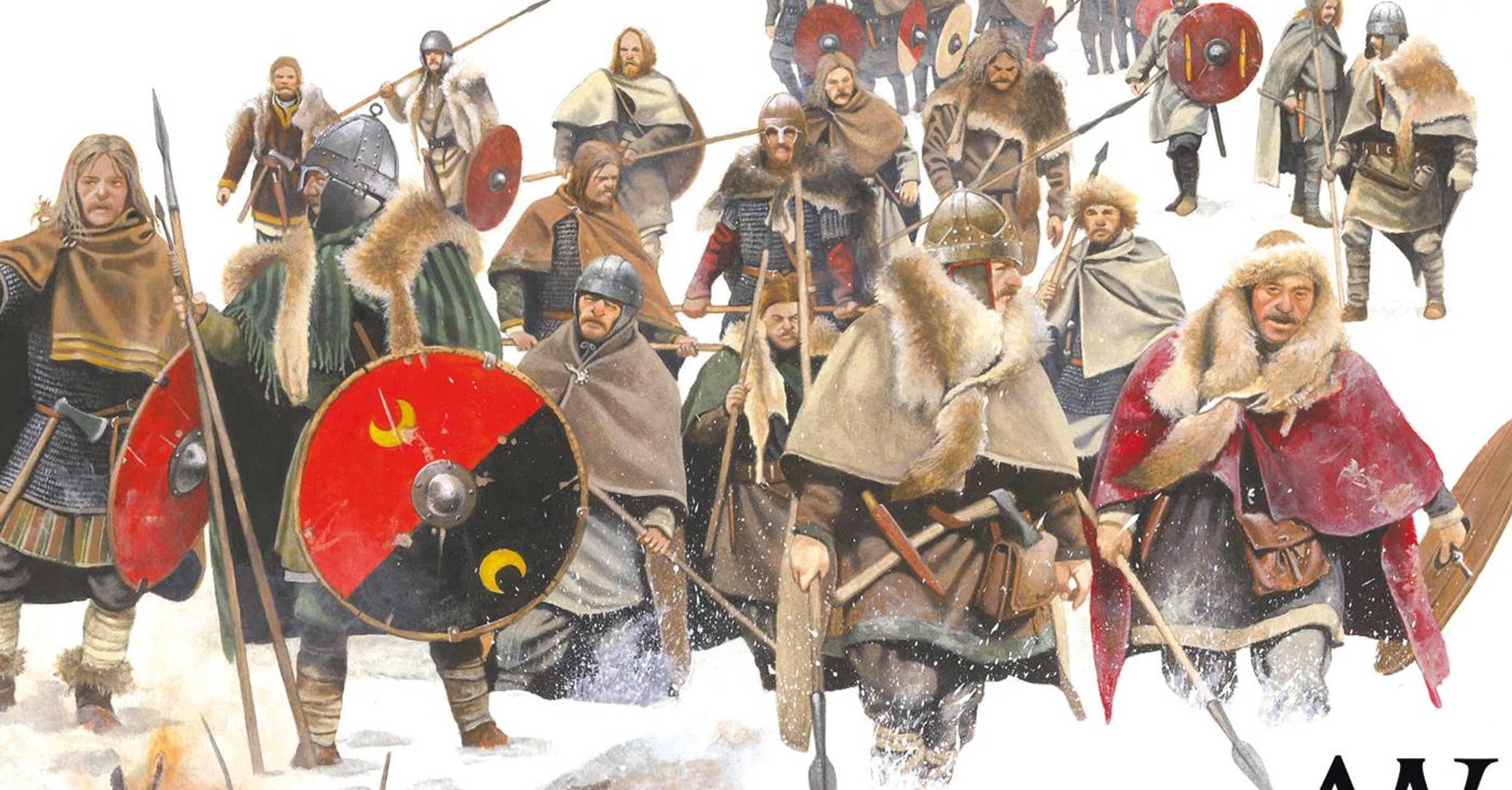
The arsenal of a Germanic warrior, particularly in the early centuries CE, reflected both practical necessity and economic realities. While the image of a Germanic warrior often conjures a fearsome figure with a great sword, the reality was more nuanced.
Offensive Arsenal
- Swords: The long, two-edged sword, known to the Romans as a spatha, was a highly prized and expensive offensive weapon. The finest examples were often produced using advanced pattern-welding or damascening techniques, sometimes learned from or inspired by Roman craftsmanship. Such swords were status symbols, typically reserved for high-ranking warriors and chieftains. Their length made them formidable in close-quarters combat, delivering devastating cuts.
- Spears: For the vast majority of warriors, the spear (framea to the Romans) was the primary weapon. Versatile and relatively inexpensive to produce, it could be used for thrusting in tight formations or thrown as a projectile weapon before closing with the enemy. A warrior might carry several spears, lighter ones for throwing and a heavier one for hand-to-hand combat.
- Axes: The throwing axe, particularly the francisca favored by the Franks, was another common and effective weapon. Its distinctive shape and balance allowed it to be thrown with accuracy and considerable force, often used to disrupt enemy formations or disable an opponent before a charge.
- Bows and Arrows: While not as prominent as in other cultures, bows and arrows were also employed, primarily for skirmishing and harassing enemy lines from a distance. Their role was generally supportive rather than decisive in pitched battles.
- Knives: A large, single-bladed knife, often referred to as a seax, served as a crucial secondary weapon for close combat, utility, and a final resort if other weapons were lost.
Defensive Measures
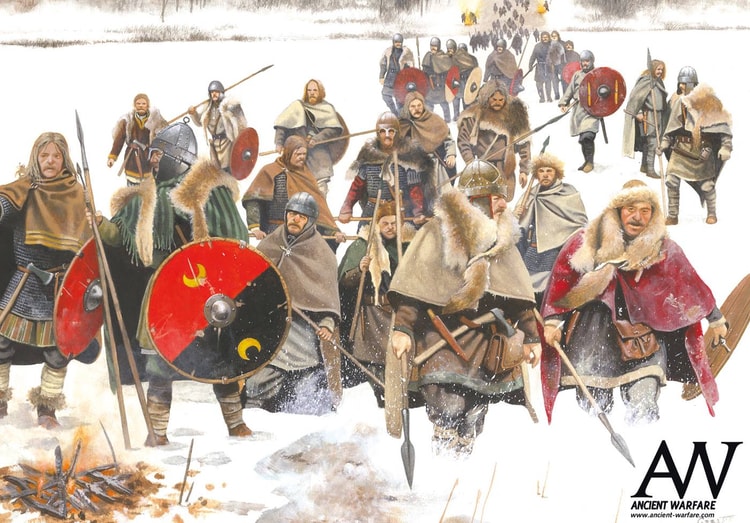
- Shields: The most ubiquitous piece of defensive equipment was the large, circular or oval wooden shield. Covered in leather and sometimes reinforced with a metal rim and a central boss, these shields were vital for both individual protection and the cohesion of formations like the shield wall. They were often brightly painted and decorated, serving as personal identifiers and symbols of status.
- Armour: Full body armour, such as chainmail (a lorica hamata equivalent) or scale armour (overlapping metal plates riveted to a leather coat), was exceedingly rare and a clear indicator of high rank and immense wealth. Frankish laws, for example, valued a chainmail coat at the equivalent of two horses or six oxen, and a helmet at one horse – a prohibitive cost for most. This meant that only chieftains and their most elite warriors could afford such protection.
- Helmets: Similarly, conical iron helmets, often featuring cheek plates and a mail neckguard, were precious commodities. Most Germanic warriors went into battle protected only by their shield and perhaps a toughened leather cap or no head protection at all.
The Roman Armory’s Allure
The disparity in equipment between early Germanic warriors and their Roman counterparts was significant. Regular Roman troops were uniformly equipped with mail or scale armour and standardized helmets, presenting a formidable challenge. However, as the migrations progressed and interactions with the Roman Empire intensified – through trade, conflict, and mercenary service – Germanic warriors increasingly acquired Roman equipment. Swords, armour, and even cavalry gear filtered into Germanic hands, either as plunder, payment, or through skilled local craftsmanship mimicking Roman designs. This gradual "Romanization" of Germanic military equipment narrowed the technological gap, contributing to their growing effectiveness against the empire itself.
The Battlefield: Tactics, Formations, and the Gothic Exception
Germanic battlefield tactics were generally direct and focused on overwhelming the enemy through force and numbers, often lacking the sophisticated maneuvers and logistical planning characteristic of the Roman legions.
Infantry Dominance
The vast majority of Germanic warriors fought on foot. Their primary defensive formation was the shield wall, where warriors stood tightly together, their overlapping shields forming an almost impenetrable barrier. This formation, likely inspired by Roman legionary tactics observed during centuries of frontier interaction, provided a strong defensive front and allowed for coordinated pushes. It was particularly effective against cavalry charges and afforded protection against missile fire.
For offensive actions, the wedge formation, sometimes called the "boar’s head" (keiler), was employed. This V-shaped formation, with the most elite and heavily armed warriors at the point, was designed to punch through enemy lines, relying on the psychological shock and physical momentum of the charge. The highest-ranking and best-equipped warriors typically formed the first ranks, followed by the humbler, less-armoured fighters at the rear, who provided impetus and numbers.
Crucially, Germanic warriors were not drilled like Roman soldiers. If a formation, particularly the shield wall, was broken, there was little chance of it reforming. Disarray often led swiftly to a rout, as the personal bonds of the comitatus, while strong, could not replicate the institutional discipline of a professional army in a broken formation.
The Rise of Cavalry: The Gothic Exception
For most Germanic groups, cavalry played a supportive role: skirmishing, scouting, raiding, and providing swift pursuit or escape. In a defensive engagement, even warriors who possessed horses typically dismounted to fight on foot, a symbolic act by war leaders demonstrating their willingness to share the same fate as their less-equipped followers and to remove the temptation of easy escape.
However, the Goths represent a pivotal exception. Under the profound influence of steppe nomads like the Huns and Sarmatians, they developed highly effective cavalry units. This adoption of steppe warfare tactics transformed their military capabilities, making their cavalry a decisive force. The Battle of Adrianople in 378 CE stands as a testament to this transformation, where Gothic heavy cavalry played a crucial role in annihilating a Roman army and killing Emperor Valens, marking a turning point in military history and the decline of Roman infantry dominance. It’s important to note that stirrups, which would revolutionize cavalry warfare, were not introduced to Europe until the sixth or seventh century. Nevertheless, specialized saddles allowed Gothic warriors to fight effectively on horseback without the immediate risk of dismount from the shock of impact.
Strategic Limitations
The Germans generally lacked sophisticated battle strategies and, perhaps more critically, siege warfare skills. As the Visigothic leader Fritigern famously remarked, he "had no quarrel with stone walls," preferring to bypass fortified positions rather than undertake the complex and resource-intensive task of besieging them. This limitation often meant that while they could defeat Roman armies in the field, taking and holding major Roman cities proved a far greater challenge, at least initially. Their focus remained on direct confrontation, ambushes, and raiding rather than intricate logistical campaigns.
Beyond the Battle: The Broader Impact and Legacy
The martial prowess and unique societal structures of the Germanic peoples had profound implications for the late Roman Empire and the subsequent development of Europe.
The Roman-Germanic Nexus
For centuries, the Roman Empire had relied on its disciplined legions. However, the increasing pressure from migrating Germanic groups, coupled with Rome’s own internal struggles, led to a growing reliance on Germanic mercenaries and auxiliaries within the Roman army itself. This "barbarization" of the Roman military, while providing much-needed manpower, also introduced different loyalties and fighting styles, subtly altering the empire’s military character. The comitatus structure, with its personal bonds, stood in contrast to the institutional loyalty of the legions, and the shift in emphasis towards cavalry, especially after Adrianople, further undermined traditional Roman infantry dominance.
Forging New Kingdoms
The collapse of Roman authority in the West was not a sudden event but a prolonged process in which Germanic war bands played a central role. As the empire weakened, these war bands, initially operating within or on the fringes of Roman territory, began to carve out their own spheres of influence. The comitatus served as the nucleus for many of the successor kingdoms that emerged in early medieval Europe – the Visigothic Kingdom in Spain, the Ostrogothic Kingdom in Italy, the Vandal Kingdom in North Africa, and perhaps most enduringly, the Frankish Kingdom in Gaul. The martial ethos and the leader-follower bonds established in these war bands laid some of the groundwork for later feudal structures, where land grants were tied to military service and personal loyalty.
Conclusion: A Martial Society’s Enduring Echoes
The Germanic warrior was not just a fighter; he was the embodiment of a society profoundly shaped by the exigencies of battle. The comitatus system, a unique blend of personal loyalty, material reward, and the pursuit of honour, served as the central organizing principle. This structure, alongside a pragmatic approach to warfare, a gradual adoption of Roman military technology, and the revolutionary development of cavalry by groups like the Goths, allowed Germanic peoples to transition from frontier antagonists to the founders of new European states.
Their enduring legacy lies not only in the fall of Rome but in the fundamental reorientation of European military and political systems. The echoes of the Germanic warrior ethos, the shield wall, and the personal bonds of loyalty would resonate for centuries, shaping the martial traditions that defined the early medieval period and leaving an indelible mark on the historical trajectory of the continent. The unyielding spear, wielded by a loyal warrior, proved to be an instrument of profound historical change.



Leave a Comment