
Unearthing Ancient Wisdom: Amanda Edmiston’s ‘The Time Traveller’s Herbal’ Bridges Past and Present
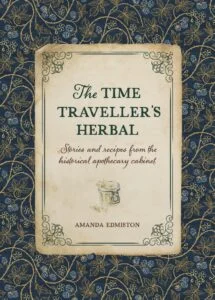
Edinburgh, Scotland – In an age where digital interfaces often replace tangible connection, a unique voice is emerging from the ancient landscapes of Scotland, urging us to step back in time. Herbal storyteller Amanda Edmiston, through her venture Botanica Fabula, invites readers on an extraordinary journey with her new book, The Time Traveller’s Herbal: Stories and recipes from the historical apothecary cabinet. More than just a collection of remedies, Edmiston’s work is a profound exploration into the intertwined worlds of history, folklore, and the enduring wisdom of plants, positioning early herbalists not as mere mystics, but as pioneers of science and custodians of traditional knowledge.
The Art of Herbal Storytelling: A Main Fact Overview
Amanda Edmiston, known for her captivating narrative style and deep connection to the natural world, is redefining how we interact with herbalism. The Time Traveller’s Herbal is an ambitious project that challenges conventional perceptions of historical healing practices. The book serves as an invitation to a "time slip," a guided immersion into bygone eras where the lines between medicine, myth, and daily life were beautifully blurred.
Edmiston’s central premise is that the herbalist, under various historical guises – be it cunning woman, wise woman, or even witch – was fundamentally an early scientist. These figures possessed an invaluable repository of traditional knowledge, accumulated over generations through keen observation, experimentation, and an intimate understanding of their local ecosystems. Far from being relegated to the realm of superstition, their practices laid foundational stones for modern pharmacology and ecology.
The book promises not only a fascinating historical account but also practical applications, weaving together stories, ancient folklore, and herbal remedies that have vitally shaped human existence. Readers are encouraged to embark on a full chronological journey through the book, but Edmiston offers a tantalising glimpse into one specific moment: a vivid transport back to 200 AD, into a world she dubs "meadow phantoms." This snapshot encapsulates the essence of her work: a sensory, imaginative, and deeply educational expedition into the past.
A Chronological Journey: From Present Inspiration to Ancient Encounters
Edmiston’s creative process is deeply rooted in her immediate surroundings. Many of her stories, and the recipes that accompany them, spring directly from the places she walks in Scotland. Her methodology involves a meditative engagement with the landscape: pausing, sitting, observing the plants, and noting the subtle changes wrought by both seasonal cycles and the passage of centuries. This deep connection to place allows her to contemplate the historical evolution of an area, the transformations it has undergone, and the rich tapestry of folklore associated with its flora.
"It is easy to be drawn into a spiral if you sit and think," Edmiston explains, "feeling the ground beneath your feet, looking at the unchanging elements, the river and the geography." This philosophy underpins the immersive experience offered by The Time Traveller’s Herbal. One of her most frequent haunts is a wild floodplain meadow nestled behind a historic castle, at the confluence of two rivers near her Scottish home. This ecologically vital site, teeming with biodiversity and history, frequently inspires her narratives.
For the purposes of this particular "time slip," Edmiston invites her audience to mentally join her in this very meadow, visualising a journey back to 200 AD. The landscape, while geographically familiar in its contours of hills and rivers, appears dramatically altered. Architectural constructs like the castle and modern paths are absent. The tree line, though present, is sculpted differently; where larch might now stand, ancient oaks dominate, and a familiar blackthorn tunnel stretches further, its ancient, gnarled forms replaced by vigorous young saplings untouched by modern pruning.
As the imaginary journey progresses, a bustling Pictish village emerges on the opposite riverbank, a testament to the vibrant ancient communities that once thrived here. Walking towards the flower-strewn field, a distinct scent pervades the air – the faint, medicinal, yet sweet and antiseptic allure of salicylates. This olfactory cue serves as a powerful bridge between the senses and history, leading the traveller directly to the source: meadowsweet.
Approaching the river’s dip, creamy clouds of meadowsweet blossoms seem to blur the bank, evoking an ethereal presence. Edmiston describes a fleeting sensation, as if an "ethereal queen was hiding behind them." This moment of vivid imagination, of perceiving "meadow phantoms," is crucial. Despite the absence of a visible figure, the experience triggers a profound connection to ancient lore, leading directly to the story of the Morrigan, the Celtic phantom queen.
Supporting Data: The Morrigan, Cu Chulainn, and the Power of Meadowsweet
The imagined encounter with the elusive queen prompts Edmiston to gather a few heads of meadowsweet (Filipendula ulmaria) for a soothing tisane. As she sips, the memory of a pivotal Celtic myth resurfaces, confirming her intuitive connection to the landscape: "The penny drops, we are in the presence of the Morrigan, phantom queen, capable of transformation, shapeshifter, one of the ethereal, rarely acknowledged, middle feminine figures in Celtic mythology."
The story unfolds around the legendary warrior Cu Chulainn, sent to Skye to master combat under the warrior maid Sgathaich. During his arduous life, marked by violence and battle, he encounters the mighty Morrigan. In one version of the tale, she appears as a beautiful young woman at a ford, offering him her love and aid in battle. When Cu Chulainn, whose heart belongs to Sgathaich’s daughter Uathach, spurns her advances, the Morrigan transforms.
Her first metamorphosis is into an eel, attempting to trip him as he crosses the water. Cu Chulainn injures her as he wrenches her off. Undeterred, she transforms again, this time into a formidable grey wolf, instigating a cattle stampede against him. He wounds her leg with his slingshot. Finally, she becomes a white heifer, leading the charge directly at him, only to be injured one last time by his spear before vanishing into the river "haar-like" – like a mist.
Weary and wounded after the battle, Cu Chulainn walks the riverbank, fearful of encountering the Bean nighe (the washerwoman of the ford, portending death) or hearing the cry of the Caointeach (a wailing woman foretelling doom). Instead, he meets an old woman milking a deer, her body bearing the very injuries he inflicted upon the eel, the wolf, and the heifer. Thirsty, he asks for a drink, and with each cup she provides, he blesses her. With each blessing, her wounds miraculously heal. After the third blessing, he finally comprehends her true identity.
As a gift, the Morrigan bestows upon him meadowsweet. While some versions suggest he regretted healing her, the enduring legacy is that Cu Chulainn carried meadowsweet on his belt from that day forward, relying on its properties – a handful of fresh blossoms or dried flower heads in a muslin bag added to a bath – to heal his wounds, reduce fevers, and temper his fiery disposition. This myth elegantly explains the Gaelic name for meadowsweet: crios Chu-chulainn, or "Cu Chulainn’s belt." It was also historically known as "bride-wort" due to its popularity as floral confetti, signifying its beauty and auspicious qualities.
The Science and Spirit of Filipendula ulmaria
Meadowsweet (Filipendula ulmaria) is far more than just a plant steeped in myth; it possesses significant medicinal properties, acknowledged across various cultures for centuries. Its distinctive scent comes from salicylates, compounds that are chemically related to acetylsalicylic acid, the active ingredient in aspirin. In fact, meadowsweet was a crucial source for the isolation of salicylic acid, which eventually led to the development of modern aspirin.
Historically, meadowsweet has been highly valued for its analgesic (pain-relieving), anti-inflammatory, and antipyretic (fever-reducing) qualities. Beyond its use in treating battle wounds and fevers, as depicted in the Cu Chulainn myth, traditional herbalists prescribed it for a range of ailments. Its gentle yet effective action made it a popular remedy for digestive complaints, particularly indigestion and heartburn, due to its ability to soothe the mucous membranes of the stomach and reduce acidity. It was also employed for conditions like rheumatism and gout, further showcasing its anti-inflammatory prowess.
From a folkloric and spiritual perspective, meadowsweet held a place of reverence. Its sweet, almond-like fragrance was believed to be pleasing to deities and spirits, making it a popular strewing herb in homes and churches to purify the air and invoke blessings. Its connection to water, often found growing in damp meadows and by riverbanks, further linked it to liminal spaces and figures like the Morrigan, who often appeared at watery thresholds. The plant’s ability to transform discomfort into relief mirrored the shapeshifting nature of the deities it was associated with, embodying both fierce power and gentle healing.
Reclaiming Ancient Remedies: Practical Applications
Edmiston’s work in The Time Traveller’s Herbal is not merely an academic exercise; it bridges the gap between ancient wisdom and contemporary living through practical applications. Drawing inspiration from Cu Chulainn’s use of meadowsweet, she provides accessible recipes that allow readers to experience these historical remedies firsthand.
Soothing Bath:
- Purpose: To help reduce fevers and soothe irritated or inflamed skin.
- Ingredients: Three or four fresh or dried meadowsweet flower heads, enclosed in a muslin (or similar porous) bag. Oats can optionally be added for extra skin-soothing benefits.
- Method: Add the bag to the bath as the water runs, allowing the botanical essences to infuse the water.
Meadowsweet Tisane:
- Purpose: A valuable remedy for mild pain relief and soothing indigestion.
- Ingredients: A few heads of meadowsweet (fresh or dried).
- Method: Steep the meadowsweet in freshly boiled water for three to four minutes to create a herbal tea.
A Cordial for a Phantom Queen (to ease tempers, fevers, and heartburn):
- Ingredients:
- 30 heads of meadowsweet blossoms (in full flower)
- Juice of one unwaxed, freshly squeezed lemon and a little grated rind
- 300 grams of blossom honey (locally produced honey is recommended for additional benefits)
- 1 litre of filtered water
- Method:
- Bring the water to a boil. Dissolve half the honey into the boiling water.
- Once the honey has dispersed, add the meadowsweet and lemon juice/rind. Simmer for three minutes.
- Remove from heat and allow to rest overnight (or for at least one to two hours) to ensure a thorough infusion of the meadowsweet.
- Strain the mixture, then add the remaining honey.
- Return to the boil and simmer for another five minutes or until the mixture reduces to a cordial-like consistency. Additional honey can be added to adjust sweetness and thickness.
- Bottle the cordial in sterile glass jars or Kilner-style bottles. When kept cool, it lasts for up to three months.
- Serving Suggestion: Mix with still or sparkling water, or even a sparkling wine, to enjoy its cooling and soothing effects.
These recipes represent not just culinary or medicinal preparations, but a tangible connection to the past, allowing individuals to incorporate ancient wisdom into modern wellness practices. They encourage a mindful engagement with nature and its historical applications, fostering a deeper appreciation for the ingenuity of our ancestors.
The Resonance of Heritage: Official Responses and Expert Views
While The Time Traveller’s Herbal does not elicit "official responses" from government bodies, its publication by Quarto Group and its widespread availability in "all good bookshops" signifies a robust endorsement from the publishing industry. More importantly, the book represents a significant contribution to the growing field of ethnobotany and the broader movement to preserve and popularize traditional ecological knowledge.
Experts in folklore, history, and botany recognize the critical importance of work like Edmiston’s. Her approach, blending rigorous historical research with engaging storytelling and practical applications, makes complex subjects accessible to a wide audience. In an era where disconnection from natural environments is prevalent, initiatives that re-establish these links are invaluable. Edmiston’s work acts as an informal "official response" to a societal need for reconnection—a call to remember the intricate relationship between humanity and the plant world.
Her unique methodology of "herbal storytelling" also serves as a pedagogical tool, demonstrating how history and science can be conveyed through narrative. By presenting herbalists as "early pioneers of science," she subtly re-frames historical figures often marginalized or demonized, offering a more nuanced and respectful portrayal of their contributions to human health and knowledge.
It is crucial to note the standard disclaimer that accompanies such traditional remedies. FolkloreThursday, the original publisher of this excerpt, explicitly states: "FolkloreThursday takes no responsibility for folklore practices listed on the website, and information is provided for entertainment only. FolkloreThursday does not offer medical advice, and recommends that you consult a medical professional before trying out any remedies or practices listed on the website." This "official response" on safety is paramount, underscoring the distinction between historical knowledge, entertainment, and contemporary medical practice. Edmiston’s work, while deeply informative and inspiring, is presented as an exploration of heritage, not a substitute for professional medical consultation.
Implications: Bridging Eras and Embracing Nature
The Time Traveller’s Herbal carries profound implications for how we perceive history, nature, and our place within them. Firstly, it champions the invaluable role of traditional ecological knowledge. In a world increasingly concerned with sustainability and biodiversity, understanding how past generations interacted with and depended on their local flora offers crucial insights for present and future challenges. By highlighting the wisdom of "cunning women" and "wise women," Edmiston reminds us that sophisticated scientific understanding existed long before formalized institutions, often held by those at the margins of power.
Secondly, the book encourages a deeper, more sensory engagement with the natural world. Edmiston’s practice of pausing, observing, and connecting with the spirit of a place serves as a powerful model. It invites readers to look beyond the superficial, to perceive the layers of history and folklore embedded in every landscape. This mindful approach can foster a greater sense of stewardship and appreciation for the environment.
Finally, The Time Traveller’s Herbal underscores the enduring power of storytelling. Myths and legends, far from being mere fanciful tales, are vehicles for transmitting cultural values, historical knowledge, and practical wisdom across generations. By weaving together the medicinal properties of plants with the rich narratives of Celtic mythology, Edmiston demonstrates how these ancient stories remain relevant, offering comfort, guidance, and a sense of continuity in a rapidly changing world.
In essence, Amanda Edmiston’s work is an urgent invitation to step into the "spiral of history" not just to observe, but to participate. It challenges us to reconsider the boundaries between science and folklore, past and present, urging us to carry forward the torch of ancient wisdom, perhaps with an armful of meadowsweet, ready to steep it in water, add honey, and create a cordial fit for a queen, or indeed, for ourselves. Her journey through time is a reminder that the remedies for our modern ailments, both physical and spiritual, might just be found by looking back, and listening closely to the whispers of the earth and its forgotten stories.

Leave a Comment