
Unearthing the Mycelial Network of Myth: Zoe Gilbert on Herne the Hunter and the Enduring Power of Folklore
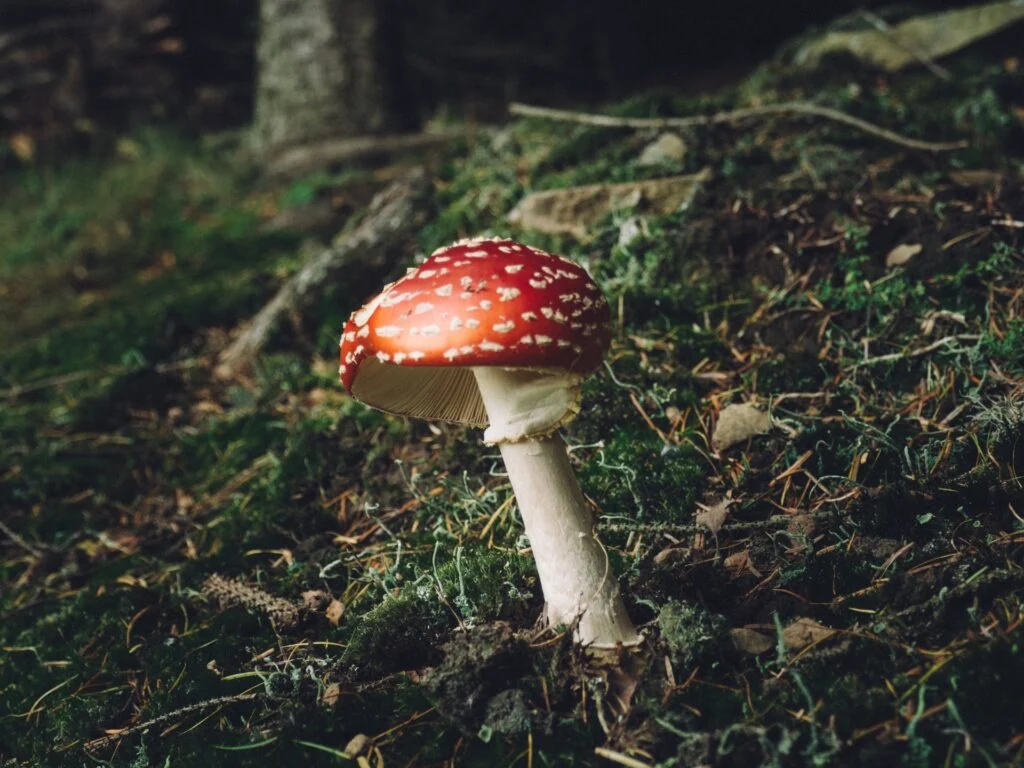
London, UK – Folklore, far from being a collection of static, ancient tales, constitutes a vast, living web that subtly underpins our cultures and societies. Much like the unseen mycelial network of fungi beneath a forest floor, these narratives form an intricate system of connection, feeding and informing the stories and beliefs that emerge above the surface, quietly spreading and thriving across time and geography. This profound analogy forms the bedrock of author Zoe Gilbert’s latest exploration into the depths of British myth, particularly her research for the novel Mischief Acts, which delves into the enigmatic figure of Herne the Hunter.
Gilbert’s work highlights how these folkloric connections, often unnoticed by casual observers, are the very roots of our shared cultural commons. Just as an English oak and a sessile oak might stand distinct yet be linked by a subterranean fungal network, so too are our diverse stories and songs bound by a hidden tapestry of kinship. For those willing to dig beneath the surface, the thrill of tracing these folkloric threads offers an unparalleled insight into the enduring power of human imagination and collective memory.
The Mycelial Metaphor: Unveiling Folklore’s Hidden Connections
At the heart of Gilbert’s understanding of folklore lies the compelling metaphor of the mycelial network. In the natural world, mycorrhizal fungi form symbiotic relationships with plants, extending vast underground networks that connect trees and facilitate the exchange of nutrients, water, and even warning signals. This subterranean "wood wide web" is largely invisible, yet it is fundamental to the health and resilience of the entire forest ecosystem.
Gilbert masterfully extends this biological concept to the realm of cultural narratives. She posits that folklore operates in a remarkably similar fashion: seemingly disparate tales, characters, and motifs are, in fact, interconnected through a sprawling, ancient, and constantly evolving network. These hidden threads link stories across different regions, historical periods, and even disparate cultures, ensuring their survival, adaptation, and continued relevance. When we encounter a myth or a folk tale, we are often only seeing the "fruiting body" – the visible mushroom – while the true, extensive organism of interconnected lore lies beneath, quietly sustaining and informing the surface manifestations.
For researchers and writers like Gilbert, identifying and following these invisible threads is not merely an academic exercise; it is an exhilarating journey of discovery. It reveals how seemingly unique narratives often share common ancestors, recurring archetypes, and thematic kinships, demonstrating the universality of certain human experiences and imaginative constructs. This perspective transforms folklore from a static archive into a dynamic, living entity, constantly regenerating and adapting.
Herne the Hunter: A Phantom’s Enduring Legacy
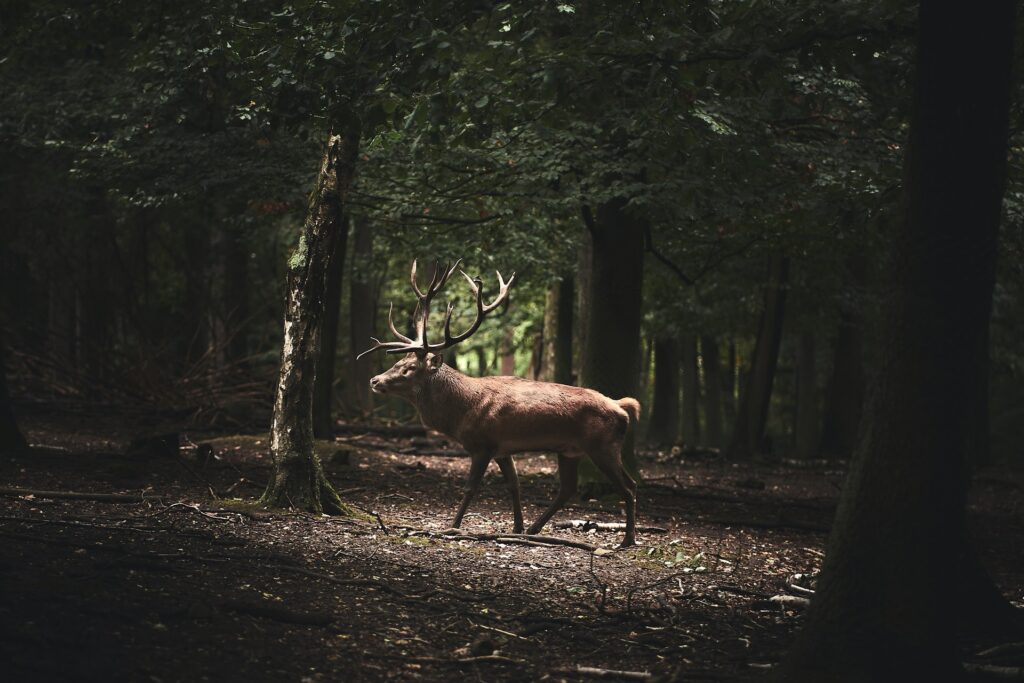
Gilbert’s research for Mischief Acts centred on Herne the Hunter, a character she describes as "mushroomy" – often lurking at the periphery of folklore, yet possessing an undeniable presence for those who seek him. His elusive nature makes him a prime example of a figure deeply embedded within the mycelial network, influencing numerous narratives without always being the central focus.
Chronology of an Enigmatic Figure: From Shakespeare to Contemporary Fiction
Herne’s journey through literature and popular culture exemplifies the dynamic evolution of folkloric figures.
- Elizabethan Origins: Herne’s most famous, perhaps earliest, explicit literary appearance is in William Shakespeare’s The Merry Wives of Windsor. Here, he is depicted as a ghostly hunter with horns, haunting Windsor Forest, cursed to roam by night. This foundational portrayal established his connection to the royal hunting grounds and imbued him with a spectral, slightly menacing aura.
- Victorian Romanticism: Nearly two and a half centuries later, William Harrison Ainsworth’s 1842 novel, Windsor Castle, provided Herne with a more elaborate and tragic origin story. Ainsworth reimagined him as a royal huntsman who, disgraced and betrayed, hangs himself from an oak tree in Windsor Forest and returns as a spectral, antlered hunter, leading a ghostly Wild Hunt. This romanticized, more detailed narrative cemented Herne’s identity and amplified his mythological gravitas, transforming him from a minor ghost into a significant figure of English folklore.
- 20th Century Reinterpretations: Herne continued to "pop up" in various forms, often in works of fantasy and children’s literature, demonstrating his adaptability.
- In John Masefield’s classic The Box of Delights (1935), Herne appears as a wise, ancient mentor, guiding the young protagonist Kay Harker through magical adventures. This portrayal shifts Herne from a purely menacing spirit to a benevolent, albeit powerful, guardian of ancient wisdom.
- Susan Cooper’s acclaimed The Dark is Rising (1973) series, a cornerstone of British children’s fantasy, presents a more ominous Herne. With "owl eyes," he menaces the young hero Will Stanton, embodying the ancient, untamed forces of nature and darkness that stand against the light.
- Contemporary Relevance: More recently, Nick Hayes’ The Book of Trespass (2020) references Herne and his legendary oak, connecting the ancient figure to modern debates about land access and environmentalism. The author contemplates breaking the law to touch Herne’s Oak, highlighting the enduring symbolic power of the myth in relation to contemporary issues of ownership and wildness.
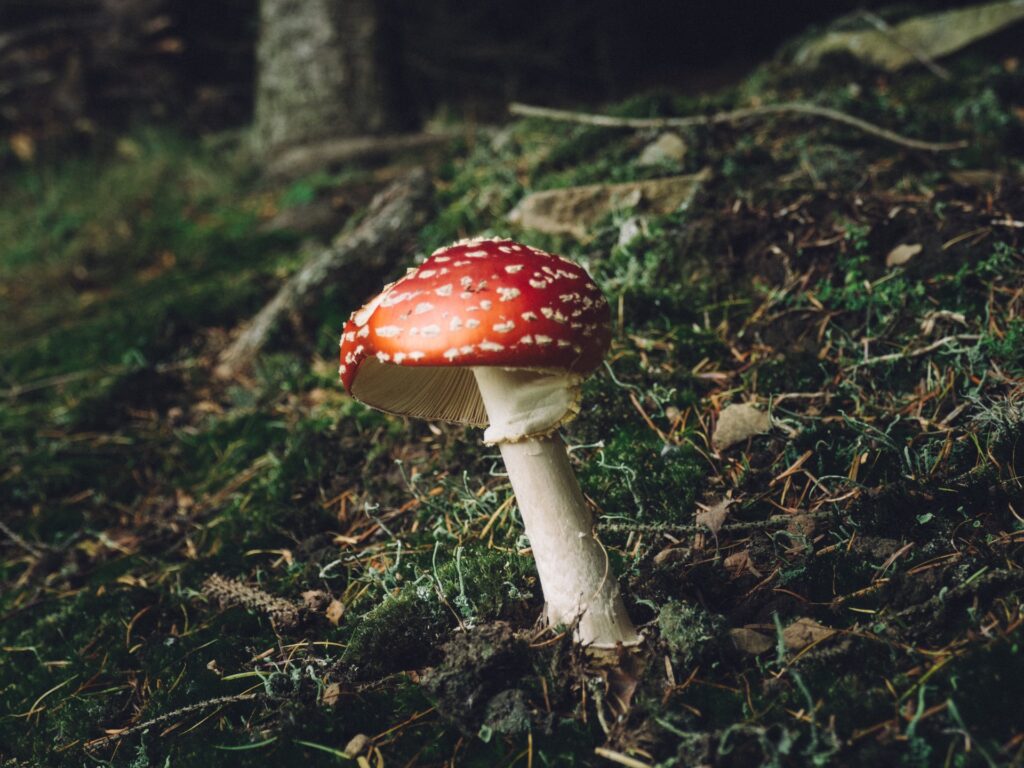
Gilbert aptly likens Herne to a fly agaric mushroom: "arresting when spotted, gorgeous and dangerous, courting the human footways but rarely sought to fill a whole foraging basket." This description perfectly encapsulates his intriguing, powerful, yet often peripheral role in the grander tapestry of folklore.
The Proliferating Network: Kinships and Counterparts
As Gilbert delved deeper into Herne’s story, her initial expectations of finding a simple connection to Odin – both figures hanged from sacred trees and leaders of the Wild Hunt – quickly expanded. The mycelial network of folklore proliferated, revealing an astonishing array of interweavings around and through Herne, demonstrating that no single mythic figure exists in isolation.
Expanding the Wild Hunt and Beyond
Her research unearthed not just dozens of Wild Hunt leaders across Europe, from the legendary King Herla of Herefordshire to the Welsh psychopomp Gwynn ap Nudd, but a multitude of characters who had carved out their own intricate "ecosystems of lore." These figures, while distinct, shared undeniable thematic and archetypal kinships with Herne:
- Harlequin (Arlecchino): This iconic commedia dell’arte character, with his diamond-patterned finery, emerged from the shadows. Harlequin, a trickster and often a mischievous servant, shares Herne’s transgressive spirit and connection to the carnivalesque, illustrating how the "wildness" can manifest not just in the forest but on the stage.
- The Erl-King: A shadowy, often malevolent, figure from German folklore, the Erl-King lures children to their deaths in the forest, embodying the seductive yet dangerous aspects of untamed nature, much like Herne.
- The Green Man: This ancient, leafy-faced motif, found in architectural carvings and across European art, represents regeneration, the spirit of nature, and the cyclical nature of life and death, echoing Herne’s deep connection to the woodland.
- Psychopomps and Cursed Ghosts: These figures, guiding souls to the afterlife or eternally bound to earthly realms, align with Herne’s spectral nature and leadership of the Wild Hunt – a procession often associated with collecting the dead.
- Entertainers, Mischief-Makers, Spirits of the Wood and Bacchanal: This broader category encompasses figures like Oberon, the fairy king; Robin Goodfellow (Puck), the quintessential trickster sprite; the Woodwose (wild man of the woods); and the Lord of Misrule, who presides over festive transgression. These characters, emerging from diverse cultural contexts (Fairyland, Tudor history, Roman mythology), collectively represent the universal human need for wildness, chaos, and a temporary inversion of social order. They are all part of the "familia herlechini" – a widespread but unruly family of archetypes.
The Elusive Central Figure: Cernunnos and the Horned God
Gilbert considered whether the ultimate horned god, Cernunnos – a deity with antlers or horns revered in Celtic mythology and contemporary Pagan and Wiccan practices – might be the central nexus of this "wood-wide web," with all mycelial threads knotted about his horns. However, such a singular, simple solution felt incompatible with the sprawling, rascally, and diverse nature of Herne and his counterparts. The network’s strength lies not in a single origin point but in its multitudinous forms and territories.
The sheer range of expression across space and time struck Gilbert: King Herla riding through the Herefordshire sky, Harlequin captivating audiences as Arlecchino in Italy. These manifestations of wildness and mischief seemed to erupt precisely "wherever and whenever people needed it," reflecting universal themes of life, death, freedom, lust, and transgression. The network is not a hierarchy leading to one root but a rhizomatic sprawl, with countless entry points and interconnected nodes.
Folklore’s Dynamic Nature: Place, Purpose, and Adaptation
A key tension in folklore studies, and one that Gilbert grapples with, is the interplay between the deep rooting of stories in specific places and the universal human need for the archetypal forces they represent. While local lore can powerfully reconnect individuals with their immediate landscapes, figures like Herne embody a more universal craving for wildness, transgression, and untamed spirit, both in the physical world and within the human soul.
The Author’s Intervention: Transplanting Herne
It was this understanding of folklore’s dynamic adaptability that gave Gilbert "permission for another bit of digging." She took her metaphorical trowel and transplanted Herne from his traditional haunt of Windsor Forest to the Great North Wood, a fragmented ancient forest scattered across South London, with notable remnants like Sydenham & Dulwich Woods.
- The Genius Loci of the Great North Wood: Gilbert was living opposite this "slender, seductive strip of woodland" when she began writing Mischief Acts. She was acutely aware of its own rich, if less celebrated, history and genius loci (protective spirit). From charcoal burners and famous gypsies of old to eccentric hermits and even a contemporary resident named Solomon who received mail via a tree, the wood had always been home to those living on the fringes, embodying a spirit of wildness within an encroaching urban landscape.
- A Modern Invocation: Gilbert’s decision to ask Herne to defend this urban wood, as if it were his own, was a bold act of folkloric re-enchantment. It wasn’t strange, she concluded, because Herne, as the "wildman, the spirit of the forest, the hooligan and the trickster," represents an archetypal force that emerges "wherever civilisation lapses, as it does where the town gives way to the wood." This act highlights the inherent flexibility of folklore, demonstrating that powerful myths can be re-contextualized to address contemporary needs and anxieties, offering a sense of enchantment and guardianship even in unexpected places.
The Symbiotic Relationship: Fiction, Folklore, and Renewal
Scholarly Perspectives on Folklore’s Evolution
While the concept of "official responses" typically refers to institutional statements, in the context of folklore and literature, it can be understood as the academic and critical consensus on how these domains interact. Folklore scholars widely acknowledge that traditional tales are not static relics but living, evolving narratives. Literary fiction plays a crucial, symbiotic role in this ongoing evolution. Authors, by engaging with and reinterpreting folkloric motifs, actively contribute to their perpetuation, ensuring their relevance for new generations. This process is not a corruption of tradition but a vital mechanism for its survival and adaptation.
Critics and academics often celebrate works like Gilbert’s Mischief Acts for their capacity to breathe new life into ancient myths, demonstrating how contemporary narratives can draw from the deep wellspring of folklore while simultaneously enriching and expanding it. This continuous dialogue between tradition and innovation is what keeps the "mycelial network" of human storytelling vibrant and boundless. The "official response" from the literary and folkloric community, therefore, is one of affirmation for this dynamic interchange.
The Never-Ending Web of Stories
Fiction has always been a powerful conduit for extending and morphing folklore, just as folklore consistently provides fertile ground for new fictional narratives. This reciprocal relationship ensures that the folkloric web, like its natural counterpart, will likely never reveal its true edges. Near the familiar fly agaric of Herne, other, less prominent "mushrooms" – the velvet shank, the amethyst deceiver – wait quietly. Beech mast sprouts into new saplings, and wood anemones expand their territory. The forest of stories, nurtured by the hidden mycelial network of folklore, forever renews itself in a beautiful, unending symbiosis.
Gilbert’s work not only offers a captivating read but also serves as a potent reminder of the invisible threads that connect us all through shared stories, proving that the wildest, most ancient spirits can still find a home in our modern world, protecting and enchanting the spaces we inhabit.
About the Author and Her Works
Zoe Gilbert is an acclaimed author celebrated for her distinctive voice and deep engagement with folklore. Her novels intricately weave ancient myths into contemporary narratives, exploring themes of wildness, identity, and the enduring power of storytelling.
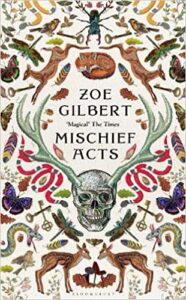
Mischief Acts by Zoe Gilbert

- Synopsis: Herne the Hunter, a shapeshifting spirit of the forest and leader of the wild hunt, hurtles through centuries, pursued by his creator. He adopts myriad guises, appearing at candlelit Twelfth Night revels, the spectacular burning of the Crystal Palace, and an acid-laced Sixties party. Wherever Herne goes, transgression, debauchery, and enchantment invariably follow. As urban sprawl and gentrification encroach upon the ancient forests, and the world teeters on the brink of crisis, Herne must find a way to survive—or exact his revenge.
- Critical Acclaim: With its intoxicating, chameleonic voice and boundless imagination, Mischief Acts reimagines British folklore as never before: dangerous, sexy, troubling, daring, and savage. It is an exhilarating race through time and space, seamlessly weaving together the ancient and the contemporary.
- Mischief Acts is available from Bloomsbury books.
Folk by Zoe Gilbert
- Synopsis: Set on the remote island village of Neverness, a world seemingly removed from our time, Folk immerses readers in a landscape rich with the scent of gorse and the salty tang of the sea. The villagers’ lives are intrinsically linked to nature and its enchantments. Characters like Verlyn Webbe, born with a wing for an arm, defy past shame; Plum is snatched by a water bull; little Crab Skerry navigates a gorse-maze; and Madden sleepwalks through violent storms, haunted by horses and her father’s wishes.
- Literary Impact: As the tales of this island community interweave across a generation, their earthy desires, resentments, idle gossip, and painful losses forge a staggeringly original world. Crackling with echoes of ancient folklore, yet entirely unique, Zoe Gilbert’s Folk is a dark, beautiful, and intoxicating debut.
- Folk is available from Bloomsbury books and as a special edition with sprayed edges from Goldsboro books.

Leave a Comment