
Nat Meade’s "Franklin" at Hesse Flatow: A Profound Exploration of Legacy, Loss, and Renewal
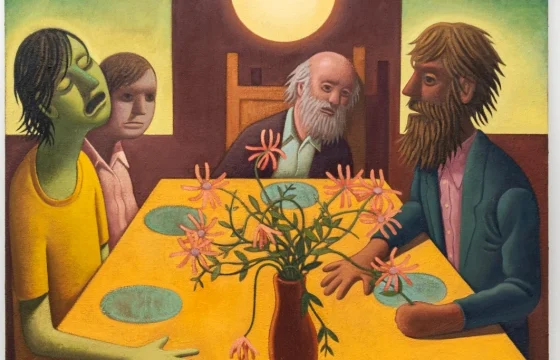
New York, NY – Hesse Flatow gallery is currently hosting "Franklin," a compelling solo exhibition by artist Nat Meade, which marks his third presentation with the esteemed gallery. Running through April 18, 2026, the exhibition showcases a powerful collection of paintings and works on paper that delve into the complex emotional landscape of human experience. Meade’s distinctive figurative works act as a mirror to his personal journey as a father, son, partner, and academic, transforming everyday struggles and triumphs into allegorical narratives that resonate deeply with universal themes of vulnerability, mortality, and the enduring hope for reconciliation and renewal.
The Genesis of "Franklin": A Dialogue with Legacy
"Franklin" emerges from a crucible of personal reflection for Nat Meade. The recent passing of his father has cast a long shadow, prompting a profound reevaluation of his own role as a parent and the intricate tapestry of intergenerational relationships. This deeply personal impetus fuels the exhibition’s thematic core, where Meade navigates the often-turbulent waters of grief, inherited trauma, and the evolving dynamics of family.
Meade’s artistic practice is characterized by its allegorical distance. Rather than creating literal portraits, he crafts protagonists that embody timeless archetypes, allowing viewers to project their own experiences onto these figures. This approach provides a fertile ground for exploring profound personal challenges through a lens that can be simultaneously absurd, somber, and darkly humorous. The exhibition’s title, "Franklin," offers a subtle yet potent wink to the unsettling patriarchal dynamics portrayed in the 1974 horror film The Texas Chainsaw Massacre. This allusion is not an endorsement of the film’s violence, but rather an engagement with the inner turmoil of confronting one’s own antagonistic impulses and the societal forces that can shape them. Meade masterfully portrays characters grappling with these internal conflicts, visualizing their sublimation or their eventual, sometimes reluctant, acceptance of their place.
Visualizing the Unseen: Themes of Vulnerability and Mortality
The works in "Franklin" unflinchingly confront themes of vulnerability, pain, and mortality. Meade’s figures are often depicted in states of profound introspection or existential searching. In Poise, a pair of dangling legs suspended from a cloud prompts a contemplation of ascension or descent, blurring the lines between physical and spiritual transitions, and perhaps suggesting the cyclical nature of birth and death. This ambiguity is a hallmark of Meade’s style, inviting viewers to engage with the inherent uncertainties of life.
The presence of "ghostly specters" hovering over certain individuals serves as a poignant metaphor for inherited trauma and the arduous process of release. These spectral presences evoke the classic cartoon trope of a soul detaching from a dying body, but Meade imbues this imagery with a complex emotional charge, leaving the viewer to ponder whether the detached spirit looks back with happiness or regret. This visual language speaks to the enduring impact of past experiences, both personal and ancestral, on the present.
The exhibition also features symbolic imagery that draws parallels to enduring myths and artistic traditions. A vulture gnawing at a corpse evokes the eternal punishment of Prometheus, a timeless representation of suffering and consequence. Similarly, a bearded figure on his hands and knees recalls William Blake’s depiction of Nebuchadnezzar, a king brought low by his hubris and lust for power. These references underscore Meade’s engagement with the grand narratives of human struggle and the consequences of unchecked ambition or deep-seated pain.
The Dawn of Hope: Youth, Reconciliation, and Renewal
In stark contrast to the weightier themes explored through the adult figures, Meade introduces younger characters who embody a palpable sense of hope, acceptance, and renewal. These younger figures represent a departure from the often-fraught dynamics of the past, charting a course towards a more harmonious future.
A particularly evocative image depicts a young boy confidently steering a boat, a radiant torch held aloft. This figure, unburdened by societal or familial pressures, symbolizes self-discovery and the pursuit of individual destiny. The scene exudes a sense of childlike wonder and unbridled adventure. Another powerful work showcases an adolescent’s ankle-deep exploration of a secluded cove. The figure’s gentle touch of the seabed, adorned with starfish, anemones, and mussels, speaks to a harmonious connection with nature and a quiet appreciation for the wonders of the world.
In a related piece, the intergenerational bond is explored with tender nuance. The legs of a father and son are depicted side-by-side in a shallow pool, with the father’s hand gently guiding the son. This image signifies a turning point, a conscious effort to foster connection and support. This shift in focus is significant, as Meade has previously depicted his figures battling or being overwhelmed by the forces of nature, such as turbulent winds and crashing waves. The embrace of "calmer seas" in "Franklin" signals a profound evolution in his artistic narrative.
Meade’s engagement with these themes suggests a recognition of the necessity to acknowledge and process one’s "rocky histories" in order to foster healing and liberate future generations from similar burdens. Despite the palpable sense of weight and introspection that pervades many of his works, Meade ultimately offers a powerful reminder of the "stubborn resilience of human nature," emphasizing that progress, even in the face of profound challenges, is indeed attainable.
Artistic Context and Critical Reception
Nat Meade’s consistent exploration of the human condition through figurative painting has garnered significant attention within the contemporary art world. His ability to imbue his canvases with both psychological depth and universal symbolism has made him a notable voice in current artistic discourse. "Franklin" builds upon his previous exhibitions, demonstrating a maturation of his themes and a deepening of his artistic inquiry.
The critical reception of Meade’s work often highlights his masterful use of line, color, and composition to evoke complex emotional states. Art critics have praised his ability to create figures that are at once familiar and enigmatic, drawing viewers into their narratives and prompting introspection. The allegorical nature of his paintings allows for multiple interpretations, ensuring that each viewer can find a personal connection to the themes presented.
Hesse Flatow, known for its commitment to showcasing emerging and established artists who push the boundaries of contemporary art, provides an ideal platform for "Franklin." The gallery’s space allows the works to breathe and resonate, enabling viewers to fully immerse themselves in Meade’s evocative world. The extended exhibition period through April 18, 2026, offers ample opportunity for the public to experience this significant body of work.
Broader Implications and Future Directions
The exhibition "Franklin" transcends a simple display of paintings; it offers a profound meditation on the enduring power of family, the inevitable cycles of life and death, and the potential for healing and growth. Meade’s exploration of inherited trauma and the subsequent journey towards reconciliation is particularly relevant in today’s world, where conversations about legacy and intergenerational impact are increasingly prominent.
The exhibition’s subtle yet potent commentary on patriarchal structures, as alluded to by the title, also invites viewers to consider the societal forces that shape our understanding of masculinity, power, and familial roles. By presenting characters who confront and sublimate antagonistic impulses, Meade suggests a pathway towards a more evolved and compassionate understanding of these dynamics.
Looking ahead, Meade’s continued exploration of these deeply human themes promises to yield further compelling artistic investigations. His ability to balance profound introspection with a message of enduring hope positions him as an artist whose work will undoubtedly continue to captivate and resonate with audiences for years to come. "Franklin" stands as a testament to his artistic vision and his unwavering commitment to exploring the complexities of the human spirit. The exhibition serves as a poignant reminder that even in the face of loss and struggle, the capacity for renewal and the promise of a brighter future remain indelible aspects of our shared human experience.




Leave a Comment