"Orchid Rain on the Underground": Chris "Daze" Ellis Celebrates the Enduring Spirit of New York City at PPOW Gallery
New York, NY – [Date of Publication] – PPOW Gallery is currently hosting "Orchid Rain on the Underground," the highly anticipated third solo exhibition by acclaimed artist Chris "Daze" Ellis. Running through April 25, 2026, this immersive exhibition delves into the vibrant legacy of New York City’s 1970s and 80s graffiti movement, while showcasing Daze’s evolution into a meticulously skilled contemporary artist. Featuring a compelling new series of paintings, a thought-provoking multimedia installation, and a striking site-specific mural, the exhibition serves as a powerful testament to the enduring influence of the city’s foundational creative spirit.
Through his masterful fusion of raw graffiti energy and refined artistic technique, honed over five decades, Daze not only revives the spirit of a bygone era but also underscores its profound and persistent impact on the creative landscape of New York City today. The exhibition is a deep dive into the artist’s personal history, intertwined with the cultural and social fabric of a city that continues to inspire and be shaped by its artistic pioneers.
The Genesis of a Graffiti Icon: From Brooklyn to the Subway Lines
Born in Brooklyn in 1962, Christopher Ellis, known to the art world as Daze, found his artistic calling amidst the burgeoning graffiti scene of the mid-1970s. His formative years at the High School of Art and Design provided him with a crucial introduction to the pioneers of the movement, including the legendary Blade, Lee Quiñones, and PHASE 2. These artists, whose work adorned the city’s subway cars and walls, served as early muses, igniting a passion for visual expression that would define Daze’s career.
As Daze began to carve out his own artistic identity, he became an integral part of the city’s pulsating nightlife. His frequent haunts included the now-legendary social and artistic hubs of the era: the Lit Lounge in the East Village, Danceteria on West 21st Street, and the Mudd Club in Tribeca. These iconic establishments were more than just nightlife venues; they were vibrant crucibles of artistic experimentation, performance art, and cultural exchange. They served as fertile ground for social interaction and creative cross-pollination, profoundly influencing the nascent stages of Daze’s artistic practice. It was within these dynamic environments that the raw energy of the streets began to coalesce with a more deliberate studio-based approach.
By the early 1980s, Daze’s artistic trajectory began to shift. While his roots were firmly planted in the exhilarating, often illicit, act of tagging subway cars, he increasingly transitioned towards developing a more formal studio practice. This evolution allowed him to encapsulate the potent ethos of New York City within a more controlled and enduring artistic framework. He began to translate the ephemeral nature of street art into tangible canvases and installations, demonstrating a commitment to preserving and reinterpreting the urban narrative. This period marked a critical juncture, where the spontaneity of the street met the discipline of the studio, setting the stage for the sophisticated body of work he would produce in the decades to come.
A Tapestry of Urban Realism and Abstract Expressionism: Honoring the City’s Soul
"Orchid Rain on the Underground" masterfully weaves together diverse artistic influences, creating a rich dialogue between the gritty reality of New York City and the boundless possibilities of abstract expression. Daze’s deep admiration for early 20th-century urban realist artists, such as John Sloan of the Ashcan School and Reginald Marsh of the WPA era, is palpable throughout the exhibition. These artists, who meticulously documented the everyday lives and urban landscapes of New York, provided Daze with a foundational understanding of how to capture the city’s essence. His works pay homage to the streets and subway systems as vital arteries of his creative journey, recognizing them as spaces of profound artistic evolution.
Simultaneously, Daze draws inspiration from the lyrical abstraction of masters like Joan Mitchell and Willem De Kooning. This influence is evident in his bold, gestural application of acrylic and spray paint, which evokes a sense of movement and raw emotion. These energetic strokes are masterfully juxtaposed with the detailed, almost photographic renderings of subway car interiors, dimly lit tunnels, and bustling stations. This duality creates a dynamic tension within his canvases, mirroring the city’s own complex character – a place of both chaotic energy and intricate detail.
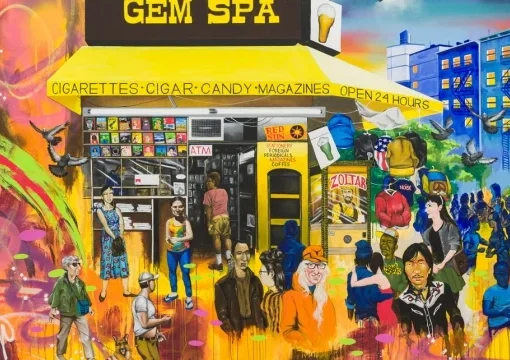
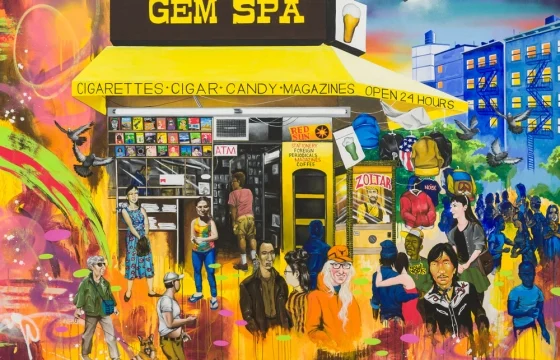
A standout piece in the exhibition, "Gem Spa In the 80s" (2025), exemplifies this artistic synthesis. Daze meticulously recreates the iconic Gem Spa, the beloved newspaper stand and candy store that once graced the corner of St. Mark’s Place and Second Avenue. This establishment was far more than a simple storefront; it was a cultural nexus, a meeting point for the city’s diverse subcultures and a revered locale mentioned by literary giants like Jack Kerouac and Allen Ginsberg, who famously dubbed it a "nerve center" of the city. In this vibrant canvas, Daze populates the scene with figures that are integral to his personal and artistic history. Prominently featured in the foreground are critic and curator Carlo McCormick and artist Martin Wong, their presence underscoring the interconnectedness of the art world and the communities that shaped it.
Beyond the specific landmarks, Daze’s paintings often feature a recurring motif of technicolor floral arrangements erupting from urban decay. These striking compositions, where vibrant orchids and local flora from his upstate New York home bloom amidst heaps of rubble, offer a profound commentary on resilience, optimism, and the inherent beauty that can emerge from adversity. These floral elements serve as poignant memorials to what has been lost – the physical spaces, the cultural touchstones, the individuals – while simultaneously acting as hopeful testaments to the enduring creativity and beauty that continue to flourish in unexpected corners of the city.
Immersive Environments: Stepping into Daze’s World
"Orchid Rain on the Underground" transcends the traditional gallery experience by offering visitors an opportunity to step directly into the artist’s creative universe. A significant element of the exhibition is a breathtaking site-specific mural that transforms a gallery hallway into a visceral extension of Daze’s artistic vision. This mural, typically an element reserved for outdoor spaces, is brought indoors, enveloping viewers and guiding them towards the exhibition’s culminating experience.
The final room of the gallery has been meticulously transformed into a multimedia installation designed to transport visitors back to the artist’s formative years. This immersive environment features a pulsating light-up dance floor and a shimmering disco ball, evoking the vibrant nightlife that fueled Daze’s early career. Authentic subway car seats are strategically placed, further grounding the experience in the urban landscape that has so profoundly shaped his art. The sonic landscape of this space is equally crucial, featuring a curated track that seamlessly fuses house, disco, hip-hop, and club music – the very genres that defined the soundtrack of Daze’s youth.
This multifaceted installation is not merely a visual or auditory spectacle; it is a deliberate evocation of the freedom, spontaneity, and boundless creative inspiration that characterized the settings of Daze’s upbringing. It underscores the vital importance of these environments to his personal and artistic development, demonstrating how the energy of the dance floor and the rhythm of the subway coalesced into a singular artistic voice. By integrating elements from throughout his extensive career, "Orchid Rain on the Underground" offers a comprehensive portrait of Daze’s ongoing exploration of New York City’s daily life and a heartfelt tribute to the individuals and places that contribute to its indomitable cultural heartbeat.
The Enduring Legacy of the Urban Canvas
Chris "Daze" Ellis’s exhibition at PPOW Gallery is more than just a retrospective; it is a vibrant declaration of the enduring power of New York City as a muse and a testament to the lasting impact of the graffiti movement. In an era where urban landscapes are constantly evolving and cultural narratives shift rapidly, Daze’s work serves as a crucial anchor, reminding us of the foundational elements that have shaped contemporary art and culture.
The exhibition masterfully bridges the gap between the raw, rebellious spirit of 1970s and 80s graffiti and the sophisticated, nuanced practice of a seasoned contemporary artist. Daze’s ability to translate the ephemeral energy of the streets into enduring works of art is a testament to his skill and his deep connection to the city. By revisiting the iconic locations, the vibrant subcultures, and the personal relationships that defined his artistic genesis, Daze not only honors his past but also illuminates the continuous thread of creativity that runs through New York City.
"Orchid Rain on the Underground" is a powerful reminder that the spirit of innovation and artistic expression, born on the subway lines and nurtured in the vibrant nightlife of a bygone era, continues to thrive. Daze’s meticulous technique, his thoughtful engagement with urban realism and abstract expressionism, and his immersive installations invite viewers to experience the multifaceted soul of New York City through the eyes of an artist who has not only witnessed its transformation but has actively shaped its artistic narrative. The exhibition stands as a compelling affirmation of the profound influence of urban environments and the indelible mark left by those who dared to paint their stories on the city’s canvas.