
The Marathon King: Shulgi of Ur’s Epic 200-Mile Run and its Enduring Legacy
Ancient Sumerian King Shulgi Immortalizes Unprecedented Athletic Feat Through Propaganda and Poetic Artistry
Main Facts
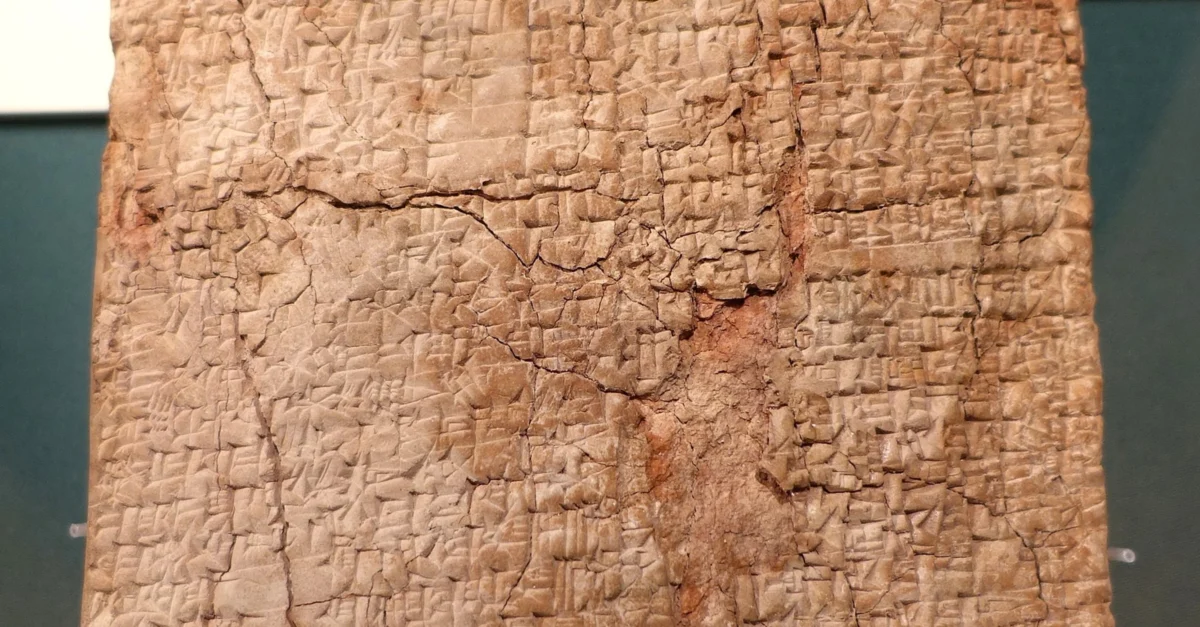
In a remarkable testament to ancient ambition, athletic prowess, and sophisticated public relations, King Shulgi of Ur, who reigned from approximately 2094 to 2046 BCE, undertook an extraordinary feat: a 200-mile (321.8 km) run in a single day. This unparalleled achievement was not merely a personal challenge but a meticulously orchestrated act of statecraft, designed to distinguish his reign and secure his legacy for millennia. The epic journey, which saw the Sumerian monarch traverse the vast distance between the sacred cities of Nippur and Ur to officiate at religious festivals on the same day, was immortalized in "A Praise Poem of Shulgi," a literary masterpiece penned around 2020-2000 BCE. This ancient document, more than just a historical record, served as a central pillar of Shulgi’s propaganda campaign, portraying him as a divinely favored, superhuman figure whose name deserved to be etched into the annals of history. The poem’s enduring popularity, even finding a place in the curriculum of ancient scribal schools, underscores its success in fulfilling the king’s fervent desire for immortality. While modern scholars debate the literal veracity of the run, its cultural impact was undeniable, shaping how Shulgi was perceived and ensuring his story resonated far beyond his lifetime.
Chronology
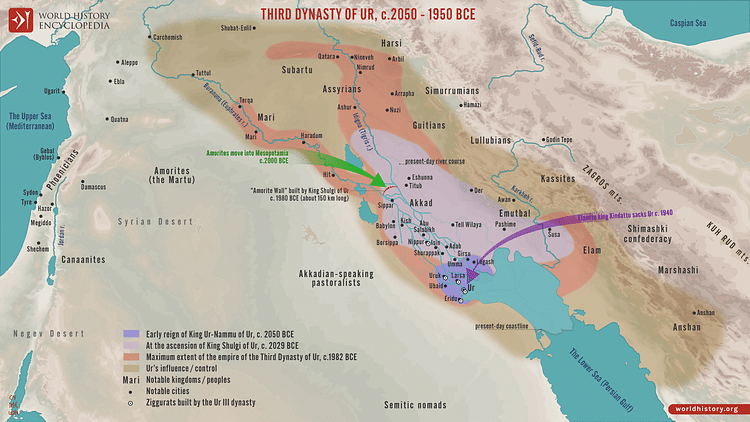
Shulgi’s ascent to power and his subsequent efforts to carve out a unique identity were deeply rooted in the political and cultural landscape of Sumer during the Third Dynasty of Ur.
The Rise of the Third Dynasty of Ur
Shulgi was the son of Ur-Nammu, the revered founder of the Third Dynasty of Ur, a period that marked a significant renaissance for Sumer after the tumultuous era of Gutian rule. Ur-Nammu himself was a formidable figure, having continued the revolt initiated by the warrior-king Utu-Hegel against the Gutians, who were largely perceived as oppressive conquerors. Tragically, Ur-Nammu met his end in battle, leaving a complex legacy and a nascent empire for his son to inherit.
A King Forges His Own Path
Upon ascending the throne, Shulgi’s immediate priority was to avenge his father and solidify the gains made against the Gutians. He successfully drove them from Sumer, thereby securing the kingdom’s borders and stability. However, even with this crucial victory, Shulgi harbored a deep-seated need to distinguish himself from the celebrated accomplishments of his father and the heroic Utu-Hegel. He sought to transcend their legacies, to achieve something truly unprecedented that would unequivocally mark his reign as exceptional.
His early reign was characterized by a comprehensive program of administrative and social reforms aimed at improving the lives of his subjects and consolidating the kingdom’s power. He invested heavily in infrastructure, constructing new roads and meticulously improving existing ones, recognizing their vital role in facilitating trade and communication across his expanding realm. To support travelers and merchants, he established a network of roadside inns, a practical innovation that fostered economic activity and connectivity. Shulgi also championed trade, which significantly boosted the Sumerian economy, and either continued or refined the legal framework established by his father, the celebrated Code of Ur-Nammu, ensuring justice and maintaining peace throughout the land.
Beyond practical governance, Shulgi was a patron of culture and education. A musician himself, he claimed proficiency on various instruments and actively encouraged the development of musical performance. He recognized the importance of knowledge and literacy, reforming the scribal schools (the edubba) of Sumer to enhance educational standards and promote widespread literacy, laying the groundwork for future intellectual flourishing.

Militarily, Shulgi was equally astute. He established a professional standing army, a significant departure from previous levies, and personally led them on a series of successful campaigns. These military victories extended Ur’s influence northward, conquering a vast territory that stretched from modern-day Kuwait up through Iraq. To ensure the smooth administration of this expansive empire, Shulgi implemented sweeping standardization measures. He unified weights and measures, reformed the calendar, and standardized timekeeping, creating a cohesive administrative system where the entire kingdom operated according to a singular, shared understanding. Agricultural reforms were also initiated to boost food production and ensure the welfare of his populace.
The Unprecedented Run
Despite these impressive and far-reaching achievements – the military conquests, the administrative reforms, the cultural patronage, and the economic prosperity – Shulgi seemingly felt a void. He believed none of these accomplishments sufficiently set him apart from the great kings who had come before him. It was at this juncture that Shulgi, a king known to be an athlete, conceived of his most audacious act: the legendary 200-mile run.
The chosen route was religiously significant, connecting Ur, his capital, with Nippur, the spiritual heartland of Sumer and the seat of the supreme god Enlil. The plan was audacious: run from Nippur to Ur, officiate at Ur’s religious festival, and then, on the very same day, run back from Ur to Nippur to preside over the festival there. This entailed covering 100 miles (160.9 km) in each direction, totaling 200 miles (321.8 km). The "Praise Poem" vividly recounts that he accomplished this even amidst a sudden and fierce storm, adding a layer of divine challenge and triumph to the narrative. This unparalleled feat, a physical and spiritual odyssey, was finally enough to assure Shulgi that his name would indeed be honored by future generations, securing his desired distinction.
Supporting Data
The "Praise Poem of Shulgi" (Shulgi A) is not merely a chronicle of an event; it is a meticulously crafted piece of self-aggrandizement, a literary and political tool designed to elevate Shulgi to a semi-divine status and solidify his legacy.
"A Praise Poem of Shulgi": A Masterclass in Ancient Propaganda
The poem, whether personally penned by Shulgi or commissioned under his direct supervision, serves as the cornerstone of his carefully constructed image. From its opening lines, the speaker is unequivocally Shulgi himself, identifying as "king of the four regions" of Sumer and immediately linking himself to the most venerated figures of Sumerian mythology. He claims to be "a child born of Ninsun," the mother of the legendary hero Gilgamesh, thereby associating himself with a figure whose epic journey of self-discovery and quest for immortality resonated deeply with the Sumerian psyche. This divine lineage extends further, as he identifies himself with Anu (An), the sky god; Enlil and Ninlil, the divine couple; Nintud (Ninhursag), the Mother Goddess; Enki, the god of wisdom; and Nanna, the moon god. Such extensive divine connections were designed to present Shulgi not merely as a king, but as a living embodiment of divine favor and power.
Shulgi’s self-portrayal is a tapestry woven with threads of superhuman strength, speed, and wisdom. He describes himself with powerful animal imagery, declaring, "I am a stallion of Sakkan," referencing the swift god of herds and wild animals, and later comparing himself to a lion, an owl, a falcon, a mule, and a wild ass. As scholar Jeremy Black notes, "Animal and bird imagery permeates this hymn. Shulgi mostly likens himself to a lion…but creatures which are renowned for their endurance or speed are also summoned up. Equids are the subject of the third paragraph, while the ass image is also used later in the composition…Shulgi is also ‘like a mountain kid hurrying to its habitation’ or like the mythical Anzud bird ‘lifting its gaze to the mountains.’" This rich bestiary reinforces his claims of unparalleled physical attributes, allowing the audience to visualize his superhuman capabilities.
Beyond brute strength, Shulgi also asserts his intellectual prowess, proclaiming himself a "knowledgeable scribe of Nisaba," the goddess of writing. This claim of literacy and wisdom, alongside his heroism, presents a well-rounded image of a king who excels in both mind and body – a truly ideal ruler. He explicitly states the core motivation behind his epic run: "So that my name should be established for distant days and never fall into oblivion." This line, found in line 36 of the poem, reveals a profound awareness of the importance of legacy and the deliberate use of grand gestures to achieve it.
The poem also subtly integrates Shulgi’s infrastructure projects into the narrative, mentioning the new roads between Ur and Nippur, the marking of danna (double-hour) distances, and the establishment of lodging houses and resting places. These details serve to legitimize his claims of tireless service to his people, even as he undertakes his personal quest for glory. The account of his arrival at the E-kis-nugal – where fates are determined – and his welcome by Utu (Shamash), the sun god and god of justice, further solidifies his divine connection. His identification as the husband or consort of Inanna (later Ishtar), the powerful goddess of love, procreation, fertility, and war, elevates his status to that of a divine partner, placing him among the pantheon. The poem concludes with a traditional praise to Nisaba, acknowledging the goddess of writing for her inspiration, a fitting end for a composition so central to his literary legacy.

The Broader Propaganda Campaign
"A Praise Poem of Shulgi" was not disseminated in isolation. It was a crucial component of a far-reaching public relations campaign designed to instill awe and loyalty in his subjects. Messengers were dispatched throughout Shulgi’s extensive kingdom, proclaiming the news of his incredible run and publicly reading this and other praise poems. These literary works consistently associated the king with the gods, implicitly and explicitly impressing upon his subjects the claim Shulgi had made for himself: that he, like the great Akkadian monarch Naram-Sin before him, was a god. This divine kingship concept was a powerful ideological tool, justifying his rule and demanding absolute devotion. The success of this campaign is evident in historical accounts, which record no significant rebellions or social unrest throughout Shulgi’s long and prosperous reign, suggesting a population thoroughly convinced or at least effectively managed by his carefully crafted image.
Enduring Educational and Literary Significance
The poem’s influence extended far beyond immediate political objectives. "A Praise Poem of Shulgi" became a popular and foundational piece of Mesopotamian literature. It was formally included in the curriculum of the scribal schools, the edubba, as one of the works comprising the Decad. The Decad was a select group of ten compositions that a student needed to master towards the end of their education to graduate and become a fully-fledged scribe. This institutionalization ensured the poem’s survival and its continuous study for centuries, thereby fulfilling Shulgi’s wish for his name to be "established for distant days."
Today, the piece is known by its catalog title "Shulgi A" but has also been referenced by other translations of the king’s name (Sulgi, Culgi, or Dungi) as "Hymn of Sulgi," "Hymn of Culgi," or "Hymn of Dungi," though these titles are less common now than in the 20th century. Its inclusion in contemporary anthologies of Mesopotamian literature demonstrates its continued scholarly and literary appreciation, proving that, just as in the scribal schools over two millennia ago, it remains a popular and significant work among aficionados of ancient texts.
Official Responses
The extraordinary nature of Shulgi’s run has naturally sparked considerable debate among modern scholars: did the king truly accomplish such an incredible feat, or was it a grand exaggeration, a mere literary flourish designed for propaganda?
The Question of Veracity: Fact or Fiction?
For an earlier generation of Assyriologists, the idea of a king running 200 miles in a single day seemed utterly impossible, leading many to dismiss the account as pure fiction. The conventional wisdom viewed such claims with skepticism, attributing them to the typical hyperbole of ancient royal inscriptions. Kings often magnified their achievements, associating themselves with divine powers and superhuman abilities to enhance their authority and prestige. From this perspective, Shulgi’s run would be seen as another example of a monarch embellishing his narrative for political gain.
Modern Reassessment: The Arguments for Possibility
However, more recent scholarship has challenged this dismissal, suggesting that Shulgi’s claim might not be as outlandish as once thought. Scholar Paul Kriwaczek, in particular, provides compelling arguments for the feasibility of the run, drawing parallels with modern ultra-marathon events. He cites two key records:
- "During the first forty-eight hours of the 1985 Sydney to Melbourne footrace, Greek ultra-marathoner Yannis Kouros completed 287 miles. This impressive distance was accomplished without pausing for sleep."
- "In the 1970s a British athlete running on a track completed 100 miles in a time of eleven hours and thirty-one minutes."
Kriwaczek argues that these modern examples demonstrate that human endurance, under extreme conditions and with intense training, can indeed achieve such distances. He then contextualizes this within the Sumerian world: "There is no reason to believe that the Sumerians were any less athletically able. Theirs was, after all, a far more physical world than is ours: speed, strength, and stamina would have been much more important to them that they are to us." This perspective highlights that ancient societies, lacking modern conveniences, cultivated a greater degree of physical resilience and stamina out of necessity. A king like Shulgi, who actively promoted himself as an athlete and leader, would have likely maintained a high level of physical fitness.
While acknowledging the possibility of the run, scholars still approach "A Praise Poem of Shulgi" with an understanding of its primary function as propaganda. The vivid imagery, the divine associations, and the triumphant tone are all characteristic of royal panegyrics. The debate, therefore, shifts from a simple "did it happen?" to a more nuanced "how much of it happened, and how was the narrative shaped?" Even if Shulgi did not cover every single mile on foot, the core event of an extraordinary journey between these two vital cities, completed with exceptional speed, remains plausible given the context of ancient athletic capabilities. The poem’s power lies in its ability to convince its audience, regardless of the precise historical details.
The Power of the Narrative Over Pure Fact
Ultimately, for the people of ancient Sumer, the exact historical veracity of the run may have been secondary to its symbolic power. Sumerian society regularly dated years according to momentous events, and Shulgi’s public relations campaign successfully embedded his run into the very fabric of their temporal understanding. Following his legendary feat, years were formally dated from "The Year When the King Made the Round Trip Between Ur and Nippur in One Day." This official recognition cemented the event as a factual and foundational moment in their history, underscoring the success of Shulgi’s efforts to control his narrative and shape public perception. The narrative became truth, not necessarily because it was rigorously verified by modern standards, but because it was proclaimed, celebrated, and officially recognized by the state.
Implications
Shulgi’s legendary 200-mile run and the "Praise Poem" that celebrated it offer profound implications for our understanding of ancient kingship, propaganda, and the human desire for legacy.
An Enduring Legacy of Ambition
Shulgi’s conscious effort to distinguish himself and ensure his name "should be established for distant days" was an resounding success. Two millennia later, his name and his incredible feat continue to be studied and discussed. This achievement demonstrates the sophisticated understanding of image-making and historical manipulation present in ancient Sumer. Shulgi wasn’t just a powerful ruler; he was a masterful storyteller and a pioneer in what we might today call brand management for a monarch. His reign highlights how early rulers actively constructed their identities, intertwining personal achievements with divine mandate and national pride.
A Window into Ancient Culture and Values
The "Praise Poem of Shulgi" serves as an invaluable primary source, offering a rich tapestry of ancient Sumerian culture, values, and religious beliefs. It reveals the importance of physical prowess, wisdom, and divine favor in the ideal king. The reverence for gods like Enlil, Inanna, and Nisaba, the significance of sacred cities like Nippur and Ur, and the societal structures represented by scribal schools and public festivals are all illuminated through Shulgi’s self-narrative. The poem also showcases the advanced literary capabilities of Sumerian scribes, their mastery of epic poetry, vivid imagery, and persuasive rhetoric.
The Sophistication of Ancient Propaganda
The entire episode of Shulgi’s run and its subsequent glorification is a testament to the sophistication of ancient propaganda. It illustrates how rulers used a multi-faceted approach – from grand public gestures and athletic feats to commissioned literature and official year-dating – to shape public opinion and consolidate power. Shulgi’s campaign ensured loyalty and prevented dissent, proving that effective communication and narrative control were as crucial for ancient empires as they are for modern states.
The Universal Quest for Distinction
Ultimately, Shulgi’s story resonates across millennia because it speaks to a universal human drive: the desire for distinction, for greatness, and for an enduring legacy. Whether or not he literally ran every mile, his ambition to achieve the unprecedented and to be remembered for it is undeniable. The "Praise Poem of Shulgi" is not just a historical curiosity; it is a timeless exploration of ambition, self-mythologizing, and the power of narrative to transcend the boundaries of time and fact, ensuring that one king’s name would indeed "never fall into oblivion." The poem’s continued study and appreciation affirm its place not only in the history of Mesopotamia but in the broader tapestry of human literature and the eternal quest for immortality through deeds and words.


Leave a Comment