
Vonda N. McIntyre’s Final Voyage: Unpacking the Posthumous Epic "The Curve of the World"
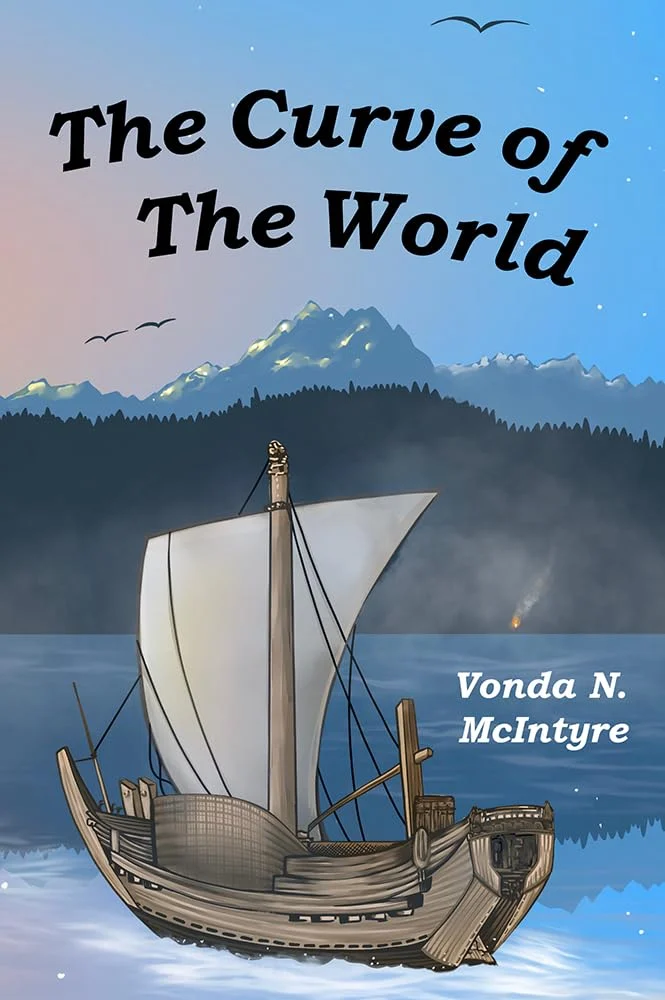
The literary world of science fiction and fantasy (SFF) recently received a poignant gift and a complex challenge with the posthumous publication of Vonda N. McIntyre’s final novel, The Curve of the World. A towering figure celebrated for her groundbreaking contributions to the genre, McIntyre left behind a sprawling alternate history epic that, even in its incomplete form, stands as a testament to her profound imagination and her enduring legacy as a writer, biologist, and activist. This article delves into the intricate tapestry of The Curve of the World, examining its innovative premise, the author’s vision, and the unique circumstances of its arrival into the hands of readers.
Vonda N. McIntyre: A Legacy Beyond the Curve
A Pioneer’s Enduring Influence
Vonda N. McIntyre, who passed away in her hometown of Seattle in 2019, was far more than just a prolific author; she was a luminary whose influence permeated the SFF community for decades. A biologist by training, her scientific acumen lent a remarkable depth and plausibility to her speculative worlds. Her career was adorned with prestigious accolades, including both Hugo and Nebula awards, affirming her status as a master storyteller. Beyond her literary achievements, McIntyre was a fervent feminist organizer and activist within the SFF community, tirelessly advocating for greater inclusivity and representation. She was also a pioneer in the nascent field of collective self-publishing online, demonstrating an innovative spirit that extended beyond the pages of her novels.
Her impact stretched across various facets of SFF. Her 1975 debut novel, The Exile Waiting, received a new edition from Handheld Press shortly after her death, reminding readers of her early brilliance. More recently, her 1997 novel, The Moon and the Sun, found a new audience when it was adapted into the 2022 film The King’s Daughter, starring Pierce Brosnan as Louis XIV. This adaptation brought to life one of McIntyre’s most fascinating and recurring creations: the "sea people." These enigmatic aquatic humans are a signature motif in her work, appearing in early short stories like “The Genius Freaks” (1973) and “The End’s Beginning” (1976), and even in collaborations with her long-time friend and fellow literary titan, Ursula K. Le Guin, notably in “The Natural History and Extinction of the People of the Sea” (2008). This thematic thread underscores McIntyre’s deep fascination with humanity’s relationship with the natural world and the boundaries of sentience.
The Genesis of The Curve of the World
The Curve of the World marks McIntyre’s return to novel-length fiction, a final, ambitious undertaking that synthesizes many of her lifelong interests. While the sea people, so central to much of her previous work, recede into a more subtle role, their legacy remains profoundly crucial to the narrative. They represent the novel’s sole overt fantasy element, weaving a delicate thread of the supernatural into what is otherwise a meticulously crafted alternate history. The novel, therefore, becomes a unique blend of speculative fiction, historical reimagining, and a touch of mythical wonder, all filtered through McIntyre’s distinctive lens. It is a nuanced exploration of human civilization, cultural clash, and the enduring power of ancient myths.
The World of Idaea: An Alternate History Unveiled
A Mediterranean Reimagined
At the heart of The Curve of the World lies the Idaean civilization, a vibrant, bull-dancing culture reminiscent of ancient Minoan societies. These Idaeans hold sway over trade routes and maintain peace across the eastern reaches of the "Sunset Sea," an evocative renaming of the Mediterranean. McIntyre meticulously constructs a world that diverges significantly from our known history. Here, the powerful Roman and Persian Empires never rose to dominance. Instead, a Pharoah—a woman, notably—rules the Egyptians, albeit with a lackadaisical approach to maintaining vital waterways, such as the dangerously shallow sailing channel that parallels our Suez Canal. Key figures of Abrahamic religions—Moses, Christ, and Mohammed—have not (yet?) emerged, allowing for a diverse religious landscape where the Idaean worship of a Moon goddess coexists among several other sophisticated, placatory belief systems. This carefully constructed absence of familiar historical touchstones forces the reader to shed preconceptions and fully immerse themselves in McIntyre’s inventive timeline.
Navigating the Timeline: A Head-Exploding Endeavor
McIntyre, with her characteristic wit, explicitly cautions readers in the acknowledgements: “Do not try to match the Idaean timeline to ours because your head will explode.” This playful warning highlights the novel’s deliberate ambiguity regarding its precise historical analogue. While the setting might appear prehistoric, elements suggest an early medieval period. The existence of writing, though specialized, and numeracy as a skilled technology, further blurs the lines.
For those determined to find a temporal anchor, the protagonist Iakinthu, who holds the powerful Idaean position of Gephyra (a multi-faceted role encompassing trade management, chief negotiation, and political operation), offers a tantalizing clue. She mentions a conch-shell alarm system last activated a thousand years prior, when a tsunami devastated Knossos. This detail might place the novel’s action around 500 BCE in our timeline. However, the reviewer notes a critical ambiguity: Is this "great wave" the same catastrophic event as the immense eruption of Santorini around 1600 BCE, which sent colossal tsunamis across the eastern Mediterranean? Such questions underscore the delicate balance McIntyre strikes between historical inspiration and imaginative divergence, challenging readers to embrace the narrative on its own terms rather than seeking direct correlation.
Technologically, the world of Idaea operates firmly within the Iron Age. There is no gunpowder, no automated projectile weaponry, and no industrial-scale metalsmithing. Yet, sailing technology is remarkably advanced, featuring clinker-built ships powered by large sails. While this sailing technology in our timeline typically emerged around the fourth century CE, McIntyre’s narrative recontextualizes its development. The necessity of weaving large ship sails, a year-long endeavor, implies a robust labor economy, a point reinforced by the pervasive theme of enslavement within the plot. Among those engaged in this practice are formidable "black-sailed, leather-clad male barbarians," whose mysterious navigation methods and violent pursuits set them against the Idaeans.
Narrative Currents: Plot, Characters, and Societal Structures
Iakinthu’s Epic Journey
The narrative propulsion of The Curve of the World centers on Iakinthu and her companions aboard the Flying Fish. Iakinthu, a figure of authority and deep maternal instinct, embarks on a crucial voyage. Her foster child, Renthizu, has reached manhood, prompting her decision to return him to his birth mother, allowing him to choose his familial allegiance. This journey, initially a mission of cultural exchange with the "People" (an allied tribe the reviewer likens to Bronze Age Scythians or Amazons), quickly spirals into high-stakes adventure.
The Flying Fish encounters its companion vessel, the Dolphin, in dire peril, captured by the aforementioned black-sailed barbarians. The ensuing violent battle results in the overpowering of the barbarians and the rescue of a small, angry barbarian boy from the hold. He is recognized by Iakinthu’s given daughter, Kilinkizu, as her son, born during her period of enslavement. In a gesture of honor and remembrance, Iakinthu renames the boy Bdarde, after a dear friend lost in the battle. However, the boy, indoctrinated into a rigidly patriarchal culture, vehemently rejects this "woman’s name," setting the stage for profound cultural conflict. With Kilinkizu unable to relinquish her son again, and Iakinthu committed to returning Renthizu, the decision is made to continue the perilous voyage across the Sunset Sea, past the "Horns of the Ocean" (our Gibraltar), and onward to the mythical "Sunset Country" in the Untameable Ocean to the west – an epic journey from the cradle of human civilization to what we know as the North American continent.
A Matriarchal Tapestry
McIntyre’s novel meticulously constructs a world largely shaped by matriarchal societies, offering a stark contrast to the patriarchal norms of the barbarians. The Egyptian Pharoah, for instance, is a woman. Among the "People," men’s activities are severely restricted, primarily confined to breeding and labor. The more moderate Idaean culture, while acknowledging men with special skills in seafaring or languages, places women firmly in decision-making roles. Fatherhood in Idaea is largely deemphasized, considered inconsequential to an individual’s societal standing.
This established order faces increasing intrusion from vastly different cultures. The black-sailed barbarians embody a severely patriarchal and violent society where women are enslaved and work is strictly gendered. The rescued boy, Bdarde-who-is, serves as a chilling embodiment of this indoctrination, screaming obscenities and threatening violence against women, echoing the brutal teachings of his father’s crew. This clash of societal values forms a crucial undercurrent of the narrative, highlighting themes of gender, power, and the devastating impact of cultural conflict.
The Enigmatic Sea People
While not active players, the legacy of the sea people is a vital, subtle fantasy element in The Curve of the World. Iakinthu’s lover, Aranthau, the skilled captain of the Flying Fish, is descended from these mysterious beings. His heritage grants him extraordinary abilities: he can instinctively read sea routes, sense impending trouble when immersed in the deep, and, remarkably, negotiate, albeit painfully, with sea monsters.
The voyage into the unknown forces Iakinthu and her companions into an encounter with one such creature, pushing Aranthau’s unique enhancements to their limits. His painful discoveries reveal that even his extraordinary abilities are circumscribed by natural forces, adding a layer of realism to the fantastic elements. The sea people’s subtle presence underscores McIntyre’s fascination with humanity’s connection to the aquatic realm and the potential for ancient, unseen powers to shape destiny.
The Posthumous Edit: Shaping a Final Vision
A Collaborative Effort
The publication of The Curve of the World is a testament to the dedication of a team of editors, as Vonda N. McIntyre passed away before its completion. The novel was in its fifth iteration at the time of her death, indicating a work still very much in progress. In the foreword, Aqueduct’s publisher, novelist L. Timmel Duchamp, details the intricate and challenging editing process she undertook with Nisi Shawl and two other editors to prepare the text for publication. The precise extent of "patching and shaping" required remains unknown, but the inherent difficulties of completing an author’s final vision without their direct input are evident.
The reviewer points to several instances that highlight these challenges: the discrepancy between a "Knossos" mentioned once and the consistently used "Kunusu" for the Idaean heartland, suggesting a missed placeholder or an unfinished revision. Many "loose ends and undeveloped threads" presumably had to be left as they were, as the editors could not ascertain McIntyre’s ultimate intentions. This collaborative effort, while essential for the novel’s release, inevitably meant making editorial choices without the author’s final blessing, a common and often bittersweet reality for posthumous works.
Strengths and Stumbles in Execution
Despite the challenges, the novel’s overall shape is described as "fairly smooth." However, the reviewer notes a significant pacing issue: "the truly powerful vitality of the first quarter diminishing through the remaining three quarters into a travelogue of strange peoples and natural wonders." This suggests that while McIntyre’s worldbuilding was "profoundly absorbing," the narrative momentum suffered in later sections.
Indeed, the reviewer praises the initial absorption into Iakinthu’s world, initially perceived as a "perfect utopia for women," only to be complicated by "slow-burn hints about the repression of males." This underlying tension, coupled with increasing cracks in buildings and subtle earth tremors, creates a genuine sense of urgency: "Will the big one hit, and if so, when?" This masterful creation of slow-burn dread is a testament to McIntyre’s narrative skill.
Yet, the later stages of the voyage, despite their individual wonders, sometimes struggle to serve the overarching plot. The reviewer expresses impatience with "the Nth dramatic encounter, the Mth strange wonder, and the Qth description of a communal meal or urgent sex," suggesting a surfeit of detail that, while rich, occasionally overwhelms the narrative drive.
Nonetheless, moments of genuine peril and brilliant writing punctuate the journey. The description of sailing past an erupting coastal volcano (speculated to be in the Gulf of Mexico) is hailed as "a fantastic piece of writing, a superb reimagining of the effects of volcanic geology on frail sailing vessels." The chilling pursuit by barbarian ships and the irredeemably horrible child Bdarde-who-is maintain a tangible threat. A tense period of "forced fraternization" with a people whose threat (implied to be like the Aztecs and their captives’ hearts) requires no explicit spelling out further demonstrates McIntyre’s ability to evoke dread.
However, some inventive elements, while charming, stretch credulity. The Idaeans’ vast, black water reservoir jars on rooftops are praised for their efficiency and practicality, reflecting a civilized desire for hot bath water. Less convincing, however, is the "clever way of getting the Flying Fish across the neck of land currently occupied by the Panama Canal," which feels like "a witty but impossible idea that Vonda refused to let go." Similarly, the apparently infinite stowage capacity of the Flying Fish for olive oil and gifts raises practical questions. The character Bridges Words, a useful translator who inexplicably speaks "all the languages they encounter up the west coast of North America," becomes "Iakinthu’s personal Babel Fish," signaling to the reviewer that "Vonda had left the plot behind and was wholly focused on worldbuilding." The introduction of "two stranded Nipunu people, who wear kimono, who are called Genji and Murasaki" further highlights this shift, bordering on anachronistic or overly referential.
Implications and Lasting Impact
A Testament to Imagination
Despite these acknowledged imperfections and the editorial challenges inherent in a posthumous work, The Curve of the World is ultimately deemed a "magnificent achievement." The reviewer’s initial inability to put the book down for three long sessions underscores the absorbing power of McIntyre’s slow, deliberate worldbuilding. Her "irrepressible love for devising alternate technologies" shines through, offering readers a glimpse into the unique mind that shaped countless innovative narratives. The novel stands as a testament to her creative process, even if its final form is not precisely what she might have intended. It is a vibrant, if sprawling, canvas of her boundless imagination.
Reflecting on McIntyre’s Legacy
The publication of The Curve of the World serves as a bittersweet capstone to Vonda N. McIntyre’s extraordinary career. It is sad, the reviewer notes, that readers won’t know more about the Idaeans or their extraordinary alternate world of cognate nations and civilizations. This sense of longing speaks to the compelling nature of the universe McIntyre created. The novel reinforces her significant contribution to the SFF genre, particularly in its nuanced exploration of gender dynamics, power structures, and truly alternate histories. It challenges conventional notions of societal organization and technological development, prompting readers to reconsider historical trajectories and cultural possibilities.
Conclusion: An Unforgettable Journey
The Curve of the World begins as an intriguing and dramatic adventure, pulling readers into a meticulously crafted alternate past. While it eventually evolves into a somewhat "over-egged travelogue of wonders," its core strengths — McIntyre’s absorbing worldbuilding, her innovative societal concepts, and her flashes of brilliant prose — remain undeniable. The journey itself, despite some "technical aspects" that leave the reviewer "regretful," is undeniably rich and thought-provoking. As Vonda N. McIntyre’s final literary offering, The Curve of the World is not merely a novel; it is a profound, albeit imperfect, valediction from a visionary author whose influence on science fiction and fantasy will continue to resonate for generations to come. It invites readers to embark on an unforgettable journey, to ponder the roads not taken in human history, and to celebrate the enduring power of a singular imagination.



Leave a Comment