
The Architecture of Anonymity: James Gunn Explains Lex Luthor’s Blindness to Superman’s Secret Identity
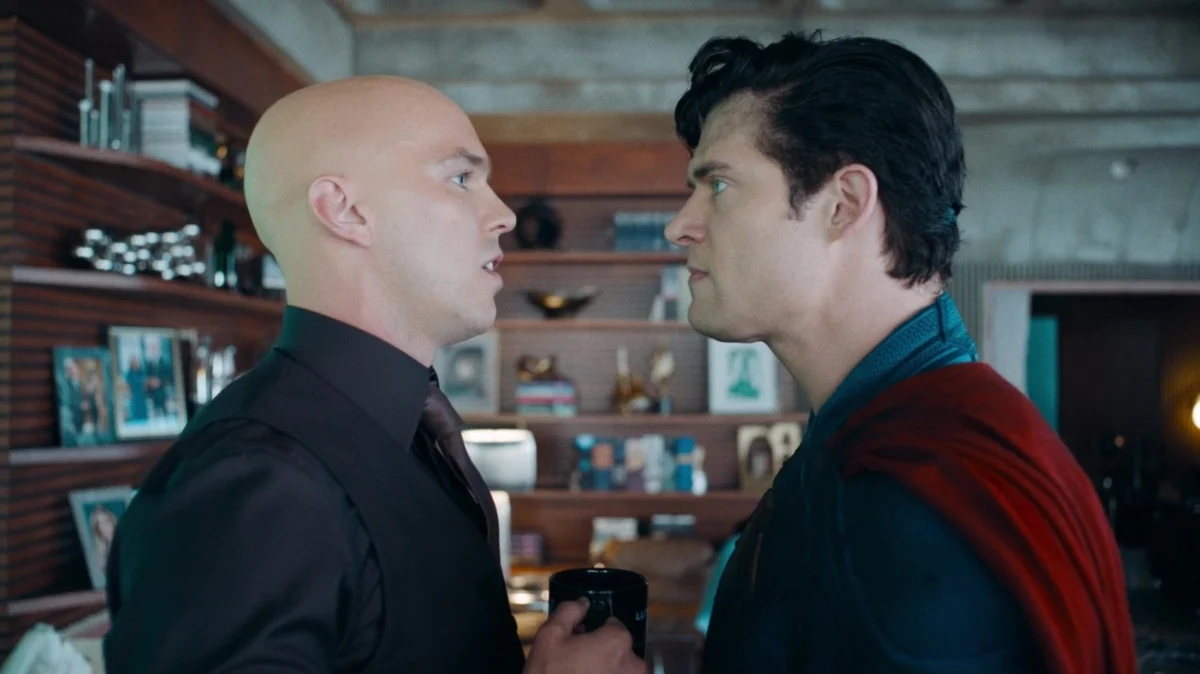
The "glasses debate" is as old as the superhero genre itself. For over eight decades, fans and critics alike have questioned the plausibility of Clark Kent’s disguise. How can a pair of horn-rimmed spectacles and a slouching posture deceive the world’s most brilliant minds, particularly the formidable Lex Luthor? As James Gunn prepares to launch his new DC Universe (DCU) with the 2025 film Superman, the director has finally addressed this narrative hurdle, providing a multi-layered justification for why Nicholas Hoult’s Lex Luthor remains oblivious to the man behind the Man of Steel.
Through a series of detailed explanations shared on social media, Gunn has signaled a return to comic book logic tempered with psychological realism. His defense of the secret identity trope suggests that in the new DCU, the deception isn’t just about physical appearance, but about the fundamental biases and intellectual blind spots of the world’s most dangerous ego.
Main Facts: The Three Pillars of Deception
James Gunn’s explanation for Lex Luthor’s ignorance regarding Clark Kent’s true nature rests on three distinct pillars: psychological projection, technological/mystical assistance, and the limitations of specialized genius.
1. The Alien Misconception
Gunn’s primary argument is rooted in Lex Luthor’s worldview. In the upcoming film, Luthor views Superman not as a hero, but as a "disconnected alien" with imperialistic ambitions. To Luthor, Superman is an extraterrestrial entity whose primary goal is the subjugation of Earth. Because Luthor views Superman as a god-like outsider, the idea that such a being would choose to spend eight hours a day writing obituaries and covering local politics at a metropolitan newspaper is, to him, utterly preposterous. Luthor doesn’t look for a secret identity because he doesn’t believe Superman has any interest in being "human."
2. The Introduction of "Hypno Glasses"
In a move that delighted comic book historians, Gunn referenced the "Hypno Glasses" concept. This lore, which originated in the late 1970s, suggests that the lenses in Clark Kent’s glasses—crafted from the glass of his Kryptonian starship—emit a low-level hypnotic frequency. This frequency causes people to perceive Clark Kent as a physically diminished, older, or more mundane version of himself, further distancing him from the radiant, powerful image of Superman.
3. The Specialized Genius
Gunn also touched upon the nature of intelligence. Nicholas Hoult’s Lex Luthor is described as a polymath with expertise in genetics, electrochemistry, nanotechnology, and quantum physics. However, Gunn posits that being a genius in the hard sciences does not equate to being a genius in social observation or human intuition. Luthor’s arrogance makes him prone to missing "basic things" that exist outside his immediate field of interest or his ego-driven narrative.
Chronology: The Evolution of the Secret Identity
To understand why Gunn is doubling down on these explanations, one must look at the history of the Superman/Clark Kent dynamic across different eras of media.
The Golden and Silver Ages (1938–1970s)
In the early days of Action Comics, the disguise was rarely questioned. The medium relied on the "suspension of disbelief" inherent in pulp fiction. However, as the stories became more complex in the Silver Age, writers began inventing more elaborate reasons for the disguise’s success. This culminated in 1978’s Superman #330, written by Martin Pasko, which officially introduced the Hypno Glasses to explain how Clark could work alongside Lois Lane for years without being caught.
The Donner and Reeve Era (1978–1987)
Christopher Reeve’s portrayal of Clark Kent is often cited as the gold standard for the secret identity. Reeve used physicality—changing his voice, slouching his shoulders, and projecting an aura of clumsiness—to make the disguise believable. In this era, the "magic" wasn’t in the glasses, but in the performance.
The Modern and "Gritty" Era (2013–2023)
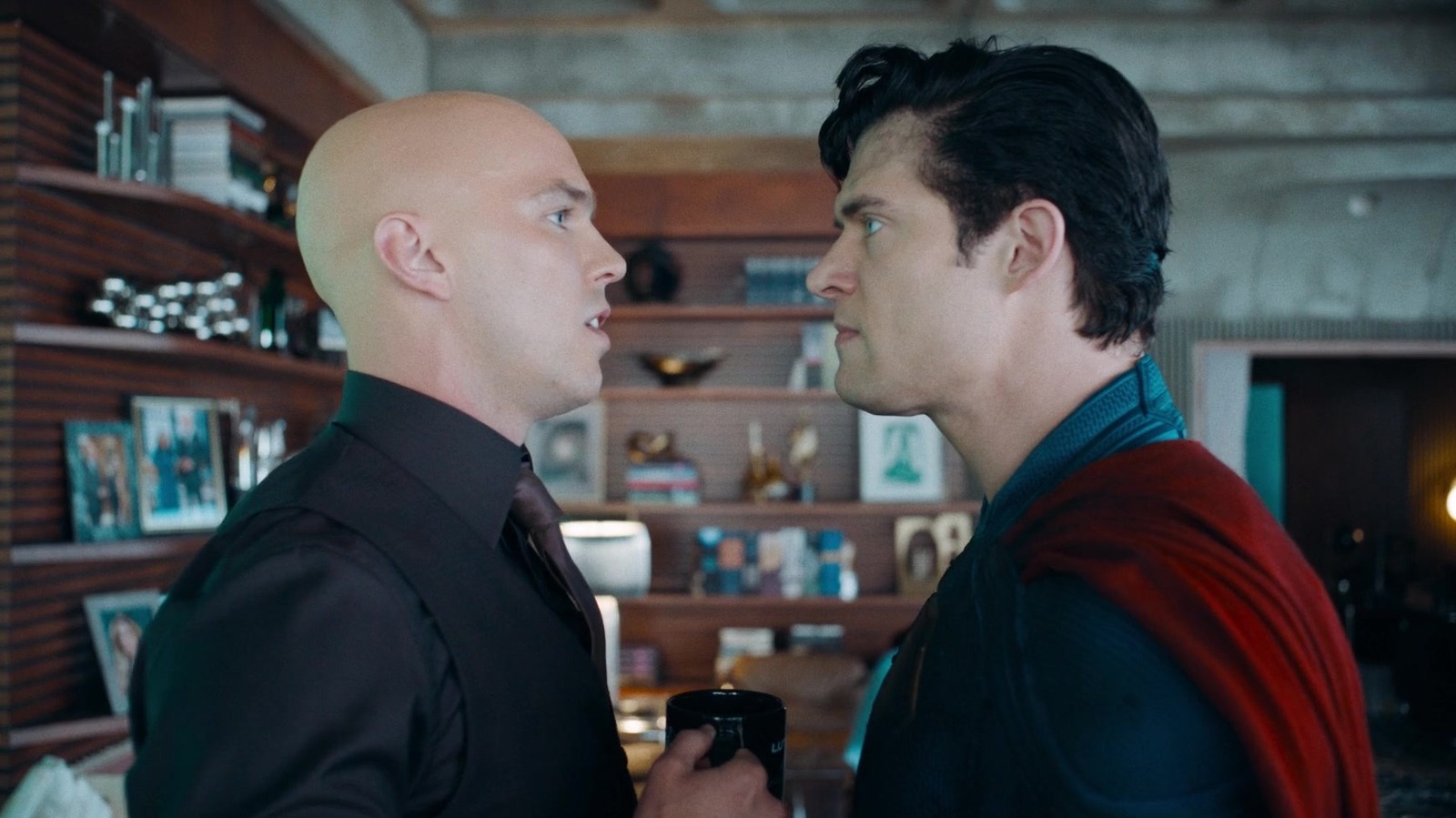
In Zack Snyder’s Man of Steel and Batman v Superman: Dawn of Justice, the secret identity was handled with more skepticism. Jesse Eisenberg’s Lex Luthor eventually deduced Superman’s identity, using it as leverage. This reflected a modern cinematic trend where "realistic" villains are expected to uncover such secrets through surveillance and data analysis.
The Gunn Era (2025–Present)
James Gunn’s DCU appears to be blending these histories. By bringing back the Hypno Glasses while maintaining a focus on Luthor’s psychological profile, Gunn is attempting to create a world that feels both "comic-book accurate" and internally consistent.
Supporting Data: The Science of Perception and the Ultraman Factor
Gunn’s explanation is supported by both comic book history and real-world psychological phenomena.
Inattentional Blindness
Psychologists often cite "inattentional blindness" as a real-world reason why someone like Clark Kent might go unnoticed. This occurs when an individual fails to perceive an unexpected stimulus that is in plain sight because their attention is focused elsewhere. For Lex Luthor, his obsession is the threat of Superman. He is looking for a weapon, a weakness, or a grand conspiracy. He is not looking for a mild-mannered journalist because that journalist does not fit into his threat assessment.
The Ultraman Reveal
A crucial piece of supporting data from the upcoming film is the presence of Ultraman. Reports indicate that Lex Luthor creates a clone of Superman, known as Ultraman, who serves as a villainous foil in the film’s third act. The fact that Luthor can master the "genetics and electrochemistry" required to clone a Kryptonian, yet fail to recognize the original at a press conference, highlights Gunn’s point about "specialized genius." Luthor is a master of the micro (DNA) but a failure at the macro (humanity).
Official Responses: James Gunn on the Record
Gunn’s recent comments on the social media platform Threads were a direct response to fan queries about the logic of his script. He was remarkably transparent about his creative process, stating:
"Lex doesn’t know who he is but I don’t know how he would… Lex thinks Superman is a disconnected alien who wants to take over the world, so I’m not sure why he’d assume he has a ‘secret identity.’"
Gunn further elaborated on the fallibility of his antagonist, noting that even the most brilliant minds have "blind spots." By listing Luthor’s fields of expertise—nanotechnology and quantum physics—Gunn emphasized that Luthor views the world through a lens of cold, hard data. Human relationships and the "boring" life of a journalist are beneath his notice.
This official stance marks a departure from previous iterations where Luthor’s discovery of the identity was seen as an inevitable endgame. In Gunn’s DCU, the secret identity is protected by a shield of arrogance and a dash of Kryptonian technology.
Implications: A New Dynamic for the DCU
The decision to keep Lex Luthor in the dark regarding Clark Kent’s identity has significant implications for the future of the DCU and the narrative structure of the upcoming films.
1. Sustained Tension
By maintaining the secret, Gunn preserves the classic tension of the Superman mythos. It allows for scenes where Clark Kent can interview Lex Luthor, creating a "lion’s den" atmosphere where the hero is hiding in plain sight. This dynamic is essential for the "Man of Tomorrow" storyline, which reportedly features a reluctant team-up between the two rivals to face the cosmic threat of Brainiac.
2. Character Depth for Lex Luthor
This approach humanizes Luthor by giving him a profound flaw: his ego. It makes him a more tragic and dangerous figure—a man so smart he has blinded himself to the truth. It also sets up a potentially explosive moment in future sequels where, should Luthor eventually learn the truth, his rage will be compounded by the realization that he was "tricked" by someone he considered inferior.
3. World-Building and Tone
The inclusion of Hypno Glasses suggests that Gunn is not afraid of the more "fantastical" or "whimsical" elements of DC history. While the DCEU often shied away from these tropes in favor of grim realism, the DCU appears to be embracing the "comic book-ness" of its source material. This could lead to a more vibrant, diverse, and imaginative cinematic universe.
4. The Brainiac Factor
With Brainiac confirmed as a major threat in the DCU’s future, the intellectual gap between Luthor and Superman becomes even more relevant. If Luthor is preoccupied with Superman’s "secret identity" (or lack thereof), he may miss the larger signs of a planetary invasion. This allows Superman to operate as both a public symbol and a covert protector.
Conclusion: The Genius of the Blind Spot
James Gunn’s defense of the Clark Kent disguise is more than just a nod to fan service; it is a calculated narrative choice that defines the tone of his new universe. By grounding the deception in Lex Luthor’s psychological arrogance and supplementing it with classic comic lore like Hypno Glasses, Gunn has found a way to make the "impossible" disguise work for a modern audience.
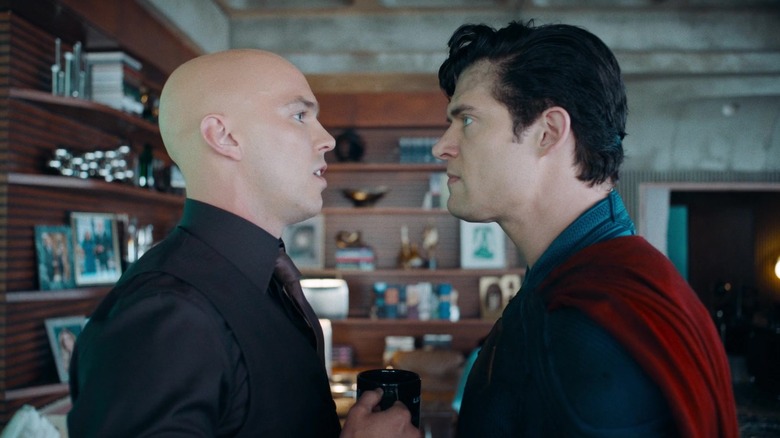
As David Corenswet’s Superman and Nicholas Hoult’s Lex Luthor prepare to clash on the big screen, the mystery of the secret identity will remain a central pillar of their rivalry. In the DCU, the greatest shield the Man of Steel possesses isn’t his invulnerability or his heat vision—it’s the simple fact that his greatest enemy cannot conceive of a god who wants to be a man.



Leave a Comment