The Architecture of Absurdity: How David Wain and Ken Marino Engineered ‘Gail Daughtry and the Celebrity Sex Pass’
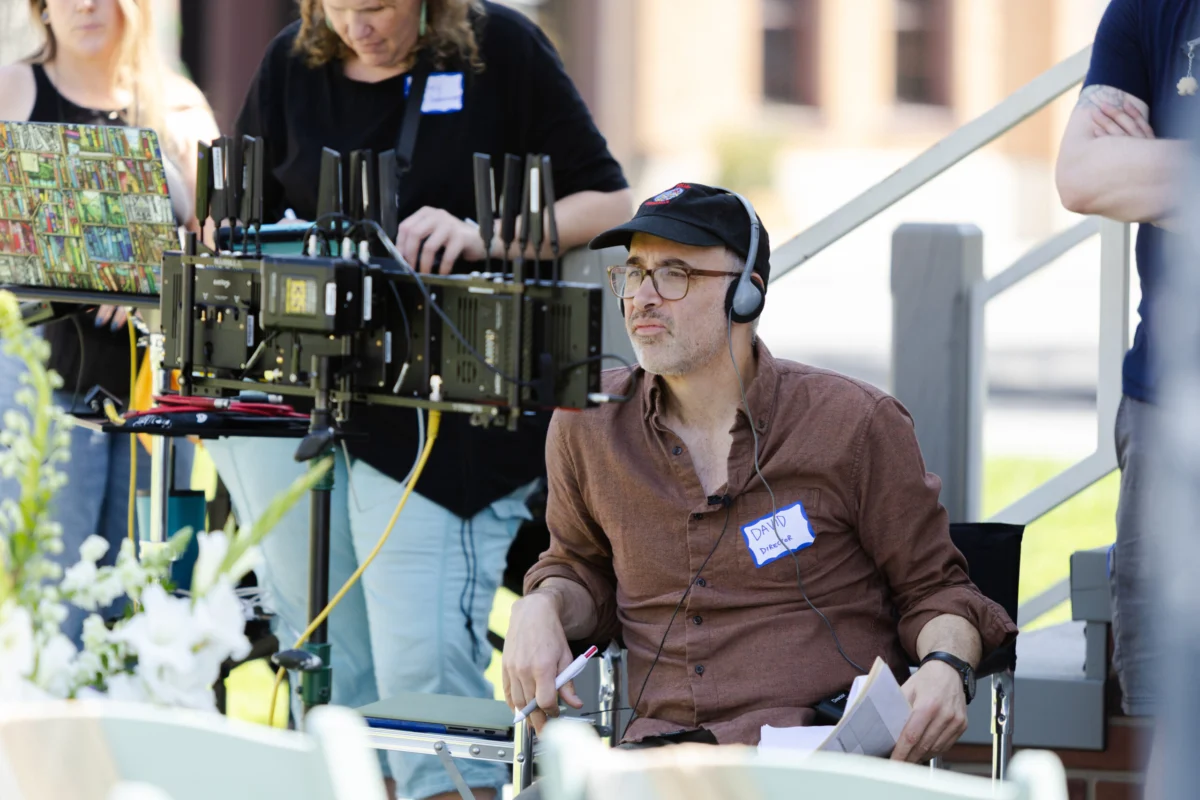
The landscape of American alternative comedy is often defined by its apparent lawlessness—a chaotic blend of non-sequiturs, slapstick, and meta-commentary that suggests a "make-it-up-as-we-go" mentality. However, for director David Wain and his long-time collaborator Ken Marino, the secret to successful absurdity lies not in the absence of structure, but in its rigorous application. With their latest release, Gail Daughtry and the Celebrity Sex Pass, the duo has once again proven that the "slapdash" aesthetic of their work is the result of meticulous planning, a 21-day production sprint, and a narrative foundation borrowed from one of cinema’s most enduring classics.
Main Facts: A New Chapter in Alt-Comedy
Gail Daughtry and the Celebrity Sex Pass, a Sony Pictures Classics release currently in theaters, marks a significant milestone for the creative partnership between David Wain and Ken Marino. The film stars Zoey Deutch as the titular Gail Daughtry, a wide-eyed Midwesterner who travels from the idyllic (and highly stylized) town of Willowbrook, Kansas, to the gritty sprawl of Los Angeles. Her mission: to exercise her "celebrity sex pass"—a hypothetical hall pass granted by her partner—with her ultimate crush, Jon Hamm.
While the premise sounds like a standard R-rated romp, the film is actually a sophisticated, absurdist reimagining of The Wizard of Oz. Along her journey, Gail is joined by a trio of Hollywood outcasts who serve as modern-day analogs to the Scarecrow, the Tin Man, and the Cowardly Lion. The film features Jon Hamm and John Slattery playing heightened, satirical versions of themselves, alongside a cast of Wain regulars and new faces like Ben Wong.
The project is the latest evolution of the "Wain-world," a comedic universe that began in the 1990s with the MTV sketch troupe The State. Known for cult classics like Wet Hot American Summer and Role Models, Wain has spent decades refining a specific tone: one that feels improvised and "breezy" while remaining anchored to a rock-solid screenplay.
Chronology: From ‘The State’ to the Yellow Brick Road
The Roots of the Partnership (1990s–Present)
The creative DNA of Gail Daughtry can be traced back to the early 1990s, when Wain and Marino were members of The State, an 11-person comedy troupe that revolutionized sketch television. This era established the "shorthand" that allows the duo to work so efficiently today. Over the last thirty years, they have collaborated on numerous projects, consistently casting fellow State alumni and building a repertory company of actors who understand "the music of the comedy."

Development and the ‘Oz’ Inspiration
The development of Gail Daughtry began with a desire to tackle the "celebrity sex pass" trope through a classic narrative lens. Wain and Marino landed on The Wizard of Oz as their structural North Star. The writing process involved mapping out Gail’s journey as a direct parallel to Dorothy Gale’s.
"It started with thinking, what are the different variety of types of people that would each have a reason to want to find Jon Hamm?" Ken Marino explained during a recent appearance on IndieWire’s Filmmaker Toolkit Podcast. By identifying the emotional voids of their characters—the need for a brain, a heart, and courage—they built a ragtag crew that felt both absurd and emotionally resonant.
Production: The 21-Day Sprint
Filming took place entirely in Los Angeles, a location the creators fought to maintain to preserve the "Oz-like" transition from a Hollywood backlot (representing Kansas) to the "bloody, dirty, and grimy" reality of the modern movie business. The production was remarkably tight, operating on a 21-day schedule. This necessitated a finished, polished script long before the first camera rolled, leaving little room for the very improvisation the film’s tone seems to invite.
Post-Production: The Brutal Edit
Following the shoot, the film entered a "brutal" post-production phase. Initially clocking in at 140 minutes, Wain and editor John Daigle worked in Wain’s Los Angeles home to trim the film down to a lean 90 minutes. This process involved constant "living room screenings" with collaborators to test jokes and ensure the narrative momentum never flagged.
Supporting Data: The Metrics of Independent Comedy
The success of a production like Gail Daughtry can be measured by the efficiency of its resource management. In an era where mid-budget comedies are increasingly rare, Wain and Marino’s ability to deliver a high-concept film on a limited schedule is a case study in independent filmmaking.

- Production Duration: 21 shooting days.
- The "Edit Gap": The film was reduced by 35% (50 minutes) during post-production to reach its final 90-minute runtime.
- Location Strategy: Despite the trend of filming in tax-incentive hubs like Atlanta or Albuquerque, Wain insisted on Los Angeles to utilize authentic Hollywood landmarks and backlots, enhancing the meta-commentary on the film industry.
- Collaborative Longevity: The film features actors (Hamm, Slattery, Marino) with whom Wain has professional relationships spanning 15 to 30 years.
These figures highlight a professional discipline that contradicts the "slapdash" feel of the final product. As Wain noted, the goal is for the effort to remain invisible to the audience, allowing the absurdity to feel spontaneous rather than engineered.
Official Responses: Insights from the Creators
In their discussion on the Filmmaker Toolkit Podcast, Wain and Marino were candid about the misconceptions regarding their creative process. Many viewers assume their films are the product of loose improvisation on set, but the creators insist the opposite is true.
"The goal is it feels sort of breezy and off the cuff, but if you look at it just one more layer, you see that we’ve really put in a lot of effort and thought," Wain stated. "It’s not nearly as much improv as one might think based on the feel of the material. We’ve figured it out in the script."
Marino elaborated on the character construction, specifically how they adapted the Oz archetypes. "Ben [Wong’s] character… thinks he needs a brain to be a big agent, but he doesn’t. He’s already got the tools for it. Vincent, my character, he’s a paparazzi guy who everybody thinks is heartless, but he’s got a bigger heart and he will help all his friends consistently."
Wain also addressed the "absurdist detours" that have become his trademark, citing the famous "trip to town" sequence in Wet Hot American Summer as a precedent. "Once in a while, when it does grind to a halt on purpose, or go into a left turn that means nothing, it is itself purposeful," he said. "People looked at Wet Hot American Summer like it’s just a strung-together series of skits, but I think people who appreciate it see that it’s really not. It’s put together in a certain way."

Regarding the casting of Jon Hamm, Wain revealed a long-standing personal connection. "[Hamm] was always a comedy nerd from day one," Wain said. "I actually semi-lived with him for a period right before he was on Mad Men. We’ve both been buddies with him for a long time, but he has always been a super fan of all comedy."
Implications: The Evolution of the "Wain-Style"
The release of Gail Daughtry and the Celebrity Sex Pass has broader implications for the current state of film comedy and the legacy of the alt-comedy movement.
1. The Survival of Mid-Budget Comedy
At a time when major studios have largely abandoned the mid-budget theatrical comedy in favor of streaming releases or tentpole franchises, Wain and Marino’s partnership with Sony Pictures Classics suggests there is still a theatrical market for "smart-dumb" adult comedy. By keeping production costs manageable and schedules tight, they provide a blueprint for how auteur-driven comedy can survive in a volatile market.
2. The Legacy of ‘The State’
The film reinforces the enduring influence of The State. While the troupe hasn’t produced a collective project in years, their "shorthand" and specific brand of irony continue to permeate the industry. The ability of Wain and Marino to identify "who gets the tone" among younger actors like Zoey Deutch and Ben Wong suggests that this specific comedic language is being successfully passed to a new generation.
3. The "Script-First" Philosophy
Wain’s insistence on a rigid script in an era of "Apatow-style" riffing is a notable shift. It suggests a return to a more classical form of comedy construction where the humor is derived from situations and structural subversions rather than just verbal gymnastics. By "killing their babies" in the editing room and holding jokes to a "10,000-laugh litmus test," Wain and Marino are advocating for a level of craft that is often overlooked in the genre.

4. Hollywood as a Mythic Landscape
By using Los Angeles as a surrogate for the Land of Oz, the film contributes to the long tradition of "Hollywood on Hollywood" cinema. However, by viewing it through the lens of a wide-eyed Midwesterner, Wain and Marino are able to satirize the industry’s grime and glamor simultaneously, suggesting that the "Wizard" (celebrity culture) is just as hollow and manufactured as the man behind the curtain in Frank Baum’s original tale.
As Gail Daughtry and the Celebrity Sex Pass continues its theatrical run, it stands as a testament to the idea that the funniest movies are often the ones that are taken most seriously by their makers. Beneath the surface of the "slapdash" detours and the quest for Jon Hamm lies a masterclass in narrative architecture.