
Ancient Epic Reveals Royal Betrayal and the Bleak Sumerian Afterlife
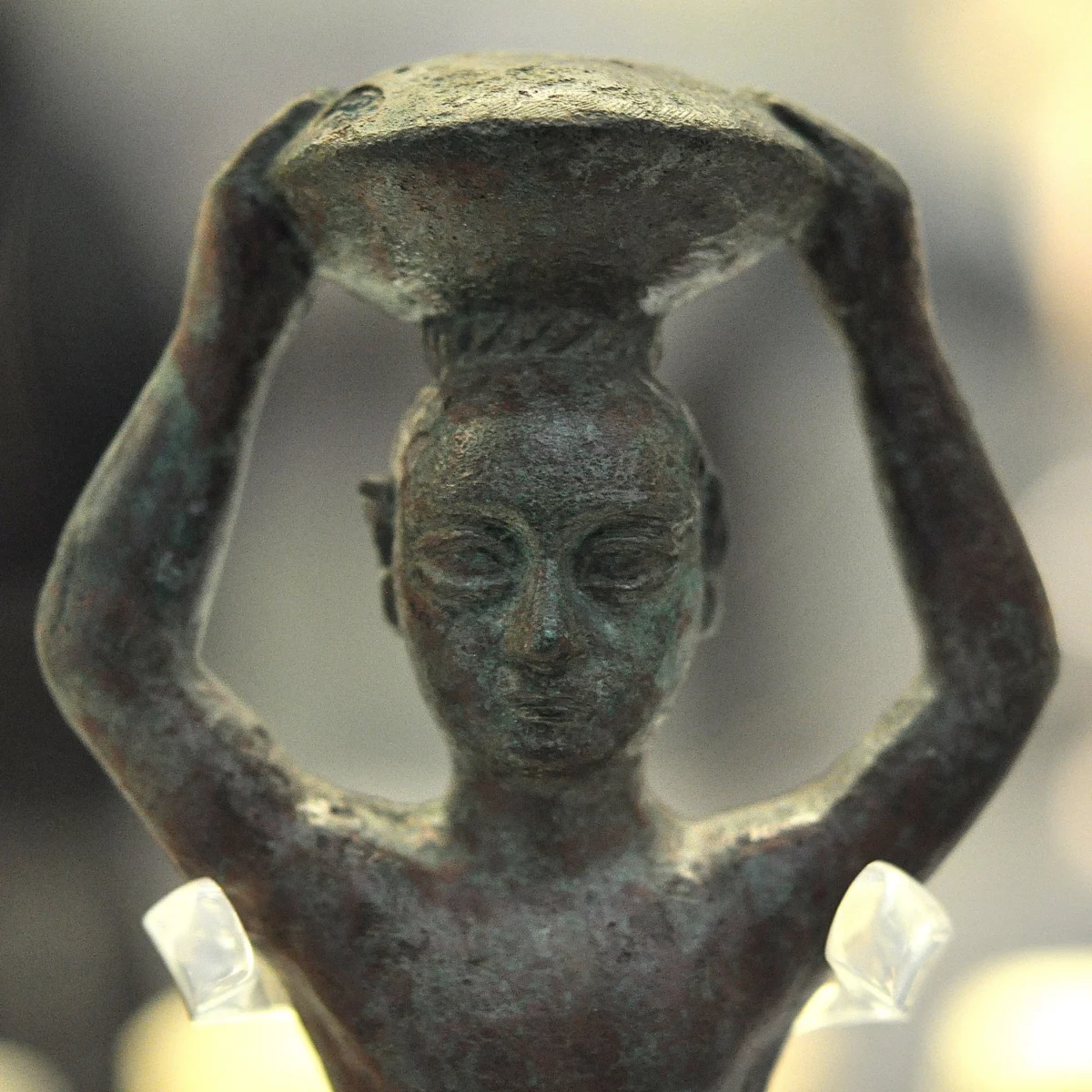
An ancient Sumerian poem, dating back to the reign of Shulgi of Ur (circa 2094 to 2046 BCE), offers a profound and surprisingly humanistic glimpse into the Mesopotamian worldview of death, divine justice, and the afterlife. Known by several titles, including The Death of Ur-Namma and The Death of Ur-Nammu and His Descent to the Underworld, this epic lament details the demise of Ur-Nammu, the founder of the Third Dynasty of Ur, his journey to the netherworld, and the raw grief and outrage that followed. Far from a blissful eternal rest, the poem paints a grim picture of the afterlife, where souls are fully self-aware yet utterly powerless, a concept that scholars believe contributed significantly to the ancient Mesopotamian belief in ghosts.
This monumental piece of literature not only chronicles a king’s transition from the living world to the realm of Ereshkigal, Queen of the Dead, but also confronts fundamental questions about divine will, human suffering, and the nature of existence beyond the grave. Its vivid descriptions of funeral rites, divine reactions, and a king’s bitter lament provide invaluable insights into the religious, social, and psychological fabric of one of the earliest great civilizations.
Main Facts: A King’s Lament from the Underworld
At its heart, The Death of Ur-Nammu is a royal elegy, a lament for a fallen king who believes he was unjustly abandoned by the very gods he faithfully served. The poem’s central narrative unfolds across several stages: Ur-Nammu’s death in battle, the elaborate funerary rites, his soul’s descent into the chilling Sumerian underworld, his attempts to appease its deities, and his poignant lament for his lost life. Critically, the text reveals a stark depiction of the afterlife where "the food of the underworld is bitter, the water of the underworld is brackish" (lines 83-84; Black, 59), and the deceased soul, though fully conscious, is condemned to mourn its earthly losses and the grief of those left behind, utterly incapable of intervention.
The poem, likely performed as part of actual funerary ceremonies, also highlights a dramatic divine conflict. Ur-Nammu explicitly accuses the most powerful gods, Anu and Enlil, of betrayal, allowing him to die on the battlefield. His personal protector, the goddess Inanna, is depicted as being purposefully diverted, only to return and unleash a furious, destructive rage upon discovering her king’s fate. This divine discord underscores a profound theological dilemma for the Sumerians: why do good people suffer and die, even when they have been devout servants of the gods? The understanding of the afterlife as a place of conscious powerlessness, combined with this perceived divine injustice, is directly linked within the text to the emergence of ghost beliefs, as some souls, in a desperate bid for autonomy, were thought to escape the underworld and return to the world of the living. Scholar Samuel Noah Kramer’s observations confirm that many details of the funeral, particularly in lines 31-42, likely reflect genuine ancient Mesopotamian practices, lending historical weight to the poetic narrative.
Chronology: From Battlefield to Bitter Beyond
The poem meticulously charts Ur-Nammu’s tragic journey, offering a chronological unfolding of events from his final moments to his eternal repose.
The Fall of a King (Lines 1-75)
The narrative opens with the devastating news of Ur-Nammu’s death, plunging the entire land of Sumer into chaos. Lines 1-7 describe the immediate aftermath: a land struck, palaces devastated, panic spreading rapidly among the "black-headed people," and cities destroyed. The city of Ur, referred to as Urim, becomes the mournful destination for the king’s body, brought from the battlefield where he met his end. The poem laments, "Evil came upon Urim and made the trustworthy shepherd pass away."
The gods’ immediate reaction, detailed in lines 8-14, is equally striking and somber. Anu, the sky god, is accused of altering his holy words, while Enlil, the god of wind and storms, is said to have "deceitfully" changed the fate he decreed. This divine betrayal sets the tone for the unfolding tragedy. Ninmah begins a lament, Enki, the god of wisdom, symbolically shuts the great door of Eridug, his sacred city, and withdraws in fasting. Even Nanna, the moon god, frowns, and Utu, the sun god, refuses to illuminate the day, leaving it "full of sorrow." This cosmic mourning reflects the immense significance of Ur-Nammu’s death.
The widespread grief is palpable. Lines 15-21 capture the heart-wrenching lament of Ninsun, the king’s holy mother, crying, "Oh my heart!" The people of Sumer, deprived of sleep and happiness, spend their time weeping over their snatched shepherd king. The impact extends beyond human emotion, affecting the very fabric of the land (lines 22-30). Canal-inspectors are silenced, fertile fields are inundated, and the land’s intelligence is lost, leading to scarcity of food and the growth of "grass of mourning." The land itself mourns, its cattle bleating bitterly.
The king’s physical state and funeral rites are described with mournful detail (lines 31-51). His hands, once strong, can no longer grasp; his feet, no longer step. The "sword of Sumer," Ur-Nammu, is brought to Urim, his body laid in the palace. The land, once vibrant, becomes "demolished like a mountain," stripped like a cypress forest. The vivid imagery of axes against a boxwood tree and an uprooted cedar conveys the violence of his demise. Even his beloved donkeys are buried with him (lines 72-73), a detail that reflects actual royal burial practices. The journey to the netherworld is explicitly called a "desolate route," marked by covered chariots and disordered roads, signifying an irreversible passage.
Descent into Ereshkigal’s Realm (Lines 76-197)
Ur-Nammu’s soul, upon reaching the netherworld, begins its descent into the realm of Ereshkigal, Queen of the Dead. His journey is marked by a series of elaborate offerings to the deities associated with the underworld. He presents gifts to the "seven chief porters of the nether world," and his arrival is announced by the famous dead kings and priests, creating a "tumult" in the underworld (lines 76-80). He hosts a "huge banquet," slaughtering numerous bulls and sheep, yet the poem grimly notes the reality of the underworld: "The food of the nether world is bitter, the water of the nether world is brackish." This stark detail immediately establishes the bleakness of the Sumerian afterlife.
Ur-Nammu, "the trustworthy shepherd," demonstrates his understanding of "the rites of the nether world" by presenting specific offerings to its most powerful inhabitants. To Nergal, the "Enlil of the nether world," he offers a mace, a large bow, a dagger, and a multi-coloured leather bag (lines 88-91). To Gilgamesh, the legendary hero and "king of the nether world," he gives a spear, a saddle-hook bag, a lion-headed mace, a shield, and a battle-axe (lines 92-96). Ereshkigal, the formidable Queen, receives a vessel filled with oil, a cajan bowl, heavy garments, and a queenly pala robe (lines 97-101). Further gifts are given to Dumuzid, Namtar (who decrees fates), Hucbisag (Namtar’s wife), the valiant warrior Ningiszida, and Ninazimua (Ningiszida’s spouse and august scribe), each offering carefully tailored to their divine roles and personalities (lines 102-128).
After these elaborate presentations, Ur-Nammu is granted a dwelling place and seated on a "great dais of the nether world" (lines 132-144). He is even given command over soldiers killed by weapons and men found guilty, and is destined to "issue the judgments of the nether world" alongside Gilgamesh. Despite this apparent position of honor, the core reality of the Sumerian afterlife — conscious powerlessness and perpetual grief — soon overwhelms him.
Lines 145-197 capture Ur-Nammu’s profound lament for his lost life. After "seven days, ten days had passed," overwhelming grief for Sumer consumes him. His heart is "full of tears" as he mourns the unfinished wall of Urim, the new palace he can no longer enjoy, his inability to comfort his wife, raise his sons, or see his daughters grow. He expresses his bitter regret, questioning the gods’ reward for his tireless service: "What is my reward for my eagerness to serve during the days? My days have been finished for serving them sleeplessly during the night!" He acknowledges the irreversibility of his fate: "just as the rain pouring down from heaven cannot turn back, alas, nor can I turn back to brick-built Urim." He laments his wife’s widowhood, her abandonment by her protective deities, and the silencing of his own musical instruments, now replaced by laments. The ultimate sting is Inanna’s absence during his judgment, as Enlil had "sent her as a messenger to all the foreign lands concerning very important matters."
Divine Outrage and Concluding Praise (Lines 198-242)
Inanna’s return and subsequent rage form a pivotal dramatic turn (lines 198-233). Upon turning her gaze from her errands, Inanna enters the shining E-kur, confronting Enlil. Enlil’s cold response, "once someone has bowed down, he cannot… (?) any more; the trustworthy shepherd left E-ana, you cannot see him any more," ignites her fury.
Inanna, described as "the fierce storm, the eldest child of Suen," makes "the heavens tremble, made the earth shake." Her rage is destructive; she "destroyed cattle-pens, devastated sheepfolds," and hurls insults at Anu, the king of the gods. She challenges the divine order, questioning who can change Enlil’s elevations or Anu’s august words. She laments the non-observance of divine ordinances, which leads to a lack of abundance. Her pain is visceral as she longs for her shepherd king: "If only my shepherd could enter before me in it in his prime – I will not enter it otherwise! If only my strong one could grow for me like grass and herbs in the desert." Her lamentation is a powerful expression of grief and a direct indictment of the gods’ perceived injustice.
The poem concludes with praise to Lord Ningiszida, a significant vegetation and underworld deity (lines 217-242). The fragmentary final lines suggest an appeal to Ningiszida to comfort Ur-Nammu amidst his tears and lamentation, hinting at a form of posthumous solace or recognition. Ur-Nammu’s "august name will be called upon," and his achievements – canals, arable tracts, reed-beds, fortresses – will be admired. This final section suggests that while the individual’s fate in the underworld is bleak, his legacy on Earth, and perhaps some divine recognition from a sympathetic deity, can endure.
Supporting Data: The Sumerian Worldview
The epic of Ur-Nammu provides a rich tapestry of supporting data for understanding the intricate Sumerian worldview, particularly concerning their conceptions of the afterlife, divine justice, and the origins of cultural beliefs.
The Sumerian Underworld: A Realm of No Return
The portrayal of the Sumerian underworld, known as the Land of No Return or Kur, is consistently bleak across Mesopotamian literature, and The Death of Ur-Nammu reinforces this grim reality. It is a shadowy realm, not of punishment or reward in the moral sense, but of perpetual, monotonous existence. The explicit declaration that "the food of the underworld is bitter, the water of the underworld is brackish" immediately strips away any notion of comfort or nourishment. This detail, appearing in other Mesopotamian texts like The Descent of Inanna, signifies a fundamental lack of vitality and pleasure.
Crucially, the poem emphasizes the soul’s complete self-awareness coupled with absolute powerlessness. Ur-Nammu can lament his lost life, his unfinished projects, and the grief of his family, yet he can "do nothing to change its fate or comfort the mourners." This state is not one of oblivion, but of agonizing consciousness, a perpetual replay of earthly attachments without the capacity for action or solace. This contrasts sharply with some other ancient afterlives, such as the Egyptian Field of Reeds, a paradise for the righteous, or even the Greek Elysian Fields, suggesting a unique and particularly harsh eschatology in Sumer. The Sumerian underworld is democratic in its misery, a fate awaiting all, regardless of earthly status or piety, though kings like Ur-Nammu might be granted a "dais" or command over lesser souls, their fundamental suffering remains.
Divine Betrayal and Human Suffering
Ur-Nammu’s direct accusation against Anu and Enlil for altering his fate and abandoning him on the battlefield is a central theological challenge within the poem. He explicitly states, "He trusted the most powerful of the gods, Anu (An) and Enlil, to protect him, but, instead, they let him die on the battlefield." This raises profound questions about the nature of divine justice and the capricious will of the gods in ancient Mesopotamia. Ur-Nammu had faithfully served them, setting up chapels and creating abundance, yet his devotion did not guarantee protection or a peaceful end.
The goddess Inanna’s outrage upon discovering Ur-Nammu’s death further highlights this divine moral dilemma. Her destructive fury and direct challenge to Anu and Enlil ("I want to hurl insults at An, the king of the gods: Who can change the matter, if Enlil elevates someone?") reveal a potential schism within the pantheon and a profound questioning of the established cosmic order. Inanna’s lament is not just for her beloved king but also for the failure of divine ordinances when "they are not observed." This narrative grapples with the timeless question of why good, devout individuals suffer and die, leaving it ultimately unanswered within the text, reflecting a complex and often unsettling understanding of divine power.
The Genesis of Ghosts in Mesopotamia
The poem explicitly links the grim reality of the Sumerian afterlife to the belief in ghosts. The text states that the soul is "completely self-aware and completely powerless once it has descended to the realm of Ereshkigal," and "this understanding of the afterlife contributed, in part, to the belief in ghosts in ancient Mesopotamia: some souls, in trying to assert their autonomy, would escape and return to the world of the living."
This connection is crucial. If the underworld offered no agency, no comfort, and no reprieve from earthly grief, a soul’s only recourse for self-assertion would be to defy its fate. Ghosts, or gidim, in Mesopotamian belief were often restless, unhappy spirits who had not been properly buried or remembered, or who had some unfinished business. The Death of Ur-Nammu suggests an additional impetus: the sheer psychological burden of conscious powerlessness in the afterlife. A soul, desperate to reclaim some measure of control or to alleviate its torment, might attempt to break free from Ereshkigal’s grasp, thus becoming a haunting presence in the world of the living. This provides a compelling, existential origin for a widespread supernatural belief.
Royal Funerary Practices
Samuel Noah Kramer’s observation that many details in the poem "no doubt reflect actual practices" provides significant archaeological and historical validation. The elaborate funeral described, from the king’s body being brought to Urim to the burial of his donkeys with him, aligns with evidence found in royal tombs, such as those at Ur itself. The gifts presented to the underworld deities – maces, bows, daggers, robes, chariots, and specific jewelry – likely mirrored the types of grave goods interred with high-ranking individuals to ensure their well-being and influence in the afterlife. The poem’s description of a king hosting a banquet for the underworld deities, even if symbolic, reflects the earthly responsibilities of a monarch to provide for his people. The performance of a lament for a fallen king, as suggested by Kramer, would have been a central component of royal funerary rites, ensuring public mourning and the proper transition of the deceased’s spirit. These details transform the poem from mere literature into a valuable historical document, offering a window into the rituals and beliefs surrounding royal death in ancient Sumer.
Official Responses and Divine Reactions
The divine reactions within The Death of Ur-Nammu are multifaceted, ranging from cosmic despair to outright rage, and highlight the complex relationship between gods and mortals in Sumerian thought.
Initially, the "official response" from the senior gods to Ur-Nammu’s death is one of profound, albeit somber, acquiescence. Enki, the god of wisdom, retreats into his bedchamber, shutting the doors of Eridug and fasting, a gesture of deep sorrow and withdrawal. Utu, the sun god, refuses to light the day, casting the world into a sorrowful gloom. Nanna, the moon god, "frowned," indicating displeasure but no active intervention. These reactions are less about comfort and more about acknowledging a fated event, one perhaps orchestrated or permitted by higher powers.
The most critical "official response" (or lack thereof) comes from Anu and Enlil regarding Ur-Nammu’s direct accusation of betrayal. The poem states that Anu "altered his holy words completely" and Enlil "deceitfully… changed the fate he decreed." There is no direct refutation or explanation from these supreme deities within the text, only a silent, damning acceptance of the king’s charge. This silence amplifies the sense of divine injustice and highlights the gods’ inscrutable nature, leaving the question of Ur-Nammu’s fate hanging in a realm beyond mortal comprehension or appeal.
The most visceral divine reaction comes from Inanna, Ur-Nammu’s personal protector. Her "official response" is one of unbridled fury and lament. Having been purposefully sent away by Enlil on an "errand to distract her," she returns to find her king dead. Her confrontation with Enlil is tense; his terse dismissal ("you cannot see him any more") only fuels her rage. Inanna, described as "the fierce storm," does not merely grieve; she actively rebels, challenging the authority of Anu and Enlil, devastating cattle-pens and sheepfolds. Her lament is a powerful protest against the divine decision, embodying the frustration of a deity who feels she has been circumvented and her protégé wronged. This portrays a pantheon not always in agreement, and where even powerful gods like Inanna can be manipulated or defied.
Finally, the poem concludes with an appeal to Ningiszida, a vegetation and underworld deity. While not a direct "response" to Ur-Nammu’s lament or Inanna’s rage, Ningiszida’s praise and the suggestion that he might "comfort the soul of Ur-Nammu amidst his tears and lamentation" offer a faint glimmer of solace. It suggests that while the supreme gods might remain silent or capricious, there are deities within the underworld who might offer a degree of understanding or empathy, providing a subtle, localized form of divine recognition in an otherwise bleak existence.
Implications: Enduring Legacy of a Sumerian King
The epic of The Death of Ur-Nammu carries profound implications, extending from its immediate impact on Sumerian society to its enduring legacy in our understanding of ancient civilization and the human condition.
Impact on Sumerian Society and Beliefs
The public performance of such a lament, as Kramer suggests, would have had a deep impact on Sumerian society. It would have served multiple purposes: expressing collective grief for a revered ruler, reinforcing the king’s divine mandate (even in death, with his judgment over lesser souls), and shaping popular understanding of the afterlife. The bleak depiction of the underworld, combined with the narrative of divine betrayal, would have fostered a complex and perhaps fearful relationship with the gods. It might have reinforced the idea that divine favor was fleeting and that even the most pious ruler could fall victim to unpredictable divine decrees. This could lead to a focus on meticulous ritual observance and offerings to appease potentially capricious deities, rather than expecting inherent divine justice. The explicit link between the powerlessness in the afterlife and the existence of ghosts would have infused daily life with a pervasive sense of the supernatural, where restless spirits might at any moment return to the world of the living, requiring further rituals and appeasement. The poem thus served as both a cultural anchor and a theological challenge.
Literary and Historical Significance
The Death of Ur-Nammu is a unique and invaluable literary and historical document. As one of the earliest known royal laments, it provides unparalleled insight into early Mesopotamian kingship, funerary customs, and theological concepts. Its detailed descriptions of Ur-Nammu’s achievements (digging canals, building fortresses, cultivating fields), even in posthumous praise, offer a glimpse into the responsibilities and legacy of a Sumerian ruler. The poem’s sophisticated narrative structure, combining heroic epic with deeply personal lament, showcases the literary prowess of ancient Sumerian scribes. It sits alongside other great Mesopotamian epics, such as Gilgamesh, contributing to a rich tradition of exploring themes of mortality, heroism, and the divine. Historically, it corroborates archaeological findings related to royal burials and provides contextual meaning to artifacts and architectural remains, enhancing our understanding of this foundational civilization.
Echoes in Modern Understanding
The enduring questions raised by The Death of Ur-Nammu – why good people suffer, the nature of divine justice, and the meaning of existence beyond death – resonate across millennia and continue to inform our understanding of the human condition. The poem reflects a universal human struggle to reconcile loss and injustice with belief in a higher power. Its depiction of an afterlife where consciousness persists without agency speaks to deep-seated anxieties about identity and control. In an age where secularism and scientific inquiry often challenge traditional religious narratives, this ancient text reminds us of the foundational role that such narratives played in providing meaning, even if unsettling, for societies grappling with the mysteries of life and death. It highlights humanity’s persistent quest for justice, even in the face of perceived divine indifference, and serves as a powerful testament to the timeless nature of grief, loyalty, and the search for comfort in an often-unforgiving world.

Leave a Comment