
Groundbreaking Research Reveals Widespread Shamanism Underpinned Early Modern British Witchcraft
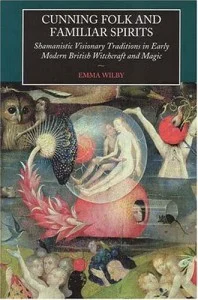
LONDON – A pivotal new academic work is challenging long-held assumptions about European spiritual history, arguing that shamanistic traditions were not only present but pervasive in early modern Britain, forming the experiential bedrock of what was later condemned as witchcraft during the infamous trials of the 16th and 17th centuries. Emma Wilby’s "Cunning Folk and Familiar Spirits: Shamanistic Visionary Traditions in Early Modern British Witchcraft and Magic" offers a radical reinterpretation, positing that the accused witches were often practitioners of a deeply rooted, indigenous spiritual system misunderstood and demonized by the era’s ecclesiastical and secular authorities.
The book, hailed as an indispensable contribution to the field, dismantles the notion that "European shamanism" is an oxymoron, presenting compelling evidence that such practices thrived in Europe just a few centuries ago. Furthermore, Wilby’s meticulous research refutes the prevailing view that the Witch Trials were solely products of mass hysteria or elite fabrication, revealing a genuine, albeit misinterpreted, experiential basis for the accusations.
Main Facts
Emma Wilby’s "Cunning Folk and Familiar Spirits" stands as a significant intervention in the study of early modern European history, witchcraft, and religious anthropology. The central thesis of her work is twofold: firstly, that shamanistic practices were a widespread and integral part of folk culture in early modern Britain, contradicting the popular belief that shamanism was confined to remote, non-European societies. Secondly, she argues that the acts and experiences described in the court records of the British Witch Trials were not fabrications or delusions, but rather genuine expressions of these indigenous shamanistic traditions, misinterpreted through the Christian theological lens of the time.
Challenging Historical Narratives
For decades, the concept of "European shamanism" has been met with skepticism within academic circles, often dismissed as an anachronism or a romanticized projection onto a continent perceived to have long abandoned such indigenous spiritual practices. Wilby systematically dismantles this assumption, presenting a meticulously researched argument that shamanism, characterized by visionary journeys, spirit communication, and healing, was a living tradition in Europe until relatively recently. Her work forces a re-evaluation of Europe’s spiritual landscape, suggesting a continuity of folk beliefs and practices that predates and coexisted with dominant Abrahamic religions.
Equally transformative is Wilby’s challenge to the prevailing interpretations of the 16th and 17th-century Witch Trials. Conventional wisdom often attributes these events to mass hysteria, social control exerted by authorities, or the purely fabricated confessions extracted under duress. While acknowledging the oppressive context, Wilby introduces a crucial nuance: that beneath the layers of theological condemnation and societal panic lay an authentic substratum of practiced magic and spiritual engagement. She argues that individuals accused of witchcraft were indeed engaging in activities they understood as efficacious magic, rooted in a worldview deeply connected to spirits and altered states of consciousness. This perspective shifts the focus from purely external societal pressures to the internal, experiential realities of the accused, offering a more empathetic and complex understanding of their actions and beliefs.
The Core Argument: Witchcraft as Shamanism
Wilby’s core argument posits a direct link between the British witchcraft accounts from the trials and cross-cultural characteristics of shamanism. She meticulously compares the reported deeds of witches – such as flying, shape-shifting, interacting with non-human entities, and journeying to other realms – with established ethnographic records of shamanistic traditions from cultures like those in Native North America and Siberia. This comparative analysis reveals striking parallels, suggesting that what authorities condemned as demonic pacts and malevolent sorcery were, from the perspective of the practitioners, interactions with spirits, visionary experiences, and attempts to influence the world through ritual.
A particularly illuminating aspect of her argument concerns the interpretation of "demons." The court documents frequently detail witches interacting with "demons" or "familiar spirits" who aided them in their magical endeavors. Wilby makes a compelling case that these "demons" were, in the witches’ own understanding, far closer to folkloric fairies, elves, or other nature spirits – entities deeply embedded in the folk cosmology of pre-Christian Europe. These were not necessarily malevolent entities in the Christian sense, but rather ambivalent, powerful beings of the otherworld with whom cunning folk sought to forge relationships for various purposes, including healing, divination, and even cursing. This reinterpretation humanizes the accused, portraying them not as agents of absolute evil, but as individuals navigating a complex spiritual landscape populated by a diverse array of non-human intelligences.
Chronology
Understanding Wilby’s argument requires contextualizing it within the historical timeline of early modern Europe and the evolution of academic thought regarding witchcraft and indigenous spiritualities.
The Early Modern Period: A Time of Transformation
The period spanning the 16th and 17th centuries in Britain was one of immense social, religious, and political upheaval. The Reformation had reshaped the religious landscape, establishing Protestantism while simultaneously leading to a concerted effort by the newly consolidated Church and state to eradicate "superstition" and enforce theological conformity. This era saw the gradual erosion of older, localized folk practices and beliefs under the pressure of official doctrines. Economic changes, population shifts, and the rise of print culture also contributed to a changing worldview, where older, oral traditions and localized spiritual practices began to be viewed with suspicion by the educated elite. It was against this backdrop that the practice of "cunning folk" – individuals who offered remedies, divinations, and charms to their communities – became increasingly vulnerable to accusations of witchcraft. Their work, often blending herbal knowledge with traditional spiritual appeals, was deeply ingrained in rural life but increasingly seen as illicit by authorities.
The Era of the Witch Trials: A Brief Overview
The Witch Trials, which peaked in Britain between the mid-16th and mid-17th centuries, represent a dark chapter in European history. Thousands were accused, interrogated, and often executed for the alleged crime of witchcraft. These trials were driven by a complex interplay of legal, religious, and social factors. Authorities, influenced by demonological treatises emanating from continental Europe, believed that witches had made pacts with the Devil, granting them supernatural powers to harm their neighbors. The court records from these trials, often detailing bizarre confessions and accusations, have historically been a primary source for understanding the phenomenon. However, as Wilby points out, these records are filtered through the interpretative lens of the educated elite – judges, clerics, and lawyers – who held a worldview vastly different from that of the accused peasants. This inherent bias in the source material is precisely what Wilby seeks to deconstruct and re-evaluate.
Shifting Academic Perspectives
For centuries, academic discourse on witchcraft tended to either dismiss it as pure delusion or attribute it entirely to social control. In the 19th and early 20th centuries, some scholars, notably Margaret Murray, controversially argued for the existence of an organized pre-Christian witch cult, a theory largely discredited due to lack of historical evidence. More recently, social historians have focused on the socio-economic conditions, gender dynamics, and community tensions that fueled accusations. Anthropologists, meanwhile, have contributed by studying comparative magic and belief systems in other cultures. Wilby’s work represents a significant evolution, moving beyond both the "delusion" and "social control" paradigms to explore the experiential reality of the accused, bridging historical analysis with an anthropological understanding of indigenous spiritual practices. Her approach aligns with a growing trend in scholarship that seeks to understand historical actors’ beliefs on their own terms, rather than imposing modern or anachronistic interpretations.
Supporting Data
Wilby’s methodology is characterized by a rigorous interdisciplinary approach, drawing on historical records, anthropological theory, and folkloric studies to build her argument. The strength of her work lies in her ability to synthesize disparate forms of evidence and re-contextualize familiar historical documents.
Cross-Cultural Comparative Analysis
A cornerstone of Wilby’s methodology is her extensive use of cross-cultural parallels. By drawing comparisons between the descriptions of British witchcraft in court documents and documented shamanistic traditions from Native North America and Siberia, she highlights common structural and experiential elements. These parallels include accounts of spirit flight (often interpreted as broomstick riding), interactions with animal guides or helping spirits (the "familiars"), healing practices, divination through trance, and journeys to other worlds. This comparative approach allows Wilby to identify patterns that transcend specific cultural contexts, suggesting a universal human capacity for certain types of spiritual experience and interaction, which manifest differently according to local cultural frameworks. This method helps to normalize and understand what might otherwise seem bizarre or inexplicable in the British context.
Reinterpreting Primary Sources
Wilby’s analysis hinges on a meticulous re-examination of primary sources from the Witch Trials. She recognizes that the court records are not transparent windows into the past but rather texts produced within a specific power dynamic, reflecting the interpretations and biases of the interrogators. The language used by the elite — terms like "demon," "Devil’s pact," "heresy" — often obscured the underlying folk beliefs of the accused. Wilby "reads against the grain" of these documents, identifying recurring motifs and narrative structures that, when stripped of their Christian demonological overlay, reveal a consistent pattern of shamanistic experiences. For instance, a witch’s confession of meeting a "black man" who offered power might be reinterpreted as an encounter with a powerful spirit guide, an archetypal figure in many indigenous traditions, rather than a literal meeting with the Christian Devil. This nuanced approach allows her to discern the "peasant’s perspective" hidden within the "elite’s record."
Folklore and Folk Beliefs
Central to Wilby’s argument is the rich tapestry of British folklore, particularly regarding the "Good Neighbors" or fairies. She demonstrates how the "demons" or "familiar spirits" described in the trials bear striking resemblances to the fairies of folk tradition – entities that were often ambivalent, capable of both harm and help, and deeply intertwined with the natural world. These were not the diminutive, winged creatures of Victorian fantasy but powerful, sometimes fearsome, beings inhabiting a parallel realm. Wilby posits that cunning folk sought relationships with these beings, much as shamans in other cultures cultivate relationships with spirits of the land or ancestral spirits. The elite’s imposition of Christian demonology transformed these traditional folk spirits into agents of the Devil, but for the practitioners themselves, these were integral parts of their spiritual cosmology. This aspect of her research underscores the enduring power of indigenous belief systems even in the face of dominant religious narratives.
The Experiential Dimension
Perhaps the most compelling and empathetic section of Wilby’s book, "The Experiential Dimension," endeavors to transport the reader into the lived reality of the early modern British peasantry. She argues that the harsh conditions of peasant life – characterized by poverty, disease, high infant mortality, precarious harvests, and a deep reliance on the natural world – would have been particularly conducive to visionary experiences and a belief in the efficacy of magic. In a world without modern medicine or scientific explanations for misfortune, recourse to spiritual intervention, healing charms, and divination was a rational response to existential precarity.
Wilby explores how practices like fasting, solitary vigil, consumption of psychoactive plants (though she does not overemphasize this), and even the psychological stress of everyday life could induce altered states of consciousness, leading to encounters with what were perceived as spirits. These experiences provided meaning, comfort, and a sense of agency in a world often beyond human control. By focusing on the phenomenology of these experiences, Wilby adds a deeply human and sympathetic layer to her historical analysis, moving beyond a detached academic assessment to an attempt to understand the subjective reality of those who practiced and believed in witchcraft. This approach helps to explain why such beliefs persisted and how they were genuinely experienced by individuals, making them far less "absurd" and more explicable within their historical and cultural context.
Official Responses
As a significant academic publication, "Cunning Folk and Familiar Spirits" does not elicit "official responses" in the governmental sense, but its impact is keenly felt within academic discourse, prompting re-evaluation and discussion among historians, anthropologists, and religious studies scholars.
Scholarly Reception and Impact
The initial reception of Wilby’s work within the academic community has been largely positive and deeply impactful. Reviewers in scholarly journals have lauded her meticulous research, innovative methodology, and profound insights. Her book is seen as a vital contribution that enriches the existing scholarship on witchcraft by providing a nuanced and often overlooked perspective: the experiential reality of the accused. It challenges scholars to move beyond purely sociological or psychological explanations and to seriously consider the spiritual dimensions of early modern folk practices. The book is likely to become a standard text for courses on witchcraft, European history, and comparative religion, sparking new research directions and debates.
Challenging Orthodoxy
Wilby’s work represents a significant challenge to established historical orthodoxies. For a long time, the idea that Europe retained deep-seated, indigenous shamanistic traditions, especially into the early modern period, was considered marginal, if not erroneous. Her book forces a re-examination of the "progress" narrative that often accompanies European history, where pre-Christian beliefs are assumed to have been thoroughly eradicated or assimilated. By demonstrating the persistence and vitality of these traditions, Wilby complicates our understanding of religious change and cultural resilience. She effectively positions the Witch Trials not merely as an act of persecution, but as a clash of worldviews – a dominant Christian elite attempting to suppress and redefine an older, persistent folk spirituality.
Bridging Disciplines
One of the key strengths highlighted by scholars is Wilby’s successful interdisciplinary approach. By fluently integrating historical archival research with anthropological theory (particularly concerning shamanism and spirit belief) and folkloric studies, she offers a model for holistic historical inquiry. This methodological synthesis allows for a richer, more comprehensive understanding of complex historical phenomena that resist simplistic categorization. Her work demonstrates how insights from anthropology can illuminate historical documents, and how historical context can refine anthropological theories, creating a more robust and nuanced understanding of human belief systems across time and culture.
Implications
The implications of Emma Wilby’s research extend far beyond the specific study of early modern British witchcraft, offering profound insights into European spiritual history, the nature of religious persecution, and the enduring power of folk traditions.
Re-evaluating European Spiritual History
Wilby’s book fundamentally alters our understanding of Europe’s spiritual landscape. It suggests that underneath the veneer of Christianity, a vibrant and resilient substratum of indigenous, shamanistic practices persisted, influencing the lives of ordinary people for centuries longer than previously acknowledged. This forces a re-evaluation of the idea of "Christian Europe," prompting scholars to consider the syncretic nature of popular religion and the continuous interplay between official doctrine and folk belief. It opens up avenues for exploring similar traditions in other European regions, potentially revealing a much broader and deeper legacy of shamanism across the continent. This shift in perspective could lead to a richer, more diverse narrative of European spiritual development, acknowledging the complexity and resilience of its native traditions.
Humanizing the Accused
By demonstrating the experiential and folkloric basis of what was condemned as witchcraft, Wilby’s work has a deeply humanizing effect on the historical figures accused during the trials. They are no longer merely victims of mass delusion or malicious fabrication but individuals who genuinely experienced a spiritual reality, albeit one interpreted disastrously by their persecutors. This perspective encourages empathy and a more profound understanding of their worldview. It moves beyond simplistic victimhood to acknowledge their agency within their own belief system, even as that system was systematically dismantled and demonized. This approach helps to restore dignity to those who were historically marginalized and condemned, allowing us to see them as complex individuals with rich inner lives and meaningful spiritual practices.
The Enduring Legacy of Folk Beliefs
"Cunning Folk and Familiar Spirits" underscores the remarkable tenacity of folk beliefs and practices in the face of institutional pressure. Despite concerted efforts by the Church and state to eradicate "superstition" and enforce theological conformity, these indigenous traditions persisted, often underground or in disguised forms. Wilby’s research illustrates how these beliefs provided practical solutions, spiritual comfort, and a sense of community for the peasantry, fulfilling needs that official religion sometimes failed to address. This highlights a universal truth about human societies: folk traditions, rooted in local knowledge and communal experience, often possess an incredible resilience, adapting and surviving through generations even when suppressed.
Modern Relevance
The insights offered by Wilby’s research also hold contemporary relevance. In an age where discussions around spirituality, alternative healing, and the re-emergence of indigenous traditions are prevalent, understanding the historical roots of such practices in Europe provides crucial context. It encourages a more nuanced approach to contemporary spiritual movements and a critical examination of how dominant narratives continue to interpret or misinterpret marginalized belief systems. Furthermore, her work serves as a powerful reminder of the dangers of misinterpreting and demonizing cultural practices that do not conform to established norms, offering lessons for understanding religious intolerance and persecution in any era.
A Call for Nuance
Ultimately, Emma Wilby’s "Cunning Folk and Familiar Spirits" is a profound call for nuance in historical inquiry. It challenges historians and readers alike to move beyond simplistic narratives and to engage with the complex, often contradictory, realities of the past. By meticulously reconstructing the experiential world of early modern British cunning folk, Wilby not only sheds new light on a dark chapter of history but also enriches our understanding of the enduring human quest for meaning, connection, and power within the spiritual dimensions of existence. Her book is a testament to the power of scholarly investigation to unearth hidden histories and reshape our collective memory.



Leave a Comment