
Caesarea Maritima: A Digital Odyssey into Herod the Great’s Roman Jewel
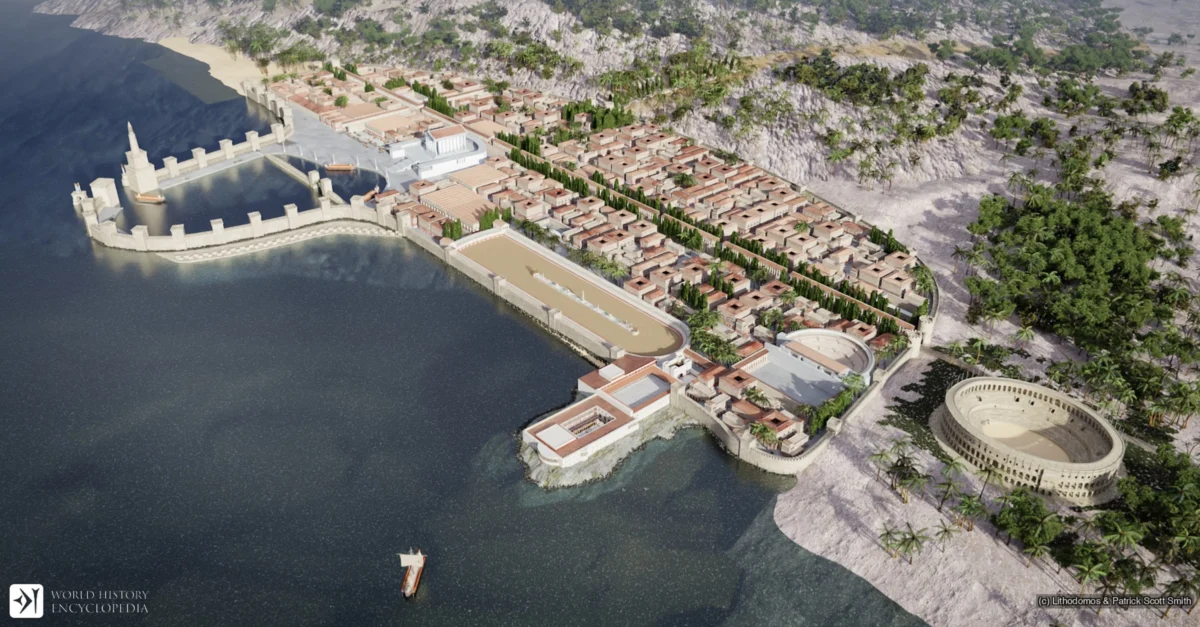
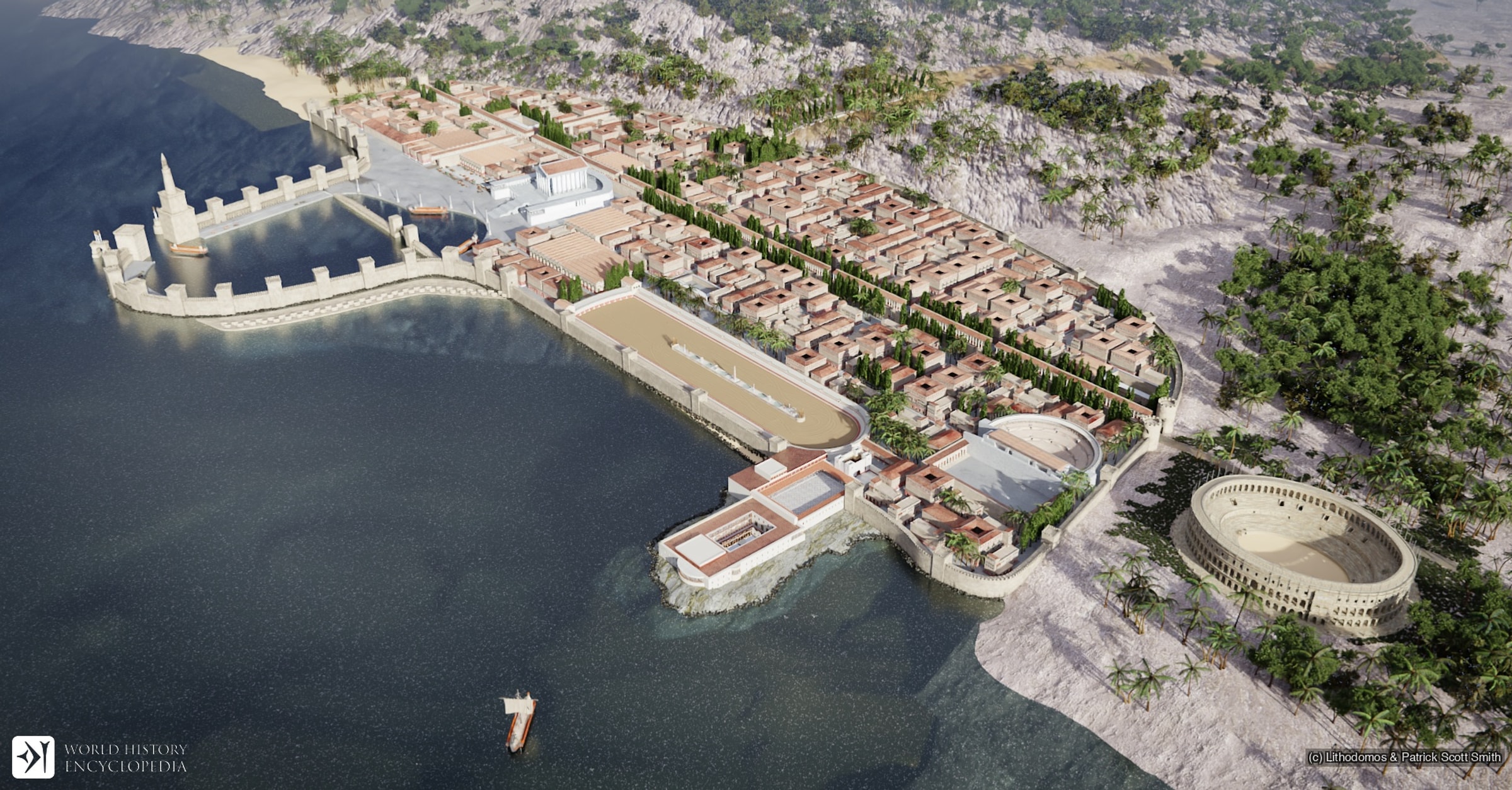
Caesarea Maritima, Israel – In a remarkable intersection of ancient history and cutting-edge technology, the colossal Roman port city of Caesarea Maritima, once a bustling trading hub and strategic military outpost in the Eastern Mediterranean, is being brought back to vivid life through meticulous digital reconstructions. Commissioned by the ambitious Herod the Great (reigned 37-4 BCE) on the ruins of an earlier settlement, this metropolis was a testament to Roman engineering and Herodian ambition, boasting a magnificent harbor, grand public buildings, and sophisticated infrastructure.
Modern efforts by Lithodomos and Patrick Scott Smith are now allowing us to visualize the city as it stood in its prime. These digital renderings, born from a rigorous synthesis of archaeological reports, comparative analyses of Roman construction techniques, and the invaluable eyewitness accounts of the historian Flavius Josephus, offer an unprecedented glimpse into one of the ancient world’s most impressive urban creations. From its innovative harbor to its sprawling civic complexes, Caesarea Maritima served as a pivotal nexus of trade, power, and culture for centuries, leaving an indelible mark on the history of the Roman Empire and the broader Levant.
Main Facts: The Vision of Herod and Roman Power
Caesarea Maritima was more than just a city; it was a grand statement of power and an engineering marvel. Conceived by Herod the Great, the Roman client king of Judea, the city was inaugurated around 10 BCE and quickly rose to prominence as the administrative capital of the Roman province of Judea. Its strategic location on the Mediterranean coast made it an indispensable asset for Rome, facilitating both commercial exchange and military projection across the vital Eastern Mediterranean.
The centerpiece of Herod’s creation was its colossal artificial harbor, known as Sebastos, meaning "Augustus" in Greek, honoring his Roman patron, Emperor Augustus. This harbor was not merely a dock; it was a fortified maritime complex, featuring advanced hydraulic concrete technology – a testament to Roman ingenuity – and massive breakwaters that created a secure, all-weather port. Sebastos was a dual-purpose facility: a gateway for vast mercantile fleets laden with goods from across the empire, and a formidable naval base capable of hosting substantial military forces. Its innovative design and sheer scale made it one of the largest and most advanced harbors of the ancient world, rivaling even the Piraeus in Athens or Portus in Rome.
Beyond the harbor, Caesarea was a fully realized Roman city. It featured a magnificent temple dedicated to Augustus and Roma, strategically placed on a high podium overlooking the harbor, symbolizing Herod’s loyalty to Rome. The city also housed sumptuous palaces for the Roman procurators and local elite, a grand amphitheater for gladiatorial contests and public spectacles, a classical theater for dramatic performances, intricately paved streets arranged in a grid pattern, and a sophisticated system of aqueducts that supplied fresh water to its burgeoning population. These elements collectively forged a vibrant urban center that seamlessly blended Roman architectural grandeur with the local Levantine landscape, serving as a beacon of Roman civilization in the East.
Chronology: The Evolution of a Roman Metropolis
The history of Caesarea Maritima is a dynamic narrative, mirroring the ebb and flow of regional and imperial power. From its ambitious founding to its eventual decline, the city played a crucial role in the unfolding drama of the Roman East.
Founding and Early Splendor (c. 22 BCE – 6 CE)
Herod the Great initiated the construction of Caesarea Maritima around 22 BCE, transforming a minor Phoenician port named Straton’s Tower into a magnificent Roman city. His motivations were multi-faceted: to create a deep-water port that would solidify Judea’s economic ties with Rome, to establish a grand city that would enhance his international prestige, and to provide a loyal Roman client state with a secure administrative and military base. The sheer scale and speed of its construction were legendary, largely thanks to Herod’s access to Roman engineering expertise and vast resources. The city’s dedication around 10 BCE marked a new era for Judea, shifting its focus firmly towards the Mediterranean world. Upon Herod’s death in 4 BCE, Judea became a Roman province, and Caesarea was designated its administrative capital, housing the Roman governors (procurators).
Integration into the Roman Empire and the Jewish Revolts (6 CE – 135 CE)
As the seat of Roman power in Judea, Caesarea was inevitably at the heart of the complex relationship between Roman authority and the Jewish population. Tensions frequently simmered, occasionally erupting into violence. The city’s multi-ethnic population, comprising Romans, Greeks, Samaritans, and Jews, often clashed, providing a volatile backdrop to Roman governance.
The most significant period of upheaval came with the Great Jewish Revolt of 66 CE. The spark that ignited this widespread rebellion is often traced to a conflict in Caesarea itself, arising from a dispute over synagogue rights and Roman provocations. Caesarea became a critical Roman base of operations during the brutal suppression of the revolt. Emperor Vespasian, then a general, stationed significant legions in the city, using it as a logistical and strategic hub to conduct campaigns against Jewish strongholds, including Jerusalem. The atrocities committed by Roman soldiers garrisoned at Caesarea during this period are well-documented by Josephus, culminating in the horrific loss of thousands of Jewish lives. Following the Roman victory, Vespasian, now emperor, elevated Caesarea to the prestigious status of a Roman colony (Colonia Prima Flavia Augusta Caesarea), granting its residents Roman citizenship and further cementing its imperial importance.
Decades later, Caesarea again played a central role during the Bar-Kochba Revolt (132-135 CE). This second major Jewish rebellion, led by Simon bar Kokhba, aimed to establish an independent Jewish state. While Jerusalem was ultimately destroyed by the Romans, Caesarea served as the provincial governor’s headquarters. After the crushing of the revolt, Emperor Hadrian further solidified Roman control by renaming the province of Judea to Syria-Palaestina, a symbolic act intended to erase Jewish ties to the land. Caesarea, as the undisputed capital, became the primary locus of Roman administration and culture in the newly designated province.
Byzantine Zenith and Christian Flourishing (4th Century CE – 7th Century CE)
Following the 4th century CE, as the Roman Empire transitioned into the Byzantine period and Christianity became the dominant religion, Caesarea entered a new golden age. Its population surged, thought to have exceeded 100,000 residents, spilling beyond its original Herodian walls. This growth was sustained by significant infrastructural enhancements, particularly the expansion of its water supply system. New aqueducts were constructed, tapping into additional distant water sources to meet the demands of a burgeoning urban center.
During this era, Caesarea became a prominent center of Christian scholarship and pilgrimage. It housed a significant Christian community from early times, including figures like the theologian Origen and the historian Eusebius, whose ecclesiastical history provides invaluable insights into early Christianity. The city’s impressive churches, public baths, and vibrant marketplaces underscored its status as a thriving metropolis, a testament to its enduring strategic importance and economic vitality.
Decline and Subsequent Eras (7th Century CE Onwards)
The prosperity of Byzantine Caesarea began to wane with the advent of the Islamic conquests. In 640 CE, the city fell to the Arab armies of the Rashidun Caliphate after a prolonged siege. While it remained a significant port, its status diminished as new administrative centers emerged. Over the subsequent centuries, Caesarea experienced periods of partial revival under various Islamic dynasties, but it never fully regained its former glory. During the Crusades, it was captured by the Crusaders in 1101, becoming an important stronghold and port for the Kingdom of Jerusalem, before being re-taken and eventually destroyed by the Mamluks in 1265, effectively ending its prominence as a major urban center. The once-mighty city slowly faded into ruins, buried beneath layers of sand and time, awaiting rediscovery by archaeologists centuries later.
Supporting Data: Unveiling the Ancient City Through Reconstruction
The detailed understanding of Caesarea Maritima’s grandeur is owed to over seven decades of intensive archaeological excavation, meticulously documented by scholars and researchers. These efforts have laid the groundwork for the impressive digital reconstructions that now allow us to virtually walk through Herod’s magnificent city.
Archaeological Foundations
Key archaeological reports form the bedrock of our knowledge. Scholars such as Ehud Netzer have provided unparalleled insights into Herodian architecture and engineering, particularly concerning Herod’s palaces and the overall urban plan. Barbara Burrell has contributed significantly to our understanding of the city’s civic and religious structures, including the temple and various public buildings. Kenneth Holum and Robert Bull, through their extensive work at Caesarea, have helped elucidate the city’s long history, from its Roman origins through its Byzantine flourishing and subsequent decline, identifying crucial features like the aqueducts, the theater, and the hippodrome. These reports, often spanning decades of fieldwork, combine stratigraphic analysis, artifact recovery, and architectural studies to paint a comprehensive picture of the ancient city.
Josephus’ Eyewitness Accounts
Crucially, the archaeological data is complemented and enriched by the writings of Flavius Josephus, the 1st-century Jewish historian. Josephus, who lived through the tumultuous period of the Jewish Revolts, provided detailed eyewitness descriptions of Caesarea, its construction, and its strategic importance. His accounts in works like "Antiquities of the Jews" and "The Jewish War" offer invaluable textual evidence, describing Herod’s motivations, the astonishing speed of construction, and the elaborate features of the harbor and other public buildings. Josephus’s narratives not only confirm archaeological findings but also fill in gaps, providing context and human stories that bring the dry architectural plans to life. For instance, his vivid description of the colossal statues of Augustus and Roma within the temple, or the scale of the harbor’s breakwaters, offers details that archaeology alone might struggle to fully convey.
The Art of Digital Reconstruction
The digital reconstructions created by the collaborative efforts of Lithodomos and Patrick Scott Smith represent the pinnacle of modern historical visualization. This process is far from speculative; it is a rigorous, multi-disciplinary endeavor:
- Data Integration: The first step involves meticulously integrating all available archaeological plans, survey data, and textual descriptions. This includes CAD drawings of excavated structures, topographical maps, and detailed measurements from the site.
- Comparative Analysis: Roman construction techniques were standardized across the empire. By analyzing known Roman cities and structures (such as those in Rome, Pompeii, or other provincial capitals), the team can infer design elements, building materials, and decorative styles for parts of Caesarea that are no longer extant or only partially preserved. This comparative approach is vital for reconstructing elements like column orders, roof types, and decorative motifs.
- Herodian Fortification Studies: Patrick Scott Smith’s expertise in Herodian fortification work at sites like Jerusalem and Masada provides crucial insights into Herod’s distinctive architectural style and engineering preferences. This allows for accurate representations of features specific to Herod’s patronage, such as particular types of masonry or defensive structures.
- 3D Modeling and Texturing: Using advanced 3D modeling software, architects and digital artists create detailed models of each building and urban element. Texturing then adds realistic surfaces – stone, marble, wood, plaster – based on archaeological evidence and understanding of ancient materials. Lighting and environmental effects are then applied to simulate natural conditions, bringing the scenes to life.
- Validation and Iteration: The reconstructions undergo a continuous process of validation by historians and archaeologists, ensuring that every detail, from the width of a street to the height of a temple, is as historically accurate as current evidence allows. This iterative process allows for refinements and corrections as new data emerges or interpretations evolve.
These digital images are more than just pretty pictures; they are scholarly tools that enable a deeper understanding of the physical reality of ancient Caesarea, making its complex history accessible to a wider audience.

Official Responses: Scholarly Validation and Public Engagement
The academic community and heritage organizations have largely embraced the role of digital reconstruction in interpreting and disseminating historical knowledge. The work on Caesarea Maritima, leveraging decades of rigorous archaeological research, stands as a prime example of this positive reception.
Academic Endorsement
Leading archaeologists and historians specializing in the Roman Levant have affirmed the value of projects like the Lithodomos and Patrick Scott Smith collaboration. These digital models are not seen as replacements for physical archaeological sites but as powerful interpretive tools. They enable researchers to test hypotheses about urban planning, visualize spatial relationships, and even simulate ancient life within the reconstructed environment. The meticulous referencing of archaeological reports by scholars like Netzer, Burrell, Holum, and Bull, alongside textual sources like Josephus, lends significant academic credibility to these reconstructions. They are frequently used in academic publications, presentations, and university courses as pedagogical aids, enriching the learning experience for students and seasoned scholars alike.
Public and Educational Impact
Beyond academia, these digital reconstructions have garnered widespread public appreciation. Heritage organizations and museums increasingly utilize such visualizations to engage visitors, particularly those who may not have the opportunity to visit the physical ruins. For sites like Caesarea, where much of the ancient city lies submerged or heavily eroded, digital models offer the most comprehensive way to understand its past glory.
The "View Full-Size Image" option and the Creative Commons Attribution-NonCommercial-NoDerivs license associated with the images, as published by the World History Encyclopedia, reflect a commitment to broad educational outreach. This licensing encourages the non-commercial sharing and use of these reconstructions, fostering greater public understanding and appreciation for ancient history. The collaborative nature of the project also highlights a growing trend in digital humanities, where expertise from various fields (archaeology, history, computer graphics) converges to create richer, more accurate representations of the past.
Implications: Caesarea’s Enduring Legacy and the Future of Heritage
Caesarea Maritima’s story extends far beyond its physical ruins. Its legacy continues to shape our understanding of ancient urbanism, Roman imperial policy, and the interface between technology and historical preservation.
Enduring Historical Significance
Caesarea remains a site of immense historical significance. It encapsulates the ambition of Herod the Great, the power and influence of the Roman Empire in the East, and the complex cultural dynamics of the ancient world. Its architectural innovations, particularly the groundbreaking harbor, continue to be studied by engineers and historians alike, offering insights into Roman technological prowess. The city’s role as the administrative center during pivotal moments like the Jewish Revolts underscores its importance in shaping the religious and political landscape of the region for centuries to come. The transition from a pagan Roman colony to a thriving Christian center also highlights its adaptability and enduring urban vitality through successive historical epochs.
Modern Preservation and Tourism
Today, Caesarea Maritima is a designated national park and a UNESCO World Heritage Tentative Site, attracting hundreds of thousands of visitors annually. Ongoing archaeological work continues to uncover new facets of its past, adding to our collective knowledge. The visible ruins—the theater, the hippodrome, parts of the aqueduct, and the impressive Crusader fortifications built atop earlier structures—offer a tangible link to its rich history. The digital reconstructions serve as invaluable interpretive tools at the site itself, allowing visitors to superimpose the vibrant ancient city onto the excavated remains, thereby enhancing their understanding and appreciation of the scale and complexity of this former metropolis.
The Future of Digital Heritage
The project by Lithodomos and Patrick Scott Smith for Caesarea Maritima exemplifies the transformative potential of digital technologies in the field of heritage preservation and education. As archaeological sites face the dual threats of natural degradation and human impact, digital documentation and reconstruction become increasingly vital. These virtual models offer a durable, accessible record of our shared heritage, capable of reaching global audiences. They open new avenues for interactive learning, virtual tourism, and scholarly research, ensuring that the stories of places like Caesarea Maritima continue to be told and understood by generations to come, long after the physical stones have weathered away. The fusion of meticulous scholarship with advanced visualization techniques promises a dynamic future for how we engage with and learn from the ancient world.


Leave a Comment