
Sophia Huitema Unveils "Prussian Blue" at Harper’s Gallery: A Luminous Exploration of Duality and Desire
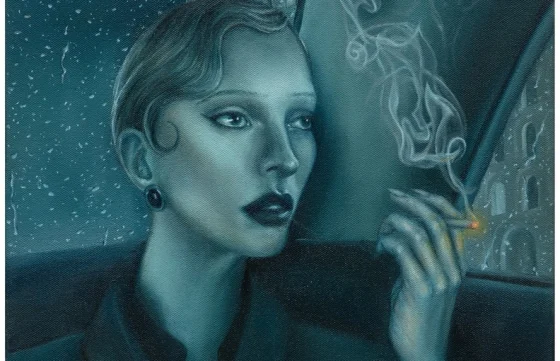
New York, NY – Harper’s Gallery is proud to present "Prussian Blue," the inaugural solo exhibition for New York-based artist Sophia Huitema. This captivating exhibition, running until April 25, 2026, features a compelling collection of seven new oil paintings that delve into the multifaceted nature of the enigmatic pigment, Prussian Blue, as a potent metaphor for the guarded femininity and alluring danger that define Huitema’s distinctive artistic vision.
Huitema masterfully employs the visual and chemical properties of Prussian Blue to weave a narrative thread through her ethereal, dreamlike compositions. The chosen palette, a restrained symphony of blues and greens, cultivates a moody, atmospheric quality, evoking dimly lit interiors and cool, melancholic harmonies. The very essence of Prussian Blue, with its historical ties to cyanide and its paradoxical use as an antidote, serves as a profound symbol. This inherent duality—of toxicity and protection, danger and solace—resonates deeply with the emotionally complex and ambiguous presence of the female figures that populate Huitema’s canvases.
The exhibition invites viewers into a world where beauty and menace exist in a perpetual, electrifying tension. Huitema’s figures, characterized by elongated limbs and graceful, almost serpentine movements, command attention. They often meet the viewer’s gaze directly, their presence both inviting and unsettling. Set against backdrops that evoke the opulent decadence of the Gatsby era, these women are themselves embodiments of high society, adorned in elegant gowns, pearl necklaces, and jewel-encrusted headdresses. Their poised demeanor, reminiscent of femme fatales from film noir, suggests a calculated allure, a seductive ruse, or perhaps a cunning strategy to evade unseen threats.
A Deeper Dive into Huitema’s "Prussian Blue"
The exhibition’s title, "Prussian Blue," is more than just a chromatic throughline; it is a conceptual anchor that binds together the disparate yet harmonious elements of Huitema’s oeuvre. The pigment itself, discovered in the early 18th century, has a complex history. Its intense, deep blue hue quickly made it a favorite among artists, but its production involved hazardous chemical processes. This inherent duality—its vibrant beauty born from a potentially toxic origin—mirrors the very essence of the women Huitema depicts. They are alluring, sophisticated, and seemingly at ease, yet there’s an undercurrent of something more profound, a guardedness that hints at hidden depths and potential dangers.
In works like "Sleeper Car," Huitema crafts a scene of palpable cinematic suspense. A woman, draped in a backless evening gown, tilts her head with a disarming nonchalance, her right hand subtly braced, hinting at a readiness to act. The setting—a rain-streaked train carriage, its narrow aisle stretching into an ambiguous distance—amplifies the psychological tension. This moment captures the apex of a thriller, a fleeting instant pregnant with unspoken narratives and potential consequences. Through such meticulously staged scenes, Huitema constructs worlds of heightened atmosphere and theatricality, drawing upon a rich tapestry of visual traditions and painterly languages.
Chronological Context and Artistic Lineage
Sophia Huitema’s artistic journey, while distinctly contemporary, is deeply informed by a rich lineage of art historical and visual references. Her distinctive approach to figuration—characterized by attenuated proportions and stylized poses—evokes the elegance and dynamism of early twentieth-century fashion illustration and Art Deco design. The gestural language and embellishments seen in her work echo the streamlined finesse of illustrators like Erté, whose iconic drawings captured the spirit of a bygone era with unparalleled sophistication. Furthermore, the theatrical poise of her figures resonates with the opulence and drama of interwar couture and stage design, where fashion and performance intertwined seamlessly.
Beyond the glamour of the early 20th century, Huitema’s compressed spaces and evocative atmospheres also suggest affinities with the introspective realms of Symbolist and Surrealist painting. Artists in these movements often employed shallow interiors and phantasmagoric backdrops not as literal representations of reality, but as psychological landscapes shaped by the subconscious. Huitema masterfully synthesizes these influences, creating a visual language that transcends singular historical frameworks. Her work fluidly navigates the territories of illustration, painting, and cinematic staging, forging a unique contemporary aesthetic.
It is noteworthy that Huitema’s distinct vocabulary has been cultivated outside formal academic training. This self-directed approach, born from sustained studio practice and keen observation, has resulted in a body of work that engages in a vital dialogue with art history while remaining firmly rooted in her individual vision. The "Prussian Blue" exhibition serves as a testament to this independent spirit, showcasing a collection that is both intellectually resonant and visually arresting.
Supporting Data: The Chemical and Cultural Significance of Prussian Blue
The choice of Prussian Blue as the thematic cornerstone of Huitema’s exhibition is a deliberate and multifaceted one, drawing upon the pigment’s intriguing scientific and historical dimensions. Discovered accidentally in Berlin around 1706 by Johann Jacob Diesbach, Prussian Blue was the first modern synthetic pigment. Its intense, deep blue hue, often described as a "noble" or "royal" blue, quickly captivated artists and artisans. Its chemical composition, a complex iron ferrocyanide, is what gives it its characteristic color.
However, the historical context of its creation is also laced with a certain danger. The process involved the use of animal products and potassium carbonate, which could, under certain conditions, lead to the formation of cyanide compounds. This inherent toxicity, though largely mitigated in modern pigment production, imbues the historical understanding of Prussian Blue with a subtle, underlying menace.
This duality is mirrored in the pigment’s medical applications. Prussian Blue has been used as an antidote for thallium and radioactive cesium poisoning. Its chemical structure allows it to bind with these toxic substances in the digestive tract, preventing their absorption into the bloodstream and facilitating their excretion from the body. This remarkable capacity to counteract poison adds another layer of meaning to Huitema’s exploration of protection and threat.
The prevalence of Prussian Blue in various historical periods also speaks to its cultural significance. It was widely used in oil painting, watercolor, and even for printing blueprints, a process that gave the pigment its name. Its deep, resonant hue lent itself to depicting shadows, night scenes, and the vastness of skies and oceans, making it a versatile tool for artists across different genres. Huitema’s embrace of this pigment, therefore, is not merely an aesthetic choice but a profound engagement with its layered history and symbolic resonance.
Official Responses and Critical Acclaim
Harper’s Gallery, in its announcement of "Prussian Blue," expressed immense enthusiasm for Sophia Huitema’s debut solo exhibition. A spokesperson for the gallery stated, "We are thrilled to introduce Sophia Huitema’s remarkable body of work to our audience. ‘Prussian Blue’ is a testament to her extraordinary talent for imbuing her canvases with both profound psychological depth and exquisite visual beauty. The exhibition marks a significant moment in her career, and we are honored to be the platform for this captivating exploration of color, form, and narrative."
While formal reviews of "Prussian Blue" are still emerging as the exhibition is in its initial phase, early commentary from art enthusiasts and collectors present at the opening reception has been overwhelmingly positive. Many have lauded Huitema’s unique ability to blend historical allusions with a contemporary sensibility, creating works that are both intellectually stimulating and emotionally resonant. The evocative atmosphere and the compelling portrayal of her female subjects have been frequently cited as highlights.
Art critics are anticipating a significant discourse around Huitema’s contribution to contemporary painting. Her self-taught approach, combined with her sophisticated engagement with art history, positions her as a compelling voice in the current art landscape. The conceptual rigor underpinning "Prussian Blue," particularly the nuanced use of the Prussian Blue pigment as a symbolic device, is expected to generate considerable discussion within the art world.
Implications and the Enduring Allure of Ambiguity
The exhibition "Prussian Blue" by Sophia Huitema carries significant implications for the contemporary art discourse. By centering her narrative on the inherent duality of the Prussian Blue pigment, Huitema invites viewers to contemplate the complex nature of femininity, power, and vulnerability. The guarded, enigmatic presence of her female figures suggests that true strength often lies not in overt displays of dominance, but in a carefully cultivated self-possession, a quiet intelligence that can be both alluring and formidable.
Huitema’s work challenges conventional notions of representation. Her figures, while drawing from historical archetypes, are distinctly modern in their psychological complexity. They exist in liminal spaces, on the precipice of action or revelation, leaving the viewer to ponder their intentions and their ultimate fates. This deliberate ambiguity fosters a sense of ongoing engagement, encouraging introspection and multiple interpretations.
Furthermore, "Prussian Blue" underscores the enduring power of painting as a medium for exploring complex human emotions and societal dynamics. In an era saturated with digital imagery, Huitema’s masterful application of oil paint, her meticulous attention to detail, and her ability to create immersive atmospheres offer a refreshing and deeply engaging artistic experience. The exhibition is a compelling reminder of painting’s capacity to convey nuanced narratives and to provoke profound emotional responses.
Sophia Huitema’s "Prussian Blue" is more than just an exhibition of paintings; it is an invitation to delve into the fascinating interplay of beauty and danger, protection and threat, and the ever-present allure of the unknown. As the exhibition continues at Harper’s Gallery, it promises to be a significant touchstone in the burgeoning career of a remarkable artist.



Leave a Comment