
The Ephemeral and the Urgent: A Comprehensive Analysis of Amanda Baeza’s ‘Wisps’
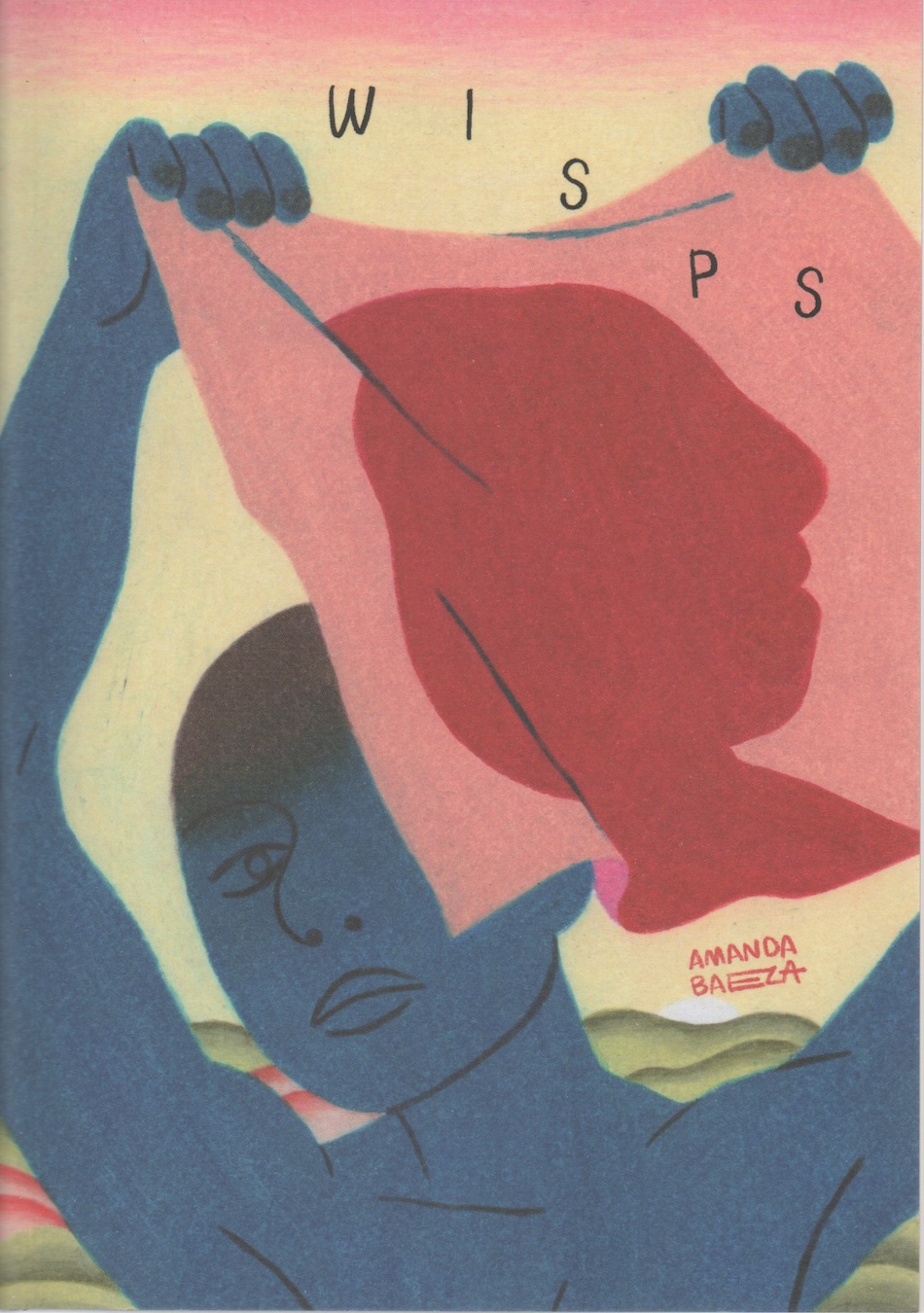
The landscape of contemporary independent comics is often defined by a tension between the hyper-personal and the global, between the abstract and the urgent. Few artists navigate this intersection with as much grace and formal ingenuity as Amanda Baeza. With the release of Wisps, her second major collection published by the esteemed Latvian publisher Kuš!, Baeza solidifies her position as a vanguard of the "Kuš Mono" series—a line dedicated to showcasing the expansive, singular visions of international auteurs.
Wisps is more than a mere anthology; it is a kaleidoscopic journey through the anxieties of the 21st century, rendered in a visual language that borrows as much from textile design and folkcraft as it does from traditional sequential art.
Main Facts: The Intersection of Form and Philosophy
Amanda Baeza, a Chilean artist currently residing in Portugal, has emerged as a distinct voice in the European comics scene. Wisps serves as a spiritual and formal successor to her 2017 collection, Brume. While Brume introduced readers to her penchant for shifting styles and vibrant palettes, Wisps matures these tendencies, grounding them in a deeper sense of moral and social responsibility.
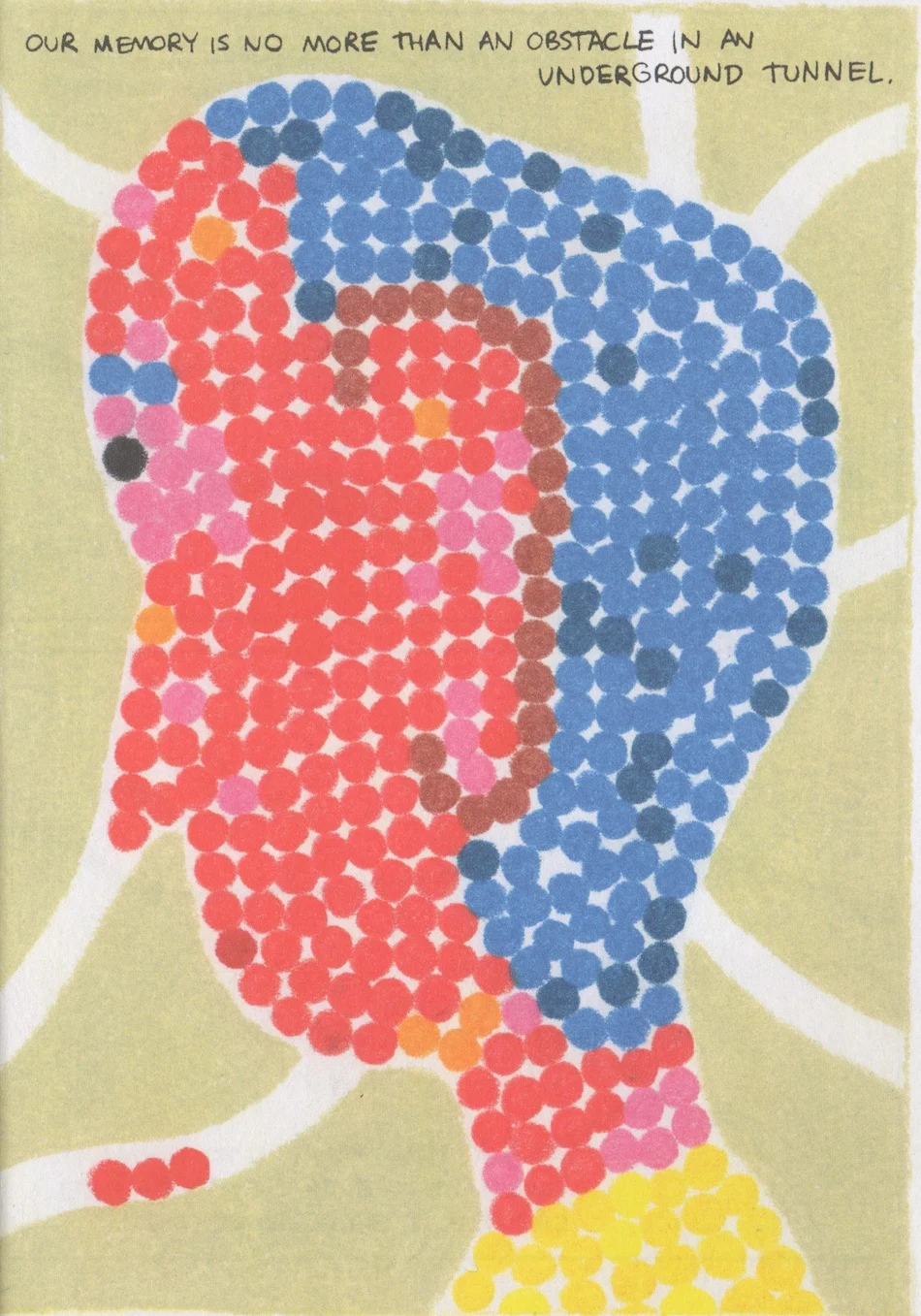
Published under the "Kuš Mono" imprint, the book departs from the publisher’s signature pocket-sized "mini-kuš!" format, opting for larger dimensions that allow Baeza’s intricate compositions to breathe. The collection is structured into four distinct sections, each introduced by illustrations of fabric hung on a clothesline—a recurring motif that suggests the airing out of ideas, the fragility of memory, and the environmental ethics of domestic labor.
The core of Baeza’s work lies in its rejection of standard narrative tropes. There are no recurring protagonists or traditional "hero’s journeys" here. Instead, the book is a series of poetic monologues. Baeza utilizes visual metaphors to explicate complex emotional states, moving from the whimsical to the harrowing with a fluidity that mirrors the "wisps" of the title—ephemeral moments that demand to be savored before they dissipate into the ether.
Chronology: From ‘Brume’ to the ‘Kuš Mono’ Evolution
To understand the significance of Wisps, one must look at the trajectory of both the artist and the publisher.
- 2011–2016: The Rise of Kuš! and the Mini-Comics Revolution: Based in Riga, Latvia, Kuš! became a global hub for experimental comics. Their primary output consisted of A6-sized anthologies. During this period, Amanda Baeza began contributing to various international anthologies, establishing a style characterized by bold color fields and a lack of traditional "holding lines."
- 2017: The Publication of ‘Brume’: Baeza’s first collection in the "Kuš Mono" series was a landmark for the publisher. It followed the inaugural Mono book by Roman Muradov. Brume established Baeza’s ability to treat recognizable forms as abstractions, focusing on the pure beauty of composition.
- 2017–2023: Global Shifts and Personal Migration: During the years between her two major collections, the global political climate shifted toward increased polarization. Baeza, born in 1990—the year Augusto Pinochet stepped down from the Chilean presidency—carried the inherited weight of political transition into her work. Her move to Portugal further informed her explorations of outsider status and the immigrant experience.
- 2024–2026: The Assembly of ‘Wisps’: This collection compiles work created over several years, including the notable 2021 piece "The Scene." The book represents a culmination of Baeza’s experimentation with color-as-temperature and comics-as-folkcraft.
Supporting Data: Visual Language and Aesthetic Affinities
Baeza’s aesthetic is frequently compared to contemporaries such as Anna Haifisch and Aisha Franz, yet she carves out a unique niche through her use of color. In Wisps, color is not merely decorative; it is functional and diagnostic.
The Color of Anxiety
In the story "Not From Here, Not From There," Baeza explores the persistent, often invisible, fear of the outsider. As the protagonist faces a mysterious pursuer or a strange social interaction, the line work shifts into a searing red. This is not a stylistic whim; it functions as a visual "cortisol spike." The page flushes like skin, signaling a heartbeat accelerating under duress. This use of "emotional temperature" allows the reader to feel the character’s internal state without the need for explanatory dialogue.
Textile and Tapestry
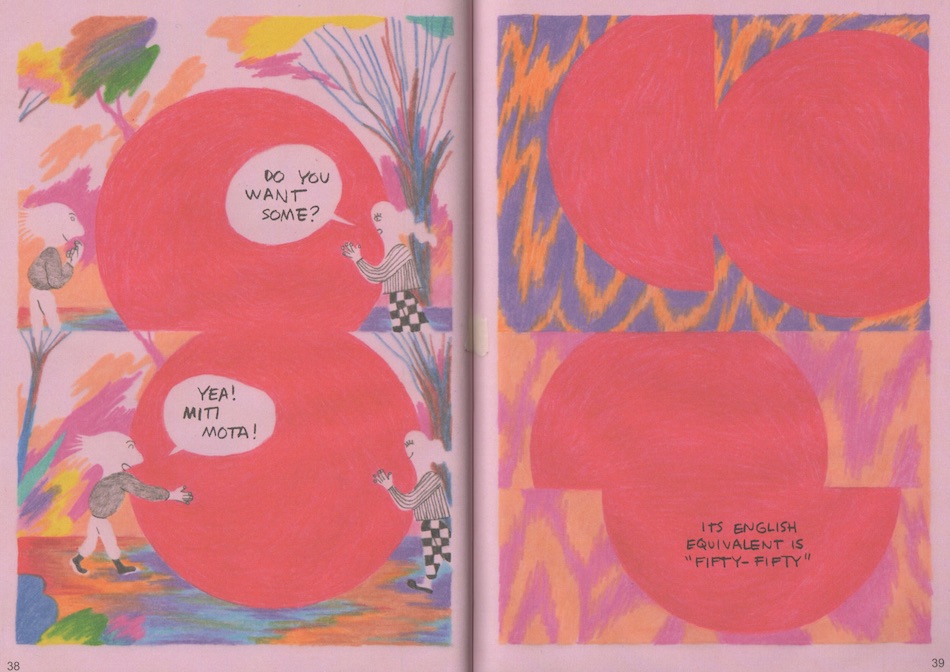
A significant portion of the book treats the comic page as a textile. In the segment "Miti Mota," images are cut, layered, and reassembled, mimicking the process of sharing and play. By treating shapes as shreds of fabric to be stitched together, Baeza aligns herself with a tradition of editorial illustration—reminiscent of the peak era of Nobrow Books—while maintaining a "folk" sensibility. This approach rejects the "storyboard" style of modern commercial comics, where character consistency is paramount, in favor of a more tactile, expressive form of communication.
Narrative Weight
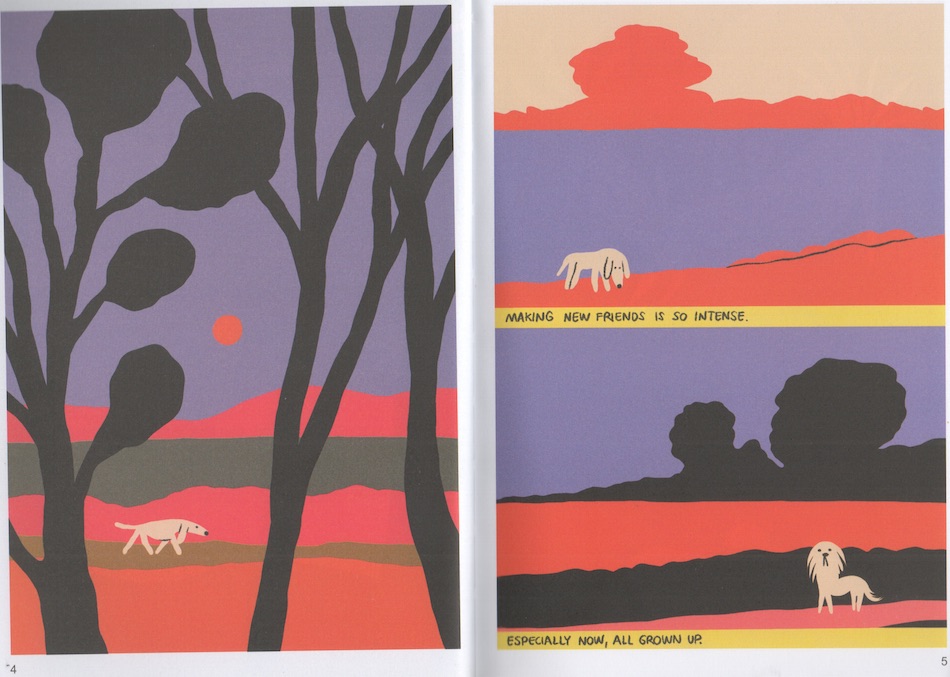
While the book opens with the deceptively light imagery of "cute dogs," it quickly pivots. The prose is plain-spoken and unfurls against the images in a way that suggests the author is thinking aloud. The pleasure for the reader is found in the "revelation"—the moment when the visual metaphor clicks into place, and the underlying subject (often far heavier than the initial imagery suggests) is revealed.
Official Responses and Critical Context
While independent comics rarely receive "official" government responses, their reception within the global arts community serves as a vital metric of their impact. Critics have noted that Baeza’s work represents a "healthy" understanding of the medium—one that views comics as a tool for connection rather than just a commercial product.
The Ethics of Representation
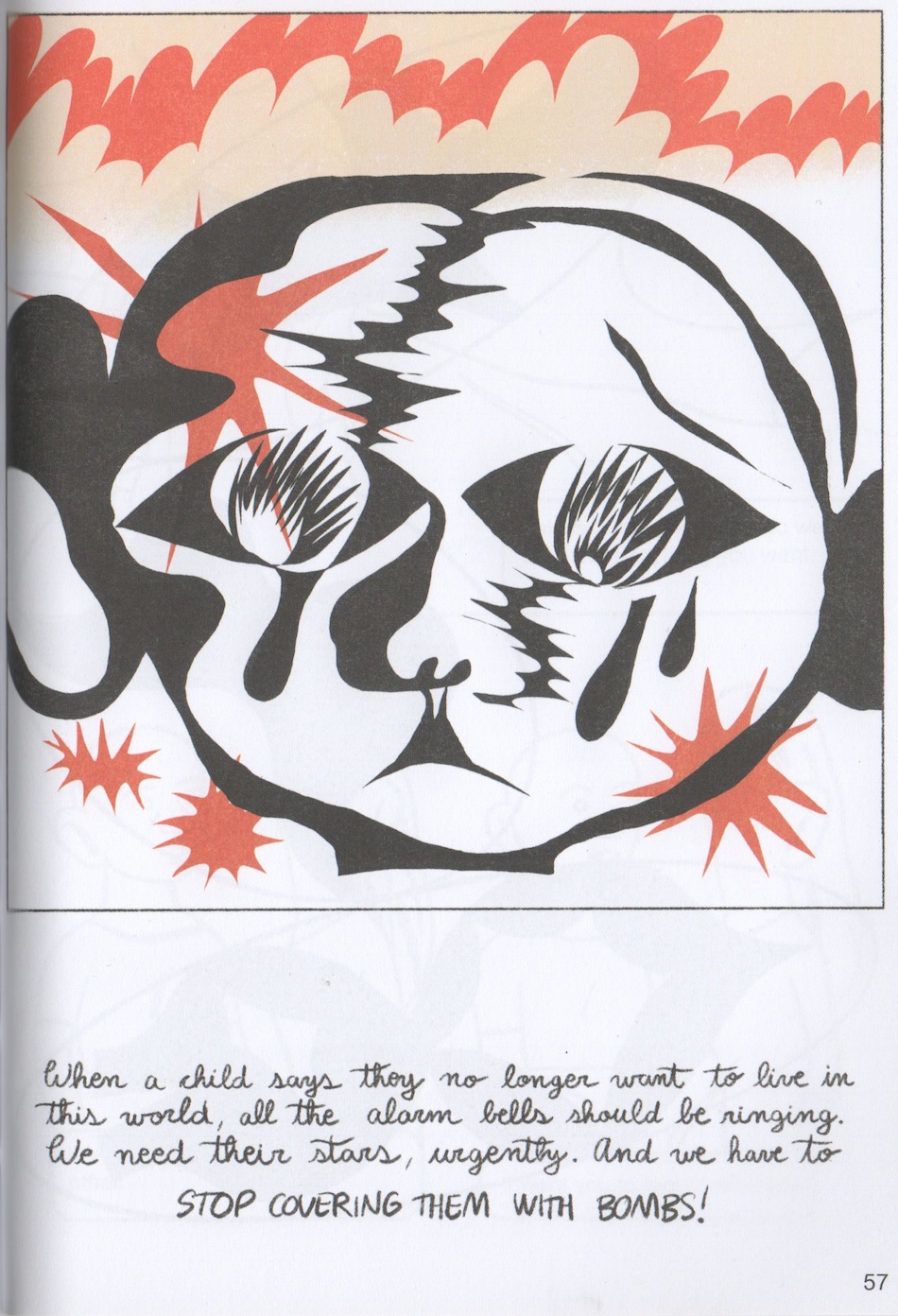
One of the most discussed pieces in Wisps deals explicitly with the conflict in Palestine and the deaths of children. Baeza’s approach here is somber and stark. She employs a black, inky depiction of a child’s face as the light leaves its eyes. Critics have compared this specific visual gravity to the work of Noel Freibert. By placing such a heavy, urgent topic within a book that is otherwise "candy-colored," Baeza asserts that the beauty of form does not negate the necessity of addressing pain. The "brightly colored clothes" of her art are, in this context, the garments one wears to a protest.
The Role of the Publisher
Kuš! has maintained a stance of radical internationalism. By publishing a Chilean-Portuguese artist in Latvia for a global English-speaking audience, the publisher reinforces the idea of a "borderless" comics scene. Wisps is seen as a flagship for this mission, proving that abstract, poetic comics can have a broad, if niche, appeal.
Implications: Comics as Folkcraft and Environmental Signal
The final sections of Wisps suggest a broader philosophical shift in how we view the medium of comics.
The Environmental Dimension
The story titled "Clothes" offers a haunting reflection on fashion and affect from a post-human perspective. By situating the narrative after the destruction of the Earth, Baeza frames human creativity and self-expression (fashion) as both a beautiful instinct and a complicit act. The metaphor of line-drying clothes—the most environmentally courteous way to maintain one’s "affect"—serves as a call for a more sustainable, thoughtful approach to both life and art.
The "Scene" and Connection
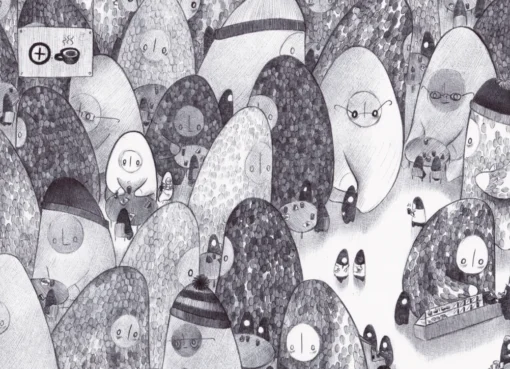
In the grayscale story "The Scene," Baeza moves away from her jewel-toned palette to embrace the aesthetic of the photocopier. This is a deliberate nod to the "democracy of the zine." The story explores how comics act as a bridge between lonely individuals, finding peers in a world that often feels isolating.
Conclusion: The Legacy of the Ephemeral
The title Wisps is a warning and a promise. It suggests that while the topics Baeza covers—war, migration, environmental collapse—are heavy, the medium of the comic remains a light, portable, and human thing.
The implications for the future of the medium are clear: as comics move further away from traditional retail structures and toward the world of fine art and folkcraft, artists like Amanda Baeza will be the ones setting the tempo. She proves that the "seriousness of subject" does not forbid formal play. Rather, it demands it. Wisps stands as a testament to the idea that art can be both a badge of identity and a signal to others who, in the vastness of the modern world, might feel exactly the same way.


Leave a Comment