
Ink Strings: Redefining the Cozy Puzzler Through Hand-Painted Precision and Mechanical Innovation
The landscape of independent gaming has, over the last decade, undergone a significant transformation. Once a niche corner of the industry defined by high-difficulty platformers and experimental art house projects, the "indie" label now encompasses a vast spectrum of genres. Among the most successful sub-genres to emerge is the "cozy puzzler"—a category that prioritizes atmosphere, relaxation, and thoughtful engagement over twitch reflexes or high-stress environments. At the forefront of this movement’s next wave is Ink Strings, a title that takes the elementary concept of connecting dots and elevates it into a sophisticated, multi-layered experience.
Recently showcased at DreamHack Birmingham, Ink Strings has caught the attention of critics and enthusiasts alike. By blending hand-painted aesthetics with increasingly complex physics-based puzzles, the game promises to offer more than just a momentary distraction; it aims to provide a meditative yet intellectually stimulating journey through a world crafted with meticulous care.
Main Facts: The Core Identity of Ink Strings
At its most fundamental level, Ink Strings is a puzzle game centered on the act of drawing lines to connect nodes. However, to describe it as a simple "connect-the-dots" game would be a disservice to the mechanical depth being developed. The game is built upon a foundation of "clever twists" that transform static puzzles into dynamic challenges.
Developed with a focus on "thoughtful interactions," the game introduces several unique mechanics that differentiate it from its peers:
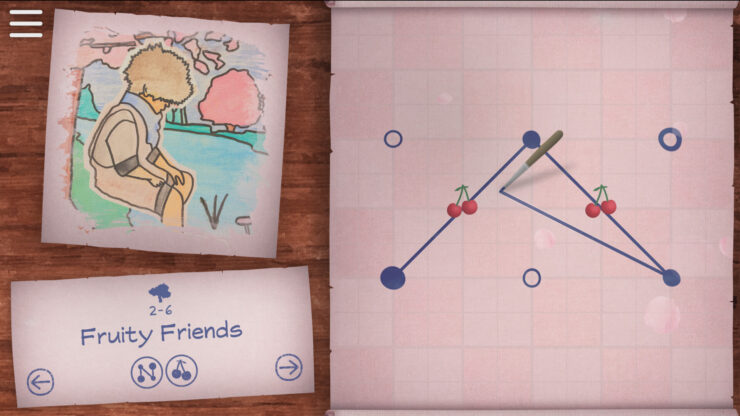
- Quantitative Constraints (The Cherry System): Unlike traditional dot-to-dot puzzles where the path is arbitrary, Ink Strings introduces environmental obstacles like cherries. Each cherry stem may have one or two fruits attached. The player must pass their line through these icons exactly the number of times indicated by the fruit count. This forces the player to plan their route with mathematical precision rather than simple linear progression.
- Physics-Based Interaction (The Pencil and Sharpener): As the game progresses, it introduces pencils that must reach a sharpener located at the end of the level. To achieve this, players must use their completed "ink strings" as physical barriers or trampolines, bouncing the pencils toward their destination. This adds a layer of spatial reasoning and physics-based logic to the experience.
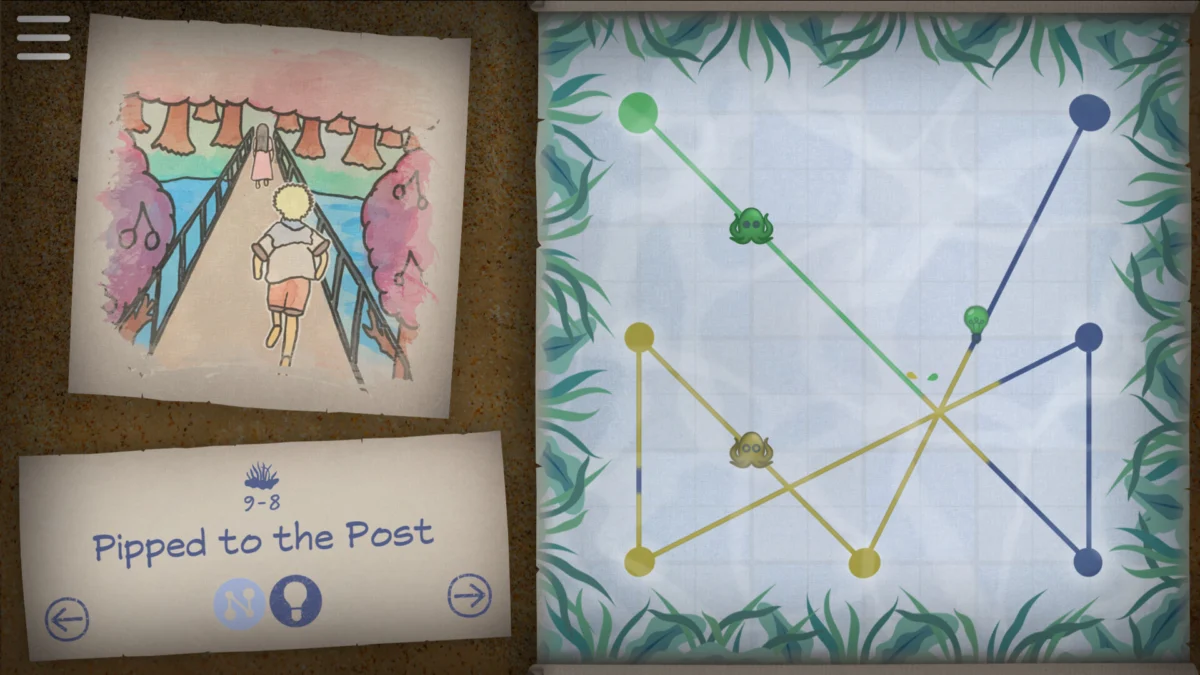
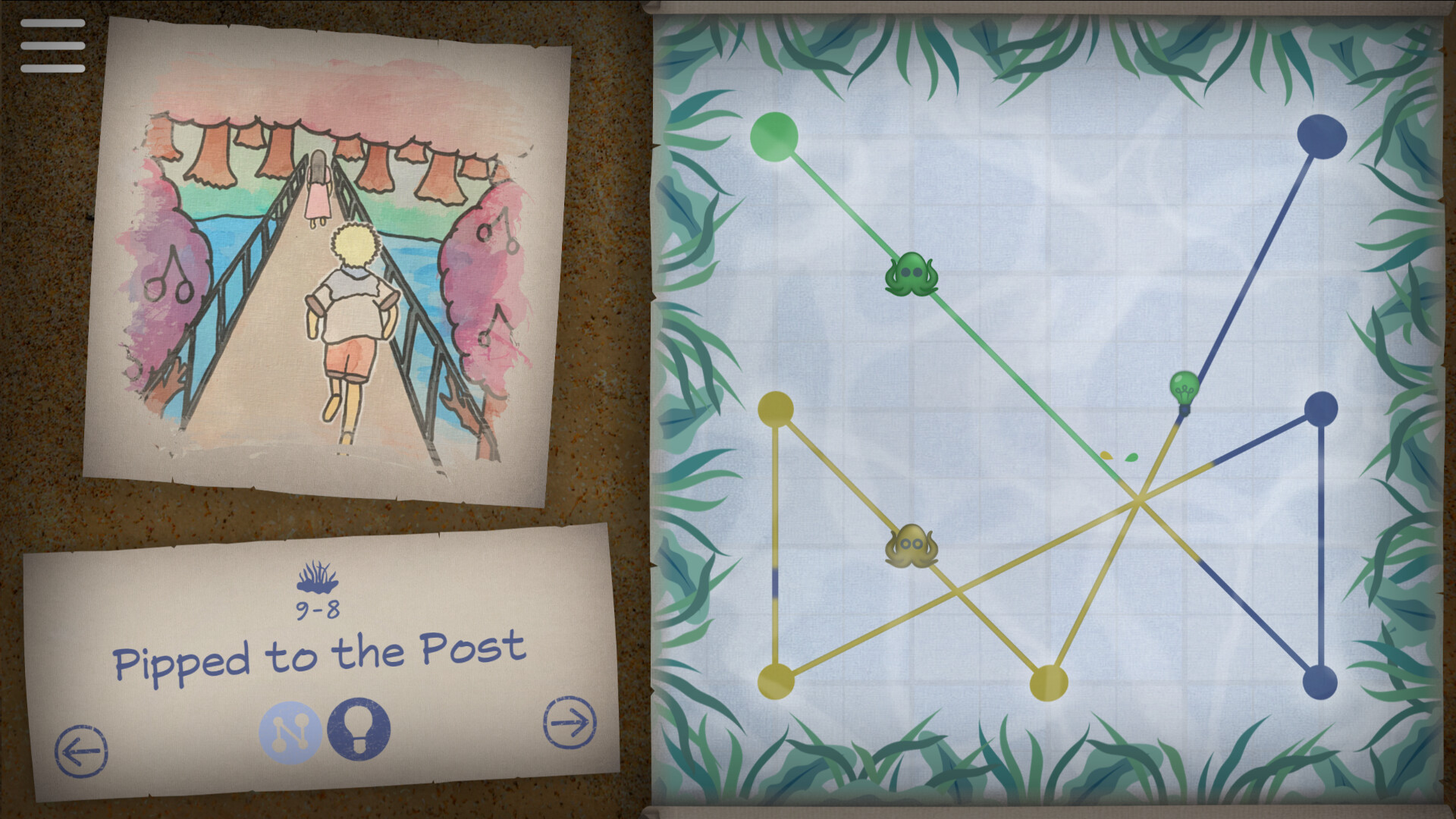
- Chromatic Complexity (Color Blobs): In later stages, the game introduces color mechanics. Players must draw their lines through specific "blobs" of color, which then alters the properties or requirements of the line itself.
- The Implicit Tutorial (The Grid System): One of the game’s most praised features is its subtle use of a grid-like background. This serves as a non-intrusive guide, allowing players to predict line trajectories and align their movements without the need for heavy-handed UI prompts.
Chronology: From Concept to DreamHack Birmingham
The development of Ink Strings follows a trajectory common among high-quality indie projects, moving from a core mechanical concept to a polished, event-ready demo.
- Initial Concept and Alpha Development: The project began with the goal of reimagining the tactile sensation of ink on paper. Early development focused on the fluidity of line-drawing and the "feel" of the connection mechanics.
- Visual Integration: Once the core mechanics were established, the developers integrated a series of hand-painted illustrations. These were not merely decorative but were designed to weave a "hint of story" through the levels, providing a narrative impetus for the player’s progress.
- Mechanical Expansion: During the mid-development phase, the "Cherry" and "Pencil" mechanics were introduced to prevent the gameplay from becoming repetitive. This phase saw the game transition from a relaxing activity to a genuine cognitive challenge.
- DreamHack Birmingham Showcase: A significant milestone occurred when Ink Strings was featured at DreamHack Birmingham. This provided the developers with vital playtesting data. Critics, including veteran indie game journalist Jupiter Hadley, were able to experience the game’s variety first-hand, noting the seamless transition between simple introductory levels and complex, multi-variable puzzles.
- Current Status: As of early 2024, Ink Strings remains in active development. The game is currently available for wishlisting on Steam, with the developers utilizing the feedback from the DreamHack showcase to polish the final experience.
Supporting Data: The Mechanics of "Cozy" Design
The term "cozy" is often used colloquially, but in the context of Ink Strings, it is backed by specific design choices that influence player psychology. The game’s "slow, relaxed aspect" is a deliberate result of its UI/UX design and pacing.
Visual Polish and Accessibility
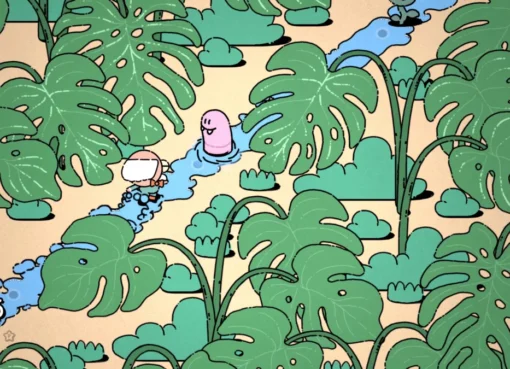
The hand-painted map that appears between chapters serves as a structural anchor for the player. By visualizing progress through a mysterious, artistic map, the game provides a sense of place and accomplishment. Furthermore, the use of hand-painted assets over procedurally generated or vector-based art creates a "human" feel, which research suggests lowers player cortisol levels compared to high-intensity, neon-saturated visuals.
The Grid System as a Cognitive Aid
The grid-like background is a standout feature in terms of game design. By providing a subtle reference frame, the game reduces the "cognitive load" required to execute a move. Players can focus their mental energy on solving the puzzle rather than struggling with the controls. This balance is essential for maintaining the "flow state" central to successful puzzle games.
Complexity Scaling
Data from the alpha trailer and DreamHack builds suggest a steep but fair difficulty curve. While Level 1 might take seconds to complete, later levels involving color-changing blobs and pencil-bouncing require multi-step planning. This variety ensures that the game appeals to both casual players looking for relaxation and hardcore puzzle enthusiasts seeking a challenge.
Official Responses and Developer Philosophy
While the developers have remained focused on the production cycle, the design philosophy of Ink Strings speaks volumes. The inclusion of a "hint of story" suggests a move away from the abstract nature of classic puzzlers like Tetris and toward the atmospheric storytelling seen in titles like Gris or Unpacking.
In response to the growing trend of "cozy games," the development of Ink Strings appears to be a response to a market demand for games that offer "mindfulness through challenge." The developer’s decision to showcase the game at a major event like DreamHack indicates a confidence in the game’s ability to stand out in a crowded marketplace. The emphasis on "thoughtful interactions" implies that the developers view the player’s time as valuable, ensuring that every mechanic—from the bounce of a pencil to the crossing of a cherry—feels intentional and rewarding.
Implications: The Future of the Puzzle Genre
The emergence of Ink Strings carries several implications for the indie gaming industry and the puzzle genre at large.
1. The "Cozy" Evolution
Ink Strings proves that "cozy" does not have to mean "easy." By incorporating challenging physics and strict quantitative requirements, the game challenges the notion that relaxing games cannot be difficult. This could lead to a new wave of "Hardcore Cozy" games—titles that feature soothing aesthetics but demand high-level problem-solving skills.
2. Art as Gameplay
The integration of hand-painted pictures as part of the narrative and the puzzle-solving process highlights a trend where art is no longer a wrapper for the game but a core component of the interaction. This elevates the medium, blurring the lines between interactive art and traditional gaming.
3. The Importance of Physicality in Digital Spaces
The "Pencil and Sharpener" mechanic introduces a sense of weight and physicality to a 2D space. As players become more accustomed to high-fidelity physics in AAA titles, indie developers are finding clever, low-resource ways to implement similar "tactile" feelings in 2D puzzle environments.
4. Steam and the Indie Ecosystem
The push for Steam wishlists is a critical strategy for modern indies. For a game like Ink Strings, success will depend on its ability to build a community through its aesthetic appeal and mechanical uniqueness before launch. Its reception at DreamHack suggests a strong foundation for this growth.
In conclusion, Ink Strings represents a sophisticated evolution of the puzzle genre. By taking the simplest of actions—drawing a line—and layering it with artistic beauty and mechanical ingenuity, it offers a glimpse into the future of indie game design. It is a game that respects the player’s intellect while providing a sanctuary from the high-speed demands of modern life. As it continues its journey toward a full release, it stands as a testament to the power of "clever twists" and the enduring appeal of a well-placed dot.

Leave a Comment