
The Eternal Nectar: Unlocking the Scientific Mysteries of Honey’s Indefinite Shelf Life
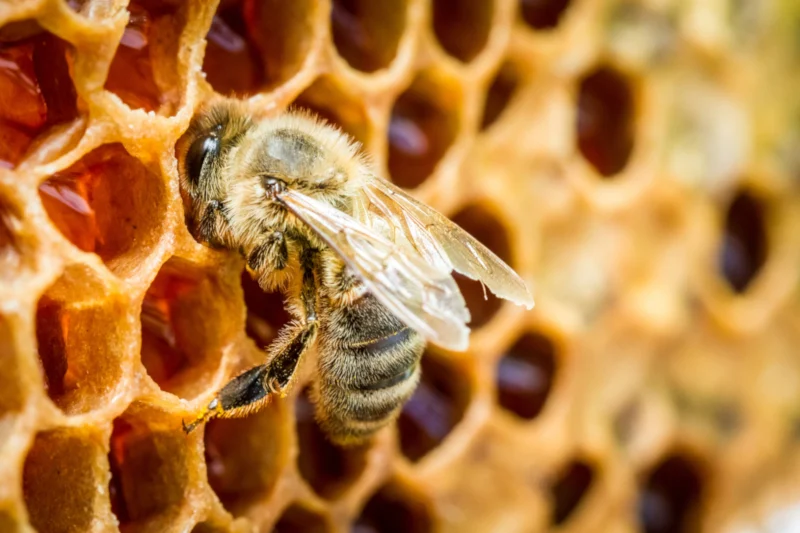
In an era defined by the fleeting freshness of the "farm-to-table" movement and the ubiquitous presence of expiration dates, the modern supermarket is a testament to the perishability of the human diet. From the rapid wilting of organic greens to the souring of dairy, most food items possess a shelf life measured in days or weeks. However, tucked away in the pantry is a golden anomaly that defies the biological imperative of decay: honey.
Archaeologists excavating ancient Egyptian tombs have, on numerous occasions, unearthed pots of honey dating back over 3,000 years. The most staggering aspect of these discoveries is not merely the presence of the substance, but its condition. When sampled, this millennia-old honey was found to be perfectly preserved, unspoiled, and—by all accounts—safe for human consumption. This extraordinary longevity is not a fluke of history but the result of a precise, multi-layered chemical fortification that makes honey unique among all natural products.
The Triple Shield: The Core Facts of Honey’s Longevity
Honey’s ability to remain edible for centuries is the product of a "perfect storm" of chemistry. It is a substance that essentially creates its own sterile environment, hostile to the very microorganisms that cause rot and fermentation in other foods. This preservation is achieved through three primary mechanisms: low moisture content, high acidity, and the production of hydrogen peroxide.
1. The Desiccated Environment
At its core, honey is a sugar. While sugars are hygroscopic—meaning they contain little water in their natural state but can readily suck moisture from the environment—ripe honey is exceptionally dry. During the honey-making process, bees extract nectar from flowers, which is approximately 60% to 80% water. Through a communal effort of regurgitation and vigorous wing-fanning, the bees evaporate the vast majority of this moisture until the water content drops to roughly 17% to 18%.
In this hyper-concentrated state, honey exerts immense osmotic pressure. "Very few bacteria or microorganisms can survive in an environment like that; they just die," explains Amina Harris, executive director of the Honey and Pollination Center at the Robert Mondavi Institute at the University of California, Davis. "They’re smothered by it, essentially." Because there is so little available water, the bacteria that would normally colonize a food source are effectively dehydrated to death before they can reproduce.
2. The Acidic Barrier
The second layer of honey’s defense is its pH level. While most foods hover near a neutral pH, honey is decidedly acidic, typically ranging between 3.2 and 4.5. To put this in perspective, this is a similar acidity level to orange juice or even some types of vinegar. This low pH is toxic to a wide range of bacteria, including notorious pathogens like E. coli, Salmonella, and Staphylococcus aureus. By maintaining such a high level of acidity, honey ensures that even if a stray microbe manages to survive the dry environment, it cannot thrive or multiply.
3. The Enzymatic Weapon: Hydrogen Peroxide
The final and perhaps most sophisticated weapon in honey’s arsenal is hydrogen peroxide. This chemical is not present in the nectar itself but is introduced by the bees. As bees process the nectar, they mix it with an enzyme from their stomachs called glucose oxidase (GOx). When this enzyme interacts with the nectar, it breaks down the glucose into two specific by-products: gluconic acid (which contributes to the acidity) and hydrogen peroxide.
For millennia, humans have used hydrogen peroxide as a disinfectant for wounds. In honey, it serves as a microscopic "search and destroy" mechanism, preventing any fungal or bacterial growth. This enzymatic reaction occurs continuously, though slowly, providing a sustained antiseptic quality that persists as long as the honey is kept away from heat and light.
A Chronology of the "Liquid Gold"
The history of honey is as much a history of medicine and religion as it is a history of food. Humans have recognized and exploited the preservative and healing properties of honey for over four thousand years.
- 2100–2000 BCE (Sumerian Civilization): Some of the earliest written records of honey’s utility appear on Sumerian clay tablets. These texts describe honey not just as a sweetener, but as a primary ingredient in medicinal prescriptions. Sumerian physicians used honey in ointments to treat skin infections and open wounds, intuitively understanding its antiseptic nature long before the discovery of bacteria.
- 1550 BCE (Ancient Egypt): The Ebers Papyrus, one of the oldest and most important medical scrolls of ancient Egypt, mentions honey in hundreds of remedies. The Egyptians viewed honey with religious awe, believing that honeybees were created from the tears of the sun god, Re. Because of its "eternal" nature, it was a staple in funeral offerings, intended to provide sustenance for the deceased in the afterlife.
- The Classical Era: Greek and Roman physicians, including Hippocrates and Galen, utilized honey for everything from "clearing the eyes" to treating fevers and ulcers. Aristotle even referred to honey as "dew distilled from the stars and the rainbow."
- 19th–20th Century: With the advent of modern microbiology, scientists began to isolate the specific enzymes and chemical properties—such as the aforementioned glucose oxidase—that gave honey its legendary shelf life. This transitioned honey from a "folk remedy" to a subject of rigorous clinical study.
Supporting Data: Industrial vs. Artisanal Preservation
While honey is naturally preserved, the version found on modern supermarket shelves undergoes additional processing to ensure it remains visually appealing to consumers. It is important to distinguish between the chemical stability of honey and its physical state.
The Crystallization Factor
Many consumers mistakenly believe that honey has "gone bad" when it becomes cloudy, thick, or solid. This is a natural physical change known as crystallization. Since honey is a supersaturated sugar solution, the glucose eventually precipitates out of the liquid and forms crystals.
Data shows that the ratio of fructose to glucose determines how quickly this happens. Honeys high in glucose (like clover or lavender) crystallize faster, while those high in fructose (like tupelo or acacia) can stay liquid for years. Industrial honey producers often use a heating and ultra-filtration process to remove particulates like pollen and wax. Because these particulates act as "nuclei" around which crystals grow, their removal keeps supermarket honey liquid for much longer, though some purists argue this strips the honey of its local nutritional benefits.
Official Responses and Expert Insights
The scientific community remains fascinated by honey’s biological resilience. Experts emphasize that while honey is "immortal," its longevity is contingent upon human behavior.
Amina Harris of UC Davis notes that the most critical factor for preservation is the seal. "Honey is hygroscopic. In its natural state, it has very little moisture, but it will suck moisture out of the air if left uncovered," Harris explains. If honey absorbs enough water from a humid environment, the concentration of sugar drops, the yeast naturally present in the honey can begin to ferment, and the "immortal" product finally spoils.
Furthermore, medical professionals have begun reintegrating honey into modern clinical settings. The FDA has approved certain types of "medical-grade" honey, such as Manuka honey from New Zealand, for the treatment of drug-resistant wound infections. According to researchers at the University of Technology Sydney, honey’s complex chemistry makes it difficult for bacteria to develop resistance, a stark contrast to traditional antibiotics.
Implications: Why Honey’s Longevity Matters Today
The "eternal" nature of honey carries significant implications for the future of food security and medicine.
1. A Blueprint for Natural Preservation
As the global food industry seeks to move away from synthetic preservatives and "E-numbers," honey serves as a biological blueprint. Understanding how bees create a shelf-stable product using only enzymes and physical dehydration could lead to new, natural methods for preserving other liquid foods.
2. Medical Resilience in the Age of Superbugs
With the rise of antibiotic-resistant bacteria, honey is being re-examined as a vital tool in the "post-antibiotic era." Its ability to debride wounds, lower pH at the infection site, and provide a slow-release source of hydrogen peroxide offers a multi-pronged attack that modern pharmaceuticals struggle to replicate.
3. Environmental Canary in the Coal Mine
The fact that honey can last for thousands of years makes it a unique historical record. Pollen trapped in ancient honey can tell scientists about the flora and climate of the Earth three millennia ago. However, this "eternal" resource is under threat. With honeybee populations declining globally due to Colony Collapse Disorder (CCD), pesticides, and climate change, the production of this miraculous substance is no longer guaranteed.
Conclusion
Honey is a testament to the sophistication of the natural world. It is a product of biological engineering that exceeds the capabilities of most human-made preservatives. By combining the physics of dehydration, the chemistry of acidity, and the biology of enzymes, honeybees have created a substance that transcends the boundaries of time.
Whether it is sitting in a modern kitchen or an ancient limestone sarcophagus, honey remains a "living" liquid that refuses to die. As long as the lid is kept tight and the bees are protected, this golden treasure will continue to be a source of sweetness and healing for thousands of years to come—a rare constant in an ever-changing world.




Leave a Comment