
Publishing World Shaken by Amazon Antitrust Revelations, Banned Book Backlash, and AI Advancements
April 24, 2026 – The publishing industry is navigating a tumultuous week marked by significant legal developments, unexpected market shifts, and rapid technological evolution. From explosive revelations in California’s antitrust lawsuit against Amazon to a "banned" book’s surprising ascent to bestseller status, and the continued acceleration of artificial intelligence, authors and publishers are grappling with a landscape that is rapidly being reshaped. This week’s developments underscore the increasing complexity and interconnectedness of the book world, impacting everything from pricing strategies and content moderation to creative tools and author rights.
Amazon Accused of Blatant Price Fixing: Unsealed Emails Ignite Antitrust Firestorm
California Attorney General Rob Bonta has unsealed court documents that provide compelling evidence of alleged price-fixing activities by e-commerce giant Amazon. The filings, stemming from a 2022 antitrust lawsuit, reveal a pattern of Amazon coordinating with numerous brands to artificially inflate prices on rival retail platforms, including Walmart, Target, Chewy, and Home Depot.
The documents detail specific instances where Amazon identified lower prices for products on competitor websites and then leveraged its influence to pressure brands into raising those prices. A notable example involves Levi Strauss khaki pants; after Amazon flagged a lower price on Walmart, Levi’s reportedly intervened, prompting Walmart to increase the price to $29.99. Amazon then matched this higher price, effectively eliminating competitive pricing. Similar allegations have surfaced concerning Hanes apparel, pet food sold on Chewy, Skullcandy earbuds, fertilizer at Home Depot, and Allergan eye drops. In some cases, brands allegedly made lower-priced items unavailable on competing platforms to maintain Amazon’s price advantage.
Stacy Mitchell, an expert on market monopolies, highlighted on X (formerly Twitter) that Amazon allegedly trained its employees to conduct these price-fixing discussions over the phone or using pre-approved talking points to minimize a paper trail. This strategy aimed to enforce higher prices uniformly across the market.
Attorney General Bonta has characterized this conduct as "blatant price fixing" that directly harms consumers by driving up costs. California is seeking a preliminary injunction to halt these practices, with a hearing scheduled for July. The full trial is slated to commence on January 19, 2027.
Amazon has vehemently denied the allegations, asserting that its policies are designed to benefit customers through competitive pricing.
Implications for Authors:
This case carries significant weight for authors, particularly those in the independent publishing sphere. Many KDP authors and small presses have experienced situations where offering lower prices on their own websites or alternative retailers like Bookshop.org results in Amazon suppressing their listings or removing the "Buy Box." The newly public evidence suggests these tactics may be part of a broader, systemic strategy to stifle price competition. A favorable ruling for California could lead to a loosening of these restrictions, granting authors greater freedom to discount their books across various platforms without fear of diminished visibility on Amazon. This could, in turn, make direct sales and wider distribution channels more viable and profitable.
Thomas’s Take:
"Amazon’s defense that it offers customers the lowest prices is undermined by the evidence. Instead of lowering its own prices to match competitors, it’s pressuring suppliers to raise prices elsewhere. This is a classic sign of market failure where monopolistic behavior stifles genuine competition. In publishing, this translates to Amazon manipulating royalties on both low-priced and high-priced books to maintain market control. The critical question is whether regulators will act decisively against this already illegal monopolistic behavior. Breaking Amazon’s market grip could foster real competition, but the company’s structural advantage, particularly its reliance on AWS as a profit engine, makes it a formidable opponent. The money flows back to Amazon regardless of whether consumers shop on its platform or stream content from competitors it powers."
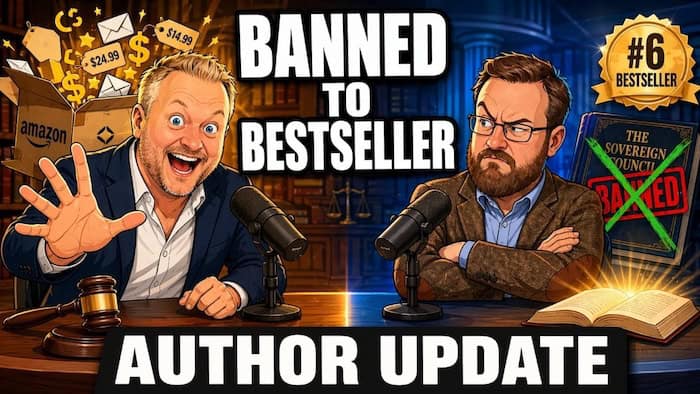
The Streisand Effect in Action: "Banned" Book Soars to Amazon’s Top 10
In a striking example of the Streisand effect, Jean Raspail’s 1973 dystopian novel, The Camp of the Saints, experienced an unprecedented surge in popularity after its paperback and hardcover listings were temporarily removed from Amazon’s U.S. site on April 17, 2026. The removal was reportedly due to a violation of Amazon’s "offensive content" policy, following pressure from the subreddit r/BannedBooks.
Members of the subreddit celebrated the takedown, with some users justifying the action by claiming the novel was "not actually a book" and that a "private company" had the right to remove it. However, this move quickly drew widespread criticism on X, with screenshots of the subreddit’s commentary going viral and garnering millions of views. The backlash highlighted the perceived hypocrisy of a subreddit dedicated to preventing book bans actively campaigning for a book’s removal.
By April 21, the book was back on sale on Amazon. The apparent reversal fueled further outrage among some Redditors, who then complained that the book had "never been banned."
The controversy propelled the novel to remarkable commercial success. On April 22, tech entrepreneur and author David Heinemeier Hansson reported that The Camp of the Saints had climbed to number 6 on Amazon’s overall bestseller list.

Analysis:
The attempt to suppress The Camp of the Saints, a polarizing novel that explores themes of mass immigration overwhelming Western civilization, backfired spectacularly. The public outcry on social media, amplified by X, transformed an obscure policy enforcement into a national conversation. Small publisher Vauban Books, which publishes the novel, has seen its reach expand to readers who were previously unaware of the book. The novel remains available directly from the publisher as well.
Thomas’s Take:
"This situation raises the perennial question: ‘Was this a book ban?’ The irony is that this effort came from a subreddit called ‘Banned Books,’ yet its members were actively trying to get Amazon to delist a title. When private individuals pressure a platform to remove a book, it’s more accurately described as a ‘cancellation.’ In today’s climate, cancellation has become an incredibly effective marketing technique. The closer a work gets to being truly canceled, the more attention and sales it can generate. There’s a palpable ‘rally-to-the-flag’ effect where people rush to defend perceived victims of cancellation, even if they don’t align ideologically. This collective fear of becoming the next target encourages solidarity. The fact that this specific cancellation attempt originated from a ‘Banned Books’ community is deliciously ironic."
Jonathan’s Take:
"Our society has become so polarized that people instinctively align with ‘teams.’ Certain keywords trigger an automatic response. The term ‘book ban’ is a potent trigger that forces individuals to pick a side, whether conservative or progressive, and engage in a fight. However, in practice, this was Amazon delisting physical editions. It was a cancellation, not a ban in the governmental sense. A ban implies a government declaration making a book illegal, enforced by law enforcement."
Thomas’s Take on Government Influence:
"It’s important to acknowledge that in some instances, supposedly private organizations have acted under government direction. The ‘censorship industrial complex’ revealed in congressional investigations, particularly those involving the Biden administration, highlights this. However, in the Camp of the Saints incident, only the ebook and audiobook remained available, while physical editions were delisted. This selective removal is a peculiar way to execute a cancellation, granting the book the notoriety of being ‘banned’ without truly denying access. The Kindle and audiobook versions were available throughout, allowing the book to gain ‘street cred’ without actual reader deprivation. Now that the paperback is back, sales are booming."
Publishing Tools Embrace AI: Book Cover Designer 2 and 3D Mockup Maker Evolve
Author Media’s Patron Toolbox has seen significant upgrades with the release of Book Cover Designer 2 and the new 3D Mockup Maker, both leveraging advanced AI capabilities to empower authors.
Book Cover Designer 2, initially designed for temporary and reader magnet covers, now boasts an expanded feature set. It integrates three AI image engines: GPT Image 2, Grok, and Nano Banana. A standout new feature is its image editing capability, allowing for minor adjustments to a cover without requiring a complete regeneration of the design. This iterative editing process is a significant enhancement for authors.

Of the available engines, GPT Image 2 is currently delivering the most impressive results, though Grok and Nano Banana may offer unique advantages for specific genres or stylistic preferences. The tool also offers an image editing feature, demonstrated by the ability to add a silver cross necklace to an existing image without altering the entire cover design. Authors can utilize Book Cover Designer 2 for both placeholder covers and final artwork.
The Patron Toolbox 3D Mockup Maker, developed over six months, transforms flat cover images into photorealistic 3D representations. A key challenge overcome in its development was the accurate design of book spines without AI "hallucinations."
Prompt Example for AI Engines:
"Title, Genre and Author Name. Then for the Primary Visual Element I wrote: A young woman with long black hair wearing a green dress stands in the dark woods holding a flintlock pistol. The young woman is in color, everything around her is in grayscale."
Thomas’s Take:
"This is genuinely significant news. While GPT 5.5 represents a modest upgrade, GPT-Image-2 is a quantum leap forward compared to its predecessor and competitors. It can now generate 16:9 images in a single prompt, a capability previously unavailable. I had recently canceled my ChatGPT subscription due to Claude and Grok performing better for my needs. However, ChatGPT’s enhanced image generation capabilities may very well win me back."
U.S. Copyright Office Proposes Significant Fee Increases for Indie Authors
The U.S. Copyright Office has proposed substantial increases to its registration fees, a move that could impact independent authors seeking to protect their intellectual property. A notice of proposed rulemaking published in the Federal Register on March 20 outlines the changes, which include the elimination of the single application option.
Currently, authors can register a single work by one author for $45. Under the proposal, all applicants would transition to the standard electronic application, with its fee rising from $65 to $85. Paper applications are also slated for a significant jump, from $125 to $185. Furthermore, group registrations for unpublished works or short online literary works would increase from $85 to $130.

The Copyright Office attributes these proposed increases to rising operational costs, noting a 23 percent expense climb since the last fee adjustment in 2020. The new fee structure aims to improve cost recovery from 41 percent in fiscal year 2024 to approximately 53 percent in the coming year, with a long-term goal of reaching 60 percent. The office suggests that higher fees for corporate services will help offset the burden on individual creators.
The elimination of the single application option is partly driven by administrative challenges; this option has the highest refusal rate due to submissions failing to meet basic eligibility requirements. The office is encouraging authors to utilize more efficient group registration options.
Public comments on the proposal are being accepted through May 4. A separate inquiry into alternative fee structures, including tiered pricing, is also underway, with comments due by June 24.
Copyright registration remains a prerequisite for filing infringement lawsuits in federal court and strengthens claims for statutory damages. Given the proposed fee hikes, many authors may reconsider registering older works, focusing solely on frontlist titles.
Thomas’s Take:
"The surge in content creation, partly fueled by AI, has overwhelmed the Copyright Office. These fee increases are framed as a tax on authors, but they are more accurately a tax on the proliferation of AI-generated content. For authors who invest significant time and effort into their work, an additional $20 for registration is negligible. However, for those generating multiple books daily via AI, the cost becomes substantial. This measure is designed to discourage the churn of low-quality, AI-generated material. Human authors producing quality work will be minimally affected."
Jonathan’s Take:
"Realistically, a dedicated author produces one book every six to seven months. For them, a slightly higher registration fee is a minor consideration."

Thomas’s Take on Systemic Issues:
"The Copyright Office is facing a deluge not only from AI-generated content but also from authors rushing to register their works to qualify for potential class-action lawsuits against AI companies. The Trademark Office is experiencing even greater strain. Amazon’s requirement for third-party sellers to have trademarks has led to an astronomical increase in filings, overwhelming the office. This has resulted in the proliferation of nonsensical company names designed to expedite trademark approval. These government agencies are performing vital, constitutionally mandated functions and are being swamped. Scaling up is necessary. Instead of protesting, authors should consider submitting comments to the Copyright Office advocating for even higher fees on AI-generated content, effectively targeting mass producers."
Global AI Race Intensifies: OpenAI and Chinese Rivals Launch Advanced Models
The artificial intelligence landscape is evolving at an unprecedented pace with the release of new, powerful models from both OpenAI and its Chinese competitors.
OpenAI’s GPT-5.5 Unleashed:
OpenAI announced the release of GPT-5.5 on April 23, 2026, touting it as their most intelligent and intuitive model to date. Designed for complex real-world tasks, it excels in coding, debugging, online research, data analysis, document and spreadsheet creation, and agentic multi-step processes, enabling larger and more extended projects. Key improvements include enhanced contextual understanding, reduced hallucinations in lengthy tasks, more stable tool utilization, and a reduced need for human guidance, pushing towards autonomous "super app" workflows. GPT-5.5 is available to ChatGPT Plus, Pro, Business, and Enterprise users, with a higher-tier GPT-5.5 Pro for Pro, Business, and Enterprise subscribers. API access is rolling out with updated safeguards, priced at $5/$30 per million input/output tokens. Native image, audio, or video generation is not included in this release.
Chinese AI Models Make Major Strides:
The global AI race intensified last week with two significant releases from China:
-
Moonshot AI Kimi K2.6 (April 20-21, 2026): This open-weight Mixture-of-Experts model boasts approximately 1 trillion parameters, with 32 billion active. It demonstrates exceptional performance in extended coding sessions (over 13 hours), agent swarms (over 300 parallel agents handling 4,000+ steps), and complex multi-agent workflows. It features native multimodal support and is accessible on Kimi platforms.
-
DeepSeek V4 (Preview April 24, 2026): Two open-source variants, V4-Pro (1.6 trillion total parameters / 49 billion active) and V4-Flash (284 billion / 13 billion active), are available under the MIT license. These models offer a 1-million-token context window (approximately 750,000 words), significantly reduced compute and memory requirements, and strong capabilities in reasoning, agentic tasks, coding, and general knowledge. Optimized for Huawei chips, preview versions are accessible on DeepSeek platforms and Hugging Face.

Implications for Authors:
These advancements signal a deeper integration of AI into the authoring process, assisting with drafting, research, outlining, world-building, and even technical aspects like website development or interactive fiction. The availability of more affordable, open-source Chinese models could dramatically reduce costs for indie authors undertaking extensive AI workloads. Agentic features further empower AI to handle longer, more independent projects. Publishers and platforms are expected to accelerate their adoption of AI-driven content strategies as quality and volume continue to rise.
Thomas’s Take:
"Chinese AI models have significantly closed the gap with their American counterparts, moving from approximately a year behind to about six months behind. Crucially, they operate at a fraction of the cost. Per-token costs for Chinese models are around 10% of American equivalents, meaning one prompt on ChatGPT 5.5 might yield ten prompts on DeepSeek V4. This cost disparity will become critical as subsidies diminish. Currently, tools like Claude Code offer generous free tokens due to early adoption phases. However, within two to three years, as training materials and courses proliferate, these subsidies will likely vanish. Subscription costs will rise, reflecting a price-skimming strategy by American companies to lock in users before increasing prices. We’re already seeing this with API costs, and Anthropic’s removal of Claude Code from its $20 monthly plan necessitates a $100 plan. Chinese models employ a similar, more aggressive strategy. The open-source nature of DeepSeek allows for installation on U.S.-based servers by American companies, who then sell tokens directly. This addresses trust concerns and offers a more palatable alternative to subscribing directly to a Chinese company, which I would advise against."
Authors Guild Strengthens Author Protections with New AI Clauses in Model Contract
The Authors Guild has updated its model publishing contract by incorporating two new clauses designed to safeguard authors’ manuscripts and personal information from unauthorized use in consumer-facing artificial intelligence tools. The Guild released its recommended language on April 16, 2026, with an update on April 22, following industry reports of editors, agents, and publishing professionals feeding full manuscripts into AI tools like ChatGPT without author consent.
The new clauses aim to prevent the use of author works for AI training and to limit AI’s role in the editorial process.
Clause 1: Protection Against Consumer AI Use:
"Publisher shall not upload the Work or any of Author’s personal information to consumer-facing AI systems for purposes such as generating summaries, assessments, or marketing copy without written permission from the author or as otherwise agreed to hereunder; and when such permission is granted, it shall ensure that the manuscript is not used by third-party AI companies for training, such as by opting out of allowing training in user settings."
Clause 2: Limitation on AI Editing:
"Publisher agrees and warrants that it will not use AI to substantially edit a manuscript (excepting the use of basic spelling and grammar-checking applications)."

Umair Kazi, Director of Policy and Advocacy at the Authors Guild, emphasized that any sanctioned AI use must occur within sandboxed models with safeguards to prevent training on author material. He noted that many reported incidents stemmed from individuals acting under deadline pressure rather than official publisher policy. The Guild maintains that all AI applications should be contractually addressed.
These additions build upon the Guild’s 2023 AI clauses, which already require author consent for AI-generated translations, audiobook narration, cover art, and training uses. Authors and agents can now leverage this updated language in contract negotiations. The clauses provide clear boundaries for AI use while allowing for limited, approved applications.
Recent surveys indicate that nearly two-thirds of publishing companies are adopting AI to some degree. For both indie and traditionally published authors, these clauses offer concrete leverage to ensure human judgment remains central to editing and marketing. Authors signing contracts without these protections risk their unpublished works being utilized in unforeseen ways.
Thomas’s Take:
"It’s important to note that publishers have often demanded restrictions on authors’ AI use while extensively employing it themselves. These new contract clauses represent a shift in that dynamic. However, they are unlikely to affect tools like the Patron Toolbox. The key phrase ‘consumer-facing’ likely refers to free versions of AI platforms like ChatGPT, Claude, and Grok, where user data is used for training. The Patron Toolbox utilizes the API tier, which offers higher privacy guarantees and is not marketed directly to consumers. The second clause, limiting substantial AI editing, also does not apply to our tools, which provide feedback and ‘homework’ rather than direct editing."
Jonathan’s Take:
"Our tools do not edit; they offer opinions and present areas for authors to consider."
Thomas’s Take on Transparency:
"While these clauses may not directly impact tools like ours, they are crucial for fostering transparency. Many traditionally published authors are unaware of the extent to which AI is already integrated into their publishers’ operations. The analogy of AI use in publishing to premarital sex in the 1950s – widely practiced but denied – highlights the need for open discussion. If the anti-AI movement adopts a puritanical stance, it may struggle to gain traction against the prevailing cultural narrative of tolerance and individual choice."

Author Alerts: Cultural Shifts and Industry Adjustments
Cultural Shift: Church Searches Surpass OnlyFans Interest
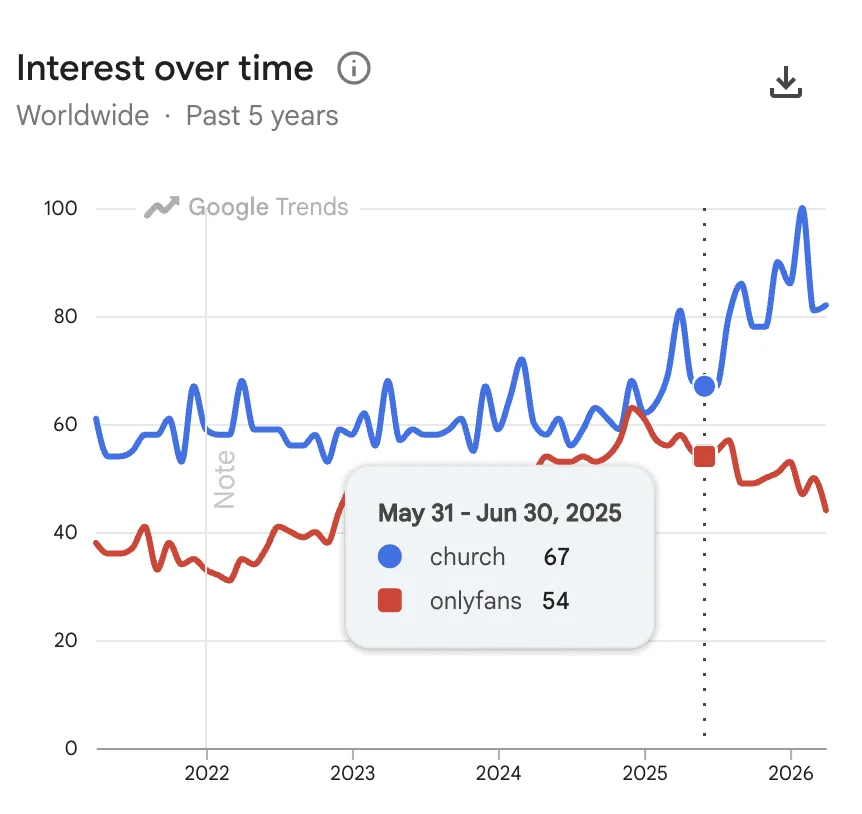
Google Trends data reveals a significant cultural shift, with worldwide search interest for "church" now double that of "OnlyFans," a reversal from their parity in 2025. This surge in faith-related searches in early 2026, coupled with a decline in OnlyFans interest, suggests a growing demand for religious content. Authors specializing in Christian fiction, spiritual nonfiction, devotionals, and Bible studies may find a receptive audience as readers increasingly turn towards faith-based material.
Super Tickets Sold Out for 2027 Novel Marketing Conference
Demand for premium access to the 2027 Novel Marketing Conference is exceptionally high, with Super Tickets selling out rapidly. This exclusive tier included a pre-conference hands-on advertising workshop. Standard tickets remain available for the main event, scheduled for January 22-23 in Austin, Texas, offering core marketing strategies and networking opportunities.
AI-Powered Typos: A New Frontier in Authenticity?
Ben Horwitz has launched Sinceerly.com, an AI tool designed to deliberately introduce typos into emails to make them appear more human. This Gmail Chrome extension strategically adds imperfections and removes AI hallmarks, offering a "humanization level" slider. This development signals a radical shift in how typos are perceived, moving from indicators of incompetence to markers of authenticity in an era of widespread AI-generated communication.
Jonathan’s Take:
"This is akin to a student obtaining an answer key and deliberately getting a B to avoid suspicion."
Thomas’s Take:
"The perception of typos is undergoing a profound transformation. What once signified a lack of education now proves one’s humanity. As AI-generated emails become commonplace, tools like Sinceerly.com allow users to inject perceived human flaws, mirroring AI audio models that add ‘ums’ and ‘uhs’ to speech. These affectations are designed to create a sense of authenticity."
Meta’s Workforce Reduction Amidst AI Investment:
Bloomberg reports that Meta plans to lay off approximately 8,000 employees and leave 6,000 open positions unfilled. This decision is part of the company’s substantial $135 billion investment in artificial intelligence this year. Authors who utilize Facebook and Instagram for advertising and audience building should closely monitor ad pricing and algorithm changes as Meta streamlines its operations.

Microsoft’s Voluntary Retirement Program:
CNBC reports that Microsoft has introduced its first voluntary retirement program for about 7 percent of its U.S. workforce. This initiative targets senior directors and below, whose age plus years of service total 70 or more, as the company seeks to manage costs during its AI infrastructure expansion. Authors relying on Microsoft 365, Copilot, or LinkedIn should anticipate accelerated AI feature rollouts.
Thomas’s Take:
"This reflects a technological turning point. Major technological revolutions often lead to the displacement of experienced personnel whose skills become less relevant. This mirrors the transition from typewriters to personal computers in the 1990s, where older workers resistant to change were often phased out. Microsoft’s situation highlights the competitive pressure in the AI race. Their stock has suffered due to perceived weaknesses in their AI offerings, including a less-than-stellar CoPilot and issues with GitHub and Windows 11."
Zeitgeist: Southern Poverty Law Center Indictment Sparks Debate on Racism Accusations
A federal grand jury in Montgomery, Alabama, indicted the Southern Poverty Law Center (SPLC) on April 21, 2026, on charges including wire fraud, false statements, and conspiracy to commit money laundering. Prosecutors allege the organization funneled over $3 million in donor funds between 2014 and 2023 to individuals associated with extremist groups, including the Ku Klux Klan and neo-Nazi organizations. The SPLC allegedly used shell entities to conceal these payments while publicly denouncing the same groups.
Acting Attorney General Todd Blanche stated that the SPLC "manufactured racism to justify its existence," while FBI Director Kash Patel added that the group allegedly lied to donors about dismantling extremists while paying their leaders. The indictment traces this alleged scheme back to the 1980s.
The SPLC has denounced the indictment as a politically motivated attack by the Trump administration and vows to contest the charges. Civil rights organizations have also criticized the move.
Implications for Authors:
The SPLC’s hate-group designations have historically influenced publishing decisions, leading to book drops, canceled tours, and refused advertising for authors labeled as racist or extremist. The indictment provides critics with new evidence suggesting the organization may have financially supported the very groups it publicly condemned. This development occurs amidst a broader cultural "vibe shift" where accusations of racism may carry less automatic weight. Authors are increasingly finding more freedom to tackle sensitive topics without immediate career repercussions, as readers and reviewers demand evidence over reflexive acceptance of such labels. While not erasing genuine bigotry, this erosion of the weaponization of the term "racist" by organizations facing credibility crises could embolden authors to write with greater confidence. Publishers may also re-evaluate risks as the influence of traditional gatekeepers wanes.

Thomas’s Take:
"Alex Jones’s past claims about the SPLC funding the Charlottesville rally are being revisited, suggesting he may have been correct. The SPLC’s defense that these were informant payments is being challenged by allegations that they funded the leadership of hate groups, rather than embedded informants. The core of the allegation is that the SPLC generated the very problem it claimed to solve, thereby perpetuating its own existence and revenue stream."
Jonathan’s Take:
"Nonprofits that claim to correct societal issues, like fighting racism, face a fundamental challenge: if they succeed, their reason for existence disappears. This creates an incentive to ‘manufacture’ the problem to ensure continued donations and operational necessity. This dynamic can lead to a focus on maintaining the narrative rather than achieving genuine resolution."
Thomas’s Take on Economic Incentives:
"This pattern is not unique. Historical examples, such as companies funding protests against their own expiring patents to promote new products, illustrate how financial incentives can drive seemingly contradictory actions. Regulations, too, are often pushed by the very industries they aim to govern, as they can create barriers to entry for smaller competitors. Anthropic’s public statements about the dangers of AI, for instance, may be strategic moves to encourage regulation that would disadvantage lower-cost competitors like Baidu and Tencent."
Jonathan’s Take on Terrorism and PR:
"In the context of counter-terrorism, military assets are often placed in hardened locations. However, terrorists may deliberately hide weapons under civilian infrastructure like schools and hospitals. This strategy capitalizes on the public relations fallout when these sites are hit, generating martyrs and increasing donations. The casualties become a tool to propagate their message through a sympathetic media ecosystem, sustaining the terrorist operation."
Thomas’s Prediction:
"The SPLC indictment is likely the first of many similar actions. The ‘racism industrial complex’ may have faced a deficit in genuine racism to justify its funding, leading to an incentive to generate it. Future indictments could be strategically released in intervals, a PR technique known as ‘trimming the puppy’s tail,’ to gradually release negative news and allow the subject to partially recover before the next blow. This approach is consistent with efforts to dismantle institutions perceived as adversaries."
Thomas’s Take on Trust and Nonprofits:
"There is a broader erosion of trust in charitable organizations. Questions about the efficacy of major nonprofits in delivering aid, coupled with concerns about excessive overhead and executive salaries, are leading to a growing sentiment of bypassing these institutions and giving directly to individuals or smaller, mission-driven entities. The SPLC case exemplifies an extreme form of this problem, where an organization allegedly acted contrary to its stated mission. This points to a systemic issue where the existence of an organization dedicated to ending something creates a conflict of interest: success means obsolescence."

Jonathan’s Take for Authors:
"For authors, especially those writing mission-based fiction, the lesson is authenticity. Avoid sounding corporate or sterile, and eschew AI-generated emails that strip personality. Genuine communication, even if it includes unconventional phrasing, resonates more deeply. My own emails are distinctive because I express viewpoints that AI is not programmed to convey."
Thomas’s Take on For-Profit Models:
"The future may lie in for-profit businesses operating with a clear mission. The SPLC’s alleged actions highlight the potential pitfalls of donation-based models. A subscription-based, for-profit model, focused on providing good, wholesome books with distinct curation, could offer a more transparent and honest transactional relationship. This approach allows for clear communication of values and avoids the inherent conflict of interest in organizations that profit from the continuation of a problem."
Jonathan’s Historical Parallel:
"The Apostle Paul’s tent-making exemplifies a commitment to financial independence, refusing to be a burden on the churches he founded. This deliberate choice protected him from accusations of profiting from his ministry and serves as a valuable model for structuring mission-driven endeavors to maintain integrity and avoid financial conflicts of interest."
Thomas’s Concluding Thought:
"Being for-profit allows for transparency in compensation, including executive salaries, without inviting criticism. Profitability itself is not inherently negative; honesty about the business model is paramount."



Leave a Comment