
New Novel "Inkpot Gods" Unveils Origins of Alchemical Power in 19th-Century New England
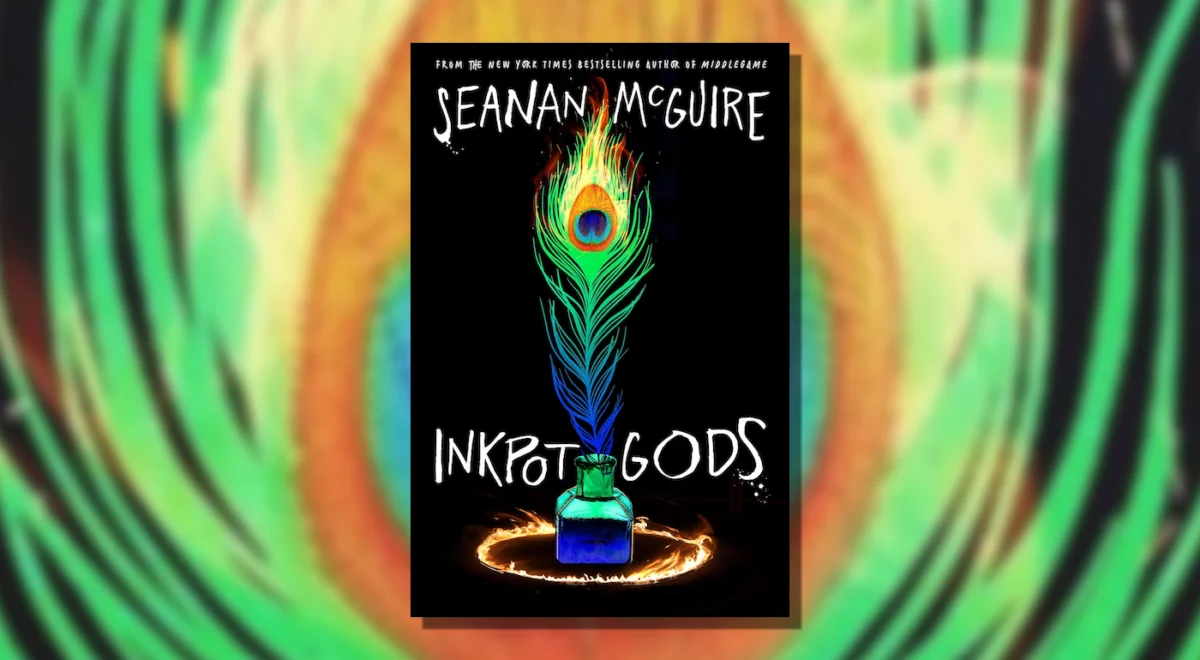
New York, NY – Tor Books is set to release Inkpot Gods, the fourth installment in Seanan McGuire’s acclaimed Alchemical Journeys fantasy series, on June 9th. The novel promises to delve deeper into the origins of alchemically created life, tracing a lineage back to a tumultuous period in 19th-century Massachusetts. An exclusive excerpt released ahead of publication offers a poignant glimpse into the foundational events surrounding the birth of a pivotal figure, revealing a world where ancient deities still walk among humanity, shaping destinies with both indifference and unexpected grace.
The series, known for its intricate world-building and exploration of powerful alchemists, invites readers to witness the very beginnings of a saga that has already seen the construction of the Impossible City on the ruins of Olympus. As the narrative progresses, it explores the descendants of a "dark alchemy" grappling with a reality "inching ever closer to the hellscape of her imagination." This latest volume, Inkpot Gods, appears to rewind the clock, offering an origin story steeped in both human despair and divine intervention.
Main Facts: A Divine Conception in a Desolate Landscape
The core of the preview excerpt revolves around Elisabet Turner, a woman ostracized and disfigured in rural Massachusetts during the mid-1860s. Her unexpected and inexplicable pregnancy becomes the nexus of suspicion and fear within her village. Despite her community’s "civilized" denial of witchcraft, Elisabet’s condition defies conventional explanation, challenging societal norms and religious dogma.
The excerpt reveals that Elisabet’s pregnancy is not of human origin, but the result of an encounter with a powerful, elemental entity—a "storm god." This divine liaison culminates in a harrowing childbirth facilitated by Ilithyia, the goddess of birth, who offers Elisabet a tragic choice: her life or her child’s. Elisabet’s decision to sacrifice herself for her daughter, Floretta, sets in motion a chain of events that will ripple through the ensuing decades, ultimately drawing the child into the orbit of her stern, pragmatic great-uncle, John Baker, in Boston. The narrative powerfully establishes Floretta’s destiny as a figure destined to "change the world," hinting at her central role within McGuire’s broader Alchemical Journeys universe.
Chronology of Fates: From Ostracism to Olympus’ Shadow
TIMELINE: 12:00 a.m. ET, JANUARY 7, 1865.
The story begins with the shocking news of Elisabet Turner’s pregnancy. A woman marked by ill-health, disfigurement from two bouts of pox, and social isolation, Elisabet is widely considered undesirable. Her past includes a missed opportunity for a better life in Boston with her uncle, John Baker, an offer rescinded due to her illness. Villagers, unable to comprehend her condition, oscillate between fear of witchcraft and quiet condemnation of sin. Elisabet, however, holds a secret: a profound, lonely belief in pagan gods, having witnessed their hidden presence in the world.
An Elemental Encounter:
Elisabet recounts a pivotal night when a "storm god" descended, taking human form. This powerful being, smelling of "petrichor and the electric burn of static," offered her a rare moment of acceptance and love. The union, a "storm cradled in her womb," imbues her with a sense of purpose and belonging, ending her profound loneliness.
TIMELINE: JULY 2, 1865.
Elisabet’s labor proves agonizing and life-threatening. A mysterious midwife, Ilithyia, arrives with a caravan of travelers, revealing her divine nature and the grim prognosis: Elisabet’s body cannot withstand the birth. Ilithyia, acting on the storm god’s behalf and bound by her own duties, presents Elisabet with a stark choice: save herself and live a potentially happy life, or sacrifice herself for her child, who is destined for greatness and remembrance. Elisabet chooses her daughter, driven by a deep longing for motherhood and a desire for her child to be remembered. She dies shortly after, at the stroke of noon. Ilithyia, contemplating taking the infant, is deterred by the arrival of Father Clemence, the village priest, who has an intuitive understanding of the extraordinary circumstances. Ilithyia then entrusts the infant to Father Clemence before departing for Olympus.
TIMELINE: 4:18 p.m. ET, JULY 11, 1872.
Seven years later, the orphaned daughter, named Floretta Bearse by Father Clemence’s housekeeper, has grown into a vibrant, beautiful girl—a stark contrast to her mother. The village, however, remains steeped in gossip and suspicion regarding her birth and her continued residence with Father Clemence. They perceive her "wildness" and "compromised" status as a threat to their community’s moral fabric and their sons’ virtue.
Intervention and Relocation:
A delegation of village men confronts Father Clemence, pressuring him to remove Floretta from his care. Despite his genuine affection and belief in Floretta’s innocence, Father Clemence, aware of the deeper, unearthly forces at play and the social impossibility of his continued guardianship, concedes. He contacts John Baker, Elisabet’s distant and wealthy uncle in Boston, summoning him to the isolated village.
John Baker’s Arrival:
John Baker, a man epitomizing Bostonian pragmatism and stern control, arrives in the desolate village, annoyed by the perceived "summons." He discovers that Elisabet had a child who survived, a fact he was not properly notified of due to a mysteriously "astray" letter (implied to be divine interference, a subtle protection by the storm god who, despite his indifference, ensures the land suffers for Floretta’s mistreatment). Initially dismissive of Elisabet’s memory, John’s calculated sense of family duty and reputation prompts him to agree to take Floretta, intending to reshape her into a proper Baker, free from the "taint" of her humble origins and the "unsuitable" name "Floretta."

Supporting Data: The Tapestry of Human Frailty and Divine Intent
The excerpt masterfully weaves together themes of social judgment, personal resilience, and the subtle, yet profound, influence of ancient deities on human affairs.
Elisabet Turner: A Vessel of Fate:
Elisabet’s character is a study in profound isolation. Her physical deformities and repeated bouts with pox render her an outcast, a living embodiment of misfortune in a community that equates ugliness with sin. Her internal world, however, is rich with observation and a quiet defiance. She may not believe in the conventional God’s plan, but her acceptance of a world populated by "pagan things from before the Bible was set in stone" speaks to a deep, intuitive wisdom. Her yearning for love and remembrance, culminating in her selfless choice, elevates her from a mere victim to a tragic, yet powerful, progenitor. Her fate underscores the harsh realities for unmarried, unconventional women in the 19th century, while simultaneously revealing a supernatural dimension that transcends these constraints.
The Gods Among Us:
The presence of the "storm god" and Ilithyia introduces a core element of the Alchemical Journeys series: the active, if often detached, involvement of divine beings. The storm god’s encounter with Elisabet is portrayed as an act of casual desire, yet it sparks a lineage of immense power. His subsequent, indirect "protection" of Floretta through the blighted landscape of the village demonstrates a god’s indifferent yet potent influence, punishing those who slight his progeny without fully understanding the human consequences. Ilithyia, the goddess of childbirth, acts with a sorrowful wisdom, a powerful figure bound by duty and truth, her interventions shaping mortal choices and destinies with an ancient understanding of fate. Her ability to see the "iridescence and impossibility stretching into the unvarying future" highlights the predetermined nature of some events within this universe.
Societal Hypocrisy and Superstition:
The village community serves as a microcosm of 19th-century societal anxieties. Despite professing to live in a "civilized time" that "no longer believe[s] in such nonsense as women who dance with the Devil," their actions betray a deep-seated fear of the unknown and a readiness to condemn those who deviate from the norm. Their whispers, their turning away from Elisabet, and their eventual pressure on Father Clemence regarding Floretta reveal a community more concerned with outward appearances and moral purity than genuine compassion. The concept of "taint" and "compromised" status for an innocent child underscores the cruel judgment imposed by rigid social codes.
Father Clemence: The Reluctant Guardian:
Father Clemence embodies a complex moral struggle. A man of "unshakable faith" and a "distaste for the company of women," he initially takes Floretta in out of a sense of spiritual obligation, believing he failed Elisabet. His genuine affection for Floretta over seven years is evident, as is his internal battle against the villagers’ mounting pressures. His intuitive grasp of Elisabet’s being "serving in an older story than her own" and his quiet acceptance of the "dead woman’s child" as a duty beyond the conventional highlight his role as a bridge between the mundane and the divine. His ultimate concession is not a failure of character, but a recognition of the overwhelming societal forces he cannot single-handedly oppose.
John Baker: The Architect of Logic:
John Baker represents the antithesis of the mystical and emotional elements of the narrative. A "hard-pressed diamond formed from good New England coal," he embodies urban pragmatism, logic, and a ruthless pursuit of control. His disdain for the rural village, his focus on reputation and order, and his calculated approach to family duty sharply contrast with Elisabet’s vulnerability and the gods’ ancient impulses. His decision to take Floretta is not an act of affection, but a cold, rational move to rectify a perceived anomaly in his family line and to mold the child into an acceptable Bostonian, unaware of the divine heritage he seeks to suppress. His inability to comprehend the "cracked and oddly muddy ground" of the blighted village symbolizes his disconnection from the deeper, elemental truths that govern this world.
Official Responses: The Unfolding of Predetermined Paths
The concept of "official responses" within this fictional context refers to the critical decisions made by key figures, often under duress or divine influence, that propel the narrative forward.
- Elisabet’s Choice: Her "official response" to Ilithyia’s offer—to choose her child’s life over her own—is the ultimate act of self-sacrifice and an affirmation of her desire for legacy and motherhood. This decision is divinely guided, fulfilling Ilithyia’s prophecy of Floretta’s future.
- Father Clemence’s Guardianship: His acceptance of Floretta from Ilithyia, despite the societal implications, is an "official response" driven by a profound sense of duty and an intuitive understanding of the child’s extraordinary nature. His subsequent seven years of care, while nurturing Floretta, inadvertently sets the stage for the villagers’ eventual "official response."
- The Village’s Ultimatum: The community’s decision to formally confront Father Clemence about Floretta’s presence in his household constitutes an "official response" to their fears and prejudices. It reflects their collective desire to maintain social order and moral purity, even at the expense of an innocent child. This societal pressure forces Father Clemence’s hand.
- John Baker’s Acceptance: John Baker’s grudging yet firm agreement to take Floretta to Boston is his "official response" to the summons. While driven by his own calculations of family duty and reputation, it aligns with the predetermined path for Floretta, fulfilling Ilithyia’s vision of her future. His intent to "fix" her name and upbringing signals his attempt to exert control over a destiny already partially shaped by divine forces.
Implications: A Legacy Forged in Storm and Sacrifice
The events detailed in this excerpt from Inkpot Gods carry profound implications for the Alchemical Journeys series. Floretta’s birth and early life serve as a powerful genesis point, establishing a lineage directly linked to ancient gods and a destiny intertwined with the series’ overarching themes of alchemical power and the clash between human and divine wills.
- Floretta’s Destiny: Ilithyia’s prophecy—that Floretta "will be exceptional, bright and brilliant and blazing" and "will change the world"—positions her as a figure of immense significance. Her unusual parentage and the suffering endured by her mother suggest a profound wellspring of power and purpose. Her future in Boston, under the stern guidance of John Baker, hints at a clash between her inherent wildness and a disciplined, human-driven upbringing, potentially shaping her into the powerful alchemist or figure of change described in the series synopsis.
- The Ongoing Influence of Gods: The excerpt confirms that gods are not merely mythical figures but active participants in the world, albeit often with a detached and sometimes destructive impact on human lives. The storm god’s unwitting punishment of the village through blighted crops and Ilithyia’s direct intervention underscore that divine power operates beyond human comprehension or control, influencing destinies in unpredictable ways.
- Connecting to Asphodel Baker’s Legacy: The series synopsis mentions "Asphodel Baker," who "refined the process allowing her to imbue alchemically created life with power." Given Floretta’s adoption by John Baker, a "Baker" by name, it is highly plausible that Floretta is a direct ancestor or a foundational figure in the lineage leading to Asphodel Baker and the powerful alchemy that defines the series. Her divine heritage could explain the unique "power" she might bring to the alchemical process.
- The Conflict of Logic vs. Wisdom: The excerpt’s titles, "Wisdom" and "Logic," directly reflect the central tension. Elisabet’s "wisdom" is her intuitive understanding of the pagan gods and her sacrificial love. The village’s "logic" is their fear and judgment, while John Baker’s "logic" is his pragmatic, controlling approach to life. The juxtaposition implies that while human logic attempts to impose order, divine wisdom and inherent destinies ultimately prevail, setting the stage for the epic conflicts explored in the Inkpot Gods and the wider Alchemical Journeys series.
As Inkpot Gods prepares for its June 9th release, readers can anticipate a rich narrative that explores the profound impact of ancient myths on a seemingly modern world, and the extraordinary legacy born from an impossible union in a forgotten corner of 19th-century New England.



Leave a Comment