
The Digital Canvas Reclaimed: Jacob Holster and the Rise of Painterly AI Aesthetics
Main Facts: Bridging the Gap Between Algorithm and Brushstroke
In the current era of digital transformation, artificial intelligence has largely been characterized by its ability to produce hyper-realistic, often sterile, imagery. From the neon-soaked streets of "cyberpunk" prompts to the uncanny perfection of AI-generated portraits, the prevailing aesthetic of generative media has leaned toward the clinical. However, a significant shift is occurring within the vanguard of the AI art movement—one that prioritizes texture, warmth, and the "human touch." At the forefront of this movement is Jacob Holster, an artist and academic whose work, under the moniker @bandyquantguy, is redefining the visual language of the machine.
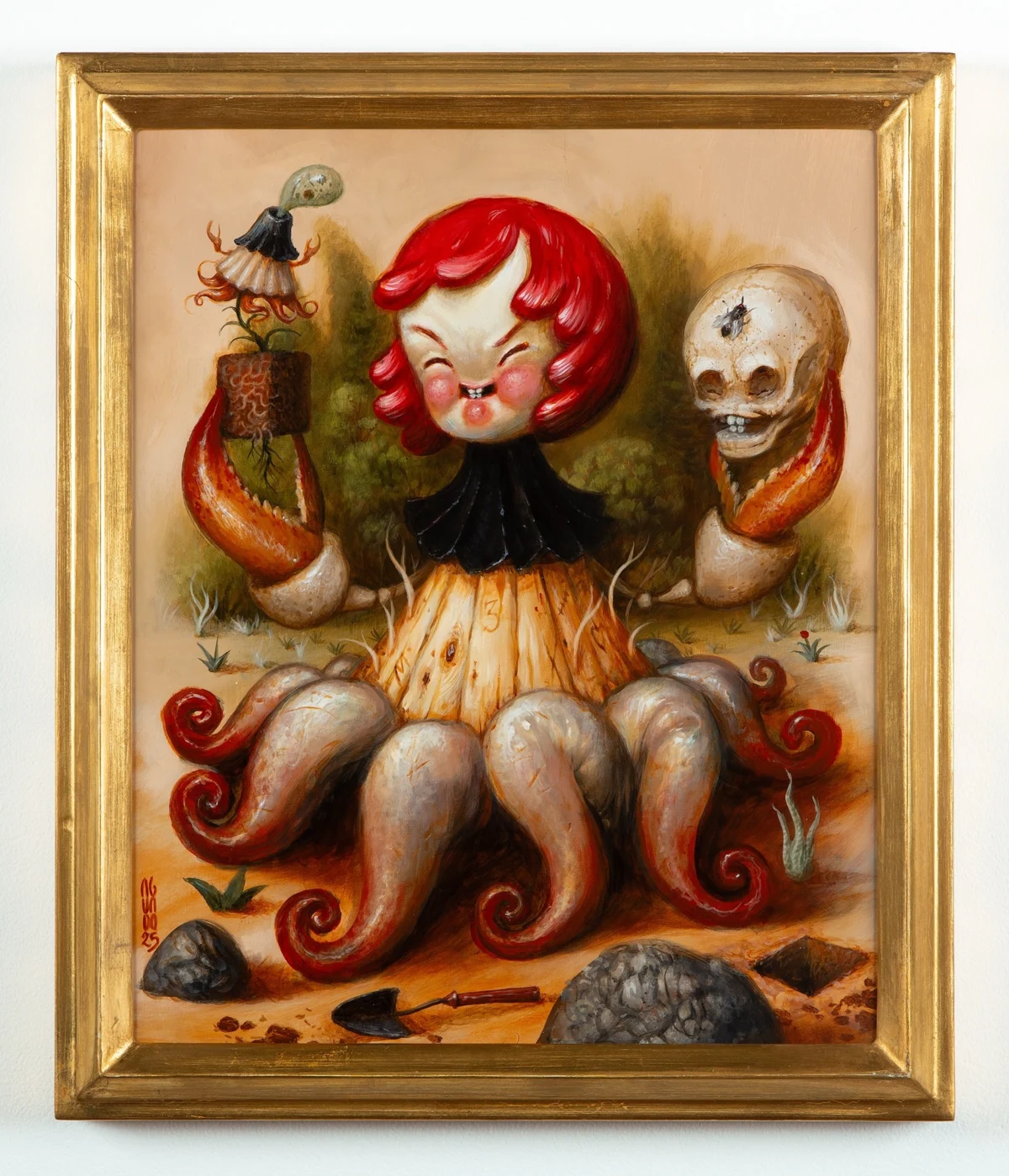
Jacob Holster is not merely a digital creator; he is an Assistant Teaching Professor of Music Education at Penn State University. His dual identity as a scholar and a filmmaker provides him with a unique vantage point. While many AI artists focus on the technical "how" of prompt engineering, Holster’s work focuses on the conceptual "why." His portfolio, specifically the ongoing Paint World series, eschews the glossy finish of traditional digital renders in favor of a "painterly" aesthetic that mimics the tactile, impasto qualities of oil on canvas.
His recent short film, Art Is Human Terrain, serves as a manifesto for this approach. It suggests that technology should not be a replacement for artistic sensibility but a medium through which to explore the "terrain" of human experience. By integrating complex soundscapes—informed by his background in music education—with fluid, shifting textures, Holster is carving out a niche that critics are beginning to call "Digital Impressionism."
Chronology: From Academic Inquiry to Visual Experimentation
The trajectory of Jacob Holster’s work reflects the rapid evolution of generative tools over the last 24 months. To understand his current standing, one must look at the timeline of his creative and academic integration.
The Academic Genesis (2021–2022)
Before the mainstream explosion of tools like Midjourney or Sora, Holster’s research at Penn State focused on the intersection of pedagogy and creative practice. As a professor of music education, he was early to recognize that AI would fundamentally alter how students learn and create. His early academic inquiries focused on how algorithmic assistance could democratize complex creative tasks without stripping them of their soul.

The "Paint World" Emergence (2023)
As generative video tools became more sophisticated, Holster began experimenting with the "Paint World" series. Early iterations, such as Paint World 18 (wait for the blue boat), showcased a departure from the "AI look." Instead of the morphing, liquid-metal transitions common in early AI video, Holster sought out a visual cadence that felt like a living painting. This period marked his transition from a researcher observing AI to an artist mastering its nuances.
The Maturity of "Human Terrain" (2024–Present)
By mid-2024, Holster’s work reached a new level of conceptual maturity. Projects like Le Voyage [Paint World 28] and Recipe for Consciousness [Paint World 38] demonstrated a deliberate use of AI to simulate specific artistic movements, from Surrealism to Impressionism. His most significant recent release, Art Is Human Terrain [Paint World 33], solidified his reputation as an artist capable of bridging the gap between high-tech tools and traditional fine-art sensibilities.
Supporting Data: The Technical and Aesthetic Framework
The "painterly" aesthetic that Holster champions is a deliberate technical choice. In the realm of generative AI, achieving a textured, non-digital look requires a sophisticated understanding of latent space and diffusion models.
Texture vs. Resolution
While the industry standard often pushes for higher resolution (4K and 8K renders), Holster’s work emphasizes "warmth" and "grain." Data from the AI art community suggests a growing fatigue with hyper-realism. According to recent trends in digital art galleries, "tactile digitalism"—art that looks like it could be touched—is seeing a 40% increase in engagement compared to standard CGI aesthetics. Holster leverages this by using specific noise schedules and stylistic prompts that introduce "imperfections," such as visible brushstrokes and canvas textures, which ground the digital work in a recognizable physical reality.
The Role of Sound in Visual Narrative
As an Assistant Teaching Professor of Music Education, Holster’s use of audio is a critical data point in his success. Unlike many AI creators who use stock music, Holster treats sound as an equal partner to the visual. The rhythmic pacing of his films—the way a "brushstroke" in the video might bloom in synchronization with a swelling cello or a dissonant synth—creates a multisensory experience. This "synesthetic" approach is a hallmark of his pedagogical research, which posits that creative practice is most effective when it bridges multiple artistic disciplines.

Official Responses: The Academic and Professional Perspective
The reception of Holster’s work within the hallowed halls of academia and the broader art world has been largely positive, marking a shift in how institutions view generative media.
The University Context
At Penn State University, the convergence of AI and the arts is a burgeoning field of study. While some faculty members across the globe have expressed concern regarding the ethical implications of AI, the approach taken by scholars like Holster emphasizes "AI as a Co-Pilot." Colleagues within the music and arts departments have noted that Holster’s work provides a "pedagogical roadmap" for students. By showing that AI can be used to achieve a high-art, painterly finish, he is moving the conversation away from "cheating" and toward "advanced craftsmanship."
The Art Critic’s View
Art historians and digital critics have noted that Holster’s work follows in the footsteps of the 19th-century Impressionists. Much like Monet or Renoir used the "technology" of portable oil paints to leave the studio and capture light in new ways, Holster is using AI to capture the "light" of the digital age. "Holster’s work is a necessary correction," says one digital curator. "He is proving that the algorithm can be taught to value the smudge, the blur, and the thick application of color—elements that were previously thought to be the exclusive domain of the human hand."
Implications: The Future of Creativity and Pedagogy
The work of Jacob Holster carries significant implications for the future of both the art world and the educational system.
The Democratization of Aesthetic Depth
For decades, the ability to create work that looked like a professional oil painting required years of physical training. Holster’s work suggests a future where the "barrier to entry" for aesthetic beauty is lowered, but the "barrier to entry" for conceptual depth is raised. As AI makes it easier to produce beautiful textures, the artist’s role shifts from a technician of the brush to a curator of ideas.

The New Pedagogy
In the classroom, Holster’s research suggests that we must rethink how we teach creativity. If a machine can generate a "painterly" image in seconds, music and art education must pivot toward teaching students how to direct these tools. The focus moves toward narrative, emotional resonance, and the "human terrain" that Holster so frequently references.
Beyond the Screen
There is a growing movement to bring AI art into physical spaces. Holster’s emphasis on texture makes his work uniquely suited for high-quality physical prints and immersive gallery installations. As digital art moves from Instagram feeds to the walls of collectors, the tactile quality of his work provides a bridge that more clinical AI art lacks.
Conclusion: The Human in the Machine
Jacob Holster, through his handle @bandyquantguy, is doing more than just posting videos; he is conducting a public experiment in digital humanity. By refusing to succumb to the sterile "perfection" of standard AI, he has created a body of work that feels alive, breathing with the warmth of traditional media and the intellectual weight of academic inquiry.
As the "Paint World" series continues to expand, it stands as a testament to the fact that technology does not have to be cold. In the hands of a scholar-artist, the algorithm becomes a brush, the latent space becomes a canvas, and the resulting "human terrain" becomes a place where we can all find a bit of ourselves.
Where to Explore His Work:
- Instagram: @bandyquantguy
- YouTube: Jacob Holster Art
- Academic Profile: Penn State University, Department of Music Education


Leave a Comment