
Unearthing the Mycelial Network: How Folklore Thrives in a Tangled Web, Explored by Zoe Gilbert
London, UK – Folklore, often perceived as a collection of quaint, static tales from the past, is in fact a dynamic, living entity, a vast subterranean network akin to the intricate mycelial systems that underpin our forests. This profound metaphor lies at the heart of author Zoe Gilbert’s exploration into the enduring power and interconnectedness of myths, particularly as illuminated by her research for the novel Mischief Acts. Gilbert posits that these cultural threads, much like the hidden fungal mesh, feed and inform the visible narratives and traditions that sprout above the surface, quietly spreading, adapting, and thriving across generations and geographies.
The author’s latest work delves into the shadowy figure of Herne the Hunter, a character who embodies the complex, often elusive nature of folklore. Far from being an isolated legend, Herne emerges as a key node in an expansive web of ancient spirits, tricksters, and wild men, demonstrating that individual stories are never truly singular but are deeply interwoven into a larger, vibrant tapestry of human experience and imagination. This perspective challenges conventional understandings of mythology, urging a deeper look beneath the surface to appreciate the profound symbiosis between traditional narratives and contemporary creative acts.
Main Facts
Unearthing the Mycelial Network of Folklore
Zoe Gilbert’s core thesis is that folklore constitutes a "gigantic living web," directly comparable to the biological marvel of mycelium. This subterranean fungal network connects individual plants and trees, facilitating nutrient exchange and communication. In the cultural sphere, this translates to an intricate system where stories, songs, and traditions, much like the visible "oaks" of a forest, draw sustenance from and contribute to a shared, often unseen, substratum of collective memory and archetypes. This "cultural commons" is not a static archive but a constantly evolving ecosystem, where new narratives emerge from ancient roots, influenced by the underlying connections. Gilbert’s work champions the idea that understanding folklore requires delving beneath the superficial narrative, into the rich, "busy earth" of interconnectedness, revealing profound kinships, ancestors, and progeny within the realm of tales.
Herne the Hunter: A Folkloric Keystone
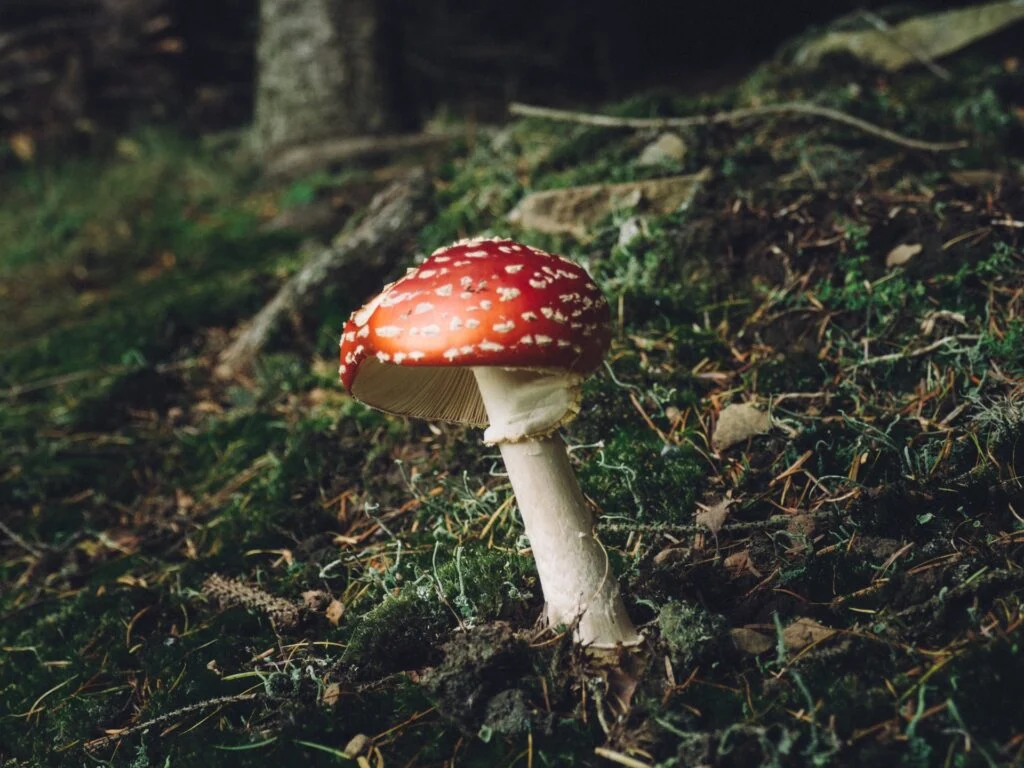
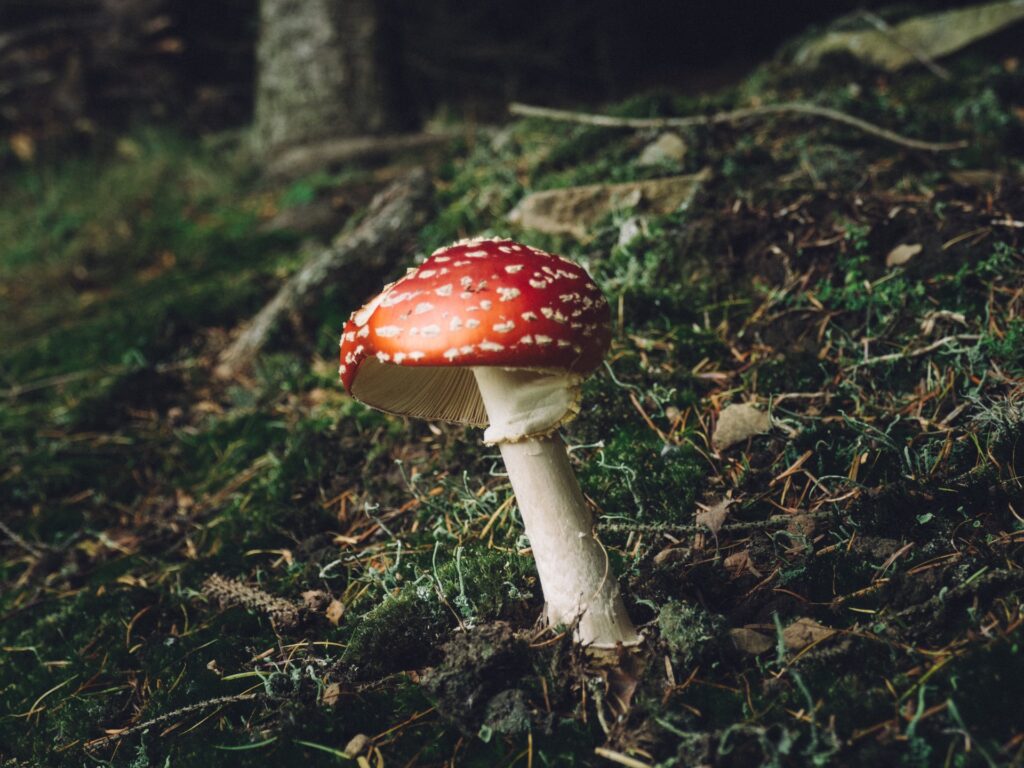
Central to Gilbert’s investigation is Herne the Hunter, a figure she describes as "mushroomy" – arresting when spotted, often lurking on the periphery of consciousness, yet undeniably present and significant. Herne is not always "centre stage" but plays crucial, often catalytic, roles across various narratives. His appearances range from John Masefield’s The Box of Delights as a wise mentor and Susan Cooper’s The Dark is Rising as a menacing presence, to Nick Hayes’s The Book of Trespass and, most famously, William Shakespeare’s The Merry Wives of Windsor. William Harrison Ainsworth later provided a glorious origin story in his 1842 novel, Windsor Castle. Gilbert likens Herne to a fly agaric mushroom: visually striking, beautiful and dangerous, courting human pathways, but rarely collected in bulk. This analogy underscores his unique position as a distinct, impactful entity deeply rooted within the larger, hidden network, whose full significance is only revealed upon closer inspection of its widespread connections.
Chronology
Ancient Roots and Enduring Presence
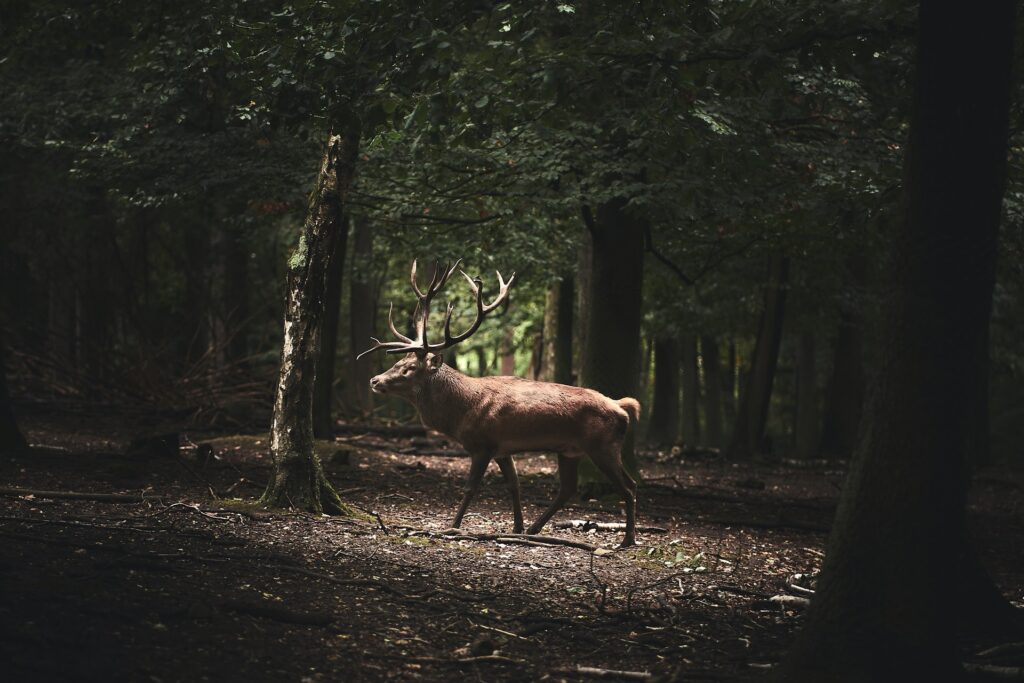
The journey into Herne the Hunter’s lineage quickly reveals deep roots stretching back through centuries of European folklore and mythology. While Shakespeare’s The Merry Wives of Windsor (circa 1597-1602) arguably solidified Herne’s place in popular English consciousness, depicting him as a horned ghost haunting Windsor Forest, his characteristics resonate with far older archetypes. Gilbert’s research swiftly connects Herne to Odin, the Norse Allfather, both figures associated with hanging from sacred trees and leading the fearsome Wild Hunt. This ancient motif, prevalent across Germanic and Celtic traditions, involves a spectral procession of hunters, often associated with winter storms and portents of war or plague. Figures like King Herla in Herefordshire and Gwynn ap Nudd in Welsh mythology also lead such hunts, illustrating the widespread nature of this powerful archetype.
Further tracing these threads reveals the familia herlechini, a diverse group of figures linked by themes of wildness, mischief, and liminality. This includes the Harlequin, evolving from a demonic figure in medieval French mystery plays to the iconic masked character, Arlecchino, of Italian Commedia dell’arte. The Erl-king, a malevolent elf from German folklore, and the more benevolent, leafy-faced Green Man, a symbol of rebirth and nature’s vitality, also emerge as kin. These characters, spanning centuries and diverse cultural contexts, demonstrate a continuous reinterpretation and adaptation of core folkloric elements, ensuring their enduring presence in art, literature, and performance, from ancient rituals to contemporary stages.
Modern Reinterpretations and the Author’s Journey
Zoe Gilbert’s deep dive for Mischief Acts began with Herne but quickly unfolded into a sprawling network of interconnected myths. Her initial expectation of finding a clear link to Odin proved true, establishing a critical ancient lineage. However, this connection was merely a gateway to a much vaster "mycelial network" that proliferated with unexpected interweavings. Gilbert found not just dozens of Wild Hunt leaders but also characters who had carved out their own unique "ecosystems of lore." This included the mischievous Robin Goodfellow (Puck), the primal Woodwose (wild man of the woods), Oberon (King of the Fairies), and the festive Lord of Misrule.
The research journey traversed distinct cultural landscapes, from the magical realms of Fairyland to the historical intricacies of Tudor England and the foundational narratives of Roman mythology. Each attempt to isolate and follow a single thread led to further discoveries, revealing how these figures are not confined to singular origins but are composites and echoes across different traditions. This complex web of influence provided Gilbert with a crucial insight: the universal appeal of "mischief, transgression, wildness in landscape and soul." This understanding, born from the sprawling, unruliness of the folkloric network, ultimately gave her "permission" to perform her own act of reinterpretation: transplanting Herne from his traditional Windsor haunt to the Great North Wood in South London for her novel. This creative act underscores the dynamic nature of folklore, demonstrating how authors can actively participate in its ongoing evolution.
Supporting Data
The Mycelial Metaphor: A Deeper Dive
The analogy between folklore and mycelium is more than poetic; it offers a potent framework for understanding cultural transmission and evolution. Mycelium, the vegetative part of a fungus, consists of a network of fine white filaments called hyphae. This hidden network can span vast areas, connecting individual trees and plants in a forest through mycorrhizal associations. Through these connections, fungi facilitate the exchange of water, nutrients, and even warning signals between plants, effectively creating a "wood-wide web." This symbiotic relationship ensures the health and resilience of the entire forest ecosystem.
Similarly, Gilbert argues, folklore functions as a cultural "mycorrhizal network." Individual stories, songs, and characters, like the distinct English or sessile oaks, appear as separate entities. Yet, beneath the surface, they are deeply interconnected, sharing thematic "nutrients" (archetypes, motifs, narrative structures) and "communicating" across time and space. This hidden web explains how similar tales or characters can emerge independently in different cultures or how a single figure like Herne can manifest in various forms, from wise mentor to menacing spirit. The network allows for the adaptation and regeneration of cultural knowledge, ensuring that the "forest of stories" continually renews itself, drawing from the shared, ancient wellspring of human experience. For those who "dig beneath the leaf mulch," tracing these threads offers a profound "thrill" of discovery, revealing the intricate patterns that bind our collective imagination.
A Pantheon of Connected Figures
Gilbert’s research reveals Herne as a nexus for a diverse pantheon of figures, each contributing to the rich tapestry of the folkloric mycelium.
- Wild Hunt Leaders: Beyond Odin, Herne’s direct kin include figures like King Herla, a legendary ancient British king condemned to ride eternally with his ghostly retinue, his tale often associated with Herefordshire. Similarly, Gwynn ap Nudd, the Welsh king of the underworld and leader of the Wild Hunt, adds a Celtic dimension to this powerful archetype. These figures embody themes of spectral pursuit, doom, and the boundary between worlds, highlighting the ancient fear and awe inspired by untamed forces.
- Mischief-Makers and Tricksters: The connection to Herne extends to figures renowned for their playful subversion and chaotic energy. Harlequin, or Arlecchino, with his distinctive diamond-patterned finery, evolved from a devilish figure to a comedic, often anarchic, character in Italian theatre, his antics challenging social norms. Robin Goodfellow (Puck in Shakespeare’s A Midsummer Night’s Dream) is another quintessential trickster, a sprite known for his pranks and ability to cause delightful chaos. The Lord of Misrule, a medieval and Tudor tradition, temporarily inverted social hierarchies during festive periods, embodying a sanctioned transgression. These figures collectively represent humanity’s need to periodically challenge order, embrace folly, and find freedom in disruption.
- Woodland Spirits and Horned Gods: The network also encompasses ancient spirits deeply tied to nature. The Green Man, a motif found in medieval art and architecture, with his face wreathed in leaves, symbolizes rebirth, fertility, and the untamed vitality of the natural world. The Woodwose, or wild man of the woods, represents primal, untamed human nature, living outside civilization. At the broader mythological level, figures like Cernunnos, the horned god of Celtic polytheism, emerge as powerful archetypes, often associated with fertility, animals, wealth, and the underworld. While Herne shares iconography with Cernunnos, Gilbert notes that the sheer "range of form and territory" and the unruly nature of Herne’s family suggest a more complex, less singular origin than simply tracing all threads back to one ultimate horned god. The shared themes, however, are undeniable: life, death, freedom, lust, wildness, and mischief, all deeply embedded in the natural world and the human psyche.
The Enduring Power of Place and Spirit
Folklore is intrinsically linked to place, grounding narratives in specific landscapes and communities. This deep connection manifests in the concept of genius loci, the protective spirit or essence of a particular location. While Herne the Hunter is traditionally rooted in Windsor Forest, Gilbert’s decision to "transplant" him to the Great North Wood in South London for Mischief Acts speaks to a broader truth about folklore’s adaptability. The Great North Wood, though fragmented today into areas like Sydenham & Dulwich Woods, once stretched across a significant portion of South London. Its historical inhabitants, from ancient charcoal burners and famous gypsy communities to eccentric hermits (like the recently documented Solomon, who received mail via a tree), attest to its long-standing role as a liminal space – a wild edge where civilization meets untamed nature.
Gilbert observes that this wood, regardless of its size, has always possessed a genius loci. Her question was whether Herne, as the embodiment of wildness and transgression, would answer the call to defend and inhabit a new, urban woodland. The answer, for Gilbert, is a resounding yes. The universal human need for "mischief, transgression, wildness in landscape and soul" means that such archetypal figures are not bound by a single geographical location. Instead, they emerge "wherever and whenever people needed it," particularly in those transitional zones "where the town gives way to the wood." Herne, the "wildman, the spirit of the forest, the hooligan and the trickster," represents an enduring primal force that transcends specific locales, making his transplantation a logical and powerful narrative choice.
Official Responses
Critical Acclaim and Scholarly Engagement
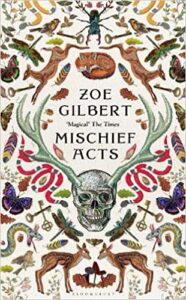
While the original article is a personal reflection from the author, its insights resonate strongly with critical reception and broader academic interest in folklore. Zoe Gilbert’s novels, Mischief Acts and her debut, Folk, have garnered significant critical acclaim, signaling a growing appreciation for works that deeply engage with and reinterpret traditional narratives. Mischief Acts is lauded for its "intoxicating, chameleonic voice and boundless imagination," described as "dangerous, sexy, troubling, daring, savage, an exhilarating race through time and space, weaving together the ancient and the contemporary." This critical language suggests that Gilbert successfully taps into the primal, often unsettling, energy of folklore while making it relevant to modern sensibilities. Similarly, Folk is praised for its "staggeringly original world" and "crackling with echoes of ancient folklore," highlighting its inventive approach to myth-making.
This reception is indicative of a broader resurgence in scholarly and public engagement with folklore, mythology, and their contemporary relevance. Academic fields such as folkloristics, literary studies, and cultural anthropology increasingly explore how ancient narratives continue to shape modern identities, ethics, and aesthetics. Platforms like Folklore Thursday, where Gilbert’s article was originally published, serve as vital hubs for this dialogue, connecting authors, researchers, and enthusiasts who share a passion for exploring the depths of cultural heritage. Gilbert’s unique approach—using the mycelial metaphor to illustrate the interconnectedness and dynamism of folklore—contributes significantly to this discourse, offering a fresh conceptual lens through which to view the evolution and perpetuation of myth in a rapidly changing world. Her work exemplifies how contemporary fiction can not only draw inspiration from folklore but also actively participate in its ongoing re-creation and re-enchantment.
Implications
Re-enchanting the Modern World
The understanding of folklore as a living, interconnected mycelial network carries profound implications for how we perceive our cultural landscape and our place within it. In an increasingly rationalized and urbanized world, the concept of a hidden, vibrant network of stories offers a powerful means of re-enchantment. By recognizing the ancient threads that bind contemporary narratives to primal archetypes, individuals can reconnect with landscapes, both physical and imaginative, that might otherwise seem mundane or disconnected. The notion that figures like Herne embody a universal need for "mischief, transgression, wildness" suggests that these forces are not relics of a forgotten past but intrinsic components of the human psyche, ready to emerge "wherever civilization lapses." This perspective encourages a re-evaluation of wild spaces, both within nature and within ourselves, as vital sources of inspiration, challenge, and spiritual sustenance. It implies that even in the most urbanized settings, the underlying current of wildness, represented by these folkloric figures, remains accessible, offering a pathway to a deeper, more magical understanding of existence.

The Symbiotic Relationship Between Fiction and Folklore
Perhaps the most significant implication of Gilbert’s work is its illumination of the symbiotic relationship between fiction and folklore. This is not a one-way street where folklore merely serves as raw material for authors. Instead, Gilbert demonstrates that fiction actively participates in extending, morphing, and renewing folklore. Every new interpretation, every transplantation of a character to a new setting, every novel that reimagines an ancient myth, adds a new thread to the mycelial network. This continuous creative feedback loop ensures that the "forest of stories forever renews itself." Authors like Gilbert are not just preserving old tales; they are engaging in a dynamic process of cultural evolution, keeping folklore vibrant and relevant for new generations. This ensures that the collective imagination remains fertile, continually sprouting new narratives while remaining deeply rooted in the wisdom and wildness of the past. It underscores the vital role of artists and storytellers as custodians and innovators within this living tradition.
A Call to Explore the Unseen
Ultimately, Gilbert’s exploration serves as an invitation – a call to "dig beneath the leaf mulch" and discover the hidden wonders of the folkloric mycelium for oneself. The acknowledgement that "we will never discover the edges of Herne the Hunter’s folkloric web" is not a limitation but an affirmation of its boundless richness and ongoing potential. Just as the forest floor constantly teems with unseen life – "velvet shank and amethyst deceivers wait quietly; beech mast sprouts into new saplings and wood anemones expand their territory" – so too does the world of folklore offer an inexhaustible source of discovery. This perspective fosters a sense of wonder and curiosity, encouraging individuals to seek out the connections, to question the seemingly singular, and to appreciate the profound, intricate web that informs our cultures, shapes our identities, and continually inspires our imagination. It reminds us that beneath the surface of everyday life lies a magical, interconnected realm waiting to be explored.


Leave a Comment