
The Spatial Pivot: Meta’s Horizon OS Update Transforms Quest 3 into a 3D Media Powerhouse
The boundary between the flat digital world and the immersive spatial realm is beginning to dissolve. In a move that signals a significant shift in its product philosophy, Meta has released a transformative update for the Quest 3 via its Horizon OS Public Test Channel (PTC). This update, while containing several quality-of-life improvements, is headlined by a breakthrough feature: the ability to convert almost any standard 2D image into a stereoscopic 3D experience.
By leveraging advanced AI depth-estimation algorithms, Meta is effectively retrofitting the history of digital photography for the spatial computing era. This development, alongside streamlined system controls, marks a clear departure from the Quest’s origins as a dedicated gaming peripheral, repositioning it as a versatile "spatial computer" designed for everyday media consumption and productivity.
Main Facts: AI-Driven Depth and User Interface Refinement
The latest Horizon OS PTC update introduces three primary pillars of functionality that enhance the Quest 3’s utility.
1. The "View in 3D" Browser Integration
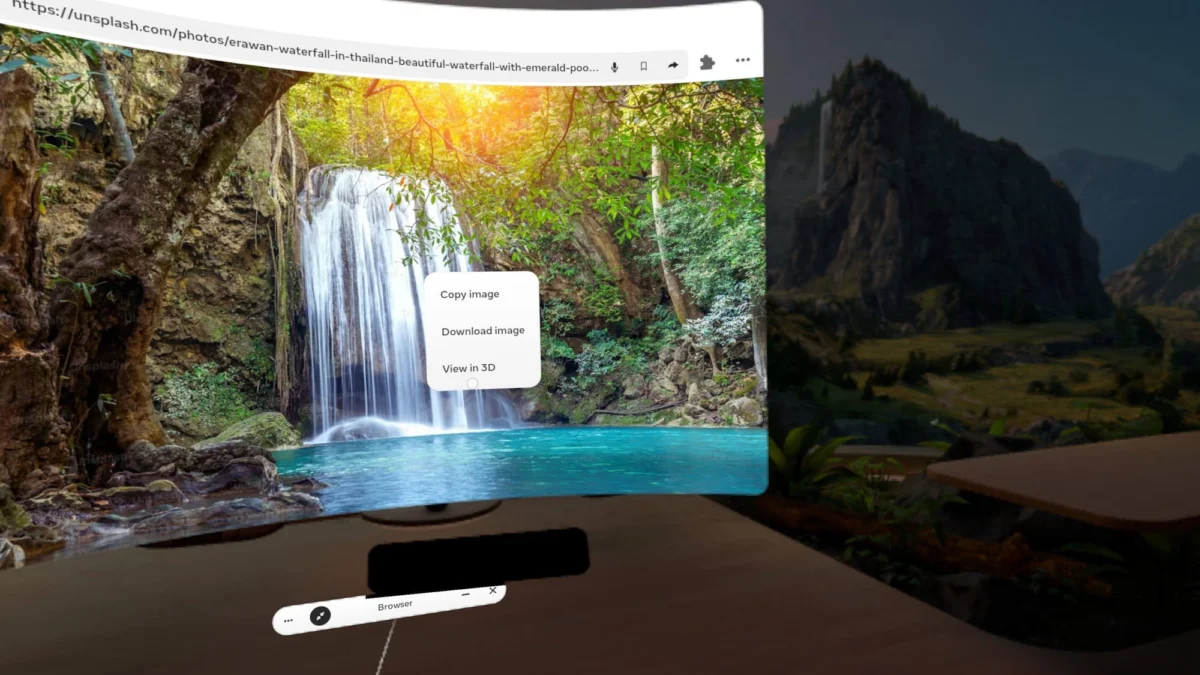
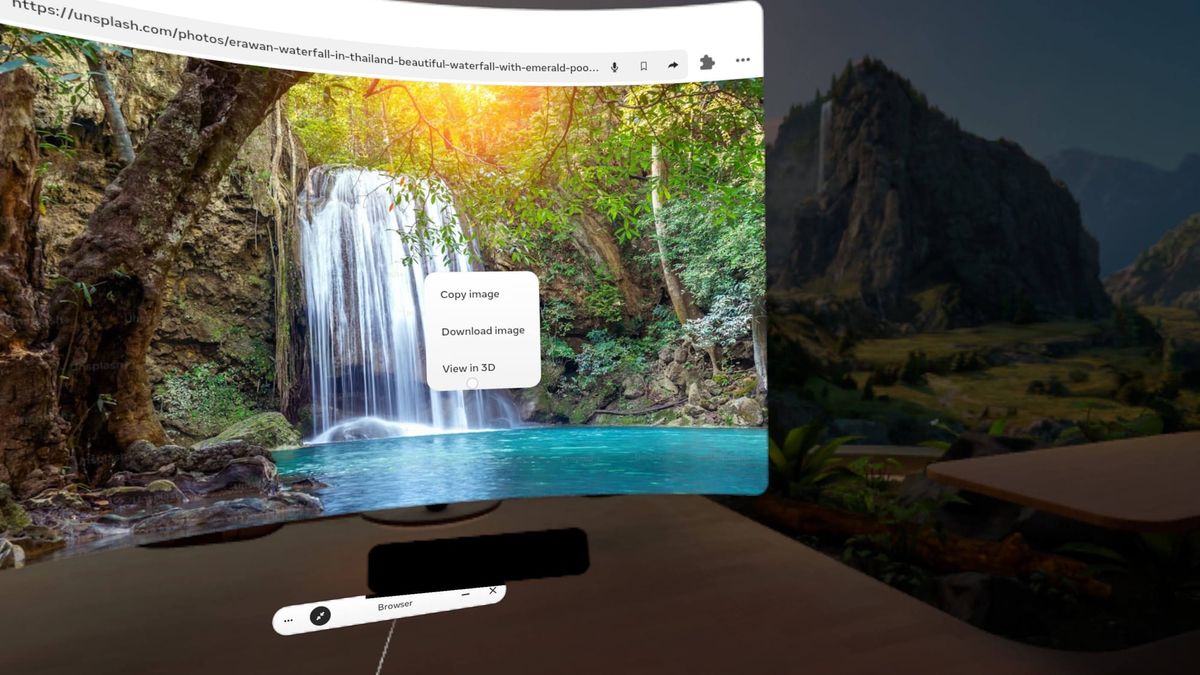
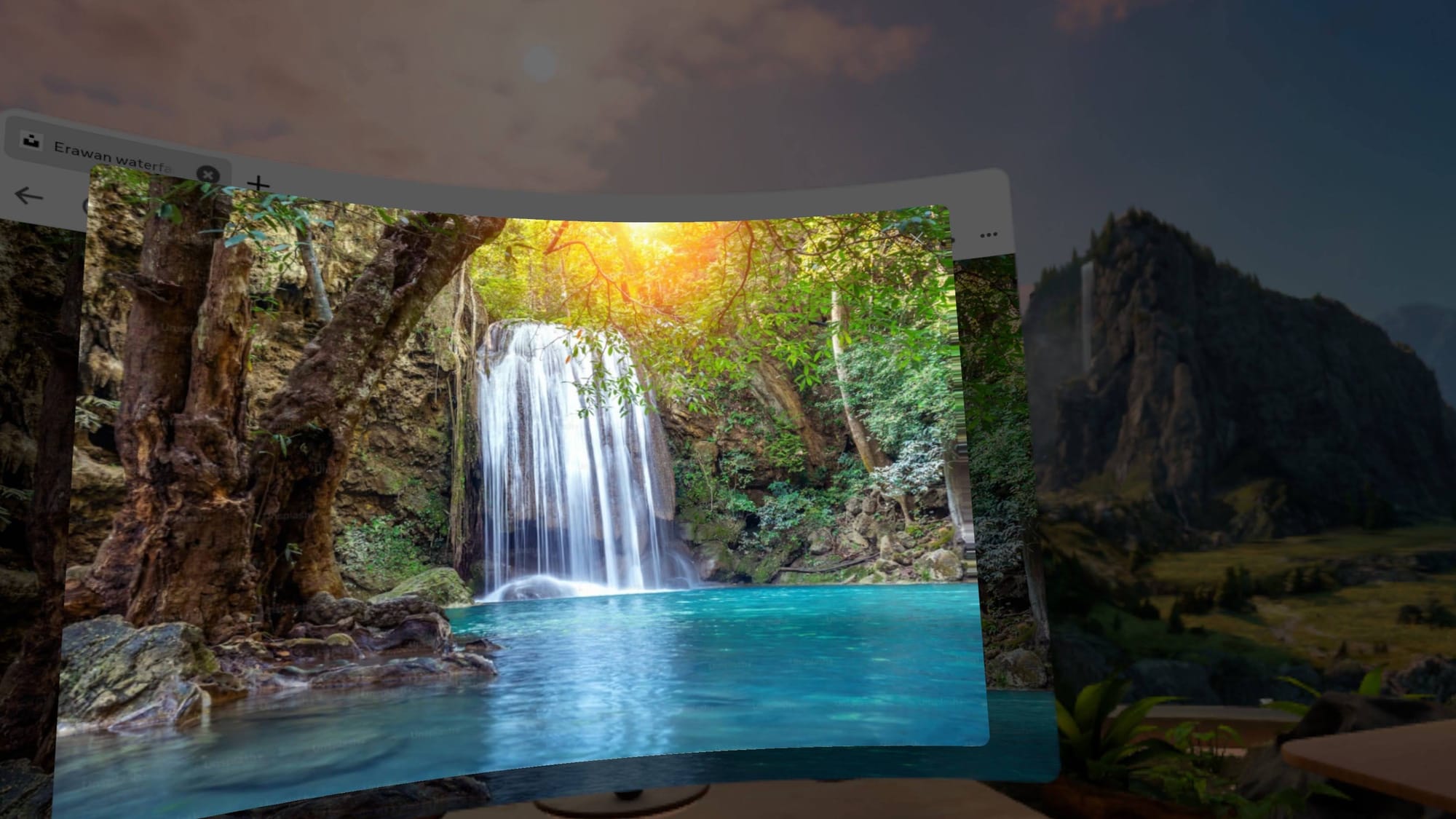
The most technically impressive addition is the integration of real-time 3D conversion within the Quest’s native web browser. Users can navigate to any website—from news outlets to image repositories like Unsplash—and, with a simple "select and hold" gesture (or a pinch via hand tracking), trigger a "View in 3D" option. Within seconds, the system processes the 2D image and projects it as a stereoscopic scene. The result is a photo that appears to have genuine depth, with foreground elements "floating" while background elements recede, providing a sense of immersion previously reserved for expensive specialized cameras.
2. Mobile App Synergy and Photo Conversion
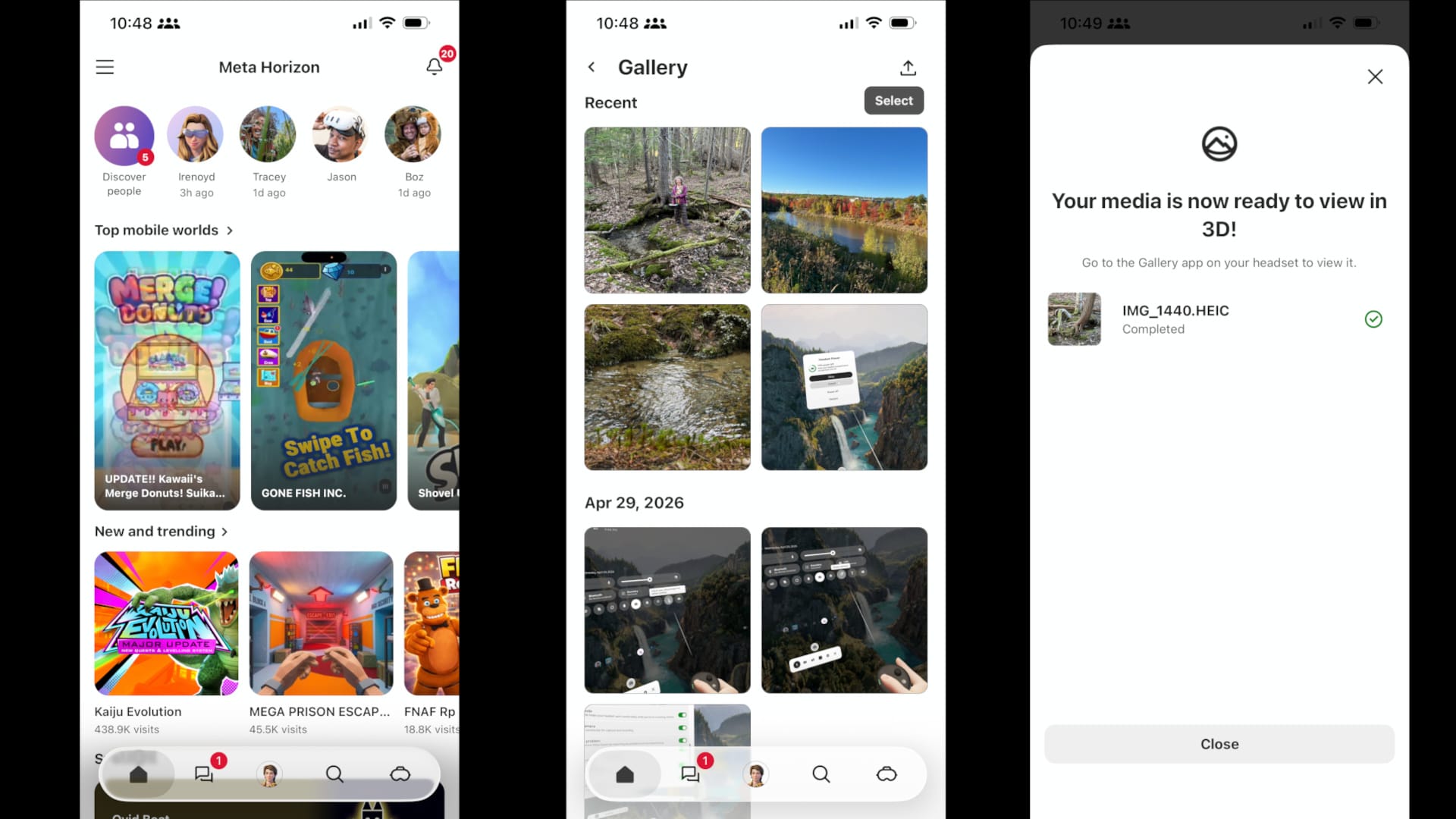
Meta has also updated the Horizon mobile app to act as a bridge for personal memories. Users can now upload standard photos from their smartphone’s camera roll directly to their Quest gallery. During the upload process, Meta’s cloud-based processing converts these images into 3D. This allows users to revisit their own personal history—family vacations, portraits, and landscapes—with a level of presence that 2D screens cannot replicate.
3. Quick Settings Evolution: Power and Accessibility
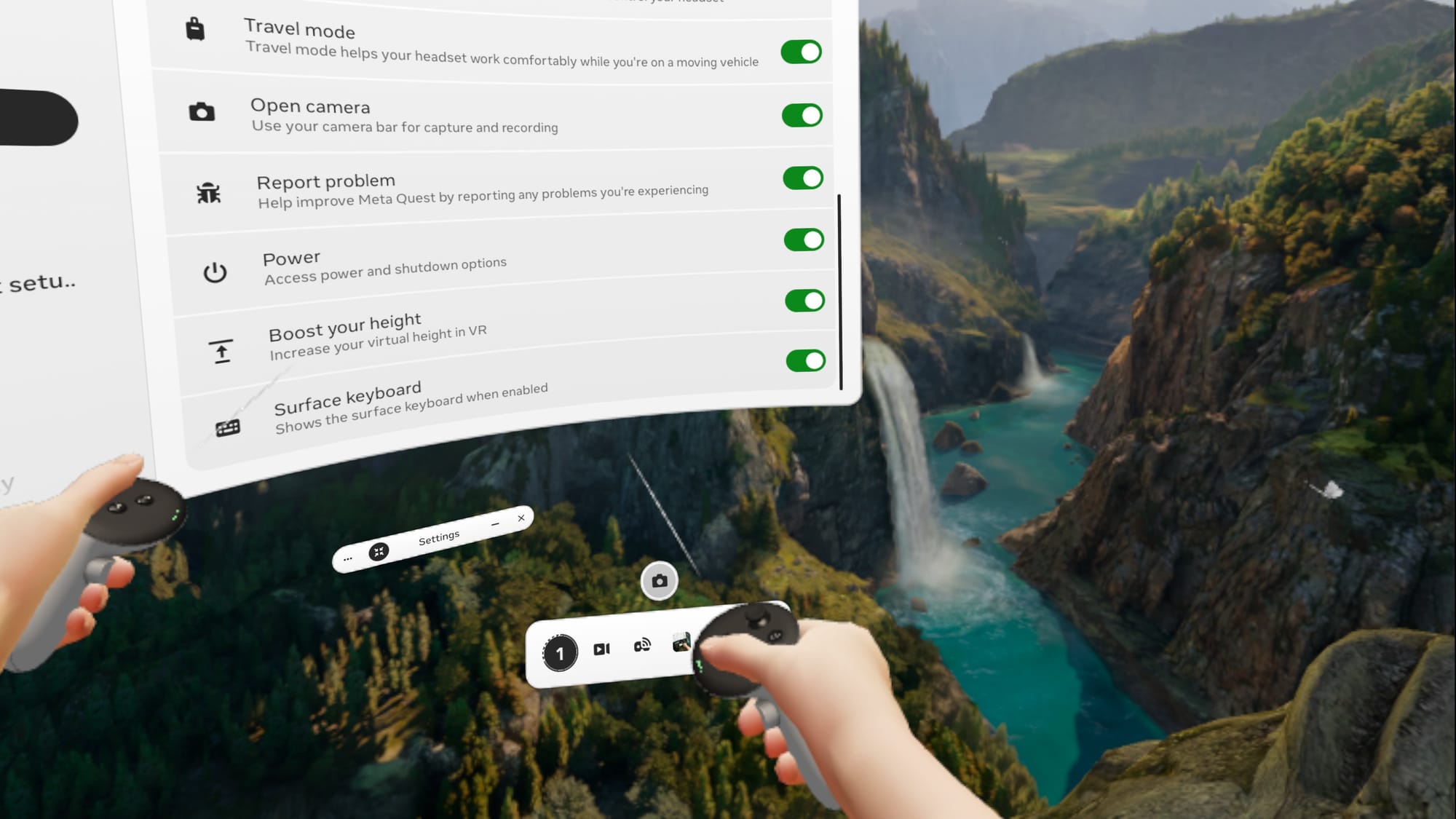
Beyond media, the update addresses long-standing user interface (UI) complaints. Two new toggles have been added to the Quick Settings panel:
- Power Options: A centralized hub for battery monitoring, sleep mode, power-off, and restart functions.
- Boost Height: A critical accessibility feature that allows users to virtually increase their height by approximately 16 inches. This is particularly vital for "seated VR," allowing users to interact with virtual environments as if they were standing, without physical strain.
Chronology: The Road to Horizon OS
To understand the significance of this update, one must look at the trajectory of Meta’s software development over the past 24 months.
- October 2023: Meta launches the Quest 3, featuring high-fidelity color passthrough and a powerful Snapdragon XR2 Gen 2 chipset. While the hardware was capable of spatial computing, the software remained heavily focused on the "Quest Store" gaming ecosystem.
- Early 2024: Following the launch of the Apple Vision Pro, the industry shifted its focus toward "Spatial Media." Apple’s emphasis on "Spatial Photos and Videos" set a new standard for what users expected from a high-end headset.
- April 2024: Meta announces the rebranding of its operating system from "Quest OS" to "Meta Horizon OS." In a historic move, Mark Zuckerberg confirms that the OS will be opened to third-party hardware manufacturers like Asus and Lenovo, mirroring the "Android model" of the VR/AR world.
- Late 2024 (Current PTC): The introduction of AI-based 2D-to-3D conversion represents Meta’s response to the high barrier of entry for spatial content. Rather than requiring users to buy new 3D cameras, Meta is making existing content "spatial" through software.
Supporting Data: The Technology of Depth
The conversion of 2D images to 3D is not a simple visual trick; it relies on complex computational photography.
AI Depth Estimation
The Quest 3 utilizes a machine learning model known as a "Depth Estimator." When a user selects a 2D image, the AI analyzes the visual cues—such as occlusion (one object blocking another), linear perspective, and relative size—to create a "depth map." This map assigns a distance value to every pixel in the image. The system then generates a second viewpoint (a "synthetic eye") based on this depth map, creating the stereoscopic pair necessary for the human brain to perceive 3D.
Market Comparison
Meta is entering a competitive field where other players have already established a foothold:
- Apple Vision Pro: Focuses on hardware-level capture, using the headset’s cameras to record spatial data natively.
- Android XR (Samsung/Google): Offers "system-wide auto-spatialization," which aims to turn entire apps and video feeds into 3D in real-time.
- Smart Glasses (Viture/Xreal): These devices have already implemented real-time 3D toggles for video content, though often with less sophisticated depth mapping than what Meta is now proposing for static images.
The Meta update is unique because it democratizes 3D content. While Apple requires an iPhone 15 Pro or a Vision Pro to create spatial media, Meta allows any photo from any era to be viewed with depth.
Official Responses: The "Cameron Effect" and Strategy
Meta’s leadership has been vocal about the importance of 3D media. During the Quest 3 launch cycle, Mark Zuckerberg highlighted that the goal was to create a device that "doesn’t just play games, but enhances how we see the world."
The company has also sought validation from Hollywood. Legendary director James Cameron, a pioneer of 3D cinema with Avatar, has partnered with Meta to consult on 3D entertainment content. Cameron has noted that modern VR headsets finally solve the "3D problem"—the loss of brightness and restricted viewing angles associated with 3D glasses in theaters. By moving 3D conversion into the OS level, Meta is aligning itself with Cameron’s vision of a world where 3D is the default mode of high-quality media consumption.
In technical forums, Meta engineers have hinted that this 2D-to-3D photo conversion is merely the "first phase." The ultimate goal is real-time spatialization of 2D video, a much more computationally expensive task that would allow users to watch YouTube or Netflix with simulated depth.
Implications: A New Paradigm for Memories and Computing
The implications of this update extend far beyond a "cool feature" in a browser.
1. The Resurrection of the Past
By allowing the conversion of camera roll photos, Meta is tapping into the emotional "nostalgia market." Being able to see a deceased relative or a childhood home in 3D creates a "presence" that a flat screen cannot match. This could make the Quest 3 a leading device for digital archiving and personal legacy.
2. The Erosion of the Gaming Label
For years, the Quest was seen as a "toy" for gamers. By focusing on browser utilities, power management, and photo viewing, Meta is successfully rebranding the device as a general-purpose computer. The "Boost Height" feature, for instance, is a direct nod to the professional user who might want to use the headset at a desk for several hours.
3. The Content Gap Solution
One of the biggest hurdles for VR adoption has been the "content gap"—there simply wasn’t enough 3D content to justify wearing a headset every day. By making the entire 2D internet (billions of images) 3D-compatible, Meta has effectively solved the content problem overnight. Every website is now a 3D gallery.
4. Competitive Pressure on Apple and Google
Meta’s move puts significant pressure on Apple. While the Vision Pro offers higher resolution, the Quest 3 is now offering a broader range of "AI-enhanced" legacy content at a fraction of the price. For Google and Samsung’s upcoming XR collaboration, the bar has been raised; "auto-spatialization" is no longer a futuristic promise but a current feature in the Meta ecosystem.
Conclusion
The Horizon OS PTC update is a pivotal moment in the evolution of the Quest 3. It demonstrates that the future of spatial computing is not just about creating new worlds, but about re-interpreting the old one. As Meta continues to refine these AI-driven features, the Quest 3 moves closer to becoming an indispensable tool for media, memories, and daily digital interaction. The "spatial pivot" is no longer a marketing slogan; it is a functional reality.


Leave a Comment