
The Law of the Frontier in the Garden State: Rediscovering ‘Cop Land’ as a Neo-Western Masterpiece
In the current landscape of prestige television and cinematic revivals, the "Modern Western" has undergone a massive resurgence. Driven largely by Taylor Sheridan’s expansive Yellowstone universe and its various period-piece spin-offs, audiences have rediscovered a hunger for stories about rugged individualism, moral ambiguity, and the harsh realities of frontier justice. However, long before the Dutton family defended their ranch on Paramount+, and even before director James Mangold redefined the superhero genre with the Shane-inspired Logan, there was a gritty, rain-slicked thriller that transposed the tropes of the Old West onto the suburban streets of New Jersey.
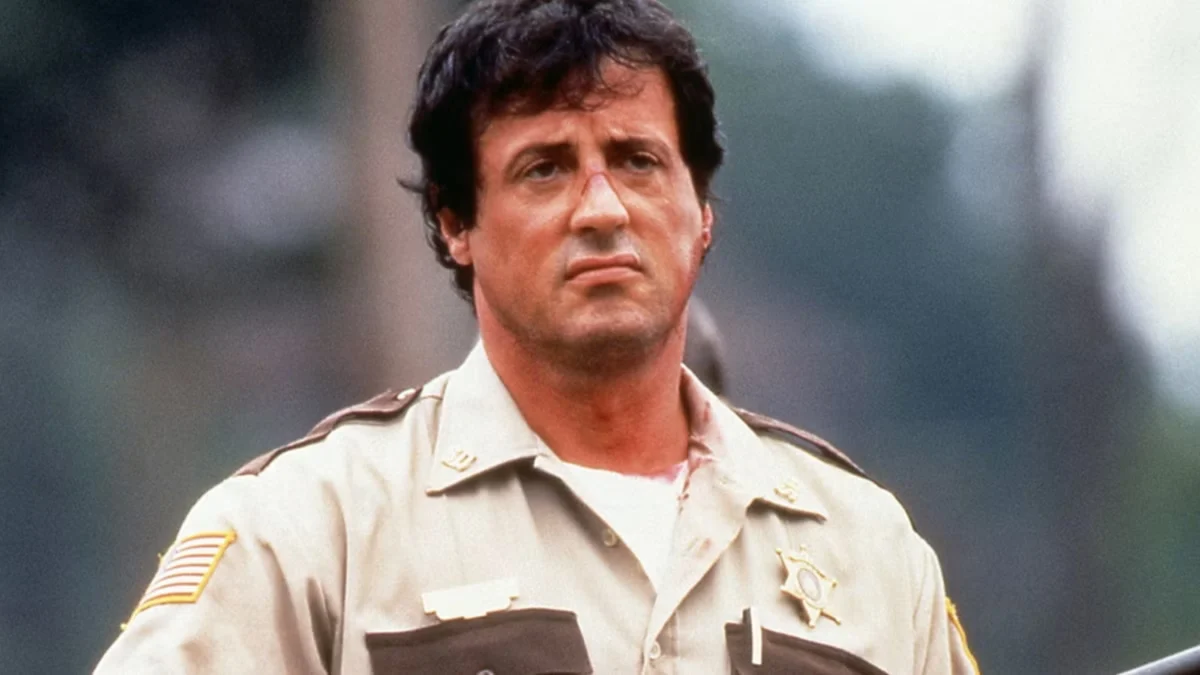
That film is 1997’s Cop Land. Despite a star-studded cast that reads like a "Who’s Who" of American crime cinema, the film has spent much of the last quarter-century relegated to the status of a "forgotten gem." Yet, upon modern re-examination, Cop Land reveals itself not just as a standard police procedural, but as one of the most sophisticated Neo-Westerns ever produced—a film that trades horses for squad cars and saloons for dive bars, while keeping the soul of the genre perfectly intact.
Main Facts: A Frontier Built on Corruption
Set in the fictional town of Garrison, New Jersey, Cop Land explores a unique sociological phenomenon. Garrison is a "bedroom community" populated almost entirely by New York City police officers. By living across the Hudson River, these officers escape the jurisdiction and the dangers of the city they patrol, creating a private fiefdom where they make their own rules.
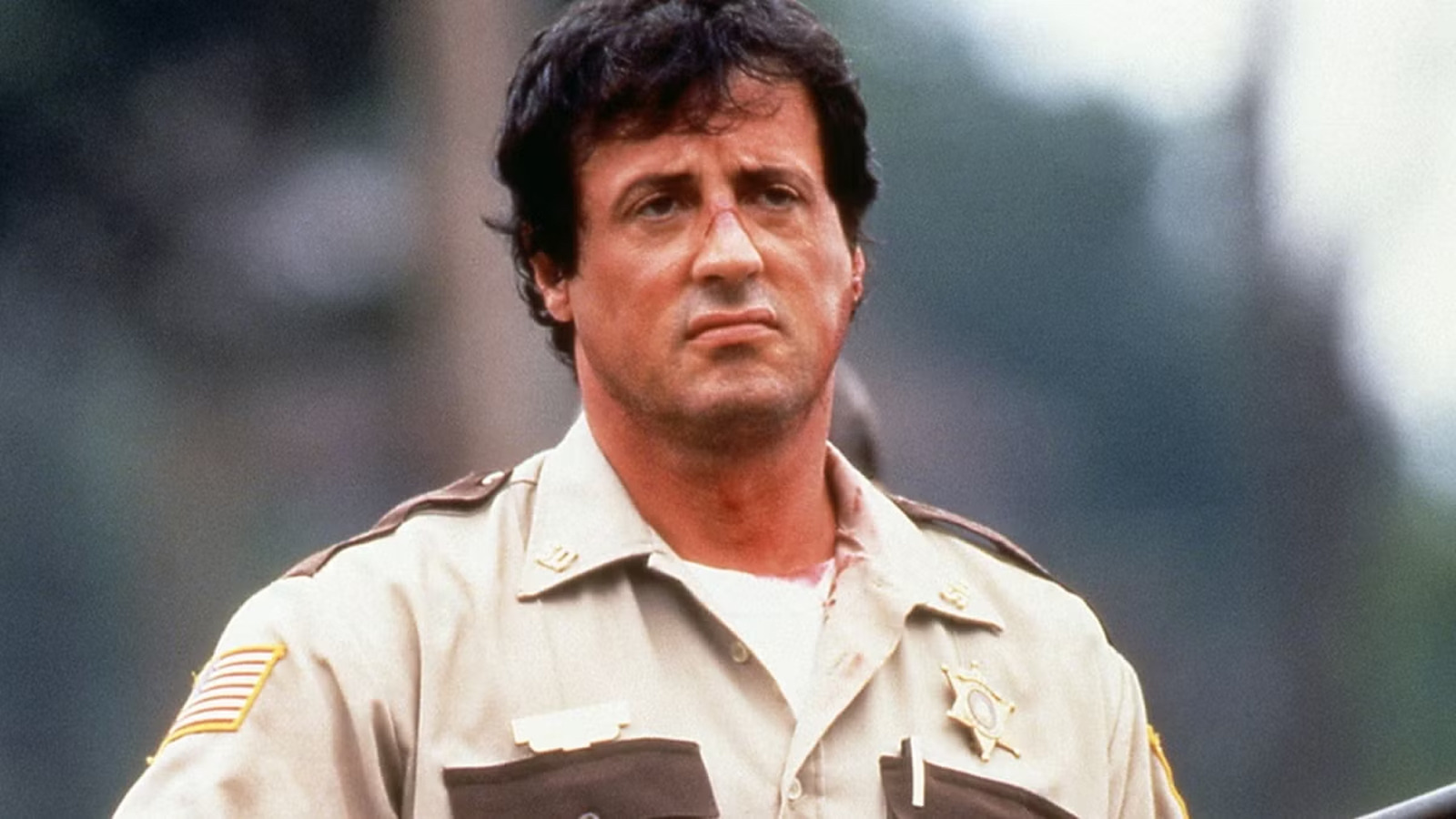
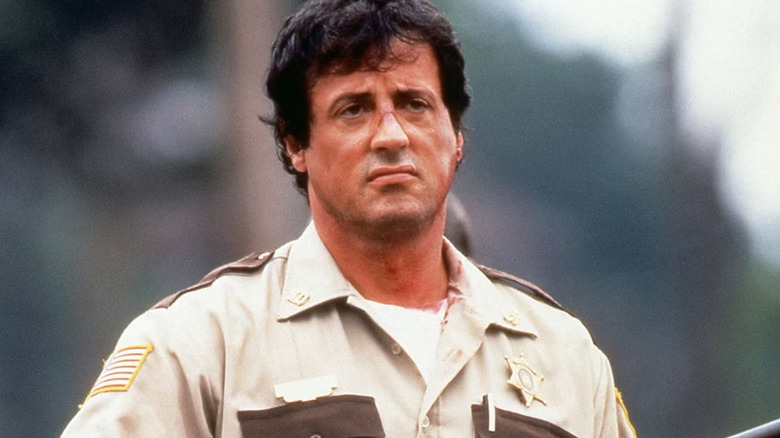
The town is overseen by Freddy Heflin (Sylvester Stallone), a soft-spoken, partially deaf sheriff who took the job because his physical disability prevented him from joining the NYPD. Freddy is a man who lives in the shadow of giants; he idolizes the "real" cops who live in his town, particularly the charismatic and menacing Ray Donlan (Harvey Keitel).
The inciting incident occurs when Ray’s nephew, a hot-headed officer nicknamed "Superboy" (Michael Rapaport), kills two unarmed Black men on the George Washington Bridge after mistaking a steering wheel lock for a gun. To protect the boy and the "integrity" of their community, Ray and his cohort fakes the nephew’s suicide and hides him in Garrison. This conspiracy triggers an investigation by Internal Affairs investigator Moe Tilden (Robert De Niro), who attempts to recruit a reluctant Freddy to help him dismantle the corruption within the town’s borders.
Chronology: From Indie Vision to Studio Juggernaut
The production history of Cop Land is a fascinating study in the collision between independent filmmaking and movie-star magnetism. In the mid-90s, James Mangold was a rising directorial talent who envisioned the project as a small, intimate character study.
The Original Vision (1995–1996)
Mangold’s original script was intended to be a low-budget indie. He initially sought out Gary Sinise for the role of Freddy Heflin, looking for an actor who could embody the "everyman" quality of a small-town sheriff who had been overlooked by life. The film was designed to be a quiet, simmering drama about the weight of compromise.
The Stallone Pivot (1996)
The project shifted gears dramatically when Sylvester Stallone expressed interest in the lead. At the time, Stallone was looking to pivot away from the diminishing returns of his high-octane action career (Judge Dredd, Daylight) and prove his mettle as a serious dramatic actor. To secure the role, Stallone famously gained 40 pounds of fat, transforming his iconic physique into that of a weary, middle-aged man whose body reflected his stagnant spirit.
Release and "The Hype Machine" (August 1997)
Miramax Films, then at the height of its power, marketed Cop Land as a heavyweight clash of the titans. With Stallone, De Niro, Keitel, and Ray Liotta on the poster, the film was positioned as the primary Oscar contender of 1997. However, when the film debuted in August—a month usually reserved for summer leftovers rather than prestige dramas—the reaction was mixed. While it earned a respectable $63 million against a $15 million budget, it failed to capture the cultural zeitgeist in the way Goodfellas or Heat had. The "Oscar buzz" for Stallone evaporated, and the film was largely categorized as a noble failure for several years.
Supporting Data: The "Scorsese" Connection and Technical Craft
One of the primary reasons Cop Land maintains such a high level of quality is its supporting ensemble, which serves as a tribute to the golden era of New York crime cinema. By casting Harvey Keitel, Robert De Niro, and Ray Liotta, Mangold was essentially borrowing the DNA of Martin Scorsese’s filmography.
- Harvey Keitel plays Ray Donlan as a classic Western cattle baron—the man who built the town and believes he is above the laws he ostensibly enforces.
- Ray Liotta provides the film’s "Doc Holliday" figure in Gary "Figgsy" Figgis. A coke-addled, twitchy officer who has been burned by Ray’s inner circle, Liotta represents the chaotic neutral element of the story—the broken man who still has a shred of conscience left.
- Robert De Niro delivers a restrained, surgical performance as Moe Tilden. Unlike his more explosive roles, his Tilden is a bureaucrat who understands that the "system" is often just as cold as the criminals it hunts.
The film’s atmosphere is further bolstered by its soundtrack. Mangold utilized the music of Bruce Springsteen—specifically tracks like "Stolen Car"—to evoke the blue-collar melancholy of the New Jersey setting. The cinematography by Eric Edwards eschews the neon-soaked aesthetics of 90s thrillers for a muted, dusty palette that feels more at home in a desert than a suburb.
Official Responses: Mangold’s Retrospective Insights
In recent years, James Mangold has been vocal about the challenges of making Cop Land and the surprising discipline shown by its lead star. In a 2017 interview with Birth.Movies.Death., Mangold reflected on his initial hesitation to cast Stallone:
"I was very scared of what it would mean to have a giant movie star in a movie that I wanted to be very realistic… But [Stallone] delivered. He never suggested a change to the script, he never told me how I should shoot him, he never interfered in the movie production at all."
Mangold also noted that the film’s marketing may have done it a disservice. By framing it as an "action-thriller" featuring the world’s biggest action star, the studio set expectations for a shootout-heavy spectacle. In reality, Cop Land is a slow-burn character study where the protagonist spends the first 90 minutes being ignored or bullied.
Stallone himself has often cited Cop Land as one of his proudest professional achievements, despite the fact that it didn’t lead to the career "re-invention" he had hoped for at the time. He took a massive pay cut (working for the Screen Actors Guild minimum) just to prove he could stand toe-to-toe with actors of De Niro’s caliber.
Implications: The Legacy of the "High Noon" of New Jersey
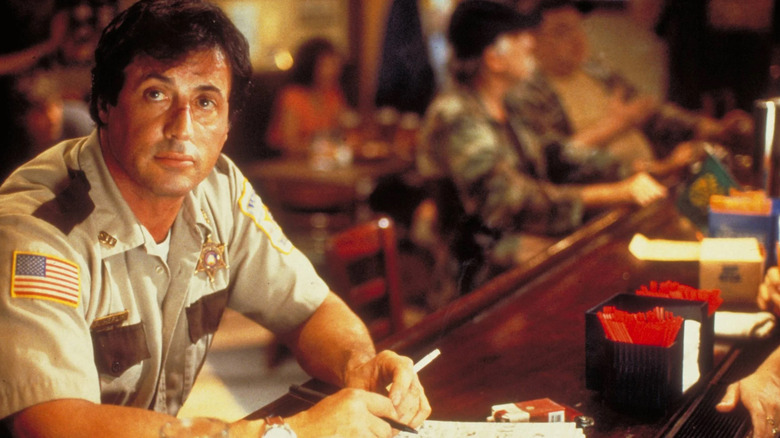
The most striking aspect of Cop Land is its structural adherence to the Western genre, specifically the 1952 classic High Noon. Like Gary Cooper’s Will Kane, Freddy Heflin is a lawman who discovers that the community he protects is built on a foundation of cowardice and corruption. When the moment of truth arrives, he finds himself abandoned by those he thought were his friends.
The film’s climax is a masterclass in Western storytelling. Freddy, having been pushed to his breaking point, suffers a second ear injury that leaves him almost entirely deaf. As he walks through the streets of Garrison to confront Ray Donlan, the sound design shifts to a muffled, ringing tone. This creative choice places the audience inside Freddy’s isolation. The ensuing shootout isn’t stylized or "cool"; it is clumsy, desperate, and bloody—the cinematic equivalent of a showdown at the O.K. Corral.
Why It Matters Today
In an era where the "Thin Blue Line" and police accountability are at the forefront of the national conversation, Cop Land feels remarkably prescient. It explores the "blue wall of silence" not just as a professional code, but as a corrosive force that destroys the very communities it claims to protect.
Furthermore, the film serves as a bridge in James Mangold’s career. You can see the seeds of Logan and 3:10 to Yuma in the way he handles Freddy Heflin’s redemption arc. He understands that the Western is not defined by its setting, but by its themes: the struggle between the individual and the collective, the cost of integrity, and the idea that a man is defined by what he refuses to overlook.
Cop Land is more than a 90s relic. It is a dense, expertly acted, and emotionally resonant drama that proves the Western never died—it just moved to the suburbs. For fans of Taylor Sheridan or gritty crime dramas, it remains the modern-day frontier story they have been looking for.


Leave a Comment