
Navigating the Moral Compass of Cinema: A Deep Dive into Noblebright and Grimbright Narratives
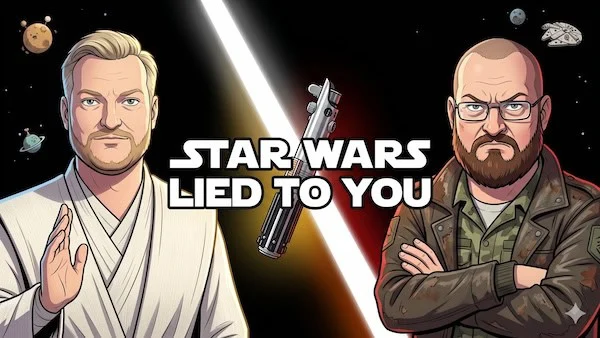
In the ever-evolving landscape of storytelling, audiences are increasingly drawn to narratives that explore the complexities of morality and societal evolution. A recent discourse, drawing parallels between generational theory and cinematic archetypes, has illuminated two distinct narrative frameworks: Noblebright and Grimbright. This analytical lens, applied to classic and contemporary films, offers a profound understanding of how stories reflect and shape our collective consciousness, particularly during periods of societal flux.
The Pillars of Narrative: Defining Noblebright and Grimbright
At its core, this framework posits a four-quadrant model for analyzing narrative tone and theme, reminiscent of the Strauss-Howe generational turnings.
Noblebright narratives embody the adage, "Hard men make good times." These stories typically feature characters who, through noble sacrifice and unwavering moral conviction, overcome adversity to usher in an era of peace and prosperity for ordinary people. The emphasis is on selfless heroism, the triumph of good over evil, and the creation of a better future through virtuous action.
Conversely, Grimbright narratives operate under the principle that "Good times make weak men." These stories often depict a world that is perceived as absurd, corrupt, or inherently flawed. However, instead of succumbing to despair, characters, often cynical anti-heroes, navigate this reality with a dark sense of humor and a focus on personal gain. While the world itself may be bleak, the tone remains engaging and entertaining, offering a cathartic exploration of vice and wit within a morally ambiguous universe.
Tracing the Threads: A Chronological Exploration of Cinematic Turnings
The authors of this analysis, Thomas and Jonathan, embark on a fascinating journey through cinematic history, examining how these narrative archetypes have manifested and evolved. Their discussion highlights a key observation: contemporary society is transitioning from a "Grimbright era" – characterized by "good times make weak men" – into a "Noblèdark" period, where "bad times make strong men." To understand this emerging paradigm, they argue, it is crucial to dissect its antithesis, Grimbright, and its historical precursors.
The World War II Lens: From "Kelly’s Heroes" to Vietnam’s Shadow
Thomas’s personal viewing experience with the 1970 World War II film "Kelly’s Heroes" serves as a pivotal example. Initially sought for its age-appropriate portrayal of wartime action for his children, the film unexpectedly revealed itself as a quintessential Grimbright narrative, deeply influenced by the socio-political climate of its production.
"Kelly’s Heroes" depicts a group of American GIs who discover Nazi gold and embark on a mission to steal it behind enemy lines. While the narrative ostensibly ends with a successful breakthrough that benefits the war effort, the underlying tone is far from straightforwardly patriotic. Made in 1970, the film’s aesthetic—with its bedraggled soldiers and a decidedly un-military vibe—mirrors the disillusionment of the Vietnam War era. The core message, Thomas observes, is a cynical questioning of the war’s purpose, epitomized by the soldiers’ primary motivation: personal enrichment.
The film’s climax, where the GIs collaborate with an SS officer to abscond with the gold, further solidifies its Grimbright credentials. This alliance with figures who represent the epitome of Nazi brutality underscores the narrative’s detachment from conventional morality. The characters’ rationalization that "the world is broken and evil" is a self-deceptive justification for their opportunistic actions, highlighting the cynical detachment characteristic of Grimbright storytelling.
Westerns as a Crucible: "The Magnificent Seven" vs. "The Good, the Bad and the Ugly"
The discussion then shifts to the Western genre, a fertile ground for exploring these narrative dichotomies. "The Magnificent Seven", a 1960 film, is presented as a prime example of Noblebright. In this story, seven gunslingers agree to protect a village of farmers from bandits, ultimately sacrificing their lives for the greater good. Their heroism, though fraught with personal flaws (one is a coward, another a drunk), leads to a brighter future for the villagers. This aligns with the "hard men make good times" ethos, where noble sacrifice paves the way for prosperity, even if the heroes themselves do not live to see it.
However, Jonathan offers a counterpoint, suggesting that "The Magnificent Seven" also possesses Grimbright elements. He argues that the world is inherently grim, and the only ones willing to stand against oppression are morally compromised individuals – criminals, mercenaries, and murderers. While the outcome is bright, the means are decidedly grim.
In stark contrast, "The Good, the Bad and the Ugly", an early Grimbright masterpiece, exemplifies the genre’s embrace of moral ambiguity. The film’s revolutionary approach, emerging in the late 1960s, challenged the traditional heroic archetypes prevalent in earlier Westerns. It showcases characters driven by self-interest and deceit, where loyalty is fluid and survival is paramount. This film, and "Kelly’s Heroes," are seen as foundational to the Grimbright sensibility, where the world is inherently flawed, and characters operate within a spectrum of self-serving motivations, often with a darkly comedic undertone.
The "Star Wars" Paradox: A Masterclass in Blending Turnings
The enduring appeal of "Star Wars" is explored as a case study in how narratives can effectively blend multiple generational turnings, thereby achieving broader and more lasting resonance. The question of whether "Star Wars" is Noblebright or Grimbright hinges on the chosen protagonist.

If Luke Skywalker is the central figure, the narrative leans towards Noblebright. Luke embodies pure goodness, the Empire represents absolute evil, and morality is clear-cut, leading to the inevitable triumph of good. However, when Han Solo is considered the protagonist, the story shifts decisively into Grimbright territory. Han, initially motivated by money and personal gain, mirrors the archetypes found in "The Good, the Bad and the Ugly" and "Kelly’s Heroes." His famous line, "If money is all you want, then money is all you’re going to get," encapsulates this mercenary outlook.
The brilliance of "The Empire Strikes Back", often lauded as the series’ finest installment, lies in its masterful subversion of these archetypes. In this film, Luke experiences disillusionment and despair as his world crumbles, while Han Solo undergoes a transformation, evolving into a heroic figure. Han’s choice to aid the Rebellion over collecting his bounty, culminating in his sacrifice (albeit temporary, frozen in carbonite), signifies a shift from his Grimbright origins to a more Noblebright trajectory. Conversely, Luke’s journey takes a darker turn; his disobedience and pursuit of personal enlightenment, rather than selfless heroism, are interpreted by Thomas as a descent into Grimbright tendencies.
Jonathan vehemently disagrees with this interpretation, arguing that these are merely character arcs, not fundamental shifts in moral alignment. He posits that Luke remains Noblebright throughout, even during his moments of doubt and hardship. His dip in the middle is a necessary phase of growth, a "training-to-failure" moment that ultimately strengthens his resolve. Han, on the other hand, remains fundamentally Grimbright, his cynicism intact even as he performs heroic acts. His sacrifice is framed as a moment of "bright" within his arc, not a complete transformation.
The Grimness of "Empire Strikes Back": Fear vs. Evil
The debate intensifies when analyzing the emotional tone of "The Empire Strikes Back." Thomas perceives Luke’s realization that he sees himself in Darth Vader as a descent into "grimness," a recognition of his inner evil. This, he argues, signifies the "good times making weak men" aspect of the Grimbright era, where personal comfort and power can lead to moral compromise.
Jonathan counters that this is not "grimness" but rather the manifestation of "fear." He emphasizes Yoda’s iconic line, "Fear is the path to the dark side," suggesting that Luke’s actions are driven by a primal survival instinct and a fear of failure, not inherent evil or weakness. The climactic confrontation with Vader, he argues, is a testament to Luke’s resilience, demonstrating his ability to hold his own against a formidable foe despite limited training. His eventual flight is a reaction to the terrifying revelation of his lineage and the realization of the darkness within him, not a surrender to it.
Supporting Data and Expert Analysis
The discussion between Thomas and Jonathan serves as the primary supporting data, offering in-depth analyses of specific films and their thematic resonance. Their contrasting interpretations highlight the nuances of these narrative frameworks and the subjective nature of interpretation.
Thomas’s Perspective:
- Focus on Outer World: Thomas emphasizes the current societal shift towards the "fourth turning," characterized by an outward focus on action and justice. He believes that in times of crisis, the "what you do" matters more than "what you believe."
- Grimbright as a "Somber Setting with Bright Characters": He defines Grimbright as a scenario where the external circumstances are bleak, but the individuals within them maintain a degree of hope or resilience.
- "Empire Strikes Back" as Grimbright: Thomas sees the film’s ending, with its sense of defeat and compromise, as more aligned with Grimbright than Noblebright, despite Luke’s survival.
Jonathan’s Perspective:
- Focus on Inner World and Character Arcs: Jonathan prioritizes the internal journey of characters and how they navigate challenging circumstances. He believes that even in grim situations, the core nobility of a character can remain intact.
- Distinction Between Fear and Grimness: He draws a clear line between fear as a natural response and grimness as a pervasive, cynical outlook.
- "Empire Strikes Back" as Noblebright with Grim Elements: Jonathan views the film as a complex Noblebright narrative, where Luke undergoes a challenging but ultimately reinforcing character arc, and Han Solo demonstrates a Grimbright character’s capacity for noble sacrifice.
The application of these frameworks extends beyond "Star Wars" to other cinematic examples. "Rogue One: A Star Wars Story" is cited as a compelling Grimbright example, where characters undertake morally compromised actions (like Cassian Andor killing informants) for a greater, ultimately bright, outcome. This aligns with the definition of Grimbright as a grim reality with bright characters, where the ending justifies the means.
The discussion also touches upon the definition of Grimdark, which Jonathan defines as a narrative where "you can’t win." This distinction is crucial, as it differentiates from Grimbright, where, despite the grim circumstances, a degree of success or hope can still be achieved. "The Matrix," for instance, is characterized as Grimdark by Thomas, as the robots still control everything, and humanity remains enslaved, even with Neo’s newfound power.
Official Responses and Expert Opinions
While there are no direct "official responses" from the filmmakers in this excerpt, the dialogue between Thomas and Jonathan represents an expert-level analysis and interpretation of these films. Their exchange is framed as a debate among cultural critics, utilizing generational theory as their analytical framework. The implied "audience" for this discussion is likely one interested in in-depth film analysis and cultural commentary.
Implications for Storytelling and Societal Reflection
The exploration of Noblebright and Grimbright narratives has significant implications for how we understand and create stories, as well as how these stories reflect our current societal mood.
- The Appeal of Complexity: The debate surrounding "Star Wars" demonstrates the enduring appeal of narratives that offer complex character arcs and moral ambiguity. Audiences are not always looking for simple heroes and villains; they are drawn to characters who grapple with difficult choices and navigate shades of gray.
- Reflecting Societal Transitions: As society transitions through different "turnings," the dominant narrative archetypes are likely to shift. The current move towards a "Noblèdark" era suggests a growing appreciation for stories that highlight resilience, courage, and the emergence of strong, morally grounded individuals in the face of adversity.
- The Power of Blending: The success of films like "Star Wars" and potentially "Rogue One" lies in their ability to blend multiple turnings. This suggests that the most resonant stories may be those that can acknowledge the grim realities of the present while offering glimmers of hope or the potential for a brighter future, or vice versa.
- Understanding Grimbright: The detailed dissection of Grimbright narratives like "Kelly’s Heroes" and "The Good, the Bad and the Ugly" provides valuable insights into how cynicism, dark humor, and self-interest can be portrayed in an engaging and thought-provoking manner. This framework is particularly relevant in understanding contemporary media that often embraces anti-heroes and morally ambiguous protagonists.
- The Future of Narrative: As society navigates the challenges of the "fourth turning," stories that explore themes of sacrifice, collective action, and the struggle for justice are likely to gain prominence. Understanding the nuances of Noblebright and Grimbright will be crucial for storytellers seeking to connect with audiences on a deeper, more meaningful level. The ability to craft narratives that resonate with the current generational mood, while also drawing on timeless themes of heroism and resilience, will define the next era of impactful storytelling.




Leave a Comment