
"The Skinny": Harold Goldberg Unveils a Gritty New York Noir Steeped in History and Haunting Echoes
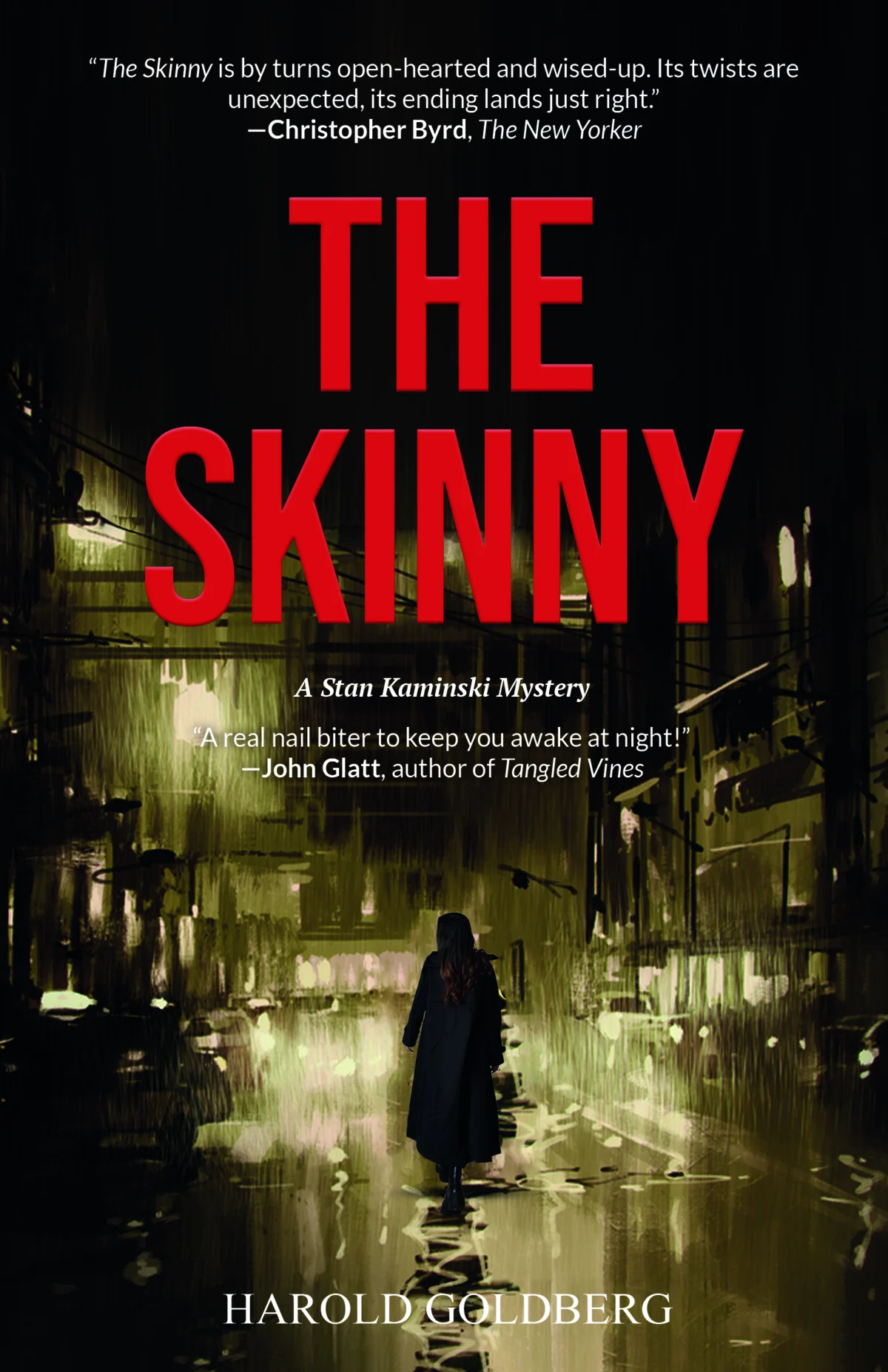
New York, NY – April 3, 2026 – Author Harold Goldberg, a celebrated voice in the world of video game history and true crime, is poised to make his mark on the literary landscape with the release of his debut novel, "The Skinny." This meticulously crafted crime thriller plunges readers into the shadowy underbelly of 1990s New York City, following the tumultuous journey of Stan Kaminski, a Polish immigrant struggling to survive amidst the city’s unforgiving streets. The novel promises a potent blend of mystery, psychological depth, and social commentary, weaving together historical echoes with contemporary anxieties.
"The Skinny" centers on Stan Kaminski, a man haunted by his past and perpetually on the fringes of society. His life takes a perilous turn when he’s reluctantly drawn into a high-stakes investigation by a wealthy landlord. The task: locate Charmaine, a brilliant yet troubled young woman. What begins as a seemingly straightforward missing person case quickly spirals into a nightmarish labyrinth of deceit, multiple murders, and the chilling specter of a serial killer. Goldberg masterfully uses this narrative to explore the profound societal shifts occurring in New York City during the 1990s, a period marked by rapid gentrification and the erasure of older communities. The novel delves into the enduring class conflicts, the internal battles of addiction, the cascading nature of mysteries, and the tenacious flicker of hope in the face of overwhelming darkness.
Unearthing the Darkness: The Genesis of "The Skinny"
The genesis of "The Skinny" can be traced back to Goldberg’s earlier work, "My Life Among the Serial Killers," co-authored with Dr. Helen Morrison. This collaboration provided Goldberg with an intimate understanding of the criminal psyche, particularly the historical figures who cast long shadows over humanity. Among these, the story of Gilles de Rais, a medieval knight who fought alongside Joan of Arc, left an indelible mark.
"The story of Gilles de Rais… had a lasting effect on me," Goldberg shared. "For research, I read a translation of his trial by the Catholic Church. It was tough going, shocking, and because his violence was against children, his misdeeds kept me up at night." The brutality of de Rais’s crimes, particularly his violence against children, deeply disturbed Goldberg, leading him to seek solace in a local bar to process the horrific details. This profound historical darkness found its way into "The Skinny" through a critical plot element: a short, sharp sword known as a braquemard, an antique weapon associated with de Rais. Goldberg hints at a significant twist involving this weapon, suggesting it will catch even the most astute readers by surprise.
This element of unexpected revelation was echoed in a review by Christopher Byrd of The New Yorker, who described "The Skinny" as "a book about flawed, vulnerable people that is by turns open-hearted and wised-up. Its twists are unexpected, its ending lands just right." This critical acclaim underscores Goldberg’s ability to craft a narrative that is both emotionally resonant and intellectually engaging.
New York City: A Character Steeped in Grit and Gore
Goldberg readily admits that New York City itself is not merely a backdrop but a central, often menacing, character in "The Skinny." Stan Kaminski’s journey through the city is depicted with visceral detail, immersing the reader in the sensory experience of 1990s New York. The author paints a vivid picture of a city grappling with its own transformation, where the scent of expensive cigars mingles with the ever-present threat of urban decay.
"Stan Kaminski, my flawed sleuth, feels the grit and grossness of 1990s New York with every step he takes," Goldberg explained. "He hates the smell of Macanudo cigars, big with the newly rich at that time in history. He worries that a rat might bite him if he falls asleep on the street while waiting to find Charmaine Kasimierz, a troubled but super-smart young woman who finds late winter in the city too much to take."
Goldberg’s research into the city’s history revealed a surprising and grim abundance of forgotten lives. The novel incorporates the unsettling fact of numerous bodies buried beneath iconic landmarks, including Washington Square Park. "In my research, I found New York City to be full of dead bodies," Goldberg stated. "Depending upon whom you ask, there are 10,000 to 20,000 bodies buried under Washington Square Park, and a violent scene in ‘The Skinny’ occurs there, within the fabled Washington Square Park arch."
The narrative also ventures into historically dangerous areas like Corlears Hook Park, once notorious for malaria and violence, and a small Irish cemetery in Queens, which triggers Stan’s poignant memories of his own past desperation in Krakow. These settings amplify the sense of foreboding that pervades the novel, transforming the city’s familiar beauty into a landscape of potential peril. Even the seemingly innocuous rustling of leaves or distant footsteps can evoke a sense of unease, mirroring the psychological tension that defines Stan’s experience.
The Digital Brushstrokes: Video Game Inspirations
Beyond historical research and literary influences, "The Skinny" draws significant inspiration from the immersive worlds of video games. Goldberg, a seasoned columnist for The New York Times covering video game culture, intentionally infused his novel with the atmospheric and narrative techniques found in critically acclaimed titles.
"Video games can inspire the plots for books," Goldberg asserted. "During the day, I write reviews and features about games as a columnist for the New York Times. So the idea of immersion I felt in the better game narratives crept into my story." The dark, unsettling ambiance of New York City in the novel is directly influenced by the "Alan Wake" series by Sam Lake, a narrative-driven horror game known for its psychological suspense and atmospheric storytelling.
"The dark nature of New York City is partially inspired by Sam Lake’s frightening Alan Wake horror series," Goldberg noted. "While ‘The Skinny’ is not a horror story per se, it has that Sam Lake vibe." He further draws a parallel between Lake’s work and the surreal, dreamlike qualities of David Lynch’s films, citing the influence of Angelo Badalamenti’s evocative scores. The novel aims to capture this same "Sam Lake/David Lynch vibe" from its opening pages, creating an immediate sense of atmosphere.
Furthermore, the adrenaline-fueled car chase sequence in "The Skinny," which unfolds across the river in Jersey City, is a direct homage to the high-octane action found in games developed by Rockstar Games, such as "Grand Theft Auto." Goldberg also cites "L.A. Noire," another Rockstar title, as an inspiration for its depiction of a morally ambiguous urban environment rife with corruption. The author’s appreciation for richly drawn characters, even minor ones, is also inspired by Walter Mosley’s "Devil in a Blue Dress," a novel he hopes will one day be adapted into a video game.
A Tapestry of Polish Heritage: Culture as an Anchor
Stan Kaminski’s Polish heritage serves as a vital anchor throughout "The Skinny," shaping his perspective and informing his interactions with the world. As he navigates the treacherous landscape of New York, his cultural background provides a lens through which he interprets events and finds solace.
"As Stan Kaminski moves through downtown New York City’s underbelly, one constant is Polish culture," Goldberg observed. "This Polish immigrant is on a mission to find Charmaine, a young woman who’s dealt with some very bad people." Stan’s encounters with the darker aspects of humanity often trigger memories of Polish folklore and mythology, which he finds to be even more harrowing than the tales of the Brothers Grimm. His thoughts are frequently colored by Polish music, from traditional polkas to the melodies of Bobby Vinton, and he often invokes the phrases of his mother country for emphasis, expressing a lingering longing for his homeland.
The East Village, historically a hub for Polish and Ukrainian immigrants, plays a significant role in the novel. By the 1990s, however, this once-tight-knit enclave was experiencing the pressures of gentrification, forcing many long-term residents, including Poles and Puerto Ricans, to seek new homes due to soaring real estate prices. This societal shift mirrors Stan’s own displacement and struggle for belonging.
Stan finds moments of comfort in a familiar East Village bar on Avenue A, where he savors Polish delicacies like pierogi and sausage. The bar is run by Bertha, a formidable older woman who wields a baseball bat with surprising proficiency, embodying a resilient spirit that resonates with Stan.
Prior to his arrival in New York, Stan served in security for the Polish Solidarity movement, notably for union leader Lech Walesa. However, his past in Poland is shadowed by a deeply personal trauma involving his wife, an event that compelled him to leave his homeland with a sense of shame and profound unease. Despite his imperfect English, Stan possesses a deep knowledge of Polish culture, from its esteemed authors to the breathtaking salt mine sculptures of Wieliczka.
Embracing the Small: The Journey to "The Skinny"
The publication of "The Skinny" marks a significant personal triumph for Harold Goldberg, particularly in his decision to remain true to his artistic vision. The novel is fundamentally an immigration story, and Goldberg highlights the pervasive issue of bigotry that immigrants often face. Told from the perspective of a protagonist for whom English is a second language, the narrative is imbued with a unique voice and perspective.
"‘The Skinny’ is an immigration story and bigotry is a sad, pervasive fact here. It’s told from the perspective of someone for whom English is a second language," Goldberg stated. "I think you’ll find some beauty in the writing and in the characters you meet."
However, the path to publication was not without its challenges. Two major publishers expressed interest in "The Skinny" but insisted on the removal of Stan’s occasional Polish phrases, believing this would broaden the book’s appeal. For Goldberg, this demand felt like a subtle form of prejudice, a rejection of the very cultural authenticity that defined his protagonist.
"Two of the bigger publishers wanted me to change Stan, the narrator, so that the occasional Polish word wasn’t used," Goldberg recounted. "If I did that, the book would be published in a bigger way. That, in itself, felt prejudiced, at least to me. So I put my draft in a drawer."
Ultimately, Measure Publishing recognized the inherent value of "The Skinny" as it was written. Their willingness to embrace the novel’s authenticity, including Stan’s linguistic nuances, proved to be the breakthrough Goldberg sought. He actively participated in the publishing process, influencing decisions from the cover design to the paper quality and the initial print run. The contractual agreement with Measure Publishing offers favorable royalty rates and timely payments, demonstrating a commitment to the author’s success.
Looking ahead, Goldberg envisions "The Skinny" as the first installment of a trilogy. He has a deep affection for Stan Kaminski as a multifaceted character and believes his perspective offers fertile ground for further exploration. The subsequent novel is slated to be told from Charmaine Kasimierz’s point of view, promising to reveal a narrative even more compelling than the one Stan has meticulously pieced together. This expansion of the narrative arc suggests a commitment to developing a rich and interconnected literary universe, further solidifying Goldberg’s emergence as a significant new voice in contemporary fiction.
About the Author: Harold Goldberg is a distinguished journalist and author with a prolific career spanning major publications including The New York Times, Vanity Fair, and Esquire. His previous works include the acclaimed narrative history "All Your Base Are Belong to Us (How 50 Years of Videogames Conquered Pop Culture)" and the bestselling "My Life Among the Serial Killers." "The Skinny" marks his highly anticipated debut in the realm of fiction.
Where to Find "The Skinny":
- Bookshop: [Link to Bookshop.org]
- Indiebound: [Link to Indiebound.org]
- Barnes & Noble: [Link to B&N]
- Amazon: [Link to Amazon]




Leave a Comment