
The Neon Descent: Nicolas Winding Refn and the Erasure of Narrative in ‘Her Private Hell’
The red carpet at the Palais des Festivals in Cannes has seen its share of provocateurs, but few have managed to curate a brand of "performative mischievousness" as consistently as Nicolas Winding Refn. For over a decade, the Danish filmmaker has been a fixture of the festival, often seen flashing the "sign of the horns" to batteries of flashing cameras. Once a gesture of genuine punk defiance from a prestige filmmaker, it has, in recent years, begun to feel more like a logo—a calculated shorthand for a director who has increasingly traded the mechanics of storytelling for the aesthetics of the abyss.
With his latest project, Her Private Hell, Refn returns to the spotlight, but the film suggests a director who is no longer merely pushing boundaries; he is drifting further into a self-imposed exile of abstraction. While his early career was marked by a visceral, gritty mastery of the thriller genre, his recent output has morphed into what some critics describe as "luridly pretentious art-trash curiosities." As Her Private Hell makes its debut, the industry is forced to ask: Has Refn’s pursuit of the "ultimate image" finally come at the expense of the cinematic medium itself?
Main Facts: The Premiere of ‘Her Private Hell’
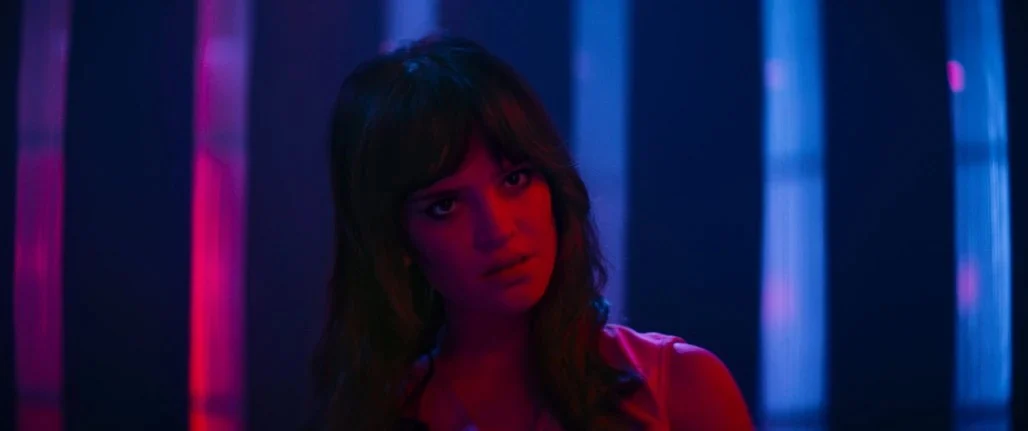
Her Private Hell arrives as Refn’s most significant venture since The Neon Demon (2016) and his subsequent forays into long-form streaming content like Too Old to Die Young and Copenhagen Cowboy. The film stars Sophie Thatcher (Yellowjackets), who brings a raw, Juliette Lewis-esque energy to the role of Elle, a young woman attempting to navigate a fractured relationship with her father, Johnny Thunders (played by Dougray Scott).
The production is a stylistic amalgam, blending the high-fashion sheen of a luxury perfume commercial with the nightmarish fetishism of European arthouse horror. Notably, the film features a lush, symphonic score by the legendary Pino Donaggio, whose work with Brian De Palma defined a specific era of operatic suspense. Despite the high-caliber talent involved, the film has been met with polarized reactions, characterized by its lack of a traditional narrative structure and its reliance on "mythological" vignettes.
Chronology: The Evolution of a Transgressor
To understand the polarizing nature of Her Private Hell, one must trace Refn’s journey from the streets of Copenhagen to the neon-soaked boulevards of Los Angeles.
The Gritty Realism Phase (1996–2005)
Refn first exploded onto the international scene with the Pusher trilogy. These films were lean, mean, and masterfully executed crime dramas that prioritized character and tension over stylistic flourish. At this stage, Refn was a "teller of conventional tales," but he told them with a ferocity that few could match. He was a filmmaker in the truest sense, using the camera to dissect the human condition under duress.
The Global Breakthrough (2011)
The release of Drive marked a turning point. A classic urban Western thriller infused with synth-pop sensibilities, it won Refn the Best Director award at Cannes and turned Ryan Gosling’s "Driver" into a cultural icon. Drive was the perfect equilibrium—a film that possessed a distinctive, cool aesthetic while remaining rooted in a tight, compelling narrative.
The Pivot to Abstraction (2013–2016)
The balance shifted with Only God Forgives (2013). At its Cannes premiere, the film was famously booed, yet its "purple and garish" pop vulgarity became part of Refn’s mystique. He had moved beyond respectability, embracing a slow-burn, hyper-violent style. The Neon Demon followed in 2016, a film that generated moody power before, as many critics noted, collapsing into a pile of surrealist-horror shards.
The Current Era (2024)
Her Private Hell represents the culmination of this trajectory. It discards the "urban Western" bones of Drive and the narrative urgency of Pusher entirely, opting instead for a series of lavishly set-dressed scenes that play like a fever dream of David Lynch and Gaspar Noé.
Supporting Data: The Mechanics of ‘Her Private Hell’
The film is structured less as a movie and more as an "abstract situation." Refn’s world-building in Her Private Hell is divided into two primary visual planes: the opulent and the desolate.
The Visual Palette
The film utilizes two main sets: the Tower Hotel, characterized by gold-gilded walls and heavy drapes that seem to poke into the clouds, and a "barren-looking hell" that echoes the Asian underworld seen in Only God Forgives. The actresses—including Thatcher, Kristine Froseth, and Havana Rose Liu—are shot with the precision of high-fashion models. Their faces are often adorned with bejeweled eye makeup, and their movements are choreographed poses rather than naturalistic acting.
The Cast and Characters
- Sophie Thatcher (Elle): Suggested by Refn to be a "mythological" figure, Thatcher’s Elle is the emotional core, though her motivations are obscured by the film’s non-linear editing.
- Dougray Scott (Johnny Thunders): Portraying an "ironic middle-aged greaser," Scott’s character serves as a nod to the Lynchian archetypes of the 1950s.
- Charles Melton (Private K): Melton, fresh off his breakout in May December, plays an American GI in the "hell" sequences. His arc involves a series of bloody altercations that Refn uses to explore the "fusion of violence and rapture," a theme heavily influenced by experimental filmmaker Kenneth Anger.
The Sonic Landscape
The most praised element of the film is the score by Pino Donaggio. By blending Bernard Herrmann’s suspense with Rachmaninoff’s romanticism, Donaggio provides a "symphonic anchor" for the audience. Critics have noted that without this score, the film’s lack of dialogue and plot would render it almost unwatchable, describing the music as the only thing "to hang onto" in Refn’s hellscape.
Official Responses: Cannes and the "Hipster Factor"
The reception to Refn’s recent work has created a rift between traditional film critics and the "cool-seeking" vanguard of the festival circuit.
At the Cannes press conference, Refn remained characteristically enigmatic. He spoke at length about a near-death experience in a hospital, claiming he was clinically dead for 25 minutes before being revived. This anecdote has been used by Refn to explain the "liminal" quality of Her Private Hell, suggesting the film is a reflection of that "between-worlds" state.
However, the response from the press has been less than spiritual. Many view the film’s incoherence not as a profound artistic choice, but as a "disaster" shielded by a "hipster factor." The film practically announces its refusal to be understood, a move that some see as the ultimate arrogance of a director who has become "seriously deluded about what an audience wants."
The inclusion of the "Leather Man"—a sadomasochistic fetish figure who demands characters call him "Daddy" before murdering them—has been cited as an example of Refn recycling his own motifs (such as the torn-out eyeballs and severed hands) for shock value rather than narrative purpose.
Implications: The Future of the Refn Brand
The trajectory of Nicolas Winding Refn raises significant questions about the intersection of cinema, fashion, and personal branding. Refn now earns a significant portion of his living directing avant-garde commercials for luxury brands, and Her Private Hell feels, in many ways, like the ultimate extension of that work.
The Death of the Narrative
If Refn continues on this path, he risks becoming a filmmaker who no longer makes films, but rather "installations" that happen to be projected in theaters. While there is a place for experimental cinema, the frustration among his former admirers stems from the knowledge that he is capable of profound storytelling. By abandoning the "conventional tales" of his youth, he has gained a distinct visual language but lost his voice as a dramatist.
The Director as Icon
Refn’s "punk showoff" persona—the boxer’s stance, the devil horns, the public proclamations of his own genius—has become inseparable from his work. In the modern age of the "auteur as brand," Refn is a success. He is recognizable, controversial, and aesthetically consistent. However, the "cool" factor is a diminishing asset. As the article notes, the more he flashes the sign of the horns, the less impact it carries.
Conclusion: A Return to the Living?
Her Private Hell is a testament to Refn’s uncompromising vision, but it is also a warning. It is a film that exists in a vacuum, beautiful to look at and haunting to hear, but ultimately hollow. Refn’s survival of a near-death experience is a miracle of medicine; his survival as a relevant filmmaker, however, may require a different kind of revival. To remain a vital force in cinema, he may eventually need to leave the "hell" of his own making and return to the land of the living—where stories, and the people who inhabit them, still matter.




Leave a Comment