
S.L. Huang’s "The Language of Liars": A Deep Dive into Galactic Ethics and the Cost of Knowledge
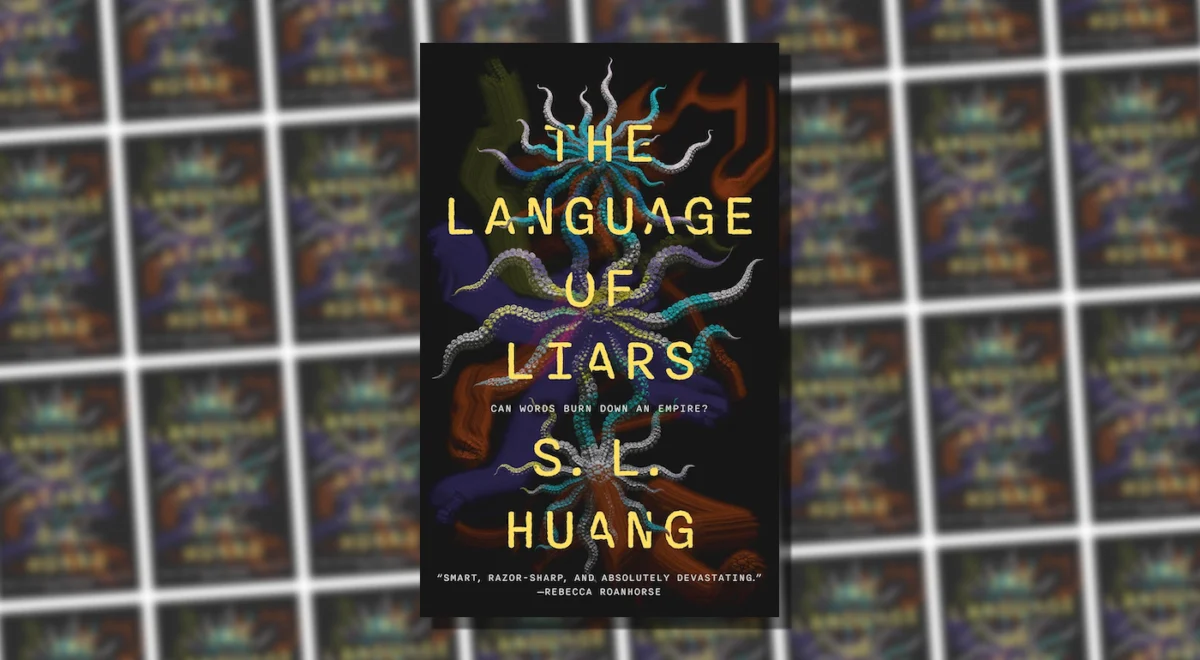
NEW YORK, NY – S.L. Huang’s latest novella, The Language of Liars, published by Tordotcom Publishing, plunges readers into a richly imagined, non-human galaxy, exploring profound ethical dilemmas through the eyes of an ambitious young linguist. While the narrative has been lauded for its ambitious world-building and searing moral questions, its climactic twist has sparked debate among critics regarding its ultimate plausibility within the meticulously crafted universe.
The novella introduces Ro, a member of the "warm and cuddly" Ponto species from the planet Orro, whose lifelong dream is to achieve the esteemed rank of Senior Linguist. However, since his acceptance into the prestigious Warren, Ro has harbored an even grander ambition: to execute "the jump," a perilous and ethically fraught process that would allow him to temporarily inhabit the body of a Star Eater. These enigmatic beings are considered the most mysterious species in the galaxy, and Ro is desperately eager to glean their secrets, believing the knowledge he can transmit back to Orro will be invaluable to his home planet.
Ro’s Ambitious Odyssey: A Linguist’s Leap of Faith
Ro’s journey is steeped in both personal ambition and profound moral quandaries. Despite his eagerness, his Seniors at the Warren perceive him as "too scattered, not serious enough, not focused enough" for such a monumental undertaking. This skepticism casts a shadow of doubt over Ro’s fitness for the jump, even as he yearns for the intellectual rewards it promises. He grapples with significant moral reservations: Is it truly justifiable to displace a living Star Eater from its own body, even if only for the comparatively short lifespan of a Ponto? This ethical tightrope walk forms the emotional core of Ro’s initial motivations, highlighting the tension between the pursuit of knowledge and the sanctity of individual autonomy.
Against all odds, and just as his self-doubt begins to solidify, Ro achieves the impossible. He successfully makes the jump, finding himself suddenly inhabiting the alien form of a Star Eater. This transition immediately thrusts him into a world far removed from the comfort and familiarity of his Ponto existence. The Star Eaters are portrayed as standoffish, their culture chilly and purely focused on their singular task: the harvesting of meridian, the galaxy’s most precious and coveted resource. For a Ponto accustomed to warmth and physical affection, adapting to this austere environment proves a constant struggle, amplifying Ro’s sense of isolation and vulnerability.
Beyond the cultural shock, Ro faces the terrifying prospect of discovery. The Star Eater language, even for a gifted linguist like Ro, is described as extraordinarily tricky and foreign. His every interaction is a performance, a desperate attempt to mimic authenticity while harboring the constant terror of being exposed as a fraud. It is within this precarious existence that Ro begins to uncover "ugly truths" that his home institution, the Warren, had deliberately withheld. These revelations are not just about the Star Eaters, but also about his own species and the broader galactic order, painting a far more complex and morally ambiguous picture than he had ever imagined. His determination to serve Orro remains, but it is now tempered by the weight of these newfound, unsettling realities.
A Galaxy of Otherness: Huang’s Masterful World-building
One of the most compelling aspects of The Language of Liars is S.L. Huang’s exceptional ability to construct a truly alien universe. The novella firmly establishes a pure secondary world where no humans exist, nor, as far as readers can discern, have they ever. This deliberate exclusion allows Huang to delve deeply into the concept of "otherness," celebrating the fundamental "person-ness" of individuals irrespective of their species or background. The vivid descriptions of Ro (pictured by one reviewer as "a largeish, upright rabbit or otter—something sweet") and the Star Eaters are carefully crafted to avoid any one-to-one correspondence with familiar Earth creatures, reinforcing their distinct alien identities.
Huang cleverly leverages Ro’s all-consuming interest in linguistics as the primary vehicle for world-building. Through his analytical lens, readers are introduced to a vast array of worlds, planets, and species, their cultures subtly revealed through their unique linguistic quirks. Slang, anomalous uses of personal and relative pronouns, and specific vowel placements become windows into diverse societal structures and histories. This technique is not merely an academic exercise; it enriches the narrative, making the galaxy feel palpably real and deeply interconnected. The reviewer noted that the world felt "stress-testable," suggesting a remarkable depth and consistency for a work of novella length. This intricate layering of detail, compressed within the novella form, highlights the flourishing of this literary format in contemporary science fiction and fantasy over the last decade.
Further enhancing the narrative’s depth, Huang employs a sophisticated mechanism to unveil the complex backstory of the Star Eaters. Each chapter opens with a carefully selected quote, excerpt, or transcript related to the Star Eaters’ history and their current standing within the galactic conglomerate. This method, which could easily have become clunky or overly expository in less skilled hands, is handled with remarkable deftness. For instance, a transcript of a debate concerning Star Eater gender roles hints at broader galactic conversations and prejudices, while the remarks of a "political commentator" subtly expose the "ugly, acquisitive xenophobia" lurking beneath the veneer of civilized galactic relations. These interstitial texts provide crucial context, building a nuanced portrait of a species and its contentious place in the wider universe without ever disrupting the flow of Ro’s immediate experiences.
The Unsettling Revelation: A Moral Reckoning
Before delving into the story’s dramatic climax, it’s worth noting the high expectations surrounding Huang’s work. The reviewer, a self-professed admirer of Huang’s previous series and a devotee of science fiction exploring "linguistics and atrocities," approached The Language of Liars with immense anticipation, confident it would be a top-tier read.

SPOILER WARNING: The following section discusses the major twist of The Language of Liars. Readers who wish to avoid spoilers should skip to the next section.
The novella culminates in a revelation designed to deliver a profound "gut-punch" to the reader. The truth Ro uncovers, and subsequently the reader, is devastating: there are no more living Star Eaters. Contrary to what Ro, and indeed the entire Ponto species, had been led to believe, the ability to "jump" into Star Eater bodies is not unique to the Ponto. Instead, countless species from across the galaxy have been employing this very technique for decades. Each invader, driven by the needs of their home planet, takes possession of a Star Eater body to harvest meridian, then siphoning off a portion of the precious resource for their own species.
This widespread, clandestine occupation has led to a horrifying, systemic atrocity. Little by little, the entire Star Eater population has been replaced, their bodies acting as unwitting hosts for individuals from other planets, each convinced they were committing a "one-off theft of Star Eater personhood." The moral calculus was always the same: a terrible act, perhaps, but one justified by the perceived "greater good" of their respective species. The twist serves as a powerful allegory for how seemingly small, individually rationalized choices, made by often well-intentioned people, can aggregate into a massive, unrecoverable, and profoundly unethical catastrophe.
Reviewer’s Critical Lens: The Cost of Plausibility
While the thematic weight of Huang’s twist was undeniably impactful, the reviewer ultimately found its logical consistency within the narrative’s meticulously built world to be problematic. The novella’s strength in creating a "textured and stress-testable world" inadvertently raised expectations for a degree of specificity and plausibility that the final reveal, unfortunately, could not sustain.
Several critical questions emerged post-revelation:
- Universal Jump Mechanism: The reviewer questioned the mechanism by which "oodles and oodles of very different species all across the galaxy" could perform the "jump" into Star Eater bodies. While willing to accept a hand-waved explanation for the Ponto as part of the initial premise, the universality of this ability across vastly diverse alien biologies demanded more detailed explanation.
- The Math of Occupation: How did the logistics of this galactic-scale occupation consistently work out? Did each individual Star Eater body always have one invading person? What happened if an invader died before the Star Eater’s natural lifespan ended, leaving the body "empty" of any consciousness? The absence of such logistical considerations strained credulity.
- The Silence of Scholarship: Perhaps the most significant critique centered on the implausibility of universal silence within the academic and research communities. Given that knowledge Ro brings to his work is derived from non-Ponto researchers, and Star Eater scholarship is clearly shared across species and planetary boundaries, the reviewer found it incredulous that "every single frontline researcher would have had to lie about the source of their information," and that "the entire network of peer reviewers would have to be like ‘that’s okay, we trust you :)’." The inherent nature of academic inquiry, collaboration, and even rivalry—"nerds talk"—makes such a decades-long, galaxy-wide conspiracy of silence highly improbable.
- Ro’s Uniqueness: The narrative implies Ro is the first Star Eater occupier ever to forge genuine connections with his fellow (occupied) Star Eaters, thereby setting the stage for the truth to be discovered. This too was questioned, as it suggested an unprecedented naivete or isolation among countless previous invaders.
The reviewer argued that while people are undeniably capable of "unfathomable and mindless cruelty" under various justifications (scholarship, protection of their own, technological advancement), they are fundamentally not capable of "keeping their damn mouths shut" across decades and planets. The human (or, by extension, sentient species’) desire to connect, gossip, exchange notes, and simply "blab and yap and yammer" is a powerful force that the story’s twist seemed to entirely suspend. The bleak heart of cruelty, the critique posits, cannot exist in isolation from the "squishy and endearing and aggravating parts" of sentient nature.
Beyond the Stars: Implications for Genre and Ambition
Despite these perceived logical inconsistencies, the reviewer concluded by acknowledging the immense ambition and moral scope of The Language of Liars. The Tordotcom novella line continues to be a vital space for "grim, strange, fascinating work" in contemporary science fiction, and Huang’s contribution is a testament to this ethos. While the "landing among the Star Eaters" didn’t entirely work for the reviewer, the novella stands out in an era often characterized by algorithm-driven content.
S.L. Huang is celebrated for her willingness to "shoot for the moon," pushing the boundaries of genre and exploring complex ethical landscapes. The Language of Liars, with its daring premise and unflinching examination of collective atrocity, ultimately serves as a powerful reminder of the value of audacious storytelling, even when its execution might spark lively debate among its most ardent readers. It prompts essential questions about the true cost of progress, the nature of consent, and the hidden mechanisms that can perpetuate unimaginable harm across a seemingly civilized galaxy.
The Language of Liars is published by Tordotcom Publishing.

Leave a Comment