The Price of Manifest Destiny: Inside the $1 Million Wagon Logistics of ‘How the West Was Won’
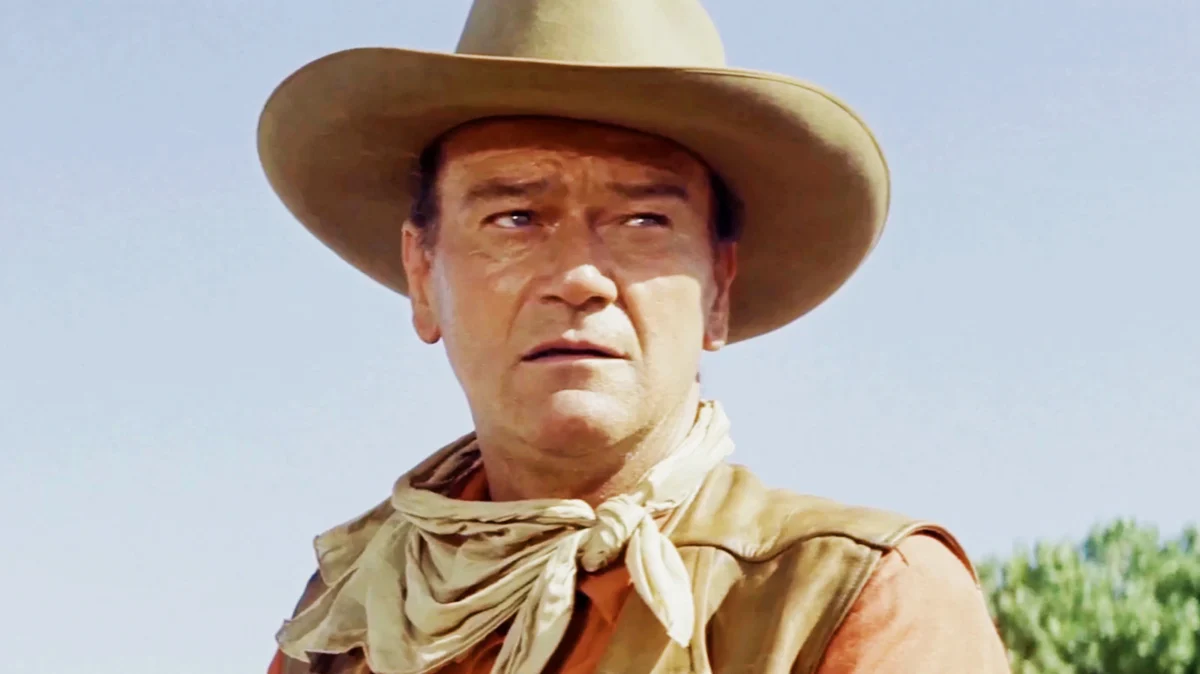
In the annals of Hollywood history, few projects rival the sheer logistical audacity and panoramic ambition of the 1962 epic How the West Was Won. Long before the digital age allowed filmmakers to conjure vast armies and endless horizons with the click of a mouse, Metro-Goldwyn-Mayer (MGM) embarked on a production so massive it required three legendary directors, a dozen A-list stars, and a revolutionary filming format. However, beyond the star power of John Wayne and the technical marvel of Cinerama, the film is remembered for a staggering financial detail: the production spent over $1 million—a fortune in 1960s currency—merely on the procurement and transportation of covered wagons.
Main Facts: An Epic Scaled for the Ages
How the West Was Won was conceived as a definitive cinematic history of the American frontier, tracing the Prescott family’s multi-generational journey from the 1830s to the 1880s. To capture the magnitude of this westward expansion, the studio utilized Cinerama, a precursor to modern IMAX. This process involved filming with three synchronized 35mm cameras and projecting the result onto a massive, 146-degree curved screen.
The film’s scale was matched by its budget. While initial estimates placed the production cost at $12 million, the final tally rose to approximately $14.4 million. A significant portion of this expenditure was driven by the film’s commitment to authenticity and its sprawling location shoots across Kentucky, the High Sierras, Arizona, Utah, South Dakota, and the Colorado Rockies.
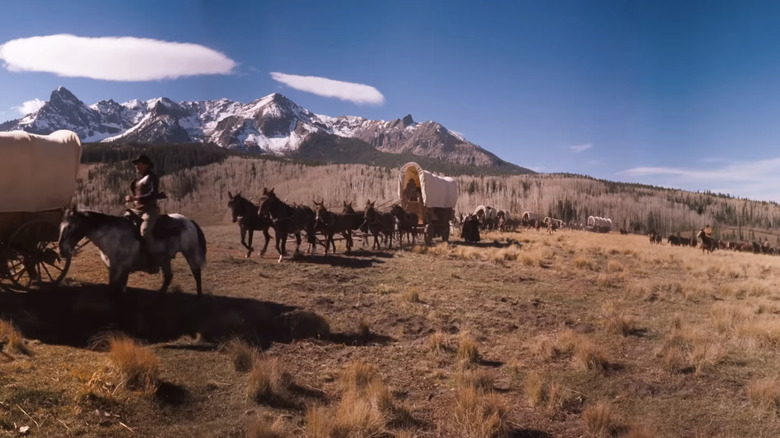
Among the most surprising line items in the budget was the cost of transportation. According to producer Bernard Smith, the logistical nightmare of moving period-accurate equipment to remote locations drove transport costs above the $1 million mark. Specifically, the necessity of shipping Hollywood-made covered wagons to the rugged terrain of Montrose, Colorado, became a symbol of the film’s "at any cost" production philosophy.
Chronology: From Concept to Box Office Triumph
1960–1961: Pre-Production and the Cinerama Gamble
In the early 1960s, MGM was looking for a "roadshow" hit to stabilize its finances. The decision was made to produce a narrative feature in the Cinerama format, which had previously been reserved for documentaries. The project was divided into five distinct segments, each helmed by a master of the genre: Henry Hathaway (the bulk of the film), John Ford (The Civil War), and George Marshall (The Railroad).
May 1961: The Logistical Nightmare Begins
Filming commenced in May 1961. The production immediately ran into the reality of 19th-century logistics in a 20th-century world. While the 1923 silent classic The Covered Wagon had been able to source authentic Conestoga wagons from local farms, by 1961, these were museum pieces. MGM had to rely on Hollywood prop houses for replicas.
The most challenging sequence involved the Rocky Mountains. To achieve the visual grandeur required for Cinerama, the production chose locations near Montrose, Colorado. Because no period-accurate wagons existed in the region, the studio was forced to transport a fleet of wagons 1,100 miles from Los Angeles via flat-bed trucks. The difficulty did not end with the delivery; the production then had to build specialized roads through the wilderness just to get the wagons to the actual filming sites.
1962–1963: Release and Critical Reception
How the West Was Won premiered in the UK in late 1962 and in the US in early 1963. Despite the ballooning budget, the film was an immediate sensation. It grossed $50 million during its initial run—an astronomical figure for the era—proving that audiences were hungry for large-scale spectacle. It would go on to earn eight Academy Award nominations, winning three for Best Story and Screenplay, Best Sound, and Best Film Editing.
Supporting Data: A Breakdown of the $14.4 Million Investment
To understand how a film in 1962 could reach a $14.4 million price tag, one must look at the internal accounting reported by the New York Times in 1963. The budget was distributed across several high-priority areas:
- Star Salaries ($2,204,000): The ensemble was a "Who’s Who" of Hollywood royalty, including Henry Fonda, Gregory Peck, Debbie Reynolds, James Stewart, Carroll Baker, and John Wayne.
- Studio Overhead ($1,590,000): The administrative and technical costs of maintaining the MGM machine during a multi-year shoot.
- Location Costs ($1,228,000): The price of housing crews and securing permits across multiple states and national parks.
- Transportation (Over $1,000,000): This category, fueled largely by the "wagon woes" in Colorado, became the fourth largest expense, nearly rivaling the cost of the entire location shoot itself.
The film’s profitability was equally impressive. With a domestic box office of $50 million, it returned more than triple its investment to the studio, securing its place as John Wayne’s highest-grossing project, even if his individual contribution was brief.
Official Responses and Production Insights
Producer Bernard Smith was candid about the financial pressures of the project. In a 1963 interview with the New York Times, Smith used the Colorado wagon transport as a prime example of the "hidden costs" of epic filmmaking.
"The wagons had to be shipped 1,100 miles to Montrose on flat-bed trucks," Smith explained. "Then a road had to be built from Montrose to the scene of the filming." These comments highlight a time when "production value" meant physical labor and geographical displacement rather than digital rendering.
The inclusion of John Wayne was another strategic move by the studio. Although Wayne appears for only about three minutes as General William Tecumseh Sherman in the segment directed by his long-time collaborator John Ford, his name on the marquee was considered essential for the film’s commercial viability. Wayne himself seemed unfazed by the brevity of the role, viewing the project as a prestigious historical tribute. This came during a prolific year for the "Duke," as he and Ford also released The Man Who Shot Liberty Valance in 1962, a film that provided a more intimate, deconstructive look at the Western mythos compared to the grandiosity of How the West Was Won.
Implications: The Legacy of the "Last Great Western"
The success and the excess of How the West Was Won carry several significant implications for the history of cinema:
1. The End of the Physical Epic
The $1 million spent on wagons represents the pinnacle—and perhaps the beginning of the end—of the era of physical spectacle. As budgets continued to rise throughout the 1960s, studios eventually found these logistical burdens unsustainable. The shift toward New Hollywood in the late 60s favored smaller, more character-driven stories, partially as a reaction to the massive financial risks posed by films like How the West Was Won and the disastrous Cleopatra (1963).
2. The Evolution of John Wayne’s Stardom
While How the West Was Won is technically Wayne’s biggest box office hit, it is rarely cited as a "John Wayne movie." The film serves as a bridge in his career. It demonstrated that his persona was so powerful it could serve as a historical shorthand for "The West" itself, even in a cameo. This era led Wayne toward more veteran roles, eventually culminating in his 1969 Oscar win for True Grit, a film he considered his first "decent role" in two decades.
3. Technical Ambition vs. Practicality
The Cinerama format used in the film was breathtaking but ultimately impractical. The three-camera system made close-ups difficult and created "seams" in the projection that were often visible to the audience. How the West Was Won remains one of the few narrative triumphs of the format, proving that while technology can drive interest, it is the scale of the physical production—the real wagons, the real mountains, and the real stars—that leaves a lasting impression.
4. A Cultural Time Capsule
Today, the film stands as a monumental, if somewhat romanticized, tribute to Manifest Destiny. Its willingness to spend millions on the minutiae of transportation reflects a period where Hollywood felt a duty to match the scale of American history with the scale of its budgets. The $1 million wagons were not just props; they were an investment in a cinematic experience that sought to be as vast as the frontier itself.
In conclusion, How the West Was Won remains a landmark of production logistics. The story of the million-dollar wagons serves as a reminder of a bygone era of filmmaking, where the distance between Los Angeles and the Colorado Rockies was measured not just in miles, but in the sheer will and capital required to move history across them.