
Unveiling the Shamanic Roots of European Witchcraft: Emma Wilby’s Groundbreaking Reassessment
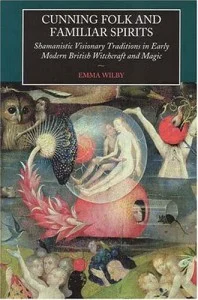
A pivotal academic work, Emma Wilby’s "Cunning Folk and Familiar Spirits: Shamanistic Visionary Traditions in Early Modern British Witchcraft and Magic," is redefining our understanding of European spiritual practices and the true nature of the infamous Witch Trials. Far from being a mere historical footnote, Wilby’s research meticulously demonstrates that shamanism was not an exotic, distant phenomenon, but a pervasive and deeply embedded aspect of life in early modern Europe, particularly within the context of British witchcraft.
Published to critical acclaim, Wilby’s book systematically dismantles long-held assumptions about both shamanism and the European witch hunts of the 16th and 17th centuries. It presents a compelling argument that the "witchcraft" documented in court records was often a misunderstood manifestation of ancient shamanistic traditions, practiced by ordinary people seeking to navigate a challenging world. This reinterpretation injects a vital human element into a historical narrative frequently dominated by tales of mass hysteria and elite persecution, prompting a significant re-evaluation of one of history’s most compelling and tragic periods.
Main Facts: A Paradigm Shift in Understanding European Witchcraft
Emma Wilby’s "Cunning Folk and Familiar Spirits" stands as a monumental work challenging two deeply ingrained historical assumptions. Firstly, it confronts the notion that "European shamanism" is an oxymoron, a concept often dismissed as belonging solely to remote, non-European cultures. Wilby meticulously demonstrates the widespread presence and practice of shamanistic traditions across Europe, and specifically in Britain, right up to a few centuries ago. This assertion fundamentally reconfigures our understanding of European spiritual history, revealing a rich tapestry of visionary practices that have largely been overlooked or miscategorized.
Secondly, and perhaps even more controversially, Wilby directly addresses the prevailing academic view of the 16th and 17th-century Witch Trials. For decades, many historians have argued that these trials were primarily instances of mass hysteria, driven by fear, religious zealotry, and societal anxieties, with accusations of witchcraft being mere fabrications by ecclesiastical and secular authorities. Within this framework, it was often assumed that "real" witchcraft, beyond simple folk superstitions, was not actually being practiced.
Wilby decisively refutes this interpretation. Through a rigorous analysis of primary sources, she posits that there was a genuine experiential and folkloric basis behind many of the deeds recounted in the records of the Witch Trials. While the elite authorities certainly misinterpreted these practices through a Christian, demonological lens, Wilby argues that some form of magic or witchcraft was indeed being practiced by the peasantry. This crucial distinction shifts the narrative from one of pure fabrication to one of profound misunderstanding and misrepresentation, suggesting that the accused were often engaging in practices they believed to be efficacious, albeit with drastically different interpretations from their persecutors.
At the core of Wilby’s thesis is the assertion that what the Church and government interpreted as diabolical pacts and malevolent sorcery was, in fact, a remnant of something far older and culturally distinct: a form of shamanism. By drawing extensive cross-cultural parallels with shamanistic traditions documented in Native North America and Siberia, Wilby illustrates how British witchcraft, as depicted in court documents, exhibited numerous hallmarks of shamanic practice. Furthermore, her analysis extends to the enigmatic "demons" with whom witches were accused of working, convincingly arguing that these entities were understood by the practitioners themselves as familiar spirits, akin to folkloric portrayals of fairies. This recontextualization profoundly alters our perception of the accused, imbuing their actions and beliefs with a dignity and rationality often stripped away by modern skepticism.
Chronology: Re-evaluating the Early Modern Period
The Early Modern Period, broadly spanning from the late 15th century to the late 18th century, represents a transformative era in European history. It witnessed the Renaissance, the Reformation, the Age of Exploration, and the dawn of modern science. Simultaneously, it was a period marked by profound social, economic, and religious upheaval, creating fertile ground for both intellectual advancement and intense spiritual anxieties. It is within this crucible of change that the European Witch Trials reached their terrifying zenith, primarily between 1560 and 1660.
Traditionally, the chronological understanding of these trials has focused on their emergence as a product of specific historical forces: the solidification of Christian demonology, the rise of powerful centralized states seeking to impose religious conformity, and the anxieties engendered by famine, plague, and social unrest. Historians often traced the development of the "witch craze" from earlier, more localized accusations of maleficium (harmful magic) to the widespread belief in a devilish conspiracy involving sabbats, pacts, and familiar spirits. This narrative often suggested a break with earlier folk traditions, positing the witch hunt as a new, elite-driven phenomenon.
Wilby’s work challenges this chronological perspective by arguing for a deep continuity of older practices, asserting that the events of the Witch Trials were not merely an aberration or a sudden eruption of fear. Instead, she posits that the trials exposed and persecuted an existing, vibrant substratum of shamanistic visionary traditions that had been present in European societies for millennia. The "new" element, according to Wilby, was not the practice itself, but the interpretation of these practices by the emerging legal and ecclesiastical authorities, who reframed indigenous spiritual experiences through the narrow and terrifying lens of Christian demonology.
By demonstrating that shamanism was a pervasive phenomenon "down to just a few centuries ago," Wilby effectively extends the chronological presence of these practices into the very heart of the Early Modern Period. This re-establishes a historical bridge between ancient indigenous spiritualities and the practices of common folk in the 16th and 17th centuries, suggesting that the "witchcraft" of the trials was not an invention, but a misinterpreted continuation. This re-evaluation demands that we look beyond the official narratives of the witch hunters and consider the chronological depth of the beliefs held by the accused themselves, rooted in a heritage far older than the Christianity that condemned them.
Supporting Data: Unpacking Wilby’s Evidentiary Framework
Wilby’s methodology is characterized by a meticulous examination of primary source material from British Witch Trials, coupled with an innovative application of cross-cultural anthropology. This dual approach allows her to uncover patterns and meanings that have eluded previous historical analyses.
The Pervasiveness of European Shamanism
One of the most profound aspects of Wilby’s research is her dismantling of the notion that "European shamanism is an oxymoron." This commonly held belief often stems from a narrow, outdated definition of shamanism, typically associated with specific indigenous cultures of Siberia or the Americas. Wilby broadens this understanding, highlighting that the core elements of shamanistic practice – such as altered states of consciousness, communication with spirits, journeying to other realms, healing, divination, and the acquisition of power through spiritual allies – are universal human phenomena.
She demonstrates that these characteristics were not only present but widespread in early modern Europe. While not explicitly labeled "shamanism" at the time, the practices of cunning folk, charmers, healers, and even some accused witches exhibited striking resemblances to shamanic roles. These individuals often served their communities by providing remedies, locating lost objects, predicting the future, or offering spiritual protection, roles deeply analogous to those of shamans in other cultures. Wilby argues that the cultural specificities of European folk beliefs, such as the veneration of specific trees, stones, or wells, or the belief in a vibrant spirit world populated by fairies, elves, and nature spirits, provided the framework for these shamanistic experiences. Her work compels us to recognize that the human capacity for visionary experience and spiritual engagement is not geographically or culturally exclusive.
Beyond Mass Hysteria: The Experiential Core of Witchcraft
Wilby’s most challenging, yet compelling, argument is that the Witch Trials were not solely products of mass hysteria or elite fabrication. She argues for a "true experiential and folkloric basis" for the practices described. This is not to say that the accused were necessarily performing objectively verifiable magic, but rather that they were engaging in practices that they believed to be effective, drawing from a rich tradition of folk magic and spiritual interaction.
For the ordinary peasant in early modern Britain, life was precarious. Disease, crop failure, infant mortality, and natural disasters were ever-present threats, often inexplicable by the limited scientific understanding of the era. In such a world, seeking supernatural intervention for healing, protection, or foreknowledge was not irrational; it was a pragmatic response to existential anxieties. Wilby suggests that practices such as preparing herbal remedies, casting charms, performing rituals to ensure fertility, or attempting to communicate with the deceased were genuine attempts to influence their world. The "deeds recounted in records" — whether it was a woman accused of flying through the air, transforming into an animal, or conversing with spirits — often reflected the subjective, visionary experiences of these individuals, deeply rooted in their cultural understanding of reality.
The crucial distinction Wilby makes is between the elite interpretation and the practitioners’ understanding. The learned elites, steeped in Christian theology and demonology, automatically interpreted any non-sanctioned spiritual practice as heresy and a pact with the Devil. For a peasant, however, their "familiar spirit" might have been a benevolent ancestor, a helpful fairy, or a guardian animal, engaged in practices intended for the good of their community or themselves. The divergence in these interpretations led to the tragic persecution, where genuine folk practices were criminalized and demonized.
Shamanistic Hallmarks and Cross-Cultural Parallels
To solidify her argument, Wilby employs a powerful comparative method, drawing parallels between British witchcraft descriptions and well-documented shamanistic traditions in Native North America and Siberia. This cross-cultural lens allows her to identify recurrent patterns and structural similarities in the experiences of the accused.
Specific shamanistic hallmarks Wilby identifies in British witchcraft include:
- Visionary Journeys: Accounts of witches flying, traveling in spirit, or meeting with spirits in "otherworlds" closely mirror shamanic journeys to the spirit realm.
- Familiar Spirits as Guides: The concept of animal or humanoid spirits serving as guides, helpers, or sources of power for the witch aligns perfectly with the shamanic familiar. These spirits often provided information, assisted in healing, or carried out tasks in the spiritual domain.
- Altered States of Consciousness: While often interpreted as demonic possession or madness by authorities, the ecstatic trances, dreams, and visions described by accused witches suggest intentional or unintentional altered states, a cornerstone of shamanic practice for accessing spiritual knowledge.
- Healing and Cursing: Like shamans, cunning folk and some witches served dual roles – both healing the sick and, in some cases, being accused of causing harm (maleficium). This power to influence both positive and negative outcomes is characteristic of many shamanic figures.
- Community Integration (initially): Before the intense persecution, many cunning folk and practitioners of folk magic were integrated into their communities, providing valued services. This echoes the social role of shamans as mediators between the human and spirit worlds.
By highlighting these structural and experiential parallels, Wilby makes a compelling case that the British "witch" was, in many ways, a European shaman, operating within a localized cultural framework that nonetheless shared fundamental characteristics with shamanism globally. This methodology provides a robust academic framework for re-interpreting historical records that have long been viewed through a biased lens.
Fairies, Familiars, and the Demonic Reinterpretation
Perhaps one of Wilby’s most fascinating contributions is her analysis of the "demons" so frequently mentioned in Witch Trial court documents. She argues convincingly that these entities, when viewed from the perspective of the accused, were often understood as familiar spirits, closely aligned with folkloric portrayals of fairies.
In British folklore, fairies (or "fae") were complex beings – sometimes benevolent, sometimes mischievous, often morally ambiguous, but rarely inherently evil in the Christian sense. They inhabited a parallel world, could interact with humans, grant wishes, offer knowledge, or cause minor troubles. They were part of the landscape, the unseen neighbors. Wilby suggests that when accused witches spoke of their "familiars" – animal companions like cats, dogs, or toads, or small humanoid figures – they were describing these traditional folkloric entities. These familiars were seen as spiritual assistants, sources of power, or messengers from the spirit world.
However, the Christian authorities, steeped in a dualistic worldview of God versus Devil, could not conceive of such intermediaries outside of a demonic framework. Any non-angelic spirit interacting with humans was, by definition, a demon. Thus, a fairy familiar, a helpful household spirit, or an ancestral guide was systematically reinterpreted as a demonic agent of the Devil, a sign of a diabolical pact. This reinterpretation was not just a linguistic shift; it fundamentally transformed the legal and theological understanding of the accused’s actions, leading to accusations of heresy and devil-worship rather than folk magic. Wilby’s argument restores the original context of these beliefs, revealing a profound disjunction between the cultural understanding of the practitioners and the theological interpretations of their persecutors.
The Experiential Dimension: Life in Early Modern Rural Britain
The final section of Wilby’s book, "The Experiential Dimension," is particularly bold and empathetic. Here, she moves beyond mere historical analysis to immerse the reader in the lived experience of the British peasantry during the early modern period. This exploration is crucial for understanding why such beliefs and practices were not only prevalent but also deeply meaningful and functional.
Life for the vast majority of people in rural Britain during this era was characterized by hardship and uncertainty. Subsistence agriculture was the norm, making communities vulnerable to the vagaries of weather, crop failures, and livestock diseases. Medical knowledge was rudimentary, leading to high rates of illness and death, especially among children. Scientific explanations for phenomena like disease, mental illness, or natural disasters were largely absent.
In such a world, a belief system that incorporated spirits, magic, and unseen forces offered several vital functions:
- Explanatory Framework: Spirits or curses could explain sudden illness, inexplicable deaths, crop blight, or bad luck, providing a narrative in the absence of scientific understanding.
- Coping Mechanism: Engaging in magical practices or seeking help from cunning folk offered a sense of agency and control in a world where individuals often felt powerless against overwhelming forces.
- Community Cohesion: Shared beliefs in spirits, local lore, and the efficacy of certain magical practices could bind communities together, providing common ground for understanding and responding to crises. Cunning folk often served as important social figures, providing solace and practical advice.
- Emotional and Psychological Support: For individuals experiencing visions, dreams, or altered states, the cultural framework of spirits and magic provided a context for these experiences, validating them rather than dismissing them as madness.
Wilby’s sensitive portrayal emphasizes that these beliefs were not simply "superstition" but formed a coherent, functional worldview for the people who held them. She highlights how the harsh realities of daily life would have been "especially conducive to encounters with phenomena that were believed to be spirits," and thus, to a belief in the efficacy of magic. This approach adds a profoundly "human, sensitive, and sympathetic element" to her discussion, urging modern readers to move beyond dismissive judgments of "absurdity" and instead seek to understand the internal logic and experiential reality of these historical beliefs. By doing so, she bridges the gap between our contemporary, often secular, worldview and the rich, spiritually infused world of early modern peasants.
Official Responses and Academic Implications
While "Cunning Folk and Familiar Spirits" does not elicit "official responses" in the sense of governmental statements, its impact within the academic community has been substantial, prompting significant discussion and re-evaluation. Wilby’s work fundamentally challenges prevailing academic narratives in several key fields: the history of witchcraft, early modern history, religious studies, and folklore studies.
Historically, the study of witchcraft has largely been bifurcated: one camp focusing on the socio-economic and political drivers of the witch hunts (e.g., poverty, gender inequality, state-building), and another on the intellectual history of demonology and theological justifications. Wilby introduces a robust third dimension, asserting the centrality of experiential practice from the perspective of the accused. This paradigm shift encourages scholars to move beyond solely analyzing the persecutors’ motives or the abstract intellectual frameworks, and instead, to seriously consider the beliefs and experiences of the ordinary people caught in the trials.
Her redefinition of "European shamanism" broadens the scope of anthropological and religious studies, demonstrating that such practices are not geographically limited and have a deeper historical presence in Europe than previously acknowledged. This has implications for understanding pre-Christian European spiritualities and their subtle persistence through various forms of folk religion.
Furthermore, Wilby’s work contributes significantly to the ongoing debate about the nature of historical evidence. By arguing that court records, while biased, contain genuine descriptions of experiential phenomena, she prompts historians to read these documents with a more nuanced and interpretive lens. It encourages a "reading against the grain," seeking the voice and worldview of the accused embedded within the hostile language of their accusers.
While generally lauded for its innovative approach and meticulous scholarship, Wilby’s work, like any groundbreaking research, may also spark further academic debate. Some scholars might question the breadth of her definition of shamanism or the extent to which all documented witchcraft can be categorized as such. However, such discussions only underscore the profound influence of her arguments in reshaping the landscape of early modern studies. Her interdisciplinary approach, drawing from anthropology, history, and religious studies, serves as a model for future research, pushing the boundaries of conventional historical inquiry. "Cunning Folk and Familiar Spirits" has thus become an indispensable point of reference for anyone seeking a deeper, more empathetic understanding of the complex spiritual realities of early modern Europe.
Conclusion: An Indispensable Contribution to Scholarship
Emma Wilby’s "Cunning Folk and Familiar Spirits: Shamanistic Visionary Traditions in Early Modern British Witchcraft and Magic" is more than just a book; it is a profound reinterpretation of a critical period in European history. By meticulously demonstrating the pervasive nature of shamanistic practices in early modern Britain and arguing for a genuine experiential basis behind the Witch Trials, Wilby has shattered long-standing academic orthodoxies.
Her work not only validates the historical presence of European shamanism but also imbues the accused witches with a dignity often denied by previous interpretations, portraying them not as victims of pure delusion or malicious fabrication, but as individuals operating within a coherent, albeit misunderstood, spiritual framework. By connecting their practices to global shamanistic traditions and revealing the underlying folkloric context of their "familiar spirits," Wilby offers a richly textured and deeply empathetic perspective.
For anyone with an interest in European history, the history of religion, folklore, or the complex interplay between belief and persecution, "Cunning Folk and Familiar Spirits" is an indispensable read. It is a work that manages to be both rigorously scholarly and immensely engaging, challenging readers to re-examine their assumptions about the past and to appreciate the enduring human quest for meaning and power in a mysterious world. Highly recommended, this book is set to leave an indelible mark on how we understand the spiritual landscape of early modern Europe.



Leave a Comment