
The State of Speculative Fiction: From Commemorative Currencies to Global Literary Frontiers
The landscape of speculative fiction (SF) and the broader publishing industry is currently undergoing a period of significant transformation, marked by a convergence of high-value heritage celebrations, groundbreaking international recognition, and complex legal challenges regarding intellectual property. From the Royal Mint’s intricate numismatic tribute to J.R.R. Tolkien’s legacy to the historic victory of Taiwanese literature at the International Booker Prize, the genre is proving its enduring cultural and economic vitality.
This report synthesizes several major developments across the fields of cinema, literature, and digital rights, highlighting the evolving nature of worldbuilding and the increasingly globalized reach of the speculative arts.
I. Main Facts: A Convergence of Heritage and Innovation
The week’s headlines are dominated by three primary pillars: the physical celebration of cinematic history, the shifting tides of literary prestige, and the ongoing struggle for creator compensation in the age of artificial intelligence.
The "Precious" 50p: Commemorating Middle-earth
The Royal Mint in Llantrisant, Wales, has officially unveiled a new series of commemorative coins marking the 25th anniversary of Peter Jackson’s The Lord of the Rings film trilogy. The first of seven planned coins features the "One Ring" with Elvish script and a "caustic feature" that reveals the Eye of Sauron when light strikes the surface. This release represents a "UK coinage first" in terms of technical application and celebrates the Academy Award-winning The Fellowship of the Ring.

Historic Win for Taiwan at the International Booker
In a milestone for translated literature, Taiwan Travelogue by Yáng Shuāng-zǐ, translated by Lin King, has been awarded the 2026 International Booker Prize. This marks the first time a book translated from Mandarin Chinese has secured the prestigious award. The novel, a metafictional exploration of occupied Taiwan through a 1938 culinary lens, highlights the growing influence of East Asian speculative and historical narratives on the global stage.
The Battle for Copyright Integrity
The Authors Guild has issued a call to action for authors whose publishers failed to register their book copyrights, potentially excluding them from the Bartz v. Anthropic class-action settlement. The Guild is advocating for a $1,500 compensation per title from publishers who neglected this contractual duty, addressing a critical gap in author protections as literary works are increasingly used to train AI models.
II. Chronology of Recent Developments
The timeline of these events reflects a busy period for the SF community, spanning the release of new media, the celebration of past icons, and the planning of future milestones.
- January 2026: Charles Stross releases The Regicide Report, the final installment of his long-running Laundry Files series.
- May 19, 2026: Jason Collins publishes a seminal essay for the Science Fiction and Fantasy Writers Association (SFWA) regarding the use of West African manuscripts from Timbuktu as worldbuilding blueprints.
- May 20, 2026: The literary community celebrates the birthday of the late Shirley Rousseau Murphy (1928–2022), a pioneer in feline-centric fantasy and mystery.
- Tuesday Night (May 2026): The International Booker Prize ceremony is held at the Tate Modern in London, crowning Taiwan Travelogue.
- May 21, 2026: Critical reviews of Beneath Ceaseless Skies Issue 457 and Doctor Who and the Robots of Death highlight the ongoing dialogue between classic tropes and modern subversions.
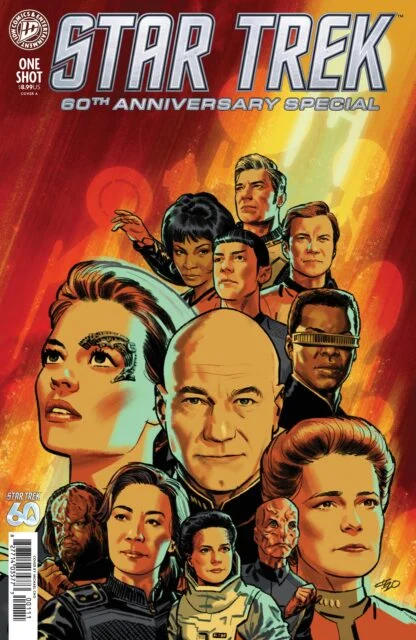
- September 2026 (Projected): IDW is scheduled to release a "super-sized" Star Trek 60th Anniversary special comic featuring veteran writers like David Gerrold.
- 2026–2028: The Royal Mint’s rollout of the seven-coin Lord of the Rings series will continue, eventually marking the anniversaries of The Two Towers and The Return of the King.
III. Supporting Data: Technical and Literary Context
The Engineering of the "One Ring" Coin
The Royal Mint’s "caustic feature" is not merely decorative but a result of advanced minting technology. By manipulating negative space at the center of the coin, designers have created a hidden image of the Eye of Sauron that only emerges under specific lighting conditions. This technical feat is intended to mirror the "hidden" and "deceptive" nature of the Ring in Tolkien’s lore. The Mint’s comparison of their work to the craftsmanship of the "Elves of Rivendell" underscores the high-value collectible nature of the 50p piece, which is expected to see significant demand from both numismatists and Tolkien fans.
The Structure of Taiwan Travelogue
The 2026 International Booker winner is noted for its "dizzying" and "alluring" structure. It presents itself as a rediscovered 1938 memoir of a Japanese writer on a culinary tour of occupied Taiwan. This metafictional approach—including an introduction and multiple afterwords—allows Yáng Shuāng-zǐ to explore themes of colonialism, romance, and cultural identity. The £50,000 prize is split equally between the author and translator Lin King, the first Taiwanese-American to receive the honor.

The Timbuktu Blueprint
In his analysis for SFWA, Jason Collins points to the 13th-century manuscripts of Timbuktu as a neglected goldmine for SF worldbuilding. These documents prove that African civilizations were theorizing cosmology, law, and ethics concurrently with the European Enlightenment. Collins argues that shifting the "emotional center" of fantasy from conquest (swords) to inquiry (star maps and libraries) could revitalize the genre, moving away from Eurocentric medievalism toward a more inclusive intellectual lineage.
IV. Official Responses: Creators and Institutions
On Franchise Fatigue and Revisionism
Damon Lindelof, a prominent writer behind Lost and Watchmen, recently spoke candidly about his dismissal from a Star Wars project. Lindelof equated his experience to the "tanker equation"—the immense difficulty of turning a massive franchise toward a new direction.
"We were attempting to have a conversation about nostalgia versus revision," Lindelof stated. "We wanted to do the ‘Protestant Reformation’ inside Star Wars, and it didn’t work." His firing highlights the tension between Disney’s need for brand consistency and the creative desire to deconstruct the canon. Lindelof noted that while the studio liked the premise, the "massive" nature of the canon made the writing process slow and tonally difficult.
On Publisher Accountability
Authors Guild CEO Mary Rasenberger has taken a firm stance against publishers who failed to register copyrights. "We think that publishers should pay authors $1,500 for each title… where the contracts required registration," Rasenberger said. This demand follows the revelation that some authors were excluded from the Anthropic AI settlement due to administrative gaps at their publishing houses. To date, Macmillan is the only major publisher to have agreed to reimburse excluded authors and fix their internal workflows.
V. Implications: The Future of Speculative Fiction
The disparate events of the past week point toward several significant trends that will shape the next decade of the genre.

1. The Global Pivot
The success of Taiwan Travelogue and the push for West African-inspired worldbuilding suggest that the "center of gravity" for speculative fiction is moving. Readers and award bodies are increasingly seeking narratives that eschew traditional Western tropes in favor of complex, culturally specific histories. This "Internationalism" is no longer a niche market but a primary driver of literary prestige.
2. The Preservation of Physical Media
In an era of digital streaming and AI-generated content, the Royal Mint’s Lord of the Rings coins and IDW’s Star Trek anniversary comics emphasize the enduring value of physical collectibles. These items serve as "totems" of fandom, providing a tactile connection to intellectual property that feels increasingly ephemeral in the digital space.
3. The Rights Revolution
The Authors Guild’s clash with publishers over copyright registration is a harbinger of a larger legal battle. As AI companies continue to scrape the internet and digital archives for training data, the definition of "intellectual property" and the responsibility of the publisher to protect it are being redefined. The $1,500 penalty proposed by the Guild may set a new standard for contractual accountability in the industry.
4. The Challenge of Franchise Maintenance
The difficulties faced by Damon Lindelof with Star Wars illustrate a growing crisis for "Mega-Franchises." As these cinematic universes expand, they become increasingly burdened by their own history (the "tanker equation"). The struggle to balance fan nostalgia with the need for fresh storytelling remains the greatest hurdle for studios like Lucasfilm and Disney.
Conclusion
From the "caustic" Eye of Sauron on a British coin to the "dizzying" prose of a Taiwanese travelogue, speculative fiction continues to be the primary lens through which we examine our history and our future. Whether through the lens of a talking cat in a Shirley Rousseau Murphy novel or the time-traveling samurai of Japanese cinema, the genre remains our most potent tool for exploring the "precious" features of the human experience.




Leave a Comment