Orchid Rain on the Underground: Chris "Daze" Ellis Captures NYC’s Enduring Creative Pulse
New York, NY – PPOW Gallery is proud to present "Orchid Rain on the Underground," the highly anticipated third solo exhibition by acclaimed artist Chris "Daze" Ellis. Running through April 25, 2026, this comprehensive showcase delves into the vibrant legacy of New York City’s formative graffiti and nightlife scenes, demonstrating how the raw energy of the 1970s and 80s continues to fuel a meticulous and deeply personal artistic practice. Through a compelling collection of new paintings, a dynamic multimedia installation, and a striking site-specific mural, Ellis not only revisits the foundational landscapes of his youth but also affirms their profound and ongoing influence on the city’s creative spirit.
The Genesis of a Vision: From Subway Cars to Studio Practice
Born in Brooklyn in 1962, Chris "Daze" Ellis emerged as a pivotal figure in the burgeoning graffiti art movement. His artistic journey began in the mid-1970s, inspired by the pioneering subway artists like Blade, Lee Quiñones, and the visionary PHASE 2, whom he encountered while attending the High School of Art and Design. This formative period was intrinsically linked to the pulse of a New York City on the cusp of cultural transformation. Ellis’s early explorations were not confined to the canvas; they unfolded across the city’s sprawling infrastructure, particularly its iconic subway system, which served as a mobile gallery for a generation of artists.
Beyond the trains, Ellis was a constant presence in the electrifying nightlife that defined the era. He frequented legendary establishments such as the Lit Lounge in the East Village, Danceteria on West 21st Street, and the Mudd Club in Tribeca. These were not mere social hubs; they were fertile grounds for artistic and social experimentation, often blurring the lines between nightclubs, art galleries, and performance spaces. These dynamic environments served as crucial incubators for Ellis’s evolving artistic vision, imbuing his work with a palpable sense of spontaneity and a keen observation of urban life. By the early 1980s, Ellis began a significant transition, moving from the ephemeral canvases of subway cars to the more permanent and deliberate practice of studio painting. This shift allowed him to encapsulate the very ethos of the city in a refined and enduring artistic language.
A Tapestry of Urban Realism and Abstract Expression
Ellis’s artistic vocabulary is a rich amalgamation of influences, drawing from the gritty realism of early 20th-century urban artists and the expressive dynamism of abstract masters. He pays homage to the city’s streets and subways, recognizing them as vital conduits for his creative development. Artists like John Sloan of the Ashcan School and Reginald Marsh, known for their WPA-era depictions of American life, resonate deeply within Ellis’s oeuvre, providing a foundation for his keen observation of urban narratives.
Simultaneously, Ellis channels the lyrical abstraction found in the works of Joan Mitchell and Willem De Kooning. This is evident in his masterful juxtaposition of gestural strokes of acrylic and spray paint with meticulously rendered details of subway interiors, shadowy tunnels, and bustling stations. This duality allows him to capture both the raw, untamed energy of the city and the introspective, emotional undercurrents of its inhabitants.
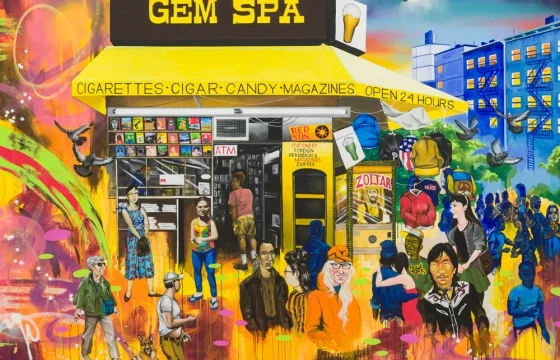
A prime example of this synthesis is the painting Gem Spa In the 80s (2025). This evocative piece immortalizes the iconic newspaper stand and candy store that once stood at the bustling corner of St. Mark’s Place and Second Avenue. Gem Spa was more than just a business; it was a vital nexus for the city’s diverse subcultures and a place celebrated by literary giants like Jack Kerouac and Allen Ginsberg, who famously referred to it as a "nerve center" of New York. In Ellis’s rendition, the familiar facade of Gem Spa becomes a backdrop for a vibrant cast of characters, including prominent figures from his own life and the art world. Critic and curator Carlo McCormick and artist Martin Wong emerge from the throng in the foreground, underscoring the painting’s significance as a portrait of a specific time and a community.
Beyond these specific narratives, Ellis employs floral imagery with profound symbolism. Technicolor arrangements of orchids and other blossoms often ascend from heaps of urban rubble, creating a striking visual metaphor for optimism amidst inequality and the enduring capacity for beauty to emerge from destruction. These floral motifs, drawing from both exotic tropical species and local blooms from his upstate New York home, serve as poignant memorials to what has been lost to the city’s relentless evolution. Simultaneously, they stand as hopeful testaments to the persistent beauty and boundless creativity that can be discovered around every corner of the metropolis.
Immersive Environments: Recreating the Spirit of a Bygone Era
"Orchid Rain on the Underground" transcends a traditional exhibition format by incorporating immersive elements that invite viewers to step directly into Ellis’s world. A significant highlight is a site-specific mural that transforms a gallery hallway. This expansive artwork, typically reserved for exterior surfaces, is brought indoors, creating a visual pathway that leads to the exhibition’s culmination.
The final room houses a compelling multimedia installation designed to transport visitors into a composite scene from the artist’s youth. This meticulously curated environment features a light-up dance floor and a disco ball, evoking the vibrant dance culture of the 1970s and 80s. Actual subway car seats are strategically placed, grounding the experience in the urban context that shaped Ellis’s artistic journey. The installation is further enhanced by a carefully selected soundtrack that fuses genres like house, disco, hip-hop, and club music, immersing the audience in the sonic landscape of the era. This installation is a powerful testament to the freedom, uninhibited creativity, and profound personal and artistic development that arose from these specific cultural settings. By weaving together elements from across his illustrious career, "Orchid Rain on the Underground" stands as a powerful showcase of Daze Ellis’s unceasing exploration of New York City’s daily life, offering a profound homage to the individuals and places that form its dynamic and enduring cultural heart.
The Enduring Legacy of Urban Artistry
Chris "Daze" Ellis’s exhibition at PPOW Gallery is more than just a retrospective; it is a vibrant declaration of the enduring relevance of urban art and the cultural touchstones that shaped it. While the specific version of New York City that ignited Daze’s artistic journey may feel like a distant memory, the works presented in "Orchid Rain on the Underground" serve as powerful evidence of its lasting impact. By breathing new life into the foundational energy of the graffiti movement and the city’s electric nightlife, Daze powerfully affirms the continued significance of the figures, places, and experiences that have profoundly influenced the creative spirit that continues to thrive throughout New York City today. His work reminds us that the city’s artistic DNA is deeply intertwined with its history, and that the echoes of its past continue to inspire and inform its vibrant present.