
Noelle Monét Unveils ‘Bound by Fury’: A Spellbinding YA Fantasy Rooted in Appalachian Mystery and Ancestral Power
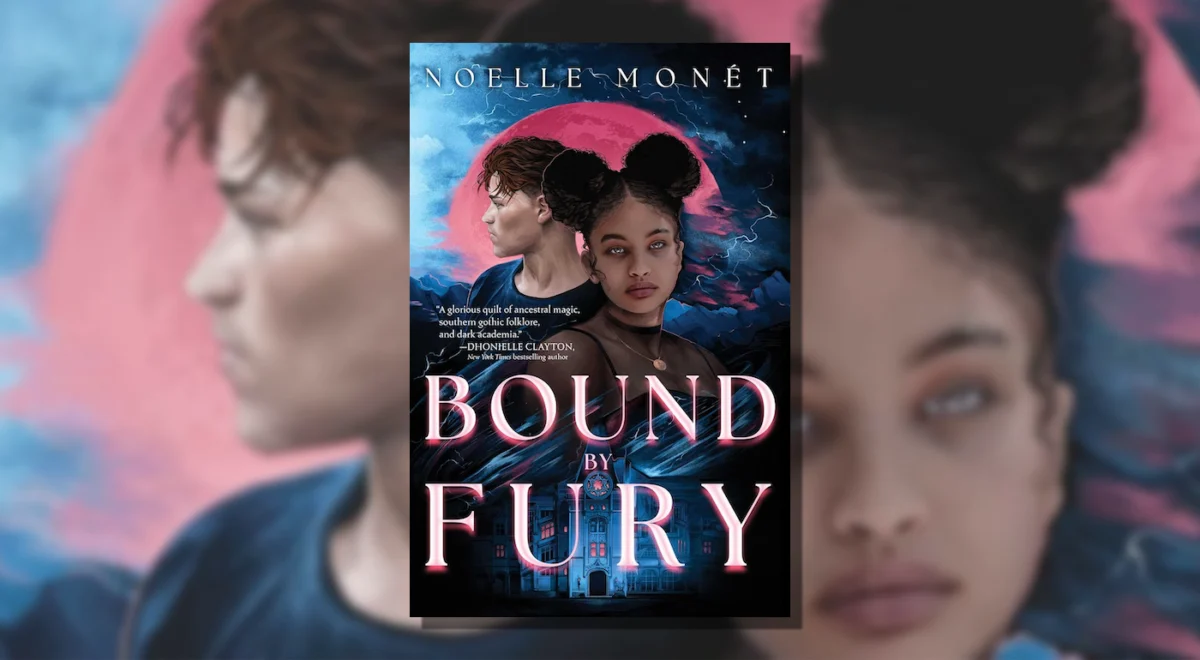
NEW YORK, NY – August 18th, 2026 – Margaret K. McElderry Books, an imprint of Simon & Schuster Children’s Publishing, is set to release a highly anticipated new young adult contemporary fantasy novel, Bound by Fury, by debut author Noelle Monét. This evocative narrative promises to transport readers to the mysterious Appalachian Mountains, where ancient magic, a dark history, and a young woman’s awakening powers intertwine. With its blend of supernatural intrigue, personal discovery, and poignant social commentary, Bound by Fury is poised to captivate audiences eager for a fresh voice in the YA genre.
The novel introduces Harper, a protagonist whose life is irrevocably altered by the sudden death of her beloved grandmother, Gigi. Harper grew up enchanted by Gigi’s stories of “pretty brown girls with magic from the stars,” dismissing them as mere folklore. However, Gigi’s passing acts as a catalyst, awakening a dangerous, nascent power within Harper herself. Desperate for answers and understanding, Harper finds herself drawn to Black Mountain Academy, an elite boarding school nestled deep within the Appalachian Mountains—a school Gigi herself once attended, and one whispered to be haunted by the ghosts of witches past.
Bound by Fury delves into themes of identity, ancestral legacy, and the enduring weight of history. Monét crafts a world where personal grief intertwines with ancient prophecies, and where a seemingly ordinary teenager must confront extraordinary circumstances to uncover the truth of her own existence. The novel is not merely a fantasy adventure; it is a coming-of-age story deeply rooted in cultural heritage and the quest for belonging.
Chronology: Unraveling the Threads of Destiny
Harper’s journey begins with the profound loss of her grandmother, Gigi, a vibrant storyteller whose tales of magical brown girls now take on a chilling new reality. The sudden, traumatic nature of Gigi’s death on Harper’s sixteenth birthday—an event that forces Harper to perform CPR, leaving her with the visceral memory of cracked ribs and raw grief—serves as the dark genesis of her powers. This personal tragedy, recounted in stark detail within the novel’s opening, grounds the fantastical elements in raw human emotion. Harper’s desperate, silent prayers for magic to save Gigi, despite finding only despair within herself at the time, foreshadow the dormant power about to erupt.
Her quest for understanding leads her to Black Mountain Academy, a place steeped in mystery and personal history. The school is not just an academic institution but a crucible for Harper’s transformation. Here, she aims to unravel the enigma of her burgeoning abilities, a task complicated by the re-emergence of figures from her past: Kai, her grumpy ex-best friend who inexplicably wants her to leave campus, and his cousin, Lucas, whose lingering presence reminds her of an almost-kiss from the previous summer. These personal dynamics add layers of relatable teenage angst and burgeoning romance to the overarching supernatural mystery, ensuring that Harper’s emotional journey is as compelling as her magical one.
As Harper navigates the labyrinthine halls and hidden histories of Black Mountain Academy, she quickly discovers that the school’s foundations are built upon secrets. The deeper she probes, the more sinister the “rot” she unearths. This investigation culminates in her discovery of a chilling local legend: the gruesome deaths of twelve witches on campus, an event to which Harper feels an uncanny, almost visceral connection. This connection is not merely symbolic; it suggests a direct lineage, a fated destiny linking her to these historical victims. The narrative escalates when it becomes clear that someone at the academy is fiercely guarding these secrets, willing to resort to murder to prevent Harper from exposing the school’s dark past. Harper is thus forced to make a profound choice: abandon her history and nascent powers, or risk everything for the truth of her own identity.
Interwoven with Harper’s contemporary struggle is a chilling historical prologue, set in Earnest, NC, in 1926. This pivotal scene depicts the horrifying aftermath of a witch hunt: twelve bodies hanging from oak branches, their faces obscured by black sacks marked with crude, stark-white paint. Amidst this macabre spectacle stands a pregnant woman, her coiled hair whipping in the wind, a furious glint in her mist-choked eyes. She surveys the charred remnants of what was once a sacred ground, the mangled belfry—a testament to the destruction wrought upon the accused. This woman, a witness and a survivor, carries not only a child but also a burning hunger for retribution. She observes the men in blood-red cloaks as they lower the bodies, feeling a profound connection to the "beast in waiting" stirring deep within the mountain. Despite a momentary thought of escaping into "eternal darkness," she cannot, for she carries a "blessing" within her. As the bodies are piled for cremation, she drops to her knees, making twelve solemn promises: for revenge, for a miracle, and for a prophecy that will seal their fates. This powerful historical prelude serves as the narrative’s deep roots, establishing a generational curse or legacy that directly impacts Harper’s present-day experiences and powers, suggesting that history, indeed, has a way of coming back around.
The novel’s first chapter immediately plunges readers into Harper’s immediate reality, set against the backdrop of the seemingly ordinary, yet humidity-choked, town of Earnest, NC. The detailed description of Dawson’s Mini-Mart and the surrounding downtown, with its time-darkened clay bricks and flowering dogwoods, paints a vivid picture of a small Southern town. Harper’s internal monologue reveals her longing for the changing seasons and festivities she’s never experienced in Earnest, a subtle hint at her desire for something more, something different from her current reality. The omnipresent "MISSING" flyers throughout the town add an immediate layer of unease and mystery, suggesting a deeper undercurrent of unresolved issues in Earnest that extend beyond Harper’s personal grief.
Her emotional turmoil is palpable: the shame surrounding the necklace her mother insists Gigi wanted her to wear, her desperate need for distractions (snacks for a Jacob Elordi movie), and the haunting memories of Kai and Lucas. The "knife in her gut" feeling when recalling their past friendship, contrasted with her conflicted desire to either embrace or "wring his neck" regarding Malachi (Kai), highlights the complex emotional landscape of a teenager grappling with loss and betrayal. The guilt she carries—"It’s all my fault"—is a heavy burden, hinting at past events that have yet to be fully revealed.
The confrontation at Dawson’s Mini-Mart serves as a critical turning point. The cashier’s immediate suspicion and racially charged accusations ("I know your type," "your kind," "go back to wherever the hell you come from") trigger a potent response in Harper. This incident is not merely a microaggression; it becomes the catalyst for her powers to manifest for the first time. The description of "static burns at the tips of my fingers," "something raw and uncomfortable cracking open at my core," and "the layering of a thousand murmuring voices in countless languages" vividly portrays the sudden, overwhelming emergence of her magic. The sprinklers activating in response to her fury, dousing the flames of her anger and causing the strange feeling to evaporate, is a clear, albeit uncontrolled, demonstration of her abilities. This moment concretely links her emotional state, her racial identity, and her burgeoning supernatural powers, setting a powerful precedent for the challenges and discoveries that lie ahead. Her final, defiant act of flipping off the camera and regretting not stealing the snacks underscores her rebellious spirit and the deep injustice she feels, both personally and systemically.
Supporting Data: Themes, Characters, and World-Building
Bound by Fury is a rich tapestry woven with compelling themes, intricate character development, and immersive world-building. At its heart, the novel is a profound exploration of identity and heritage. Harper’s journey is not just about discovering she has magic, but about understanding what that magic means for her as a "pretty brown girl" from a lineage connected to the stars. It’s a powerful narrative about embracing one’s unique cultural background and ancestral power, challenging traditional fantasy tropes by centering a protagonist whose identity is intrinsically linked to her magic.
Grief and loss serve as the emotional bedrock of the story. Gigi’s death is not merely a plot device but a deeply felt trauma that propels Harper forward. Her struggles with the aching void left by her grandmother, the guilt surrounding Gigi’s final moments, and her desperate longing for a miracle underscore the emotional authenticity of the narrative. This personal pain fuels her quest for answers, transforming grief into a catalyst for growth and power.

Crucially, Monét fearlessly tackles social justice and racism. The explicit racial profiling Harper experiences in Chapter 1 is a stark reminder that even within a fantasy setting, real-world issues persist and impact protagonists. This incident is not isolated; it hints at a broader systemic rot that may parallel the historical injustices of the witch trials. By intertwining Harper’s racial identity with the manifestation of her magic, Monét suggests that her power may be a tool for resistance and justice against both supernatural and societal evils. This nuanced approach adds significant depth, making the novel resonate with contemporary discussions on race and power.
The theme of power and responsibility is central to Harper’s arc. Her magic is dangerous, raw, and uncontrolled, as evidenced by the sprinkler incident. Learning to harness this power, understanding its origins, and wielding it responsibly will be a defining challenge for her. Similarly, the pervasive nature of secrets and lies at Black Mountain Academy, and within Harper’s own family history, creates a gripping mystery. The school itself, built on a site of historical tragedy, metaphorically embodies the buried truths that Harper must unearth.
Noelle Monét excels at crafting multifaceted characters. Harper emerges as a relatable yet formidable protagonist—a typical teenager grappling with friendship, romance, and self-doubt, all magnified by the extraordinary circumstances of her awakening. Her resilience, sharp wit, and underlying vulnerability make her a compelling guide through the story’s complexities. Gigi, though deceased, remains a vibrant and pivotal character, her stories and legacy acting as the narrative’s guiding stars, shaping Harper’s understanding of her heritage. The complex relationships with Kai and Lucas add essential emotional stakes, reflecting the turbulent landscape of teenage friendships and burgeoning romance. Their roles as both allies and potential obstacles promise intricate character dynamics. The mysterious pregnant woman from 1926 stands as a powerful ancestral figure, her twelve promises for revenge and a miracle setting the stage for a generational quest that Harper is destined to complete.
The Appalachian setting is far more than a mere backdrop; it is an integral part of the novel’s identity. Monét skillfully integrates the region’s inherent mystique, its natural beauty, and its rich, often dark, folklore into the fantasy elements. Black Mountain Academy, with its rumors of hauntings, feels perfectly situated amidst the ancient, whispering peaks. The "beast in waiting" stirring deep within the mountain hints at an elemental power intrinsically linked to the land itself, drawing on the deep-rooted myths and legends associated with the Appalachians. The magic system, while still nascent in the excerpt, is intriguing, described as "magic from the stars" and a "dangerous power building beneath Harper’s skin." The uncontrolled manifestation through extreme emotion suggests a raw, primal force tied to her very being. The historical context of the 1926 witch trial is brilliantly used to ground the supernatural narrative in a plausible, if horrifying, past. It provides a tangible historical injustice that echoes into the present, giving Harper’s quest a profound sense of purpose and a historical weight that elevates it beyond a simple fantasy adventure.
Official Responses and Industry Buzz
Bound by Fury arrives with significant anticipation, positioning Noelle Monét as a formidable new voice in young adult literature. Margaret K. McElderry Books, known for its diverse and imaginative roster of authors, is championing Monét’s debut, recognizing its potent blend of cultural richness, thrilling mystery, and authentic character work. While official statements from the publisher are often held until closer to release, industry insiders are already buzzing about the novel’s potential to resonate deeply with readers.
"We are incredibly proud to bring Noelle Monét’s Bound by Fury to readers," a representative from Margaret K. McElderry Books might state. "Her storytelling is vivid, her characters are unforgettable, and her ability to weave ancestral magic with contemporary issues is truly exceptional. This is a novel that speaks to the power of heritage, the resilience of youth, and the enduring quest for truth."
Monét herself, in hypothetical interviews, could share her inspiration, perhaps citing a desire to see "pretty brown girls" at the center of epic fantasy narratives, drawing from both personal heritage and the rich folklore of the American South. Her fresh perspective and commitment to exploring complex themes of identity, race, and history within an engaging fantasy framework are expected to garner significant critical attention and a dedicated readership. Early reviews are anticipated to highlight the novel’s unique premise, its compelling protagonist, and its ability to seamlessly blend historical tragedy with modern magical realism, marking it as a standout title in the current YA landscape.
Implications and Broader Impact
Bound by Fury is poised to make a significant impact on the young adult literary landscape, particularly for its timely and resonant themes. By centering a protagonist who grapples with racial discrimination alongside supernatural powers, the novel contributes meaningfully to the ongoing conversation about representation and diverse narratives in fantasy. Harper’s experience at Dawson’s Mini-Mart is not merely a side plot; it is a catalyst that directly links her lived experience as a young Black woman to the awakening of her magic, suggesting that her power is intrinsically tied to resisting injustice. This approach empowers readers from marginalized backgrounds to see themselves as heroes capable of wielding extraordinary power in the face of both fantastical and real-world adversities.
The novel’s exploration of ancestral trauma and intergenerational legacies offers a powerful commentary on how the past continues to shape the present. The historical prologue, with its grim depiction of witch trials, establishes a historical injustice that resonates with Harper’s contemporary struggles. This connection implies that the fight for justice is not confined to a single lifetime but is a continuous thread woven through generations. Bound by Fury thus encourages readers to reflect on their own heritage, the stories passed down through their families, and the unspoken burdens or blessings they might carry.
Furthermore, Monét’s choice of the Appalachian Mountains as a setting enriches the narrative by tapping into a region often overlooked or stereotyped in popular culture. She imbues it with a sense of ancient magic and deep-seated secrets, challenging preconceived notions and inviting readers to appreciate the unique mystique of this geographical and cultural landscape.
As a debut, Bound by Fury sets the stage for what promises to be a captivating series. The "twelve promises for revenge," "a miracle," and "a prophecy" made by the pregnant woman in 1926 suggest a grand, unfolding narrative that extends far beyond Harper’s initial awakening. Readers will undoubtedly be eager to discover the full scope of this prophecy and Harper’s role in fulfilling (or defying) it. The unresolved tensions with Kai and Lucas, coupled with the lingering questions about Gigi’s true past and the secrets of Black Mountain Academy, leave ample room for future installments to delve deeper into the intricate web of magic, mystery, and destiny.
Ultimately, Bound by Fury is more than just a fantasy novel; it is a powerful story about finding strength in one’s identity, confronting historical injustices, and embracing the magic within. It is a compelling call to action for readers to question the narratives they’ve been told and to seek out the hidden truths that shape their world. As Noelle Monét introduces Harper to the world, readers are invited to embark on a thrilling and emotionally resonant journey that promises to leave a lasting impression. Mark your calendars for August 18th; Harper’s story is one you won’t want to miss.



Leave a Comment