Beyond the Veil of Fate: ‘Thrice Married to a Salted Fish’ Redefines Danmei with Dark Humor and Transmigratory Twists
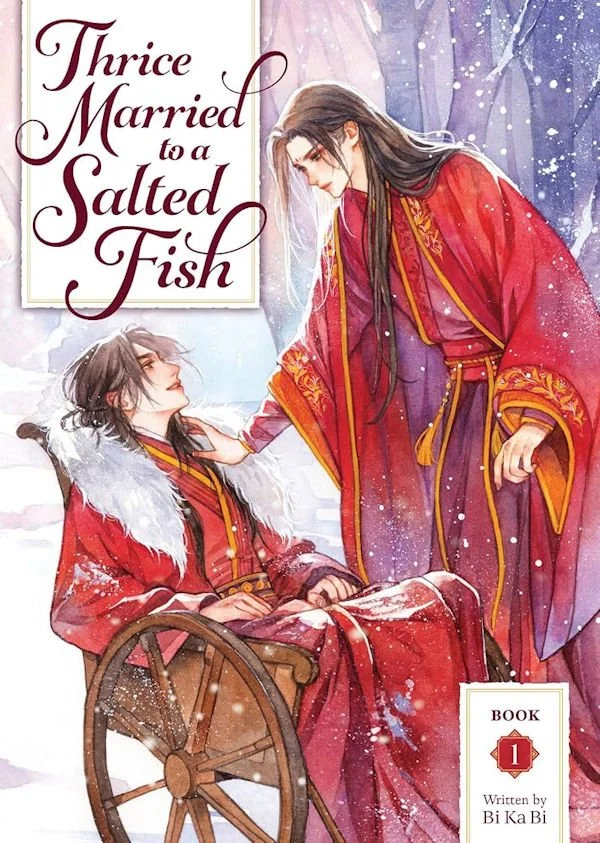
In the vibrant and rapidly expanding landscape of Chinese web novels, a new series titled "Thrice Married to a Salted Fish" (三嫁咸鱼) by the author Bi Ka Bi has emerged as a captivating force, drawing significant attention for its intricate plot, compelling characters, and subversive approach to popular tropes. This danmei (Boys’ Love) light novel series masterfully blends historical intrigue, a slow-burn romance, and the increasingly popular transmigration phenomenon, all while navigating the delicate complexities of Chinese censorship. Its unique narrative, featuring a cunning imperial physician and a mysteriously insightful, sickly nobleman, has resonated deeply with readers, cementing its place as a must-read in the genre.
The Allure of Transmigration and the Rise of Danmei
The concept of transmigration, or chuanyue (穿越) in Chinese literature, stands as a prominent narrative device, often seen as the Chinese counterpart to Japan’s isekai genre. These stories typically involve an unassuming individual’s sudden demise—often humorously attributed to a "Truck-kun" incident or another mundane accident—followed by their rebirth or transportation into an unfamiliar world. This new reality can be historical, fantastical, or a blend of both, presenting the protagonist with a clean slate and a fresh set of challenges. The appeal of transmigration lies in its promise of new perspectives, the opportunity to confront inherent dangers and inner insecurities, and the forging of new, often profound, bonds. Unlike isekai, where protagonists are often transported in their original bodies, transmigration usually places the soul into a different body, demanding an adaptation to a pre-existing identity and history while subtly managing one’s original personality to avoid alarming those around them.
Parallel to the rise of transmigration, the danmei genre has exploded in popularity, both within China and globally. Originating from online fanfiction, danmei typically focuses on romantic relationships between male characters, often set against backdrops of historical drama, fantasy, or modern life. Its rapid ascent has led to numerous adaptations into webtoons (manhua), animated series (donghua), and live-action dramas (often with censored romantic elements). Danmei offers a rich tapestry for exploring themes of love, loyalty, sacrifice, and identity, often challenging traditional gender roles and societal expectations within its fictional constructs.
"Thrice Married to a Salted Fish" deftly weaves these two popular trends together, yet with a clever inversion that distinguishes it from many of its peers. While transmigration forms a crucial narrative pillar, the primary viewpoint character, Lin Qingyu, is not the transmigrator. Instead, the story unfolds through his eyes, offering a unique lens through which to observe the complexities of a world influenced by foreknowledge and altered destinies.
"Thrice Married to a Salted Fish": A Synopsis of Deception and Destiny
The core narrative of "Thrice Married to a Salted Fish" plunges readers into a world of imperial ambition, medical aspiration, and unexpected romance, all tinged with a delicious undercurrent of dark humor and strategic cunning.
An Unforeseen Imperial Decree
The story introduces Lin Qingyu, an exceptionally gifted and intensely ambitious young scholar. After a decade of exhaustive study and sleepless nights dedicated to mastering the intricacies of medicine, Lin Qingyu stands on the precipice of achieving his lifelong dream: becoming an Imperial Physician. However, his aspirations are abruptly shattered by an imperial decree. Rather than allowing him to sit for the prestigious exam, the Emperor commands Lin Qingyu to set aside his medical pursuits and enter into a political marriage with Lu Wancheng, the sickly eldest son of a powerful marquis. This union is not born of affection or political alliance in the traditional sense, but rather a desperate, superstitious hope that Lin Qingyu’s auspicious presence might somehow heal the chronic illness plaguing the young master.
Lin Qingyu, a man described as "as venomous as he is beautiful," is initially horrified and deeply resentful of this abrupt detour in his carefully planned life. His pride is wounded, his ambition thwarted, and he harbors no intention of extending any genuine assistance or warmth to his new, seemingly doomed husband. This forced marriage, a common trope in danmei, sets the stage for a relationship initially defined by obligation and simmering frustration.
The Enigmatic Marquis’s Son
However, Lin Qingyu quickly discovers that Lu Wancheng is far more than just an ill-fated aristocrat burdened by chronic sickness. Beneath his languid, "salted fish" (咸鱼) persona—a Chinese colloquialism for someone who is lazy, unmotivated, and content to do nothing—lies a sharp, mysterious intellect. Lu Wancheng often boasts of past exploits and displays an uncanny "sixth sense," offering insights and predictions that seem impossible. This seemingly supernatural intuition is, in fact, the manifestation of his identity as a transmigrator, a soul from a different world who possesses foreknowledge of historical events and the personalities within their current timeline.
Lu Wancheng’s unusual personality and mysterious wisdom begin to intrigue Lin Qingyu, chipping away at his initial disdain. The marquis’s son, despite his outward indolence, demonstrates a keen understanding of court politics and human nature, proving to be a formidable strategic mind.
A Partnership Forged in Shadows
Recognizing Lin Qingyu’s ambition and sharp intellect, and perhaps seeing a kindred spirit beneath the icy exterior, Lu Wancheng proposes a audacious idea to his new "male bride." He offers a path that could not only send Lin Qingyu back home to continue his studies and fulfill his dreams but also one that would help him navigate and dismantle the treacherous web of court intrigue. This alliance is not just about personal gain; it’s about survival and empowerment.
What follows is a slow-burn romance, a delicate dance between two individuals who initially entered their union under duress. As they become confidants and co-conspirators, feelings begin to bloom between these unlikely allies. Lu Wancheng, far from being a passive invalid, actively embraces and even encourages Lin Qingyu’s "venomous" and vengeful side, recognizing its utility in a world rife with duplicity. This unconventional support solidifies their bond, transforming a marriage of convenience into a partnership built on mutual respect, strategic brilliance, and burgeoning affection. Yet, as their connection deepens and their schemes unfold, a dark truth about Lu Wancheng’s transmigration and his precarious health threatens to rip them apart, challenging their resolve in both sickness and in health.
Deconstructing the Narrative: Themes and Character Dynamics
"Thrice Married to a Salted Fish" distinguishes itself not just through its plot mechanics but also through its sophisticated exploration of character, morality, and the very nature of heroism.
Subverting the Hero Archetype
One of the most refreshing aspects of the series is its deliberate subversion of common protagonist archetypes in danmei and transmigration stories. Often, characters in these genres, even when employing cunning tactics, are portrayed as fundamentally "good at heart" and committed to upholding justice or national stability. Lin Qingyu and Lu Wancheng, however, are cut from a different cloth. They are unapologetically pragmatic, morally ambiguous, and driven by a desire for personal vengeance and the dismantling of those who have wronged them.
The novel revels in their less-than-savoury means, celebrating their wit and ruthlessness. A particularly iconic line, "I love the way you look when you use poison," encapsulates Lu Wancheng’s complete acceptance and even admiration for Lin Qingyu’s darker tendencies. This mutual enablement makes them a uniquely compelling duo. They systematically target the covetous Crown Prince, who is obsessed with Lin Qingyu’s chilly beauty, and Lu Wancheng’s duplicitous family, who seek to exploit his illness. The narrative ensures that these antagonists truly "deserve everything they get," providing a satisfying, albeit morally gray, catharsis for the reader. The hilarious part is that Lin Qingyu is often spurred into action by mere annoyance, and Lu Wancheng is more than happy to facilitate the ensuing chaos.
The ‘Salted Fish’ and the ‘Poisonous Beauty’
The dynamic between Lin Qingyu and Lu Wancheng is the beating heart of the story. Lin Qingyu is a character defined by his exceptional intelligence, breathtaking beauty, and fierce ambition. His forced marriage initially traps him in a gilded cage, but his innate cunning and willingness to wield poison—both literal and metaphorical—become his tools for liberation. His journey involves a gradual softening, learning to trust and love, but without ever losing his sharp edges. He is a protagonist who embraces his darker impulses, making him a complex and fascinating figure.
Lu Wancheng, on the other hand, presents a fascinating contrast. His "salted fish" facade hides a deeply strategic and perceptive mind. His knowledge from his previous life allows him to manipulate events and individuals with astonishing precision. He acts as both Lin Qingyu’s protector and his enabler, recognizing and valuing the physician’s inherent ruthlessness. Lu Wancheng’s seeming laziness is a deliberate act, allowing him to observe and plan, while his boasts hint at a deeper, more adventurous spirit from his original world. Their exchanges are filled with witty barbs, subtle flirtation, and a palpable chemistry that makes their journey together endlessly engaging.
Fate, Reincarnation, and the "Thrice Married" Prophecy
The title itself, "Thrice Married to a Salted Fish," carries profound implications for the narrative. It hints at a cycle of fate, tragedy, and rebirth, suggesting that Lu Wancheng’s survival is not guaranteed. The repeated marriages signify a deeper connection, but also a recurring heartbreak. This element injects significant emotional stakes into the slow-burn romance, elevating it beyond typical court intrigue. The knowledge that Lu Wancheng might not survive adds a poignant urgency to their quest for happiness and justice. The author masterfully balances comedic moments—often arising from their banter or the ridiculousness of their targets—with the absolute destruction of their enemies and the looming threat of separation. The emotional impact is such that many readers, including the reviewer, found themselves deeply moved by the end of the first book, immediately compelled to continue the story.
The Broader Context: Danmei, Censorship, and Literary Innovation
The success of "Thrice Married to a Salted Fish" cannot be fully appreciated without understanding the unique challenges and opportunities within the Chinese publishing landscape.
Navigating Censorship: The Author’s Alias and Creative Constraints
The author, Bi Ka Bi, uses an alias, a common practice among creators of LGBTQIA+ content in China. This is a direct consequence of the country’s stringent censorship laws, which often restrict or outright ban the depiction of same-sex relationships, particularly in mainstream media. While danmei thrives in the online sphere, authors must often employ subtlety, euphemisms, or focus heavily on political intrigue and platonic "brotherhood" in published works or adaptations to avoid government scrutiny. The use of an alias provides a layer of protection for the author, allowing them to express their creative vision while minimizing personal risk. This environment forces authors to be incredibly inventive, crafting narratives where the emotional depth and romantic tension are conveyed through implicit actions, suggestive dialogue, and deep character development, rather than explicit declarations. Bi Ka Bi’s ability to create such a compelling and openly romantic (within the genre’s context) story despite these constraints speaks volumes about their skill.
Bi Ka Bi: A Rising Voice in Danmei
"Thrice Married to a Salted Fish" marks Bi Ka Bi’s debut series, and its highly anticipated release and subsequent success have established them as a significant new voice in the danmei community. While many Chinese danmei authors tend to stick to a particular subgenre or style that has proven successful, it will be fascinating to observe where Bi Ka Bi’s inspiration takes them in the future. Their demonstrated ability to craft complex characters, intricate plots, and a unique blend of humor and pathos suggests a versatile talent capable of exploring diverse narrative terrains. The anticipation surrounding their next projects is a testament to the strong impression this debut has made.
Looking Ahead: The Anticipated Conclusion and Lasting Impact
With the first three books of "Thrice Married to a Salted Fish" now available and devoured by a fervent readership, the wait for the final installment has become an exercise in eager anticipation. Readers are left pondering the ultimate fate of Lin Qingyu and Lu Wancheng: Will their love conquer the cycles of fate and the machinations of their enemies? Will they achieve a lasting happiness, or will the world finally succeed in tearing them apart? The scheduled release of the final book in October promises to deliver a conclusion that will undoubtedly be worth the wait, satisfying the emotional investment cultivated over hundreds of pages.
"Thrice Married to a Salted Fish" stands as more than just an entertaining novel; it is a testament to the evolving sophistication of the danmei genre and the creative resilience of authors operating within challenging environments. Its innovative approach to transmigration, its morally complex protagonists, and its compelling blend of romance, intrigue, and dark humor contribute significantly to the literary landscape. For those interested in exploring similar narratives that blend transmigration with rich character dynamics and emotional depth, two highly recommended series are "Mistakenly Saving the Villain" by Feng Yu Nie and "The Scum Villain’s Self-Saving System" by Mo Xiang Tong Xiu. These stories, largely told from the transmigrated characters’ points of view, offer their own unique blend of hilarity, devastation, and the signature angst that makes the genre so compelling. "Thrice Married to a Salted Fish" continues to captivate, ensuring its place as a memorable and impactful contribution to the world of web novels.