
The Shadow of Empire: Britain’s Controversial Concentration Camps in the Boer War
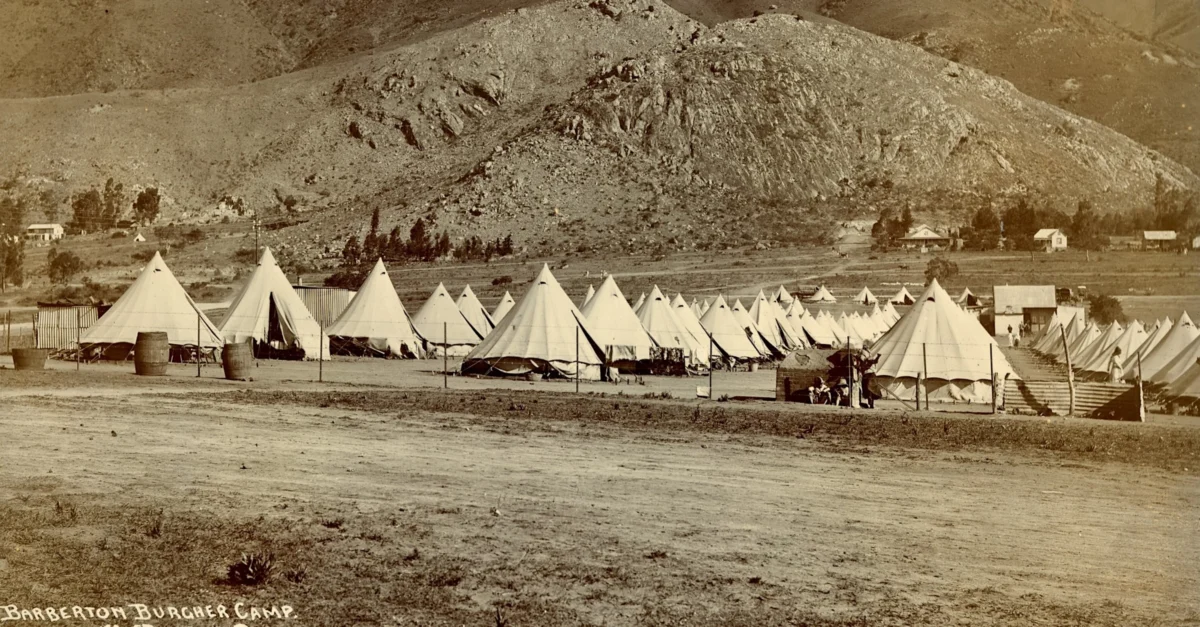
The Second Anglo-Boer War (1899-1902) stands as a stark and often unsettling chapter in the history of the British Empire. While the conflict itself was brutal, it is perhaps best remembered for a controversial and tragic policy implemented by the British authorities: the establishment of concentration camps for Boer and Black African civilians. Initially conceived as a strategic measure to quell a persistent guerrilla insurgency and provide refuge for displaced families, these camps quickly devolved into sites of unimaginable suffering, claiming the lives of tens of thousands due to overcrowding, malnutrition, and disease. This grim episode cast a long shadow over Britain’s imperial ambitions and forced a public reckoning with the moral costs of conquest.
Main Facts: A Stain on Imperial History
The British Empire, at the zenith of its power, found itself embroiled in a protracted and costly conflict in Southern Africa against the fiercely independent Boers – descendants of Dutch, French, and German settlers. Frustrated by the Boers’ effective guerrilla tactics, the British military, under the command of Lord Kitchener, resorted to a scorched-earth policy, devastating Boer farms and homes. This tactic necessitated the removal of civilian populations, leading to the establishment of numerous internment camps across the region.
These facilities, which became known as concentration camps, housed Boer women, children, and Black African labourers and their families, often against their will. The stated objectives were twofold: to deprive Boer commandos of vital logistical support from their families and to provide shelter for those displaced by the widespread destruction. However, a severe lack of foresight, compounded by administrative incompetence and an alarming indifference to civilian welfare, transformed these camps into death traps. Inadequate planning resulted in severe overcrowding, insufficient food rations, and deplorable sanitary conditions.
The human cost was staggering. Historical estimates indicate that up to 28,000 Boers, a horrifying 80% of whom were children, perished in these camps. Concurrently, between 14,000 and 20,000 Black Africans, who were segregated into even worse conditions, also succumbed to the harsh realities of internment. The overwhelming majority of these deaths were attributable to preventable diseases like typhoid, dysentery, measles, and pneumonia, exacerbated by malnutrition and exposure. The scale of this humanitarian catastrophe sparked widespread outrage in Britain and internationally, forcing a reluctant government to confront the grim realities unfolding in its distant dominion.
Chronology of Conflict and Crisis
Roots of Rivalry: British Ambition Meets Boer Independence
The seeds of the Second Anglo-Boer War were sown in decades of escalating tension between the British Empire and the two independent Boer republics: the South African Republic (Transvaal) and the Orange Free State. The Boers, having undertaken the "Great Trek" in the 1830s to escape British rule in the Cape Colony, cherished their autonomy and their agrarian way of life. However, their newfound independence was challenged by the discovery of vast mineral wealth – diamonds in Kimberley in the 1860s and, more significantly, the world’s largest gold deposits on the Witwatersrand in the Transvaal in 1886.
These discoveries ignited British imperial ambitions, transforming a peripheral colonial interest into a central strategic imperative. Control over these resources was seen as crucial for British economic dominance and prestige. Further exacerbating tensions was the issue of the "Uitlanders" (foreigners), primarily British prospectors and labourers who flocked to the goldfields. The Boer governments, wary of losing their cultural and political identity, denied these Uitlanders full citizenship rights, despite their significant economic contribution. Britain seized upon this as a pretext for intervention, claiming to protect the rights of its subjects.
An unofficial, ill-fated attempt at a British-backed coup, the Jameson Raid of 1895, further inflamed Boer suspicions and solidified their resolve to resist British encroachment. In response, the Transvaal government began to acquire foreign arms and even signed a defensive treaty with Germany, a move that deeply alarmed Britain, which feared a challenge to its regional hegemony. These simmering grievances, coupled with the Boers’ victory in the First Anglo-Boer War (1880-81), a largely skirmish-based conflict that affirmed their independence, set the stage for a much larger and more brutal confrontation.
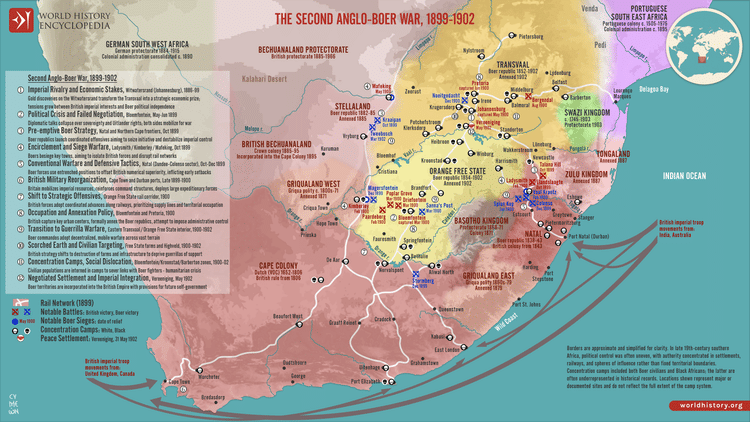
The Second Anglo-Boer War Commences (1899)
The war officially began on 11 October 1899, with a pre-emptive Boer cavalry strike. Initially, the conflict saw surprising successes for the Boers. Though not a formally trained army in the European sense, their commandos were highly mobile, intimately familiar with the rugged terrain, and expert marksmen equipped with modern rifles. They inflicted several early defeats on the British, besieging key towns like Ladysmith, Kimberley, and Mafeking.
However, the numerical and industrial might of the British Empire was undeniable. Recognizing the severity of the situation, the British government rapidly dispatched massive reinforcements. The British Army force in Southern Africa swelled dramatically from an initial 25,000 to an unprecedented 250,000 men, a significant portion of whom were colonial troops from Australia, New Zealand, and Canada. This overwhelming numerical superiority, combined with improving British generalship, eventually turned the tide. By mid-1900, the British had relieved the besieged towns and captured the major Boer capitals of Bloemfontein (Orange Free State), Johannesburg (Transvaal), and Pretoria (Transvaal).
The Shift to Scorched Earth and Civilian Internment (1900)
Despite losing their capitals and facing overwhelming odds, the Boers refused to surrender. Instead, they adapted their tactics, dissolving into highly effective commando units that waged a relentless guerrilla war against the extended British supply lines and isolated garrisons. This phase of the war proved frustratingly difficult for the British, who found their conventional military superiority ineffective against a fluid and elusive enemy.
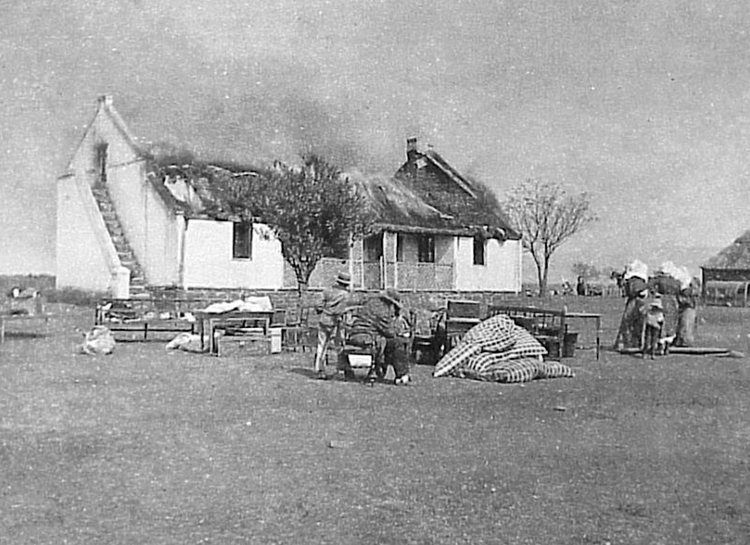
In response to this protracted and costly insurgency, the British command, under Field Marshal Lord Kitchener, adopted increasingly harsh measures. From mid-1900, Kitchener implemented a brutal "scorched-earth" policy, systematically destroying Boer farms, crops, and livestock across the countryside. Thousands of civilian homes were burned to the ground, rendering entire families homeless and destitute. To further restrict the Boers’ movement and deny them any support, Kitchener divided the former republics into a vast "steel chequerboard" using barbed wire fences and fortified blockhouses, effectively fragmenting the landscape and isolating commando units.
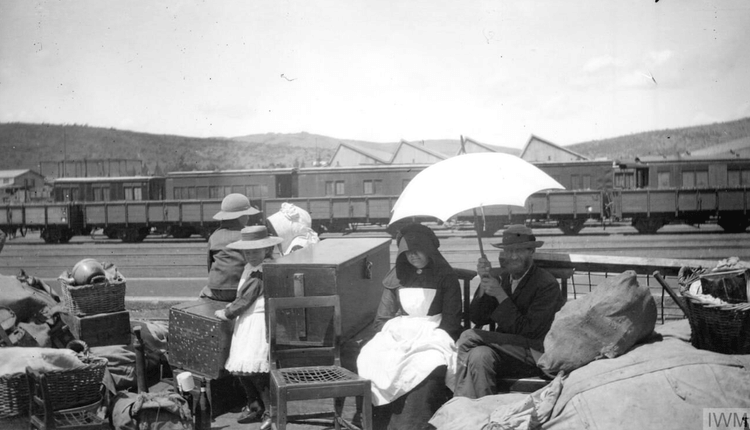
Crucially, this scorched-earth policy was coupled with the controversial order for civilian internment. Boer women, children, and their Black African household servants, now displaced and lacking any means of subsistence, were rounded up and transported to specially constructed "refugee" camps. The British articulated two primary justifications for this policy: firstly, to sever the vital logistical and moral support networks that sustained the fighting Boer commandos, and secondly, to provide a form of accommodation for the thousands of civilians whose homes and livelihoods had been destroyed by the war’s devastation. While fighting Boers who were captured were sent to more conventional prisoner-of-war camps, the non-combatant civilians were funnelled into these new, rudimentary facilities. Not all British soldiers agreed with the approach, with one Yeomanry trooper reportedly calling it "the most disgusting thing we had to do," yet a prevailing sentiment among the military was that it was a necessary evil to bring the costly war to an end.
Unveiling the Horror: Public Outcry and Reform (1901-1902)
As the war dragged into its third year, whispers and then outright reports of dire conditions within the concentration camps began to reach Britain. The government initially attempted to downplay these accounts, but the mounting evidence became impossible to ignore. A pivotal figure in exposing the truth was Emily Hobhouse, a British welfare campaigner. Undertaking a self-funded investigative tour of the Boer republics for four months in early 1901, Hobhouse meticulously documented the appalling conditions she witnessed. Her damning report, published in April 1901, graphically detailed the squalor, starvation, and rampant disease within the camps, sparking a wave of public outrage across Britain.
Hobhouse’s findings were corroborated by other independent observers and members of the Liberal opposition in Parliament. The Liberal leader, Henry Campbell-Bannerman, famously denounced the camps as "methods of barbarism" in a public speech, igniting a fierce political debate within Britain. The international press, particularly in France and Germany, also condemned the British policy, further intensifying pressure on the government.
Faced with undeniable evidence and immense public and political pressure, the government reluctantly appointed a Ladies Committee, known as the Fawcett Commission, to conduct an official inquiry. While the commission initially attempted to soften its findings, its report ultimately confirmed Hobhouse’s assertions, concluding that the majority of deaths in the camps had been preventable if adequate medical and sanitary measures had been in place from the outset. It highlighted "bureaucratic incompetence and medical ignorance" rather than deliberate malice as the primary cause, though this distinction offered little comfort to the victims.
The combined weight of Hobhouse’s advocacy, public indignation, and parliamentary debate eventually forced the government to act, albeit slowly. Control of the camps was gradually shifted from military to civilian authorities, leading to significant improvements in sanitation, food supplies, and medical care. In December 1901, Kitchener finally ordered an end to the scorched-earth policy and the further arrest of Boer women and children. These reforms, while late, dramatically reduced the mortality rates in the remaining months of the war.
The Second Boer War finally concluded in May 1902 with the signing of the Treaty of Vereeniging. Even after the peace agreement, many detainees had to endure several more months of incarceration until they could be released and, for many, attempt to return to what remained of their devastated homes.
Supporting Data: A Grim Accounting of Lives Lost
The Scale of Detention
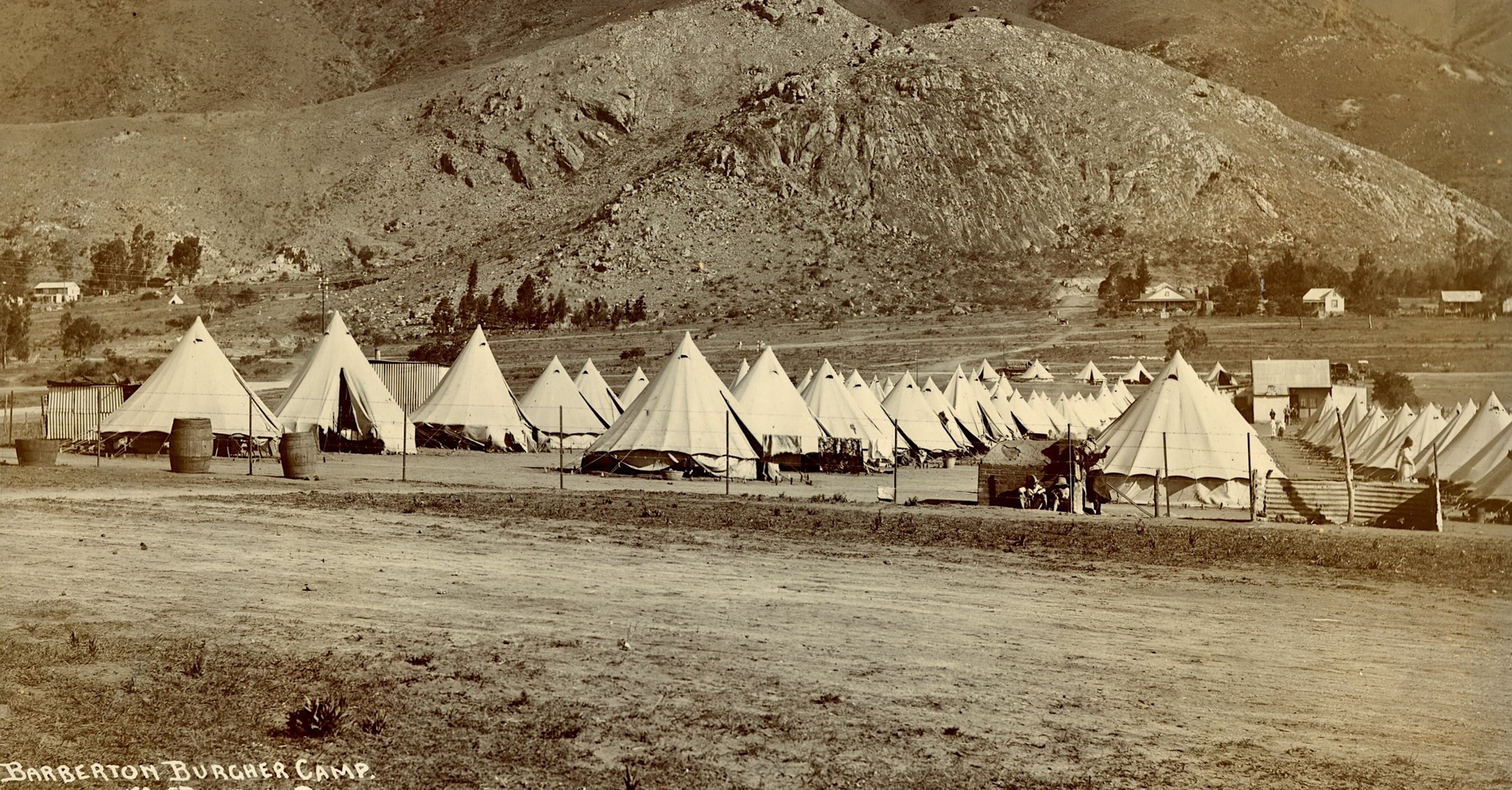
The British established a vast network of 46 main concentration camps across the former Boer republics. These facilities were rudimentary, consisting of primitive buildings or rows of tents, typically enclosed by impenetrable barbed wire fencing. By 1902, the sheer scale of the internment was staggering: official records show that 117,000 Boer women and children were detained, alongside an equally significant 119,000 Black Africans.
A critical, and often overlooked, aspect of the camp system was its racial segregation and discriminatory practices. White Boer civilians were housed in separate camps from Black Africans. The conditions in the Black African camps were systematically worse, reflecting the deep-seated racial prejudices of the colonial era. Unlike their White Boer counterparts, detained Black Africans were often compelled to work as labourers, frequently under harsh conditions and with even more meagre rations. This systemic disparity underscored the racial hierarchy inherent in British colonial policy and contributed to a higher, though less precisely recorded, mortality rate among Black African internees. Lord Kitchener, the architect of the policy, never visited these camps, reportedly reassuring authorities in London that, despite growing contrary reports, everyone was ‘happy’ – a stark testament to his detachment and negligence.
Unsanitary Conditions and Disease Epidemics
The primary cause of death in the concentration camps was not direct violence but the horrifying combination of extreme overcrowding, inadequate food, and appallingly unsanitary conditions, which created a perfect breeding ground for disease. Rations for Boer detainees were described by historian T. Pakenham as "much worse than the diet of the barrack room, or the official diet of the troops on campaign," consisting of little more than a pound (450g) of meal and half a pound of meat daily, with minimal sugar and coffee. Crucially, there were no vegetables, no jam, and no fresh milk for babies and children – a nutritional deficit that proved fatal, especially for the young.
Conditions in the Black African camps were even more dire, with many detainees reportedly resorting to eating insects to survive. Clothing was scarce across all camps, offering little protection against the harsh extremes of the Southern African climate. Medical provision was catastrophically insufficient: typically, just one doctor was assigned to an entire camp, assisted by a handful of nurses in the Boer camps, and often none at all in the Black African camps. Medical supplies quickly ran out, exacerbating the crisis.
Water supplies were frequently tainted, and sanitation was virtually non-existent, with soap often unavailable. These factors led to the rapid and devastating spread of infectious diseases. Typhoid, dysentery, and measles swept through the overcrowded tents and primitive shelters, claiming lives by the hundreds. Pneumonia was another rampant killer. The emotional and psychological toll on the internees was immense. Rina Viljoen, a detained mother, vividly described the desperation: "There were a lot of diseases in the camp. People were often sick and many died, especially the children… and when the authorities learnt there was a sick child in your tent, they took that child to a hospital. And the Boer women strongly believed that within three days that child would be dead. You were also not allowed to visit that child in hospital. So if a child became ill you just hid him in the tent and kept him there." This chilling account highlights the profound distrust and fear that pervaded the camps, leading mothers to conceal their sick children, tragically sealing their fate.
The Devastating Mortality Rates
The cumulative mortality figures from the concentration camps are a grim testament to the catastrophe. Historians estimate that between 18,000 and 24,000 Boers perished, with some figures, like those from historian L. James, pushing the number to 28,000. Crucially, approximately 80% of these Boer deaths were children under the age of 16, a statistic that underscores the particular vulnerability of the young to the camps’ conditions. In addition, between 14,000 and 20,000 Black Africans died in their segregated and even more neglected camps, bringing the total civilian death toll to well over 40,000.
To put these figures into perspective, the number of Boers killed as combatants during the entire war was around 7,000. This means that four times as many Boer civilians died in the camps than Boer soldiers on the battlefield. While some extreme voices on the Boer side accused the British of deliberate genocide, mainstream historical consensus, as noted by James, attributes the horrific death rates more to "a combination of bureaucratic incompetence and medical ignorance rather than malevolence." It is also important to remember that the British Army itself suffered terribly from disease during the war, with around 28,000 British soldiers dying from infections – a number comparable to the Boer civilian deaths. The Fawcett Commission, the official inquiry, concluded that the majority of deaths were preventable if adequate medical measures had been taken from the outset. This highlights systemic failures within the British military administration, characterized by "red tape, indifference to civilians, and general incompetence," which proved devastating not only to the internees but also to the army’s own ranks.
Official Responses and Public Condemnation
Initial Denial and Downplaying
Initially, the British government and military leadership exhibited a profound reluctance to acknowledge the severity of the humanitarian crisis unfolding in the concentration camps. Lord Kitchener, the commander-in-chief, notoriously downplayed reports of suffering, often providing optimistic assurances to London that conditions were satisfactory and that the internees were content. This official narrative sought to portray the camps as benign "refugee camps" offering protection to displaced families, rather than what they truly were: sites of mass suffering and death.
Such denial was not uncommon in colonial warfare, where the lives and welfare of indigenous or enemy civilian populations were often given low priority. The sheer logistical challenge of feeding and housing tens of thousands of people in a war zone was immense, but the British administration’s initial response was characterized by indifference, a lack of detailed oversight, and a systemic failure to allocate necessary resources or medical personnel. The bureaucratic machinery of empire, focused on military victory, proved woefully inadequate and even callous when confronted with the human consequences of its own policies.
The Role of Emily Hobhouse and Other Critics
The official narrative of denial was shattered largely by the courageous efforts of independent humanitarian campaigners, most notably Emily Hobhouse. A tireless advocate for peace and social justice, Hobhouse travelled to South Africa in late 1900, determined to investigate the rumours of suffering in the camps. Her four-month tour in early 1901 provided irrefutable evidence that contradicted the government’s reassurances.
Her detailed report, presented to the British public and Parliament, painted a horrifying picture of the camps. She described a typical scene in Bloemfontein camp on 26 January 1901: "Imagine the heat outside the tents, and the suffocation inside! We sat on their khaki blankets, rolled up, inside Mrs. Botha’s tent; and the sun blazed through the single canvas, and flies lay thick and black on everything – no chair, no table, nor any room for such; only a deal box, standing on its end, served as a wee pantry. In the tiny tent live Mrs. Botha, five children (three quite grown up) and a little Kaffir servant girl. Many tents have more occupants…" Her vivid descriptions of overcrowding, starvation, and the pervasive stench of disease shocked the British public.
Hobhouse’s report galvanized public opinion and provided ammunition for political opposition. Liberal Party leader Henry Campbell-Bannerman’s denunciation of the camps as "methods of barbarism" during a public speech in June 1901 became a rallying cry against the government’s policy. The international press, particularly in France and Germany, seized upon these revelations, using them to criticize British imperial conduct and further isolate Britain on the world stage. This combination of internal and external pressure made the continued denial of the crisis untenable.
Gradual Reforms and Shifting Responsibility
Under immense pressure from public outcry, parliamentary debate, and international condemnation, the British government was slowly compelled to address the catastrophe. The first significant step towards reform was the appointment of the Fawcett Commission in mid-1901, though even this was initially seen by some as a delaying tactic. However, the commission’s findings, which largely validated Hobhouse’s observations, left no room for continued inaction.
A crucial policy shift involved transferring administrative control of the camps from the military to civilian authorities. This move, although gradual, proved instrumental in improving conditions. Civilian administrators, often with a greater emphasis on welfare and public health, began to implement crucial changes. Rations were improved, medical staff were increased, and efforts were made to improve sanitation and hygiene within the camps. Lord Kitchener himself, bowing to pressure and recognizing the political liability, ended the scorched-earth policy in December 1901 and ordered that no more Boer women and children be arrested for internment. While these reforms came too late for thousands who had already perished, they led to a significant reduction in mortality rates in the final months of the war. The reforms represented a reluctant but undeniable acknowledgment by the British establishment of the grave failures of their initial policy.
Implications: A Lasting Legacy
The Immediate Aftermath and Union of South Africa
The Second Boer War concluded in May 1902 with the signing of the Treaty of Vereeniging. While the Boers lost their independence, the treaty included generous terms regarding their eventual self-governance, a concession influenced in part by the negative publicity generated by the concentration camps. However, the immediate aftermath was one of immense hardship. Many detainees remained incarcerated for several more months after the peace treaty, waiting for the logistical arrangements for their release and return. For those who did return, they found their farms and homes devastated, their livelihoods destroyed, and their communities shattered.
In 1910, the former Boer republics of Transvaal and the Orange Free State were unified with the British colonies of Cape Colony and Natal, along with several former African kingdoms, to form the Union of South Africa. While this represented a British political victory, the memory of the war, and particularly the concentration camps, festered as a deep wound in the psyche of the Afrikaner (Boer) population. This profound sense of grievance and victimhood played a significant role in shaping Afrikaner nationalism and would later contribute to the ideological underpinnings of apartheid, a system designed to consolidate white power and further marginalize Black Africans.
Redefining Warfare and Humanitarian Law
The British concentration camps of the Boer War marked a chilling precedent in modern warfare. While the Spanish army had employed similar internment policies against rebels and their families in Cuba just a few years prior (1896-1898), the scale and documented horrors of the Boer War camps, particularly within a conflict involving a major European power, brought the concept of civilian internment into stark global focus. The term "concentration camp," originally a neutral descriptor for a place where people were concentrated, began to acquire its grim and sinister connotations during this period.
The international outcry, spearheaded by figures like Emily Hobhouse, helped to highlight the ethical dimensions of warfare and the treatment of non-combatant civilians. Although international humanitarian law was still in its nascent stages, the events of the Boer War contributed to a growing global consciousness about the need for rules governing conflict and the protection of civilians. This episode served as a cautionary tale, influencing later debates and conventions on human rights and the laws of war, even if its lessons were tragically ignored in subsequent conflicts.
Indeed, the Boer War camps were not the last of their kind. The early 20th century saw similar policies enacted by Germany in German South West Africa (1904-1907) during its brutal suppression of the Herero and Nama uprisings, by Fascist Italy in Libya in the early 1930s, and most infamously, by Nazi Germany during the Second World War (1939-45). The British camps in South Africa, while differing significantly in intent and scale from the genocidal extermination camps of the Holocaust, undeniably represent a dark evolutionary step in the history of state-sanctioned civilian internment and suffering.
Enduring Scars and Historical Debate
The legacy of the concentration camps continues to resonate in South Africa and in the broader historical understanding of the British Empire. For many Afrikaners, the camps remain a potent symbol of British oppression and a foundational element of their collective memory of victimhood. For Black Africans, the camps represent yet another layer of colonial subjugation, where their suffering was not only extreme but also largely unacknowledged and systematically devalued in comparison to that of the white population.
Historians continue to debate the degree of British culpability. While the consensus rejects the notion of deliberate genocide, the charges of gross negligence, administrative incompetence, and a callous disregard for human life remain firmly established. The episode forced Britain to confront the darker side of its imperial project, raising uncomfortable questions about the moral limits of power and the justifications for empire. It stands as a stark reminder that even in the pursuit of strategic objectives, the welfare of civilian populations must never be relegated to an afterthought, lest the methods of war become truly barbarous. The concentration camps of the Boer War serve as a permanent scar on the historical landscape, a testament to the devastating human cost when political expediency overrides humanitarian principles.


Leave a Comment