
The Hutt Legacy Reimagined: How Rotta the Hutt Steals the Spotlight in ‘The Mandalorian and Grogu’
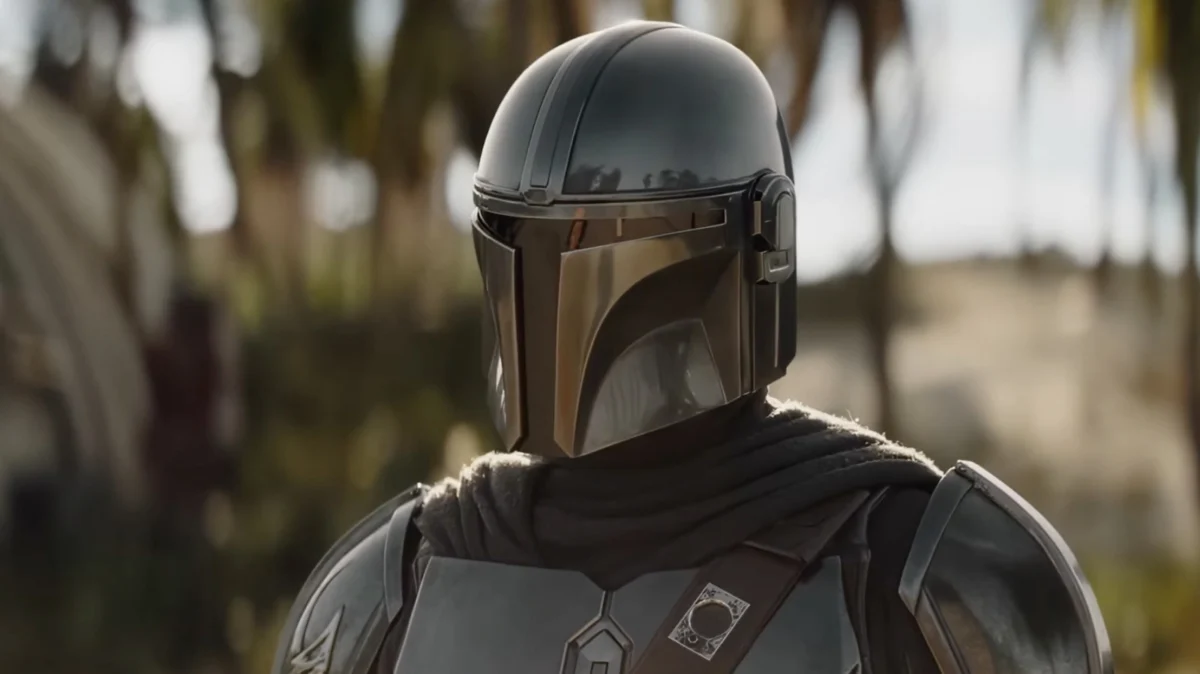
The transition of The Mandalorian from a prestige Disney+ streaming series to a tentpole cinematic feature has brought with it a host of surprises, but perhaps none as unexpected as the return and radical reimagining of a character long relegated to the fringes of Star Wars lore. While trailers for Jon Favreau’s The Mandalorian and Grogu focused heavily on the titular duo’s bond and high-stakes aerial combat, the film’s actual narrative centers on a legacy character whose presence was largely kept under wraps: Rotta the Hutt.
Portrayed by Jeremy Allen White, the adult Rotta—once the infant "Stinky" from the 2008 Clone Wars animated film—emerges not as a burgeoning crime lord, but as a physically formidable gladiator seeking to escape the shadow of his father, Jabba the Hutt. This pivot from infant MacGuffin to a fully realized, "buff" action hero marks a significant shift in how Lucasfilm handles legacy characters within the New Republic era.
Main Facts: A Mission of Necessity and an Unexpected Alliance
The Mandalorian and Grogu picks up in the volatile years following Return of the Jedi. The New Republic struggles to maintain order across a fractured galaxy, while the remnants of the Galactic Empire—led by shadowy figures and desperate Moff-level holdouts—seek to consolidate power in the Outer Rim. In this climate of political fragility and rising lawlessness, Din Djarin (Pedro Pascal) and his apprentice/adopted son, Grogu, find themselves operating as semi-official contractors for the New Republic.
The film’s central plot is set in motion when Din Djarin is tasked with a high-stakes extraction: he must locate Rotta the Hutt and return him to his surviving family members. The Hutt clan, still a potent force in the criminal underworld despite Jabba’s demise, holds the location of a high-ranking former Imperial general. For Din, Rotta is a bargaining chip; for the Hutts, he is a symbol of dynastic continuity.
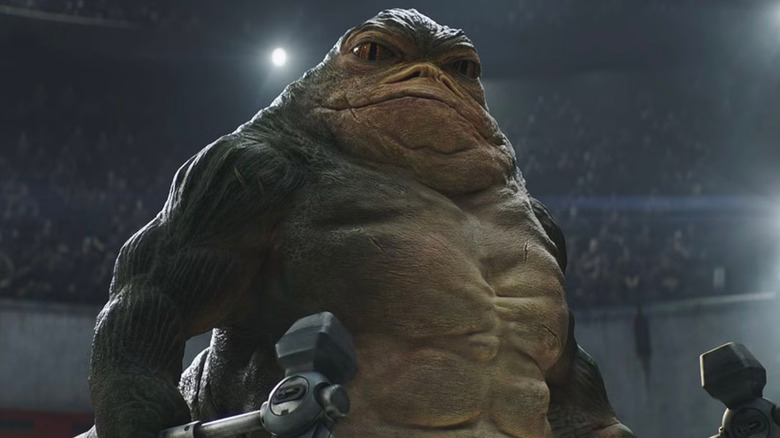
However, the film subverts expectations upon Din’s arrival in the Outer Rim. Rotta is not a pampered prince waiting to be rescued. Instead, he is found enslaved within an underground pit-fighting circuit, forced to battle monstrous creatures for the entertainment of the galaxy’s most depraved syndicates. This version of Rotta, voiced and physically performed (via motion capture) by Jeremy Allen White, is a stark departure from the Hutt anatomy seen previously in the franchise. Characterized by a muscular physique—a "buff Hutt"—Rotta uses his massive strength and a pair of axes to dominate the arena.
The narrative takes a sharp turn when Rotta refuses a simple rescue. He expresses a profound disdain for his father’s legacy of greed and cruelty, choosing the brutal honesty of the fighting pits over a return to a crime family that he believes would eventually dispose of him. This conflict forces Din Djarin and Grogu into an uneasy partnership with the Hutt as they fight their way out of the arena and into a larger conspiracy involving the Imperial remnant.
Chronology: From ‘The Clone Wars’ to the New Republic
To understand the weight of Rotta’s role in the new film, one must look back at the character’s debut in the 2008 animated feature Star Wars: The Clone Wars. At that time, Rotta was a mere infant, kidnapped by Count Dooku and the Separatist Alliance in a ploy to frame the Jedi and seize control of Hutt-controlled space lanes.
The chronology of the character provides a unique lens through which to view the Star Wars timeline:
- The Clone Wars Era (approx. 22 BBY): A baby Rotta is rescued by Anakin Skywalker and his new Padawan, Ahsoka Tano. This mission was pivotal in securing Jabba the Hutt’s neutrality during the early days of the war.
- The Reign of the Empire (19 BBY – 4 ABY): During the height of Jabba’s power on Tatooine, Rotta was largely absent from the narrative, presumably being raised within the Hutt palaces or hidden away to protect the lineage.
- The Post-Endor Vacuum (4 ABY – Present): Following the death of Jabba at the hands of Leia Organa, the Hutt empire fractured. It is during this period of chaos that Rotta was captured and sold into the gladiatorial pits, leading directly into the events of The Mandalorian and Grogu.
By bringing Rotta back as an adult, Jon Favreau bridges the gap between the prequel-era animation and the live-action "Mando-verse," utilizing the character to show the long-term consequences of the galaxy’s shifting power dynamics.
Supporting Data: Evolution of the Hutt Archetype
The decision to portray Rotta as a "buff" gladiator is more than a visual gag; it is a calculated subversion of Star Wars biology. Historically, Hutts have been depicted as sedentary, obese gastropods, relying on slaves and bounty hunters to exert their will. Jabba the Hutt was the epitome of this archetype—a stationary mountain of excess.
Rotta, however, represents a "warrior" class of Hutt that has rarely been seen on screen. His physical conditioning is a direct result of his environment; in the pits, survival depends on mobility and strength. The film takes care to show that while he still possesses the characteristic long, slug-like tail, his upper body is developed for combat.
This evolution serves several narrative purposes:
- Thematic Contrast: It visually separates Rotta from Jabba, reinforcing his desire to forge a different path.
- Action Capability: It allows the character to participate in the high-octane chase sequences and battle scenes that are the hallmark of The Mandalorian franchise.
- Dynamic with Grogu: Surprisingly, the film highlights a tender side to the warrior. Rotta forms a protective bond with Grogu, treating the "foundling" with a gentleness that mirrors the care Anakin and Ahsoka once showed him decades earlier.
While other established characters make appearances—most notably Zeb Orrelios (Steve Blum), the Lasat pilot from Star Wars Rebels—their roles are relatively minor. Zeb serves as a tactical ally, but the emotional and narrative heavy lifting is shared between Din, Grogu, and Rotta.
Official Responses: Favreau on the "Creed" Connection
In an exclusive interview with Empire, director Jon Favreau shed light on the creative inspiration behind Rotta’s transformation. He explicitly compared Rotta’s journey to that of Adonis Creed in the Rocky spin-off series.
"When you’re trying to establish yourself and your name is famous, when you’re Jabba the Hutt’s kid, what does that do? How has that affected his trajectory?" Favreau remarked. "I get a kick out of that. It’s the Creed of the Star Wars universe. You have this massive legacy—a name that everyone fears or hates—and you’re trying to find out if you’re just a shadow of that, or if you can be something entirely your own."
Favreau also noted that casting Jeremy Allen White was essential to bringing a "gritty, blue-collar intensity" to the role. Known for his work in The Bear and The Iron Claw, White brings a sense of weary resilience to Rotta, making the character’s struggle for identity feel grounded despite the fantastical setting.
Implications: A New Direction for the Criminal Underworld
The inclusion of a heroic, or at least anti-heroic, Hutt has significant implications for the future of the Star Wars galaxy. For decades, the Hutts have been synonymous with the "scum and villainy" of the Outer Rim. By giving Rotta a conscience and a distaste for the family business, the film opens the door for a new kind of Hutt leadership—one that might eventually clash with the more traditional, ruthless elements of the Hutt Council.
Furthermore, Rotta’s knowledge of the Imperial general suggests that the criminal underworld will play a vital role in the upcoming conflict against the Imperial Remnant (and eventually, the rise of the First Order). If Din Djarin can successfully navigate the politics of the syndicates through allies like Rotta, the New Republic may find an unlikely, albeit volatile, partner in their quest for galactic stability.
As The Mandalorian and Grogu continues its theatrical run, the conversation has shifted from the mystery of the trailers to the surprising depth of its supporting cast. Rotta the Hutt is no longer just "Stinky" the baby; he is a symbol of the film’s broader theme: that no one, not even a Hutt, is truly beholden to the sins of their father. In a galaxy defined by lineages—Skywalkers, Palpatines, and Fetts—Rotta’s attempt to "stand on his own two legs" (metaphorically speaking) offers a refreshing take on the struggle for self-determination.

Leave a Comment