
The Grand Finale on the Croisette: Park Chan-wook’s Wit and Cristian Mungiu’s Historic Second Palme d’Or
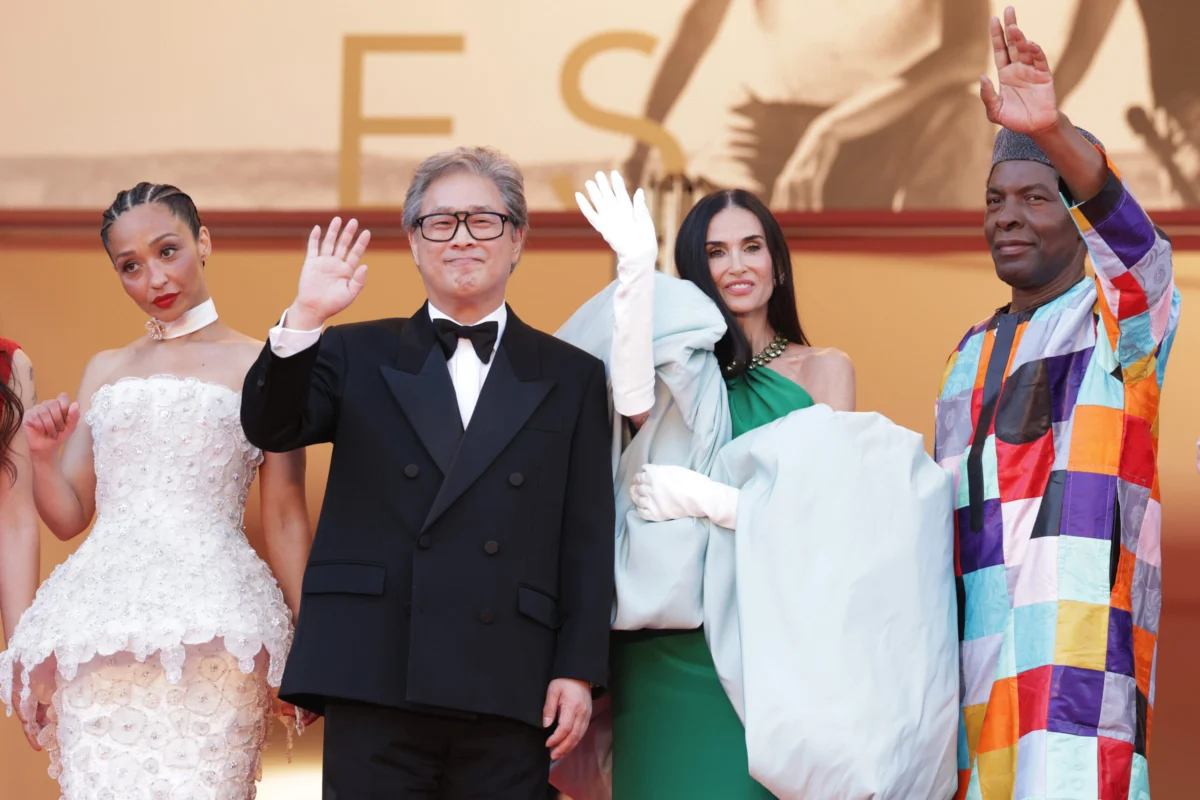
CANNES, FRANCE — As the curtain fell on the 79th Cannes Film Festival, the atmosphere inside the Grand Théâtre Lumière transitioned from high-stakes tension to celebratory relief. While the announcement of the Palme d’Or is traditionally a moment of solemn prestige, this year’s jury president, the visionary South Korean director Park Chan-wook, ensured the closing press conference would be remembered as much for its humor as for its historic verdict.
In a festival defined by a rigorous selection of global cinema, the jury ultimately bestowed the top prize upon Cristian Mungiu’s "Fjord," a complex moral drama that solidified the Romanian filmmaker’s status as one of the greatest auteurs of the 21st century. However, it was Park’s self-deprecating wit regarding his own illustrious but "Palme-less" career that stole the headlines during the final media briefing.
Main Facts: A Night of Wit and High Honors
The primary headline of the evening was the awarding of the Palme d’Or to Cristian Mungiu for "Fjord." Starring the versatile Sebastian Stan and the luminous Renate Reinsve, the film was hailed by critics as a haunting exploration of ethical ambiguity set against the stark, atmospheric backdrop of Northern Europe. This victory marks a monumental milestone: Mungiu has become only the tenth filmmaker in the history of the festival to win the Palme d’Or twice, joining an elite circle that includes Francis Ford Coppola, Ken Loach, and Michael Haneke.
Despite the gravity of Mungiu’s achievement, the post-ceremony press conference was dominated by the charisma of Jury President Park Chan-wook. Flanked by fellow jurors—including Hollywood icon Demi Moore, Academy Award nominee Ruth Negga, and veteran actor Isaach de Bankolé—Park addressed the difficulty of the selection process with a surprising confession.
“To be completely honest, I didn’t want to award the Palme d’Or to any of the films,” Park remarked through a sly smile, drawing a roar of laughter from the international press corps. “Because it’s an award that I myself have never gotten. But,” he added with a theatrical sigh, “I had no other choice.”
The joke highlighted a long-standing irony of Park’s career: despite being one of the most celebrated directors in Cannes history, the top prize has remained elusive. Nevertheless, his leadership of the jury was described by insiders as "meticulous and deeply democratic," ensuring that the 2026 awards reflected a broad spectrum of cinematic excellence.
Chronology: The Road to the 2026 Verdict
The journey to this year’s awards began twelve days ago, as the Croisette welcomed a diverse slate of films ranging from experimental arthouse pieces to big-budget studio contenders.
The Early Favorites
Early in the festival, momentum gathered behind "Fjord." Mungiu’s return to the competition was highly anticipated, coming nearly two decades after his 2007 masterpiece "4 Months, 3 Weeks and 2 Days" first won the Palme d’Or. As the screening concluded, the ten-minute standing ovation signaled that Mungiu was once again a formidable contender.
Park’s Evolution at Cannes
To understand Park Chan-wook’s perspective as Jury President, one must look at his long history with the festival:
- 2004: Park burst onto the global stage when "Oldboy" won the Grand Prix. The film, famously championed by then-Jury President Quentin Tarantino, redefined South Korean cinema for the West.
- 2009: He returned with the vampire priest drama "Thirst," which earned the Jury Prize.
- 2016: "The Handmaiden" premiered to critical acclaim, though it famously went home without a major award despite being a box-office and critical juggernaut.
- 2017: Park served as a member of the jury under Pedro Almodóvar, gaining his first taste of the deliberative process.
- 2022: He won the Best Director prize for the romantic noir "Decision to Leave."
- 2026: His appointment as President marked the pinnacle of his relationship with the festival, positioning him as the arbiter of taste for a new generation of filmmakers.
The Deliberation
Behind closed doors at the Villa Domergue, the jury spent the final 48 hours in intense debate. Reports suggest that while the jury was enamored with several performances, Mungiu’s "Fjord" emerged as the consensus choice for its "unwavering commitment to the human condition."
Supporting Data: The Statistical and Cultural Context
The 2026 awards cycle highlighted several key trends in the film industry, particularly the continued dominance of international co-productions and the rise of "prestige arthouse" distributors like Neon.
The "Two-Palme" Club
Cristian Mungiu’s victory is statistically significant. In the 79-year history of the festival, only a handful of directors have repeated a win. Mungiu’s 19-year gap between his first and second Palme d’Or is one of the longest in history, illustrating his enduring relevance in an ever-changing industry.
Park Chan-wook’s Hollywood Ascent
While Park joked about his lack of a Palme d’Or, his recent data points suggest he is currently at the height of his powers.
- "The Sympathizer": His HBO limited series starring Robert Downey Jr. was a critical hit, bridging the gap between Eastern storytelling and Western production.
- "No Other Choice" (2025): Park’s most recent feature film, distributed by Neon, saw a massive arthouse run in the United States. The film’s success in the U.S. market (grossing significantly above the average for foreign-language dramas) solidified Park’s status as a "bankable auteur."
The Cast of "Fjord"
The success of "Fjord" also underscores the globalization of acting talent. Sebastian Stan, known for his work in the Marvel Cinematic Universe, has increasingly pivoted toward challenging European cinema. Pairing him with Renate Reinsve (who won Best Actress at Cannes in 2021 for "The Worst Person in the World") proved to be a masterstroke, attracting both mainstream attention and critical gravitas.
Official Responses: Voices from the Jury
The press conference provided a platform for the jury to elaborate on their decision-making process and respond to Park’s humorous remarks.
Demi Moore praised Park’s leadership, noting, “Working under Director Park was an education in itself. He looks at film through a lens of both technical perfection and deep emotional resonance. While he joked about wanting the award for himself, he was the first to champion the bravery of Mungiu’s work.”
Ruth Negga emphasized the diversity of the selection: “We didn’t just look for the most beautiful film; we looked for the most necessary film. ‘Fjord’ felt like a story that needed to be told right now. It challenges the viewer in a way that is rare in contemporary cinema.”
Cristian Mungiu, in his acceptance speech and subsequent remarks, remained humble. “Coming back to Cannes is always like coming home,” Mungiu said. “To receive this from a jury led by a master like Park Chan-wook is an honor I cannot put into words. Cinema is not about the awards, but the awards allow us to keep making cinema that doesn’t compromise.”
The festival organizers also released a statement praising the "vibrancy and wit" of this year’s jury, noting that Park Chan-wook’s presence brought a unique energy to the proceedings that helped bridge the gap between traditional festival prestige and modern global appeal.
Implications: What This Means for the Industry
The results of the 79th Cannes Film Festival carry significant implications for the future of global cinema and the awards season ahead.
The "Neon" Effect
The success of both Mungiu’s "Fjord" and Park’s recent "No Other Choice" highlights the pivotal role of boutique distributors. Neon has successfully positioned itself as the premier home for "elevated international cinema." This victory ensures that "Fjord" will receive a massive promotional push in North America, likely positioning it as a frontrunner for the Academy Awards’ Best International Feature category.
The Korean-Hollywood Pipeline
Park Chan-wook’s rise to Jury President signifies the permanent shift of South Korean talent into the global mainstream. No longer relegated to the "World Cinema" category, directors like Park and Bong Joon-ho are now the gatekeepers of the industry. Park’s ability to move between HBO series and high-concept Korean dramas provides a blueprint for other international directors seeking to maintain their artistic voice while working within the Hollywood system.
A New Era for Romanian Cinema
For years, the "Romanian New Wave" was seen as a specific movement of the mid-2000s. Mungiu’s second win proves that this movement has evolved into a lasting pillar of European art. It encourages investment in Eastern European stories and proves that rigorous, minimalist storytelling still has a place on the world’s biggest stage.
Final Reflections
As the attendees depart the Croisette, the image of Park Chan-wook laughing with his fellow jurors serves as a reminder that even in the high-pressure world of international film, there is room for levity. Park may not have his own Palme d’Or yet, but as the 2026 festival proved, his influence on the medium is more profound than any trophy could signify. The "Fjord" victory will be studied for years to come, but the "Park Presidency" will be remembered for its grace, its humor, and its unwavering commitment to the art of the moving image.

Leave a Comment