
The Analyst’s Gambit: Deconstructing the Four-Season Legacy of Tom Clancy’s Jack Ryan
Introduction: The Evolution of a Reluctant Hero
“The world is gray, Jack. Not black and white.” This sentiment, often echoed throughout the four-season run of Prime Video’s Jack Ryan, serves as the foundational thesis for the modern reimagining of Tom Clancy’s most famous creation. When the series debuted in 2018, it faced the daunting task of updating a Cold War icon for a world defined by decentralized terror, cyber warfare, and complex geopolitical shifting.
John Krasinski, the fifth actor to portray the character, stepped into the shoes of a man who is defined not by his physical prowess—though he possesses it—but by his intellect. The Prime Video series, spearheaded by showrunners Carlton Cuse and Graham Roland, sought to return the character to his roots: the CIA analyst. Over the course of 30 episodes, the series transitioned from a localized hunt for a terrorist mastermind to a globe-spanning conspiracy involving rogue states and internal agency corruption.
Main Facts: The Architecture of the Prime Video Series
The Prime Video iteration of Jack Ryan distinguishes itself through its commitment to "boots-on-the-ground" realism and its focus on the "Intel" aspect of espionage. Unlike previous cinematic iterations that often leaned into the "action hero" archetype, the series begins with Jack in a cubicle within the Terror Finance and Arms Division (T-FAD).
Key Pillars of the Series:
- The Analyst Archetype: Jack Ryan is presented as a former U.S. Marine whose career was cut short by a traumatic helicopter crash in Afghanistan. This injury, resulting in a severe back condition and PTSD, informs his preference for data over combat.
- The Mentor Dynamic: The relationship between Ryan and James Greer (played by Wendell Pierce) serves as the show’s emotional and professional anchor. In a departure from the novels, Greer is reimagined as a Black Muslim CIA officer, adding layers of cultural and religious complexity to his character.
- Geopolitical Scope: Each season tackles a distinct global theater—the Middle East, South America, Europe, and Southeast Asia—reflecting the multifaceted nature of modern threats.
Chronology: A Four-Season Tactical Overview
Season 1: The Rise of Mousa bin Suleiman
The series premiere establishes Jack as a low-level analyst who discovers a pattern of suspicious financial transfers totaling $9 million. His "follow the money" approach leads him to Mousa bin Suleiman, a brilliant but radicalized antagonist. Played by Ali Suliman, the character was praised for having a nuanced backstory involving a tragedy that fueled his descent into terrorism. This season focused on the transition of the "desk jockey" into the field, culminating in a race to prevent a biological attack on U.S. soil.
Season 2: The Venezuelan Crisis
Shifting focus to the Western Hemisphere, the second season finds Jack in Venezuela. What begins as an investigation into illegal arms shipments evolves into a confrontation with President Nicolás Reyes, a fictionalized authoritarian leader. This season leaned more heavily into political thriller territory, exploring election interference, corruption, and the potential for nuclear escalation in South America. It also introduced Mike November (Michael Kelly), a cynical but capable Station Chief who would become a series regular.
Season 3: The Sokol Project and the Rogue Analyst
After a hiatus, the third season returned with a high-stakes plot centered on a secret Cold War-era Russian project known as "Sokol" (Falcon). Jack is framed for treason and forced to go on the run across Europe. This season was noted for its prescience, dealing with Russian expansionism and the destabilization of NATO alliances. It highlighted Jack’s commitment to the truth, even when it placed him at odds with his own government.
Season 4: The Convergence of Threats
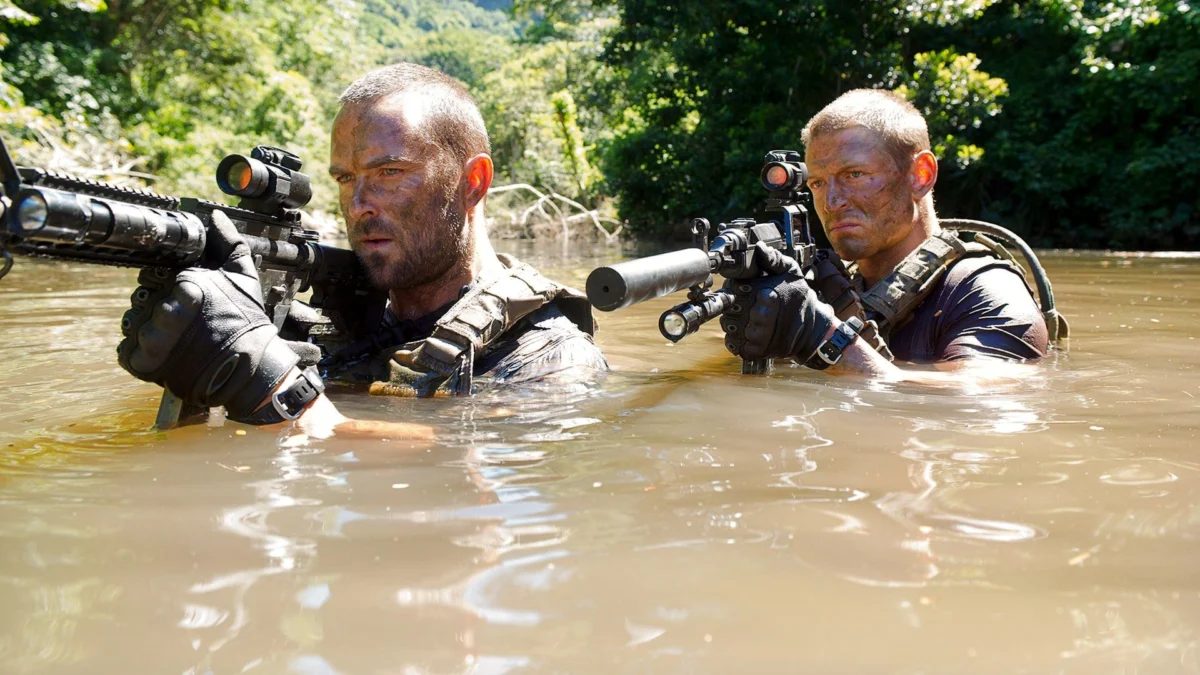
The final season brought the narrative full circle, focusing on internal CIA corruption. Now serving as the Acting Deputy Director, Jack uncovers a "triad" of threats: a rogue CIA faction, a Nigerian criminal network, and a Southeast Asian drug cartel based in Myanmar. This season emphasized the "gray world" mentioned at the start, as Jack had to dismantle the very agency he sought to protect to ensure its integrity.
Supporting Data: The "Analyst Assessment" Methodology
To celebrate the conclusion of the series, Prime Video and the "CIA Analyst Assessment Division" released a comprehensive evaluation for fans, testing their "analyst-level knowledge." This assessment highlights the technical details that the show’s writers prioritized to maintain authenticity.
Technical Accuracy and Detail:
- T-FAD Operations: The show accurately portrays how the CIA monitors the SWIFT banking system and uses financial forensics to track non-state actors.
- Military Background: Jack’s history as a Marine is a constant thread. His back injury isn’t just a plot point; it affects his physical capabilities in fight sequences, grounding the action in reality.
- Language and Culture: The series utilized various languages and on-location filming to enhance the "boots-on-the-ground" feel, moving away from the "Hollywood-ized" versions of foreign locales.
According to viewership data from Amazon, Jack Ryan consistently ranked as one of the platform’s most-watched original series, particularly among demographics interested in military and political procedurals. The show’s success is often attributed to its "dad-thriller" appeal—a genre that prioritizes competence, strategy, and clear moral stakes.
Official Responses and Production Insights
The production of Jack Ryan was a massive undertaking, involving cooperation with various entities to ensure a sense of realism. While the CIA does not officially "endorse" fictional portrayals, the showrunners have noted in interviews that they consulted with former intelligence officers to get the "vibe" of Langley correct.
John Krasinski, who also served as an Executive Producer, spoke extensively about the responsibility of playing the character. "The reason Jack Ryan is so special is that he doesn’t have superpowers," Krasinski noted during the Season 4 press tour. "His superpower is his brain and his morals. In a world that is increasingly complicated, having a character who is trying to do the right thing—even when it’s hard—resonates with people."
Wendell Pierce also commented on the evolution of James Greer, stating that the character’s faith and his history in the field provided a necessary counterweight to Jack’s idealism. "Greer is the one who has seen how the sausage is made," Pierce remarked. "He’s there to make sure Jack doesn’t lose his soul while trying to save the world."
Implications: The Legacy of the "Ryanverse"
The conclusion of the Prime Video series does not necessarily mean the end of the "Ryanverse." The final season introduced Domingo "Ding" Chavez (Michael Peña), a fan-favorite character from the Tom Clancy novels who is a central figure in the Rainbow Six lore. There have been ongoing discussions regarding a spin-off series or a feature film focusing on Chavez and the elite Rainbow unit.
The Tom Clancy Canon
The series remains a gateway for a new generation to discover Tom Clancy’s "techno-thriller" genre. In the original novels, Jack Ryan’s trajectory is even more ambitious than the show’s conclusion. Ryan eventually rises through the ranks to become the National Security Advisor, CIA Deputy Director, and ultimately, the President of the United States.
The Prime Video series chose to end Jack’s journey on a more grounded note, with him stepping away from the agency, but the door remains open for future iterations. The legacy of the show lies in its ability to modernize the character while staying true to Clancy’s core themes:
- The Power of Intelligence: That information is the most potent weapon in modern warfare.
- The Burden of Leadership: The personal cost of making impossible choices.
- Institutional Integrity: The idea that a country is only as strong as the people who serve it with honor.
As the "CIA Analyst Assessment" concludes, the world remains "gray." Through four seasons of Jack Ryan, audiences were shown that while the threats may change—from the deserts of the Middle East to the jungles of Myanmar—the need for a principled analyst to connect the dots remains constant. The Agency thanks you for your service, Jack.
Assessment Summary for Readers:
- Antagonist S1: Mousa bin Suleiman
- Military Branch: U.S. Marine Corps
- S2 Location: Venezuela
- S3 Conspiracy: The Sokol Project (Russia)
- S4 Locations: Nigeria and Myanmar
- Clancy Canon Ending: Jack Ryan becomes President of the United States.



Leave a Comment