
Crisis at the Reina Sofía: Director Manuel Segade Faces Ultimatum Amidst Political and Administrative Turmoil
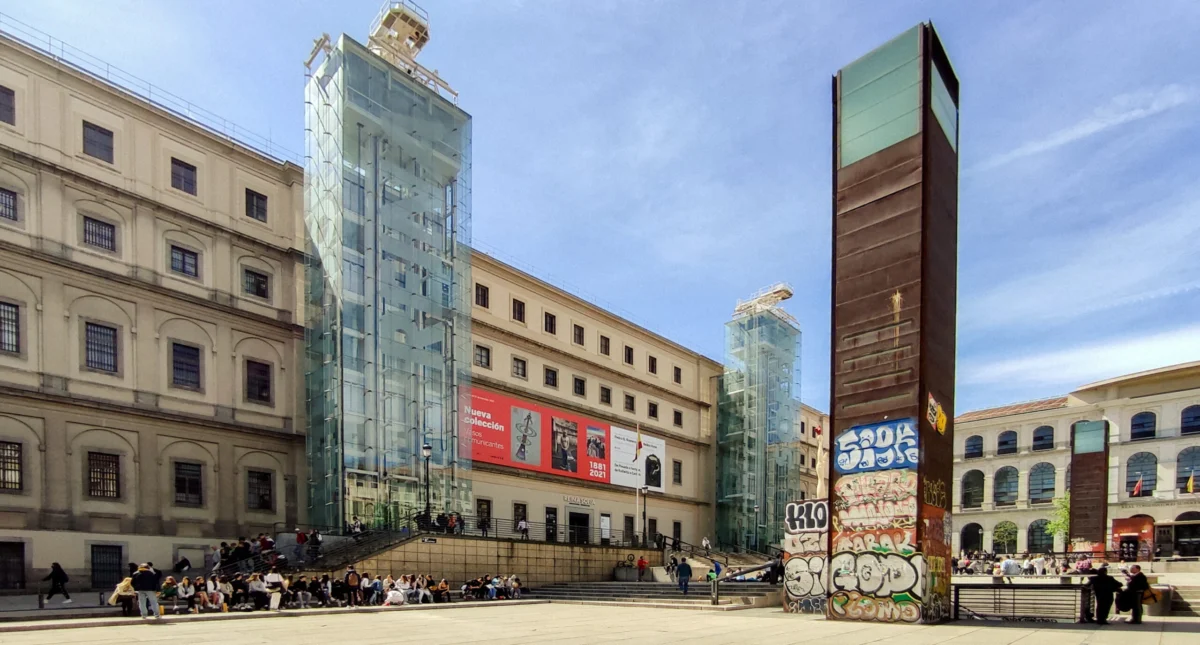
The Museo Nacional Centro de Arte Reina Sofía, the crown jewel of Spain’s contemporary art landscape, is currently embroiled in a high-stakes standoff that threatens the tenure of its director, Manuel Segade. Appointed just over a year ago to lead the institution into a new era of inclusivity and spatial reorganization, Segade now finds himself at the center of a bureaucratic and political firestorm. Lawmakers, backed by conservative and far-right factions, have issued a stark ultimatum: complete a comprehensive physical inventory and financial valuation of the museum’s entire collection by December 31, 2024, or face immediate removal from his post.
This development marks a significant escalation in the tension between Spain’s professional cultural management and its legislative oversight bodies. At stake is not only the leadership of one of the world’s most visited modern art museums but also the stability of an institution that houses Pablo Picasso’s Guernica and over 25,000 other priceless works of art.
Main Facts: An Administrative Ultimatum with Political Teeth
The core of the current crisis lies in a long-standing dispute regarding the cataloging and auditing of the Reina Sofía’s vast holdings. Spain’s Court of Auditors (Tribunal de Cuentas) has historically expressed dissatisfaction with the museum’s internal accounting procedures. However, the transformation of these technical concerns into a terminal threat for the director is a recent and highly controversial development.
The Scope of the Demand
The mandate delivered to Segade is twofold. First, the museum must perform a "physical accounting" of every piece in its collection, which exceeds 25,000 items. This requires verifying the location and condition of each work, including those currently on loan to other institutions or held in off-site storage. Second, the museum is required to provide a comprehensive financial valuation of these assets—a task notoriously difficult in the art world, where market values fluctuate and national treasures are often considered "priceless."
The Deadline and the Penalty
The deadline of December 31, 2024, has been described by museum insiders as "draconian." Given the scale of the collection and the meticulous nature of professional art auditing, a full inventory typically takes years, not months. The threat of removal serves as a powerful lever, suggesting that the pressure on Segade is as much about political accountability as it is about administrative efficiency.
Chronology: From Appointment to Crisis
To understand the current friction, one must look at the timeline of Manuel Segade’s leadership and the parallel evolution of the audit controversy.

- June 2023: Manuel Segade is appointed director of the Reina Sofía, succeeding Manuel Borja-Villel. Segade, formerly the director of the CA2M (Centro de Arte Dos de Mayo), won the position through an international competition, promising a "transformation" of the museum.
- Late 2023 – Early 2024: Segade begins implementing his vision for the museum, which includes a multi-year plan (running until 2028) to renovate the collection galleries. His focus is on decentralizing the narrative of art history and increasing the visibility of marginalized voices.
- April 2024: The museum makes headlines for refusing a request from the Guggenheim Bilbao to borrow Picasso’s Guernica. This decision sparks a diplomatic row with Basque officials and brings the museum’s loan policies into the national spotlight.
- Spring 2024: Segade announces a significant shift in the museum’s acquisition and display strategy, aiming to rectify the gender imbalance in the collection.
- June 2024: Reports emerge from ARTnews and Spanish media outlets that the Court of Auditors’ frustrations have reached a breaking point. Conservative lawmakers in the Spanish Parliament formalize the demand for the year-end inventory, explicitly linking Segade’s job security to the completion of the audit.
Supporting Data: The Scale of the Challenge
The Reina Sofía is not a singular building but a complex institution with massive holdings. The data surrounding the museum illustrates why the inventory demand is such a formidable hurdle.
The Collection by the Numbers
- Total Works: Approximately 26,000 pieces.
- Gender Representation: Historically, only 15% of the collection consists of works by women artists. Under Segade’s current initiatives, women represent nearly 35% of new acquisitions and gallery rotations—the highest percentage in the museum’s history.
- Physical Assets: The museum operates across two primary structures in Madrid: the 18th-century Sabatini building (a former hospital) and the contemporary Nouvel building, designed by Jean Nouvel and inaugurated in 2005.
The Spatial Transformation Plan
Segade’s 2024–2028 plan involves repurposing these spaces. The Sabatini building’s upper floors are being dedicated to the permanent collection, while the Nouvel building and the ground floors of the Sabatini are being transitioned to house temporary exhibitions. This massive internal migration of artworks complicates the physical inventory process, as thousands of pieces are currently in flux between galleries and storage.
Official Responses: A Divided Political Front
The response to the ultimatum has been split along sharp ideological lines, reflecting the broader polarization of Spanish politics.
The Conservative Stance
The Popular Party (PP), Spain’s primary conservative opposition, has been the most vocal proponent of the audit. Representatives of the PP have framed the issue as one of national heritage protection. "The artworks held in the museum—as well as those belonging to it that cannot be duly located—can no longer be allowed to remain at risk," a party spokesperson stated. This rhetoric suggests a fear—or an accusation—that pieces of Spain’s national heritage have been lost or mismanaged during previous administrations.
The Director’s Defense
Manuel Segade has maintained a professional focus on his "transformation" project while acknowledging the administrative burden. In interviews, he has emphasized the importance of the museum’s evolution. Regarding the inventory, the museum administration has pointed out that they are working to rectify years of "inherited" cataloging discrepancies that predated Segade’s arrival.
The Ministry of Culture
Spain’s Minister of Culture, Ernest Urtasun, finds himself in a delicate position. While the Ministry oversees the museum, it must also navigate the demands of the Court of Auditors. Urtasun has recently been involved in discussions regarding the Guernica loan, and the Ministry’s ability to protect Segade from parliamentary pressure remains to be seen.

Implications: Cultural Autonomy vs. Political Oversight
The threat to remove Manuel Segade carries implications that extend far beyond the walls of the Reina Sofía.
1. The Precedent of Political Intervention
If Segade is removed for failing to meet a near-impossible administrative deadline, it sets a precedent that the directors of national cultural institutions can be ousted through "technical" ultimatums. Critics argue this undermines the independence of museum directors, making them vulnerable to the shifting winds of parliamentary politics rather than judging them on their artistic and educational contributions.
2. The Weaponization of Audits
While financial and physical transparency is essential for any public institution, the timing and severity of this demand suggest it may be a "lawfare" tactic. By burying the director in an insurmountable amount of paperwork and logistical hurdles, political opponents can effectively stall his progressive agenda, which includes increased representation for women and a more critical look at Spain’s colonial and artistic history.
3. Institutional Stability
The Reina Sofía is already facing external pressures. A pro-Israel group recently filed a complaint against the museum for "incitement to antisemitic hatred" following its hosting of seminars titled "From the river to the sea. International solidarity with Palestine." Combined with the Basque government’s anger over the Guernica loan, the museum is fighting battles on multiple fronts. A change in leadership at this juncture could lead to a period of institutional paralysis, delaying the 2028 transformation plan and damaging the museum’s international reputation.
4. The Future of the Collection
Finally, the demand for a financial valuation of 25,000 works raises questions about the "commodification" of national art. Assigning a price tag to works like Guernica or the masterpieces of Salvador Dalí and Joan Miró is a complex exercise that some fear could be a prelude to more market-oriented management of the national collection.
As the December 31 deadline approaches, the art world watches closely. Whether Manuel Segade can perform a "miracle of the loaves and fishes" with the museum’s inventory—or whether the Reina Sofía will see its second directorial change in less than two years—remains the most pressing question in the Spanish cultural sector today.


Leave a Comment