Navigating the Uncanny: A Comprehensive Analysis of Kit Anderson’s ‘Safer Places’
The landscape of independent comics is often defined by its ability to traverse the boundaries between the mundane and the surreal. In the latest installment of DoomRocket’s "Required Reading"—a curated selection of essential literature—critic Arpad Okay spotlights Safer Places, a profound new graphic work by artist Kit Anderson. Published by the acclaimed Avery Hill Publishing, Safer Places is more than a collection of stories; it is a visual and narrative exploration of memory, magical realism, and the psychological architecture of "home."
Main Facts: The Emergence of ‘Safer Places’
Safer Places arrives as a significant addition to the contemporary graphic novel canon, priced at $19.99 (£14.99) and published by Avery Hill Publishing, a London-based house known for its commitment to avant-garde and high-quality independent creators. The book is written and illustrated entirely by Kit Anderson, an artist whose work has been described as a deliberate intersection of rustic melancholy and transformative reverie.
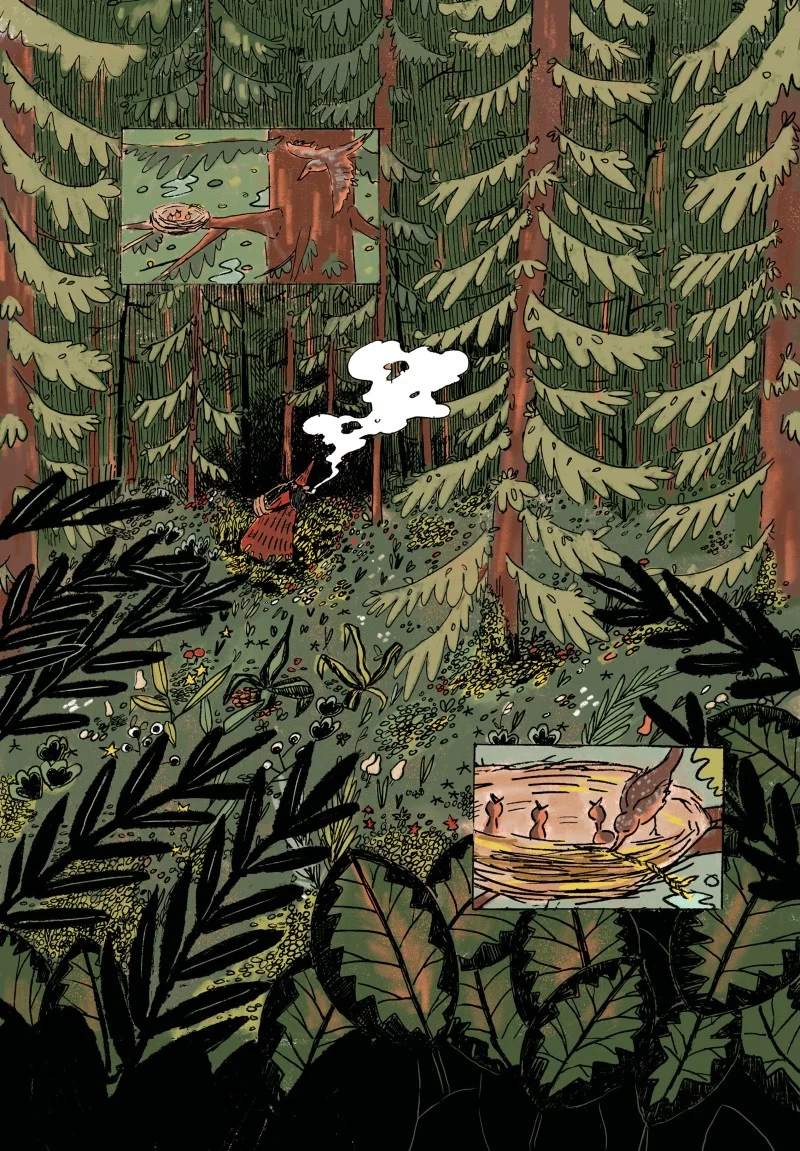
The work is structured as a "chapter-book of dreams," a series of vignettes that blend technological enchantment with eerie tales of nature’s reclamation. It does not follow a traditional linear plot but instead functions as a thematic tapestry. Central to the work are the "guides"—animal figures such as cats and foxes—that lead the reader through a world that feels post-apocalyptic yet vibrant with new growth.
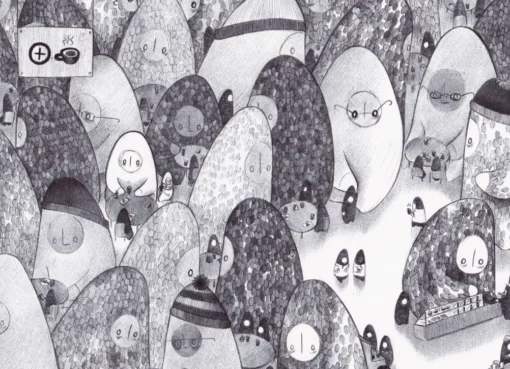
Anderson’s technical approach is a primary focal point. By utilizing inverted color palettes, poetic word placement, and abstract artistic shifts, she creates a reading experience that mimics the submersion of a dream. The book has already garnered critical acclaim for its ability to balance "dream logic" with the grounded, ritualistic realities of everyday life.
Chronology: The Narrative Flow and Artistic Evolution
To understand Safer Places, one must look at the progression of its internal logic. The book does not move through time in a straight line; rather, it moves deeper into the subconscious.
The Initial Invitation
The journey begins with an invitation to "walk with the wizard." This opening sets the stage for a world where the boundary between the human and the magical is porous. Early chapters establish a sense of "deep time," where human structures—like a farm being reclaimed by nature—are seen as temporary, while the "flowered hillside" possesses an ancient, mobile agency.
The Shift to the Ineffable
As the reader progresses, Anderson shifts from recognizable landscapes to the "inside of themselves." This is where the visual chronology becomes most apparent. The art style evolves from grounded, rustic illustrations reminiscent of Ted Stearn to more fluid, cosmic abstractions. This transition represents the characters (and the reader) moving beyond consciousness into a state of "dream submersion."

The Rhythmic Recurrence
In the latter half of the book, themes begin to repeat and fold back on themselves. Anderson employs a "symphonic" structure, where ideas presented in early fragments are reimagined in different contexts. This repetition serves to reinforce the book’s central thesis: that there is no final "end" to the journey of healing or discovery, only a cycle of being led through the wilderness.
Supporting Data: Artistic Influences and Visual Mechanics
Kit Anderson’s work does not exist in a vacuum. Her style is a sophisticated synthesis of several major movements in alternative comics and fine art.
Stylistic Comparisons
Critics have drawn parallels between Anderson and several luminaries of the medium:
- Ted Stearn: Known for Fuzz & Pluck, Stearn’s influence is seen in Anderson’s "rustic melancholy," where simple, almost pastoral settings are imbued with a sense of existential weight.
- Inés Estrada and Julie Doucet: Anderson shares their penchant for "transformative reveries," where the body and the environment are subject to sudden, surreal changes.
- Buk Ulreich: In certain sequences, Anderson departs from traditional cartooning to embrace a painterly style. Her "dream horses" evoke Ulreich’s abstract, cosmic animals, using negative space and "splashes of white" to define form against a dark background.
Technical Innovations
Anderson’s mastery of the mechanics of visual storytelling is evident in her use of form:
- Inversion: To signal a shift into a dream state, Anderson inverts the black-and-white panels. This visual cue forces the reader to recalibrate their perception, effectively "turning the lights out" as the narrative moves inward.
- Poetic Pacing: Rather than relying on traditional speech bubbles, Anderson often allows words to "cascade" over full-page images. This creates a poetic timing that emphasizes the atmosphere over the dialogue.
- Dual Narratives: Some chapters utilize a "mundane narrative" (the everyday rituals of life) juxtaposed against an "exotic narration." This technique highlights the "higher consciousness" that can flow through even the most repetitive human tasks.
Official Responses: Publisher Vision and Critical Reception
The publication of Safer Places by Avery Hill Publishing is a strategic move that aligns with the publisher’s history of fostering "uncanny" voices. Avery Hill has long been a haven for creators who defy genre conventions, and Anderson is seen as a flagship example of this ethos.
The Publisher’s Perspective
Avery Hill’s marketing of the book emphasizes its "meditative" quality. By providing a two-page preview that showcases Anderson’s use of space and shadow, the publisher has positioned the book as a tactile, aesthetic object as much as a narrative one. Their support of Anderson’s "dream logic" suggests a confidence in a market that is increasingly hungry for literary, experimental comics.
Critical Endorsement
DoomRocket’s Arpad Okay characterizes the book as a "love chest" of ideas. The review emphasizes that while the title is Safer Places, the content itself feels "haunted" and "overcome." This critical response suggests that the book’s power lies in its honesty—it does not promise safety, but rather the tools (the "guides") to navigate the lack of it.

Okay also highlights the influence of Raven Lyn Clemens’ The Paradox of Getting Better, noting that Anderson’s work shares the philosophy that nature’s cycle requires us to be led out of the wilderness repeatedly. This intellectual framing elevates the book from a mere comic to a philosophical inquiry into the nature of agency.
Implications: The Evolution of Magical Realism in Modern Comics
The release of Safer Places carries significant implications for the future of the medium and the genre of magical realism.
The Shift from Folk Horror to Gothic Fantasy
While many modern indie comics lean into "folk horror"—using nature as a source of terror—Anderson pivots toward "gothic fantasy." In her work, the "finality of nature" is reconciled with the "longevity of plastic." This creates a unique aesthetic where the suburban and the wild coexist. The implication is a new way of viewing the "Anthropocene" (the age of human impact) not just as a tragedy, but as a surreal, transformative stage of Earth’s history.
The Concept of "No Safer Places"
The book’s most profound implication is its rejection of the "quest’s end." In traditional storytelling, the hero finds a safe haven. Anderson posits that "there are no safer places," only the "importance of the guide." This reflects a modern psychological shift toward viewing mental health and personal growth as ongoing processes rather than destinations. It suggests that comics are becoming a vital space for exploring complex psychological states that prose or film might struggle to capture with the same intimacy.
Agency and the "Comics Symphony"
Finally, the "conversational" nature of the stories within Safer Places—where one story changes the "screensaver-alt-escape-art experiment" that preceded it—points to a new level of sophistication in graphic novel structure. By treating a collection of stories like a musical symphony (where themes are played by different "instruments" or art styles), Anderson provides a blueprint for how creators can explore a single topic, like agency, through multiple, non-linear lenses.
In conclusion, Kit Anderson’s Safer Places is a landmark work for Avery Hill Publishing. It challenges the reader to "let go" of traditional narrative expectations and instead embrace the "ineffability" of the dream state. As a piece of "Required Reading," it stands as a testament to the power of the graphic novel to act as a guide through the haunted, beautiful, and ever-changing landscapes of the human mind.