
The Walking Dead Shrinks to Pocket Size: A Deep Dive into "Surrounded"
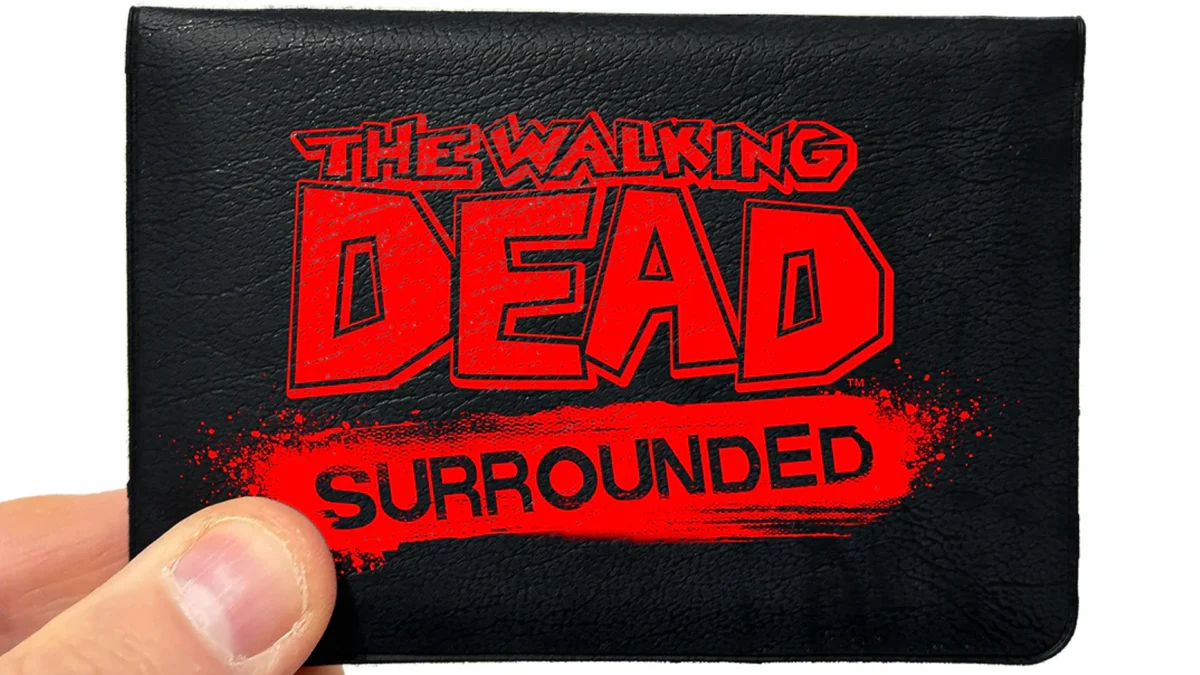
The relentless, post-apocalyptic world of Robert Kirkman’s The Walking Dead has been reimagined countless times across various media, from its foundational comic books to acclaimed television series and immersive video games. Now, the sprawling struggle for survival against hordes of the undead and the equally perilous human element is being distilled into its most compact form yet: a cooperative "wallet game" titled The Walking Dead: Surrounded. This new tabletop experience promises to deliver the franchise’s signature tension and strategic depth in a package small enough to fit in your pocket, offering a unique blend of accessibility and thematic immersion.
Main Facts: A New Chapter in Survival
The Walking Dead: Surrounded is a cooperative card game designed for one to four players, challenging them to navigate an ever-growing map, scavenge for vital resources, and manage the relentless threat of Walkers. Developed by the renowned Button Shy Games, known for their innovative "wallet games," in collaboration with Skybound Entertainment, the game encapsulates the essence of The Walking Dead within a mere handful of cards.
Players must work together to explore dangerous locations, each potentially yielding life-saving supplies or introducing new threats. A core mechanic involves recruiting survivors and leaders, who bolster the group’s numbers and provide unique abilities. However, the addition of leaders also introduces an intriguing layer of internal conflict, as their personalities and objectives might clash. All the while, the eponymous Walkers continuously spread across the map, demanding constant vigilance and tactical resource allocation to keep their numbers in check.
This highly portable game is available now on the Button Shy Games website for £10 ($12), with an expansion titled Under Siege also offered for £4 ($5). Its release marks an exciting venture for the beloved franchise into the burgeoning world of ultra-compact tabletop gaming, promising an engaging experience that can be carried anywhere.
Chronology: The Enduring Legacy of The Walking Dead
The journey of The Walking Dead from a niche comic series to a global cultural phenomenon is a testament to its compelling narrative and enduring themes. The Walking Dead: Surrounded is but the latest iteration in a rich history of adaptations that have captivated audiences across diverse platforms.
Origins in the Undead Pages: The Comic Book Saga
The saga began in October 2003 with the debut of The Walking Dead comic book series, created by writer Robert Kirkman and artist Tony Moore (later replaced by Charlie Adlard). Published by Image Comics, the series quickly distinguished itself from typical zombie narratives. Instead of focusing solely on gore and jump scares, Kirkman delved deep into the psychological toll of a post-apocalyptic world, exploring themes of morality, leadership, loss, and the ever-present question of what it truly means to be human when society collapses.
The narrative followed Rick Grimes, a sheriff’s deputy who awakens from a coma to find the world overrun by the undead. His quest to find his family and establish a safe haven led to the formation of a resilient, albeit fractured, group of survivors. Over its 193 issues, which concluded abruptly in July 2019, the comic series garnered critical acclaim for its character development, shocking plot twists, and unflinching portrayal of human depravity and resilience. It established the core tenets of the franchise: the Walkers are a constant threat, but the most dangerous monsters are often the living. Its success laid the groundwork for all subsequent adaptations, defining the tone and universe for millions of fans worldwide.
A Television Phenomenon: From Page to Screen
The comic’s success naturally attracted the attention of Hollywood, leading to the development of an AMC television series that premiered on Halloween night in 2010. Developed by Frank Darabont, The Walking Dead TV show became an immediate critical and commercial hit. It brought Kirkman’s grim vision to a massive global audience, transforming characters like Rick Grimes (Andrew Lincoln), Daryl Dixon (Norman Reedus), Michonne (Danai Gurira), and Carol Peletier (Melissa McBride) into household names.
The show broke numerous cable ratings records, becoming one of the most-watched non-sports programs in cable history. Its blend of horror, drama, and character-driven storytelling resonated deeply, sparking water cooler conversations and fostering a passionate fanbase. The success of the main series led to a prolific expansion of the television universe, including several spin-off shows:
- Fear the Walking Dead (2015-present): Explored the initial days of the apocalypse in a different part of the USA.
- The Walking Dead: World Beyond (2020-2021): Focused on a younger generation coming of age in the post-apocalyptic world.
- Tales of the Walking Dead (2022): An anthology series presenting standalone stories within the universe.
- The Walking Dead: Dead City (2023-present): Follows Maggie and Negan’s journey to a post-apocalyptic Manhattan.
- The Walking Dead: Daryl Dixon (2023-present): Charts Daryl’s unexpected journey across France.
- The Ones Who Live (2024): Reunited fan-favorite characters Rick Grimes and Michonne, delving into the mysterious Civic Republic Military (CRM).
These spin-offs demonstrate AMC’s commitment to expanding the franchise’s narrative scope and ensuring its continued relevance, cementing its status as a multimedia juggernaut.
Venturing into Interactive Narratives: The Video Game Frontier
Beyond comics and television, The Walking Dead found a powerful new medium in video games, most notably through Telltale Games’ episodic adventure series. The Walking Dead: Season One, released in 2012, was a watershed moment for narrative-driven gaming. It focused on new characters, particularly the convict Lee Everett and the young Clementine, and emphasized player choice and moral dilemmas over combat. The game’s profound emotional impact, compelling storytelling, and difficult decisions garnered widespread critical acclaim, winning numerous Game of the Year awards and proving the viability of choice-based narrative experiences.
The success of Telltale’s series led to multiple seasons and spin-offs, further enriching the lore and demonstrating the franchise’s adaptability. Other video game adaptations have also explored different genres:
- Overkill’s The Walking Dead (2018): A co-op first-person shooter set in Washington D.C.
- The Walking Dead: Saints & Sinners (2020): A critically acclaimed virtual reality survival horror game that put players directly into the action.
- Various mobile games and other smaller-scale titles that offered different takes on survival, strategy, and resource management within the TWD universe.
These ventures into video games underscore the franchise’s ability to translate its core themes of survival, character relationships, and difficult choices into interactive experiences, offering fans new ways to engage with the apocalypse.
Tabletop Presence Before "Surrounded": A History of Board Games
While Surrounded represents a fresh, compact take on the TWD universe for tabletop players, it is not the franchise’s first foray into board games. The tabletop realm has seen several adaptations, each attempting to capture the series’ unique blend of horror and human drama:
- The Walking Dead Board Game (2011, by Z-Man Games): One of the earlier adaptations, this game focused on players trying to survive and complete objectives while avoiding Walkers.
- The Walking Dead: All Out War (2016, by Mantic Games): A skirmish miniature game that allowed players to recreate tactical battles between survivor groups and hordes of Walkers using highly detailed miniatures. It emphasized scenario-based play and tactical positioning, closely mirroring the comic book’s gritty action.
- The Walking Dead: No Sanctuary (2017, by Cryptozoic Entertainment): A cooperative game that put players in the shoes of iconic characters, facing moral choices and battling Walkers in story-driven scenarios.
These earlier titles demonstrated the potential for The Walking Dead to thrive in the tabletop space, offering fans different avenues for strategic engagement. However, The Walking Dead: Surrounded distinguishes itself by embracing a minimalist "wallet game" philosophy, making it arguably the most accessible and portable physical adaptation to date. It broadens the franchise’s reach, offering a low-barrier-to-entry option for both seasoned board gamers and casual fans looking for a quick, thematic experience.
Supporting Data: Diving into "Surrounded" Mechanics and Design
The unique appeal of The Walking Dead: Surrounded lies in its ability to condense the complex narrative and thematic elements of a sprawling franchise into a remarkably small package. This feat is achieved through the ingenious design principles of Button Shy Games, combined with Skybound Entertainment’s commitment to thematic authenticity.
Button Shy Games: Masters of the Miniature
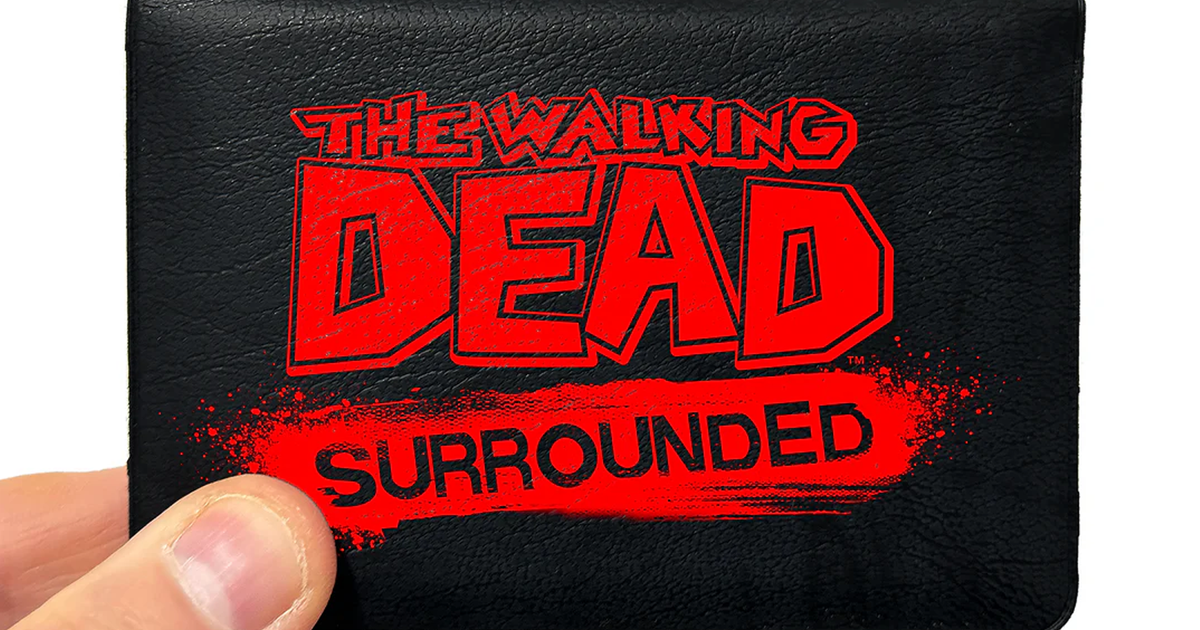
Button Shy Games has carved out a distinctive niche in the board game industry by specializing in "wallet games." These are ultra-portable games, often consisting of just 9 to 18 cards, designed to fit into a small vinyl wallet. Their philosophy centers on maximum replayability and strategic depth from minimal components. Titles like Sprawlopolis, Agropolis, and Circle the Wagons have earned them a reputation for creating elegant, brain-teasing experiences that defy their small size.
For The Walking Dead: Surrounded, Button Shy applied this expertise to a beloved IP. The challenge was to distill the essence of a world-ending zombie apocalypse, replete with character drama, resource scarcity, and constant threat, into a handful of cards. This involved crafting multi-use cards and designing mechanics that are simple to grasp but offer significant strategic choices. The choice of a cooperative format further enhances the "wallet game" ethos, as players can easily discuss strategies and manage the shared struggle in a small, intimate setting, perfectly aligning with the portability.
Skybound Entertainment: Guardians of the Lore
Skybound Entertainment, founded by Robert Kirkman, is the multiplatform entertainment company responsible for overseeing The Walking Dead franchise across various media. Their involvement in Surrounded is crucial, ensuring that despite its minimalist format, the game remains true to the spirit and lore of the original comics and subsequent adaptations. Skybound acts as the guardian of the intellectual property, ensuring that character portrayals, thematic elements, and overall tone align with the established universe.
This partnership is a prime example of how major IPs can effectively collaborate with specialized game designers. Button Shy brings the mechanical ingenuity and experience in creating compact, engaging games, while Skybound provides the narrative framework, thematic integrity, and brand recognition. The result is a game that not only plays well but also feels like The Walking Dead, a critical factor for fan engagement. Their oversight helps translate the grit, desperation, and moral ambiguities of the TWD universe into actionable game mechanics, ensuring that even a small card game can evoke the familiar tension of the apocalypse.
Gameplay Deep Dive: Surviving the Apocalypse in Your Pocket
The Walking Dead: Surrounded offers a surprisingly rich and thematic experience despite its limited components. The core gameplay loop revolves around exploration, resource management, and strategic defense.
Cooperative Nature and Player Interaction: The game is designed for one to four players, emphasizing collective decision-making and shared responsibility. Players must communicate effectively, strategizing together on which locations to explore, which resources to prioritize, and how best to mitigate the ever-present Walker threat. The cooperative nature reinforces one of The Walking Dead‘s central themes: survival is often a group effort, fraught with internal and external challenges.
Map Exploration and Discovery: The "ever-growing map" mechanic is central to the game’s sense of discovery and danger. Players will reveal new location tiles, each presenting unique opportunities and risks. Some locations might offer a bounty of resources, crucial for long-term survival, while others could be swarming with Walkers or present difficult choices. The tension of flipping a new tile, unsure of what lies beneath, perfectly mirrors the precariousness of life in the apocalypse. This procedural generation of the map ensures high replayability, as no two games will unfold in exactly the same way.
Resource Management: The Scramble for Survival: Resources are the lifeblood of the survivors. While the specific types of resources aren’t fully detailed in the initial announcement, typical survival game elements often include food, medicine, ammunition, or crafting materials. Players must scavenge these from locations, using them to heal injured survivors, clear paths, build defenses, or fuel special abilities. Strategic allocation of scarce resources is paramount, as a misstep could lead to dire consequences.
Recruiting Survivors and Leaders: Strengthening the Group: As players explore, they have the opportunity to recruit new members to their group.
- Survivors: These individuals add to the group’s overall strength, potentially contributing points towards victory or offering passive bonuses to scavenging efforts. They represent the common folk trying to make it through, adding a sense of scale to the group.
- Leaders: These are more significant additions, providing "powerful abilities" that can dramatically alter the game’s flow. A leader might grant extra actions, provide combat bonuses against Walkers, or unlock unique strategic options. However, the intriguing twist is that leaders "could be fighting against each other." This introduces a layer of internal conflict and management, forcing players to consider not just the utility of a leader’s ability, but also their potential negative impact on group cohesion. This mechanic cleverly translates the human drama and factionalism of the TWD universe into the gameplay, reflecting how interpersonal conflicts are often as dangerous as the Walkers themselves.
The Walker Threat: A Constant Onslaught: The iconic Walkers are, of course, a central antagonist. The game models their relentless spread across the map. Players draw map tiles featuring Walkers, and if left unchecked, these undead can quickly overrun areas, making them inaccessible or increasing the difficulty of acquiring resources. The group must strategically utilize their acquired resources, survivors, and leaders to keep the Walkers at bay, whether through direct confrontation, avoidance, or by establishing temporary safe zones. Managing this escalating threat is key to survival, embodying the ever-present danger that defines The Walking Dead.
Victory and Loss Conditions: While not explicitly detailed, a cooperative survival game like Surrounded likely involves achieving a certain objective (e.g., gathering enough resources to establish a permanent safe haven, surviving for a set number of rounds, or reaching a specific extraction point) before a loss condition is met (e.g., too many Walkers on the map, running out of critical resources, or all survivors being overwhelmed). The implied goal of "extracting as many resources as they can from each area" suggests a scoring system, or perhaps a series of objectives that contribute to a final successful outcome.
The compact design of The Walking Dead: Surrounded proves that compelling gameplay and rich thematic immersion are not solely dependent on expansive components. It’s a testament to clever design and focused execution.
Official Responses and Developer Insights
While specific, direct quotes from the development team regarding The Walking Dead: Surrounded are not widely available beyond the initial product description, we can infer the motivations and perspectives of both Button Shy Games and Skybound Entertainment based on their known operational philosophies and the game’s design.
Statements from Button Shy and Skybound on the Vision
For Button Shy Games, the opportunity to work on The Walking Dead likely presented an exciting design challenge: how to distill a massive, narrative-rich intellectual property into their signature "wallet game" format. Their approach would undoubtedly have focused on elegant mechanics, multi-use cards, and streamlined rules that capture the essence of TWD without overcomplicating the experience. One can imagine their designers emphasizing the portability and accessibility, aiming to create a game that fans could literally carry with them, ready for a quick session of apocalyptic survival. Their goal would be to prove that a small game can still deliver a big experience, rich with thematic resonance and strategic depth. They likely sought to craft a game where every decision matters, and the minimalist components force players to think critically and cooperatively.

Skybound Entertainment, on the other hand, would have been primarily concerned with thematic fidelity and ensuring the game authentically represents The Walking Dead universe. Their involvement would ensure that the narrative elements, character archetypes (survivors, leaders), and the portrayal of the Walkers aligned with the established canon. For Skybound, this collaboration represents a strategic expansion of the TWD brand into a highly accessible and innovative segment of the tabletop market. They would see Surrounded as a way to introduce the franchise to new audiences who might be intimidated by larger, more complex board games, or simply to offer existing fans a fresh, portable way to engage with the world they love. Their emphasis would be on capturing the core themes of desperation, teamwork, internal conflict, and the constant struggle against both the living and the dead, ensuring that even in a small card game, the soul of The Walking Dead shines through.
Target Audience: Who is "Surrounded" For?
The Walking Dead: Surrounded is strategically positioned to appeal to a broad demographic, effectively bridging several communities:
- Dedicated Walking Dead Fans: For long-time followers of the comics, TV shows, and video games, Surrounded offers a new and novel way to experience the familiar world. Its thematic accuracy, ensured by Skybound, will resonate with those who appreciate the franchise’s lore and characters. It’s an accessible piece of merchandise that doubles as an engaging activity.
- Casual Gamers and Travelers: The "wallet game" format is inherently attractive to individuals who enjoy games but lack the space, time, or inclination for elaborate setups. Its portability makes it an ideal companion for travel, waiting rooms, or impromptu game nights. It offers a quick, engaging experience without a significant commitment of time or table space.
- Board Game Enthusiasts and Button Shy Collectors: Fans of Button Shy Games will be drawn to Surrounded for its innovative design and the unique challenge of adapting a major IP within their minimalist framework. It offers a new entry in their celebrated line of compact games, promising clever mechanics and replayability.
- Solo Players: With a 1-4 player count, Surrounded is also an excellent option for solo gaming. The cooperative nature translates well to a single player managing multiple roles or simply striving for a high score, offering a challenging puzzle for those who enjoy solitary strategic experiences.
By catering to these diverse groups, The Walking Dead: Surrounded expands the reach of both the franchise and the "wallet game" concept, demonstrating how thoughtful design can create a universally appealing product.
Implications: The Future of Tiny Tabletop Gaming and IP Adaptation
The release of The Walking Dead: Surrounded is more than just another game in a popular franchise; it’s a significant indicator of several evolving trends in the tabletop gaming industry and the broader entertainment landscape.
The Rise of "Wallet Games": Accessibility and Innovation
Button Shy Games has been at the forefront of the "wallet game" movement, championing the idea that engaging and deep gameplay does not require a large box, numerous components, or an intimidating price tag. The Walking Dead: Surrounded further legitimizes this niche, showcasing that complex themes and strategic decisions can be distilled into a few carefully designed cards.
The appeal of these compact games is multifaceted:
- Accessibility: Their low price point (£10/$12 for Surrounded) makes them an easy impulse purchase.
- Portability: Fitting into a pocket or small bag, they are ideal for travel, camping, or simply playing on a small café table.
- Reduced Barrier to Entry: For newcomers to board gaming, a small card game is far less daunting than a large box full of miniatures and rulebooks.
- Sustainability: Less material means a smaller environmental footprint, an increasingly important consideration for consumers.
The success of Surrounded will likely encourage more designers to explore minimalist game design and potentially inspire other publishers to invest in this growing segment of the market. It proves that innovation isn’t always about bigger and more complex, but often about smarter and more efficient design.
IP Adaptation in Niche Markets: Versatility Beyond Blockbusters
Historically, major intellectual properties like The Walking Dead were typically adapted into large-scale, often expensive, board games or video games, aiming for mass-market appeal. Surrounded represents a growing trend where beloved franchises are finding homes in more specialized or niche segments of the gaming world.
This demonstrates the incredible versatility of strong IPs. It shows that the core narrative and thematic elements of a franchise can resonate across diverse game mechanics and scales. By partnering with a specialist like Button Shy Games, Skybound Entertainment can tap into a dedicated community of gamers who appreciate clever design and portability, reaching an audience that might not typically engage with a larger, more traditional TWD board game. This strategy allows for broader market penetration and keeps the franchise fresh and relevant across an even wider spectrum of entertainment experiences. It validates the idea that even the most massive and grim narratives can be effectively conveyed through abstract and compact mechanics, challenging conventional notions of what a licensed game can be.
Impact on The Walking Dead Franchise: Sustained Relevance
For The Walking Dead franchise itself, Surrounded is another strategic move in its impressive multimedia expansion. By continuously diversifying its presence across various platforms – comics, TV, video games, miniatures games, and now wallet games – the franchise ensures its sustained relevance and broad appeal. Each new adaptation serves to:
- Re-engage existing fans: Offering fresh perspectives and new ways to interact with the beloved universe.
- Attract new audiences: The accessibility of a wallet game might introduce The Walking Dead to individuals who have never consumed the comics, shows, or larger games.
- Reinforce core themes: Even in a simplified format, Surrounded reinforces the franchise’s enduring messages about survival, community, moral dilemmas, and the constant threat of both the living and the dead.
This continuous evolution and adaptation ensure that The Walking Dead remains a vibrant and dynamic narrative universe, capable of captivating successive generations of fans.
Future Prospects: More Expansions and Collaborations
The immediate availability of the Under Siege expansion for The Walking Dead: Surrounded suggests a strong confidence in the game’s potential for growth and ongoing support. This bodes well for the future, hinting at the possibility of further expansions that could introduce new characters, locations, threats, or mechanics, deepening the gameplay and extending its longevity.
Furthermore, the success of this collaboration could pave the way for other major IPs to explore partnerships with Button Shy Games or other niche tabletop publishers. Imagine a Star Wars wallet game focused on a daring escape, or a Dungeons & Dragons micro-adventure. The Walking Dead: Surrounded serves as a compelling case study, demonstrating that ingenuity in design, combined with a powerful brand, can create highly successful and enduring products in unexpected formats. As the tabletop gaming market continues to expand and diversify, the appetite for innovative, accessible, and thematically rich experiences like Surrounded is only set to grow.



Leave a Comment