
A Stone Age Revolution: Flat Hill Games Unveils OogaBonk, the Next Evolution in Physics-Based VR Social Sandboxes
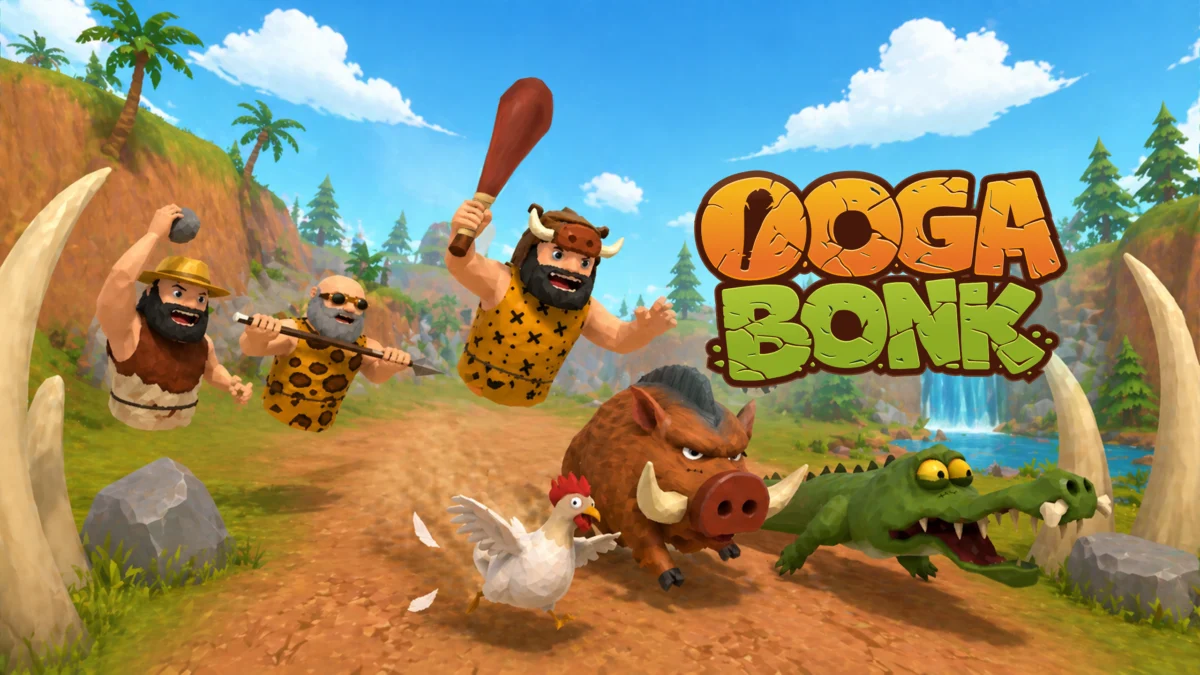
The landscape of virtual reality gaming is undergoing a seismic shift, moving away from traditional scripted experiences toward chaotic, physics-driven social playgrounds. Leading this charge is the newly announced title OogaBonk, a prehistoric-themed VR sandbox developed by the indie studio Flat Hill Games. By blending the high-energy "arm-swinging" locomotion popularized by industry giants like Gorilla Tag with deep customization and persistent base-building, OogaBonk seeks to redefine what social interaction looks like in a digital, three-dimensional space.
Main Facts: The Dawn of OogaBonk
Flat Hill Games has officially lifted the veil on OogaBonk, a multiplayer title designed specifically for standalone VR platforms, such as the Meta Quest series and Pico headsets. At its core, the game is a "prehistoric social sandbox" that drops up to eight players into a vibrant, primitive world filled with lush jungles, active volcanoes, and interactive wildlife.
The game’s primary draw is its movement system. Eschewing the standard thumbstick-based "teleportation" or "smooth locomotion" that often causes motion sickness in new users, OogaBonk utilizes physics-based arm locomotion. This requires players to physically swing their arms and push off virtual surfaces to navigate the environment, creating a sense of tactile immersion and physical exertion.
Key features of OogaBonk include:
- Multiplayer Social Play: Lobby support for up to eight players, fostering a tight-knit but chaotic community atmosphere.
- Environmental Diversity: A prehistoric playground featuring varied biomes, including volcanic regions and dense tropical jungles.
- Persistent Customization: Unlike many of its competitors, OogaBonk emphasizes "player bases." These are customizable spaces where users can express their creativity and maintain a sense of progression.
- Collectible Systems: A focus on exploration and the acquisition of prehistoric-themed cosmetics and items.
Chronology: From Gorilla Tag’s Shadow to a New Horizon
To understand the emergence of OogaBonk, one must look at the timeline of the "physics-social" genre in VR. The lineage began in earnest with the 2021 release of Gorilla Tag. Developed by Another Axiom, Gorilla Tag became an overnight sensation, proving that simple, physics-based movement could sustain a massive player base without the need for high-fidelity graphics.
Following the success of Gorilla Tag, the VR market saw a surge in "clones" and "successors." In late 2023 and early 2024, titles like Animal Company and Yeeps entered the fray, each adding a unique twist—such as cooperative "extraction" mechanics or hide-and-seek elements—to the established arm-locomotion formula.
The announcement of OogaBonk in mid-2024 marks the next stage of this evolution. Flat Hill Games released an official reveal trailer (approximately 51 seconds in length) that showcased the game’s kinetic energy. The trailer highlighted caveman-style avatars leaping across ravines, interacting with primitive tools, and congregating in tribal-like social hubs. While a definitive release date has not been set, the studio has confirmed that development is focused on optimizing the experience for the mobile processors found in standalone VR headsets, indicating a launch window likely within the next twelve months.
Supporting Data: The Multi-Million Dollar "Ape" Economy
The decision to develop a game like OogaBonk is backed by staggering market data. The genre it inhabits is currently the most profitable and high-retention sector of the VR industry, particularly among the "Gen Z" and "Gen Alpha" demographics.
The Gorilla Tag Benchmark
- Player Base: As of 2024, Gorilla Tag has surpassed 10 million unique players.
- Revenue: The game has generated over $100 million in revenue, largely through small-scale cosmetic microtransactions.
- Retention: On the Meta Quest store, physics-based social games consistently rank in the "Top Played" categories, often outperforming AAA titles with multi-million dollar marketing budgets.
The Rise of Standalone VR
The "standalone" nature of OogaBonk is a strategic necessity. Data from International Data Corporation (IDC) suggests that standalone headsets account for over 80% of the VR market share. By targeting these platforms, Flat Hill Games is tapping into a hardware ecosystem that prioritizes accessibility and wireless freedom—two factors that are essential for the wide-arm movements required by the game’s locomotion system.
Comparative Success of Recent Hits
- Yeeps: This title successfully integrated "building" mechanics into the movement-heavy genre, seeing a massive spike in concurrent users within its first month of Early Access.
- Animal Company: Focused on the "proximity chat" horror-comedy trend, demonstrating that the VR community is hungry for social experiences that allow for emergent, unscripted gameplay.
Official Responses: Flat Hill Games’ Vision for Personal Progression
While many games in this genre are criticized for being "one-note"—focusing solely on a single game mode like Tag or Hide-and-Seek—Flat Hill Games has signaled that OogaBonk will offer more depth.
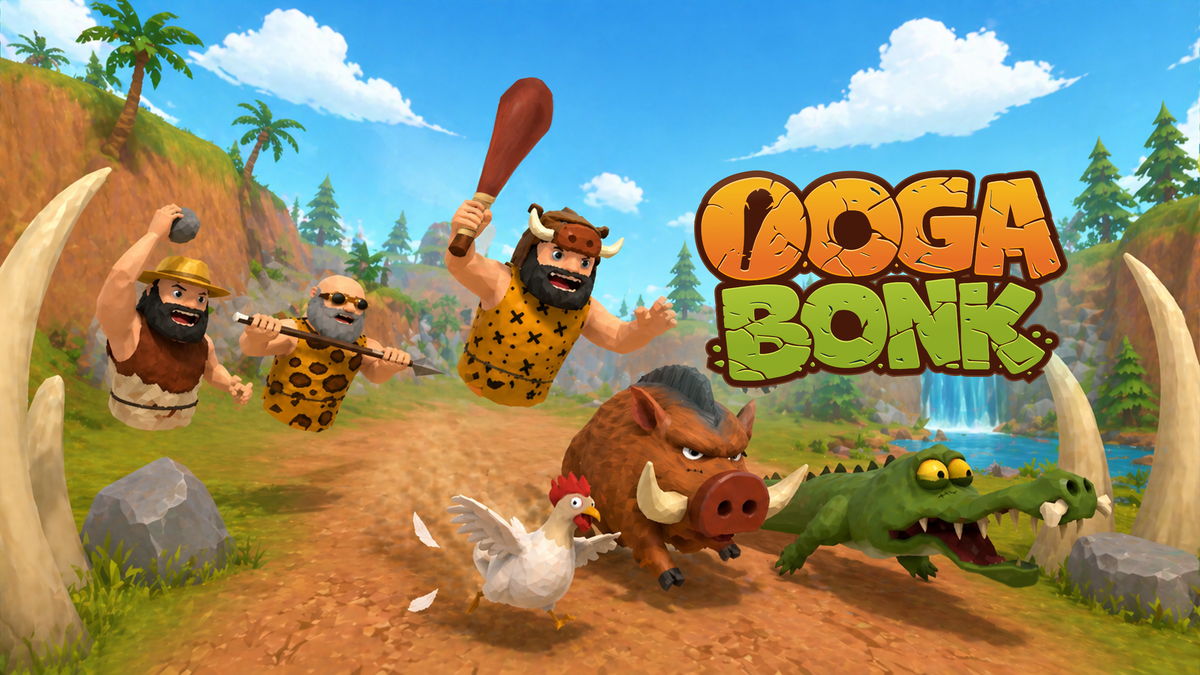
In their announcement communications, the studio emphasized that OogaBonk is intended to be more than just a playground; it is a world to inhabit. The inclusion of customizable player bases is a direct response to player feedback in other social VR apps where users felt they lacked a sense of "ownership" or "home."
"What sets OogaBonk apart is the emphasis on personal progression and persistent bases," a spokesperson for the project noted. By allowing players to collect items and build out their own caveman dwellings, the developers are aiming for higher long-term retention. This "homesteading" mechanic suggests an influence from titles like Minecraft or Animal Crossing, but reimagined through the lens of prehistoric chaos and VR physicality.
The studio has also addressed the "chaos" factor, noting that while the game is designed to be frantic, they are implementing social tools to ensure the community remains welcoming. This is a critical hurdle for social VR, which often struggles with moderation in unscripted environments.
Implications: The Future of Social Interaction in Virtual Reality
The announcement of OogaBonk carries significant implications for the broader VR industry and the concept of the "Metaverse."
1. The Death of the "Joystick" for Social VR
OogaBonk reinforces the trend that traditional gaming inputs (like thumbsticks) are becoming secondary in VR social spaces. "Natural" movement—using the body to interact with the world—is becoming the standard. This shift makes VR more intuitive for non-gamers and reduces the "barrier to entry" for physical engagement.
2. The Move Toward Persistent UGC (User-Generated Content)
By focusing on customizable bases, OogaBonk is moving toward a UGC model. In the future, the value of a VR game may not be the content the developers provide, but the tools they give players to create their own content. If OogaBonk allows for complex base-building, it could become a hub for creative expression, similar to Roblox but with the added immersion of VR.
3. Market Saturation vs. Innovation
The VR market is currently seeing a flood of "Gorilla-style" games. The success of OogaBonk will serve as a litmus test: Can a game succeed by simply refining a popular mechanic, or is the market reaching a saturation point? By adding "progression" and "exploration," Flat Hill Games is betting that the audience is ready for a "version 2.0" of the social sandbox—one that offers more than just a quick adrenaline rush.
4. The Demographic Shift
The prehistoric, "chaotic" aesthetic of OogaBonk is clearly aimed at a younger audience. This demographic is the primary driver of VR growth today. The implications are clear: the future of VR isn’t just high-end flight simulators or gritty military shooters; it’s colorful, loud, social, and physically active playgrounds where the "game" is secondary to the "vibe."
Conclusion: A Prehistoric Playground to Watch
OogaBonk represents a calculated fusion of the most successful elements in modern VR: the physicality of Gorilla Tag, the social creativity of Rec Room, and the persistent world-building of survival sandboxes. As Flat Hill Games moves toward a release, the industry will be watching closely to see if this prehistoric playground can capture the lightning in a bottle that turned its predecessors into hundred-million-dollar hits.
For now, the VR community waits for a release date, preparing to trade their controllers for virtual clubs and their thumbsticks for the frantic, arm-swinging joy of the stone age. Whether OogaBonk becomes the next king of the jungle or a relic of the past remains to be seen, but its announcement has undeniably signaled that the era of the physics-based social sandbox is far from over.


Leave a Comment