
The Ethics of Sacrifice: Unearthing the Hidden History of Human Experimentation in Infected for Science
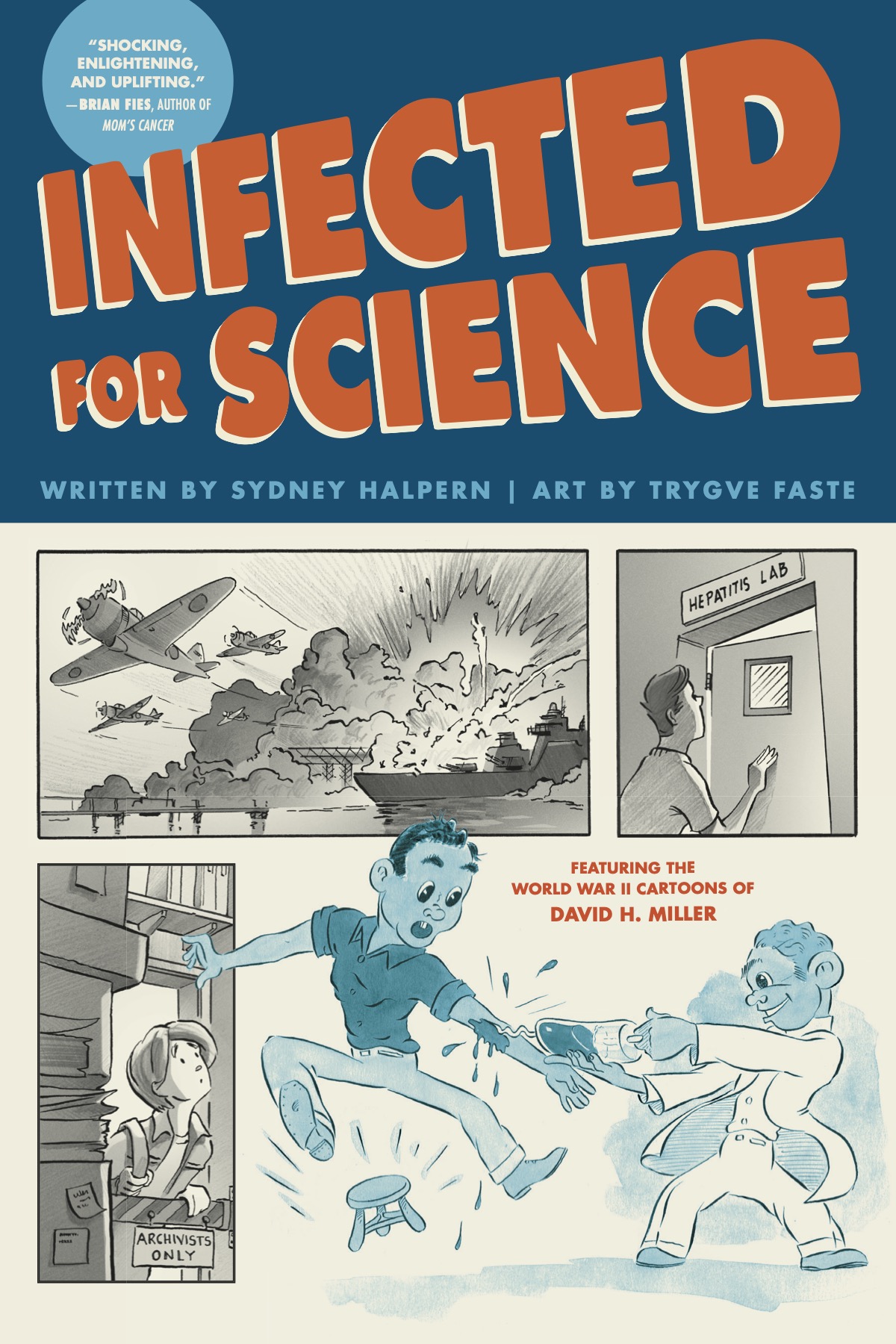
The intersection of medical history and graphic narrative often produces a unique friction. While the medium of comics allows for a visceral reimagining of the past, the weight of historical data frequently threatens to overwhelm the artistic flow. In her latest work, Infected for Science, historian Sydney Halpern—already acclaimed for her scholarly deep dive Dangerous Medicine: The Story Behind Human Experiments with Hepatitis—navigates this tension by blending rigorous research with a remarkable archival discovery.
The result is a graphic nonfiction work that serves as both a biography of a forgotten conscientious objector and a searing critique of the ethical boundaries of American medical research during and after World War II. By incorporating the primary-source drawings of David H. Miller, a participant in these trials, Halpern and illustrator Trygve Faste have created a layered narrative that explores the thin line between voluntary sacrifice and systemic exploitation.
Main Facts: A Discovery in the Archives
The genesis of Infected for Science lies in Halpern’s academic research into vaccine trials conducted during the 1940s. While investigating the George Rosen Prize-winning history of public health, Halpern encountered the estate of David H. Miller. Miller was one of many conscientious objectors (COs) who, during World War II, sought to serve their country in ways that did not involve combat.
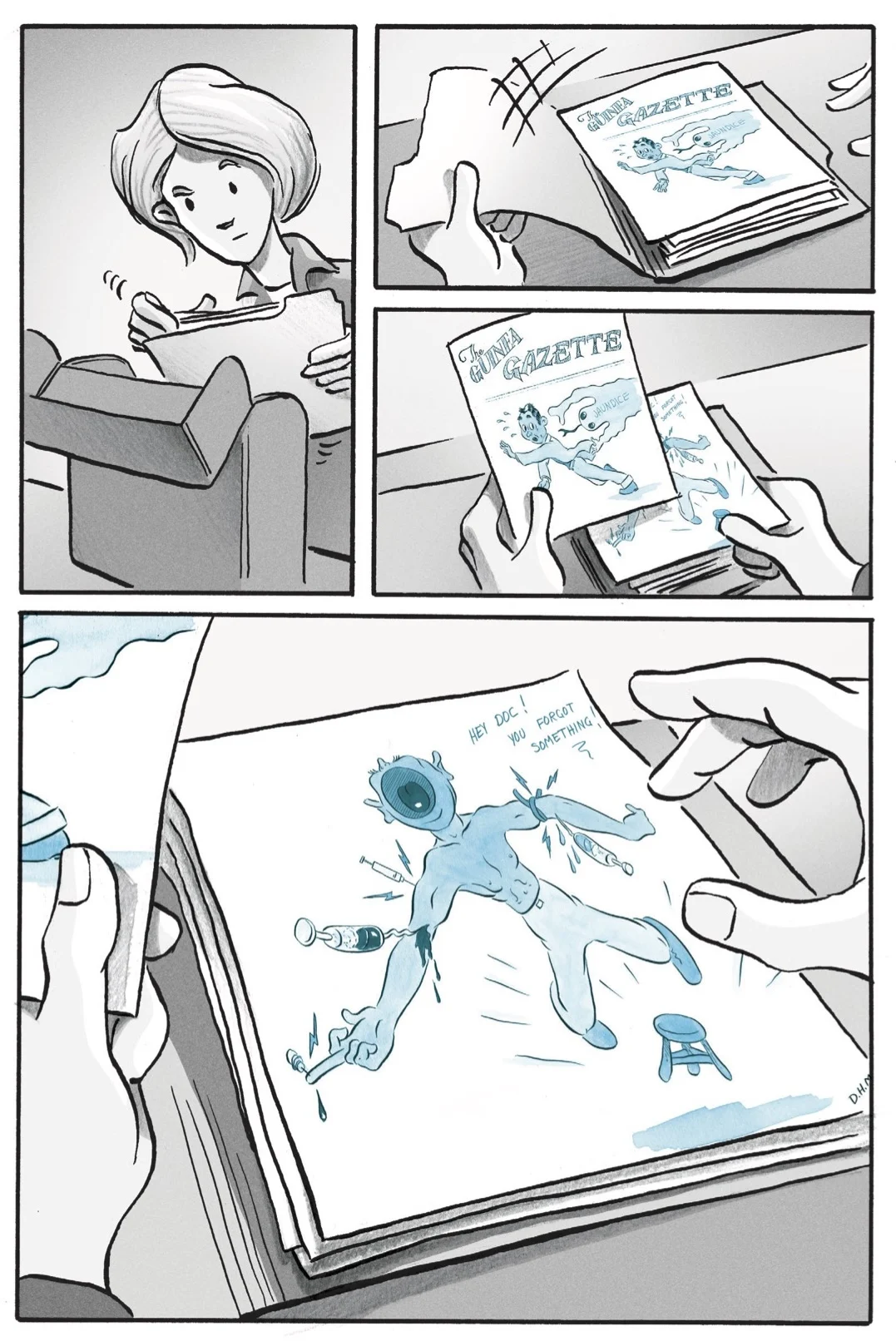
The core of the book is built upon Miller’s personal sketches—kinetic, cartoonish, and often macabre drawings he produced while being intentionally infected with hepatitis. These drawings provide a primary-source emotional counterpoint to the clinical records of the era. Halpern collaborates with artist Trygve Faste to frame these archival gems within a modern context, following her own journey as a researcher connecting with Miller’s descendants.
The book functions on three distinct levels:
- The Historical Record: A chronicle of the Civilian Public Service (CPS) and the hepatitis research program.
- The Personal Narrative: The story of David H. Miller, a Quaker who chose to risk his life through infection rather than take a life on the battlefield.
- The Meta-Narrative: Halpern’s contemporary investigation into how these experiments were conducted and how they were remembered—or suppressed—by the families of those involved.
Chronology: From Conscientious Objection to Clinical Infection
The narrative of Infected for Science moves fluidly between the mid-20th century and the present day, establishing a timeline that highlights the evolution of medical ethics.
The War Years (1941–1945)
During the height of World War II, thousands of American men declared themselves conscientious objectors. Many were funneled into the Civilian Public Service, performing tasks like forestry and soil conservation. For David H. Miller and approximately thirty other men in his cohort, this labor felt insufficient. Seeking a "moral equivalent to war," they volunteered for the hepatitis study.
The trials were conducted in phases. The first round saw relatively mild reactions, but the second round proved far more dangerous. Participants were monitored as they developed jaundice, extreme lethargy, and liver distress. At least two members of Miller’s camp required urgent hospitalization, and the specter of death—though statistically low—was an ever-present reality.
The Post-War Silence
Following the war, Miller returned to civilian life, married, and raised a family. Crucially, as Halpern discovers through her interviews with his children, he rarely spoke of his time as a "human guinea pig." This silence was typical of the era, where the trauma of the home-front "soldier" was often subsumed by the broader national narrative of victory.
The Modern Investigation
The contemporary timeline follows Halpern as she uncovers Miller’s artwork. Her conversations with Miller’s children serve as the book’s structural framework. These scenes, though occasionally criticized for their "talking head" delivery, are essential for contextualizing the long-term psychological impact of the trials on the participants’ families.
1972: The Turning Point
The book concludes its chronological arc by noting that these types of hepatitis experiments did not end with the war. They continued for decades, only ceasing in 1972 when the public revelation of the Tuskegee Syphilis Study forced a reckoning with the ethics of human experimentation.
Supporting Data: The Toll of the Trial
To understand the gravity of Infected for Science, one must look at the clinical data that Halpern integrates into the narrative. The doctors leading the study were transparent about the risks, informing the volunteers that the mortality rate for hepatitis was approximately one in a thousand.
Key data points highlighted in the text include:
- The Participant Pool: The study relied heavily on Quakers and other religious COs, whose pacifist beliefs made them a captive and compliant demographic for "risky" non-combat service.
- Medical Outcomes: In the second phase of the trial, nearly a third of the participants showed significant symptoms, with 10 men hospitalized simultaneously. Two participants required feeding tubes as their bodies struggled to process the infection.
- The Consent Paradox: Participants signed waivers freeing the U.S. Army and the researchers from liability. While "voluntary," this consent was given under the social pressure of proving one’s courage to a society that viewed COs as cowards.
The artistic data is equally compelling. Trygve Faste’s realistic, "matter-of-fact" illustrations provide the grounding for the modern research scenes. However, it is David H. Miller’s original artwork that provides the most significant "data" regarding the participants’ mental states. His drawings—inspired by the energy of jazz and dance—frequently depict the researchers as demonic figures and the patients as victims of "Gallows Humor." In one sketch, a figure labeled "JAUNDICE" chases a man toward a volcano, a metaphor for the sacrificial nature of the experiment.
Official Responses and Ethical Frameworks
The book delves into the official justifications provided by the medical establishment of the 1940s. At the time, the "Human Challenge" model was seen as a necessary evil for the greater good of the troops. Hepatitis was a major cause of disability among soldiers, and finding a vaccine or treatment was a high military priority.
The official response to the COs’ participation was one of calculated appreciation. Researchers praised the men’s "courage," yet the legal framework was designed to protect the institution, not the individual. One of the most poignant moments in the book captures the internal logic of the volunteers. One character famously states: "I’m not willing to kill for my country—but I am willing to die for it."
Halpern uses this sentiment to explore the ethical "gray zone." While the men were volunteers, the power imbalance between a government agency and a group of social outcasts (COs) complicates the modern definition of informed consent. This is further exacerbated when Halpern reveals that similar studies were performed on even more vulnerable populations, including prisoners who were promised parole assistance in exchange for their participation, and children with developmental disabilities at institutions like Willowbrook.
Implications: The Legacy of Human Subjects
The implications of Infected for Science extend far beyond a historical footnote about WWII. Halpern successfully connects these mid-century trials to the broader, often darker history of American medicine.
The Shadow of Tuskegee
By referencing the Tuskegee Syphilis Study, Halpern reminds the reader that the hepatitis trials were part of a broader culture of medical paternalism. In Tuskegee, treatment was withheld from Black men to study the natural progression of the disease. In the hepatitis trials, healthy men were actively harmed to find a cure for others. Both models relied on the marginalization of the subjects.
The Evolution of Consent
The book serves as a reminder of why modern Institutional Review Boards (IRBs) and strict ethical guidelines are necessary. The "consent" signed by Miller and his peers would be considered highly coercive by today’s standards. The use of gallows humor in Miller’s art—depicting doctors using jackhammers on patients’ arms—suggests that even if the men were "willing," they felt a profound sense of victimization and lack of agency.
The Power of Graphic Nonfiction
Finally, Infected for Science demonstrates the unique power of the graphic medium to preserve history. While a traditional textbook can list the number of people infected, Faste and Halpern’s work allows the reader to see the fear in a participant’s eyes and the "demonic" energy of a researcher’s needle. By centering David H. Miller’s art, the book restores a voice to a man who remained silent for the rest of his life.
In conclusion, Infected for Science is more than a review of a medical trial; it is a complex meditation on what a society asks of its citizens in times of crisis. It challenges the reader to consider the cost of progress and asks whether the "benefit of others" ever truly justifies the intentional suffering of the few. Through the rediscovered sketches of a Quaker artist, Halpern has ensured that this uncomfortable chapter of medical history will not be forgotten.

Leave a Comment