
Veteran Pulp Scholar Celebrates Decade of Hardboiled Introductions with Steeger Books, Cementing Legacy in Genre Revival
MAY 15, 2024 – Bob Byrne, a distinguished voice in pulp literature, marks a significant milestone in his prolific career, celebrating over a decade of contributing insightful introductions to classic hardboiled reprints published by Steeger Books. With his tenth introduction recently completed and set for release later this year, Byrne continues to play a pivotal role in reintroducing forgotten and foundational works of the genre to modern audiences. His efforts underscore a broader resurgence of interest in pulp fiction, a testament to its enduring appeal and literary significance.
Byrne’s work with Steeger Books is part of a "star-studded roster of writers" dedicated to excavating and presenting the rich heritage of pulp fiction. These reprints, available in both print and electronic formats, ensure that the gritty narratives and iconic characters of the 20th century’s golden age of pulp are not lost to time. His deep passion for the genre, particularly evident in his fervent recommendation of Norbert Davis’s Max Latin stories, shines through in each meticulously crafted introduction.
Chronology: Tracing a Journey Through the Gritty Pages of Pulp
Byrne’s journey into the heart of pulp literature as an introducer for Steeger Books began with a focus on a particularly memorable character, setting the stage for a distinguished series of contributions that have spanned nearly a decade.
The Genesis of a Partnership: From Peter Kane to Continental Op
His inaugural introduction for Steeger Books spotlighted Hugh B. Cave’s Peter Kane, a six-story series featuring a robust, hard-drinking private investigator from Boston’s Beacon Agency. Cave, a master of "Weird Menace," demonstrated his versatility with Kane, proving his prowess in "straight" hardboiled narratives, making Kane a standout example of the genre’s tough-guy archetype. This initial foray quickly established Byrne’s authoritative voice in pulp scholarship.
Over the ensuing years, Byrne’s introductions have graced numerous other seminal collections. He delved into the unique blend of humor and mystery found in Norbert Davis’s Max Latin series for Dime Detective, a personal favorite he describes as occupying a spot in his "Top Five mystery series." His contribution to this collection holds particular significance, as he "replaced" an introduction by the legendary John D. MacDonald, a testament to Byrne’s recognized expertise. He also explored Davis’s Black Mask stories, including the two Ben Shaley tales, which, though lacking Davis’s signature humor, left a profound impression on no less an authority than Raymond Chandler.

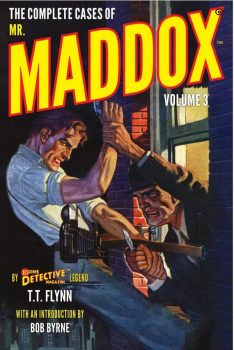
The expansive and unique world of T.T. Flynn’s Mr. Maddox series, featuring a horse-racing bookie who invariably stumbles upon murder, also benefited from Byrne’s insights. Contributing to Volume 3, Byrne highlighted the novellalength stories’ immersive portrayal of the 1940s horse-racing circuit, distinguishing Maddox from typical private eye or police procedurals. His connection to Flynn’s work also includes a "lost" introduction for the Mike & Trixie series, which, despite missing its publishing deadline, found a home on Black Gate, allowing a select few to experience his take on the duo.
Perhaps most notably, Byrne has contributed significantly to Steeger Books’ comprehensive reprinting of Dashiell Hammett’s Continental Op stories. His introductions for Volumes 1, 2, and 3 guide readers through the exploits of the unnamed, honorable, and pragmatic operative for the Continental Detective Agency, a character pivotal to the development of the hardboiled genre. The ongoing series promises to eventually encompass Hammett’s iconic novel, Red Harvest, showcasing the Op’s most celebrated exploits.
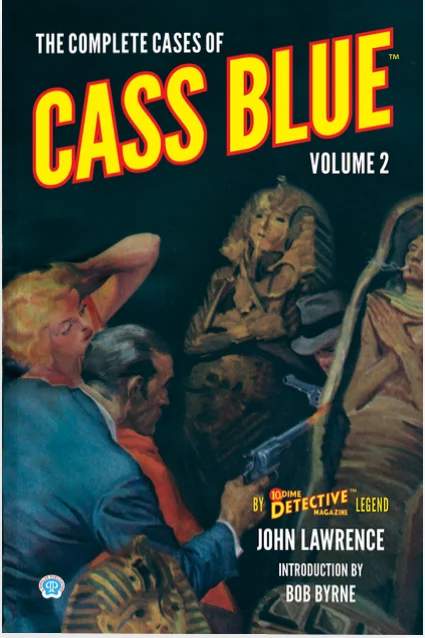
Further cementing his diverse engagement with pulp, Byrne also penned an introduction for John Lawrence’s Cass Blue – Vol 2. This series, nestled between Lawrence’s more famous Sam Beckett and Marquis of Broadway works, offered Dime Detective readers a unique "Agatha Christie ‘country manor’ vibe" blended with tough-guy tropes. His forthcoming introductions for Frederick Nebel and Rex Sackler are eagerly anticipated, promising further explorations into the rich tapestry of pulp.
"A (Black) Gat in the Hand": A Companion Series
Concurrent with his work for Steeger Books, Byrne has maintained his popular column, "A (Black) Gat in the Hand," at Black Gate magazine since 2018. This column serves as a dynamic platform for exploring various facets of hardboiled and pulp fiction, often directly complementing his introduction projects. The column provides deeper dives into specific authors, analyzes genre conventions, reviews new and old reprints, and even examines the influence of pulp on other media, such as video games (LA Noire) and television (Hell on Wheels). Guest contributors frequently join Byrne, offering diverse perspectives on the genre’s history and impact. The column’s extensive archives, dating back to 2018, illustrate Byrne’s consistent dedication to fostering appreciation for pulp, ranging from detailed examinations of individual stories and characters to broader discussions on the genre’s evolution and its place in the literary canon.
Supporting Data: Unearthing Gems and Defining Classics
Byrne’s introductions are more than mere summaries; they are scholarly analyses that place each work within its historical and literary context, drawing on his extensive knowledge and deep appreciation for the genre.
Paul Cain’s "Fast One": A Hardboiled Pinnacle
Among Byrne’s most lauded contributions is his introduction to Paul Cain’s Fast One, included in the deluxe hardback collection Lead Party, which compiles all of Cain’s short stories alongside his lone novel. Byrne unequivocally declares Fast One a "nearly flawless book," placing it in the same esteemed company as Dashiell Hammett’s The Maltese Falcon as his favorite hardboiled novel. This high praise echoes Raymond Chandler, who famously referred to Fast One as "some kind of high point in the hardboiled manner."
Cain himself, whose legal name was George Sims, led a life as enigmatic as his fiction, even writing screenplays under the pseudonym Peter Rurik. His brief but impactful literary career, marked by intense, unsparing prose, left an indelible mark on the genre. Byrne’s introduction not only celebrates the novel’s stylistic brilliance and relentless pacing but also sheds light on the elusive author behind one of hardboiled fiction’s most significant achievements. For those unfamiliar with Fast One, Byrne’s passionate endorsement serves as a compelling invitation to discover a masterpiece that redefined the boundaries of tough-guy literature.
Hugh B. Cave’s Peter Kane: The Quintessential Hard-Drinking PI
Byrne’s first Steeger introduction for Hugh B. Cave’s Peter Kane series introduced readers to a character that pushed the boundaries of the hardboiled detective. Operating out of Boston’s Beacon Agency, Kane was notable for his immense physical presence and his profound, almost legendary, alcohol consumption, making other "hard-drinking" PIs seem like "pikers" in comparison.
While Hugh B. Cave is widely recognized as a master of "Weird Menace" — a subgenre of pulp horror—only one of the Peter Kane stories ventured into that bizarre territory. Byrne highlights that Cave’s true strength in this series lay in his ability to craft "straight" hardboiled narratives, showcasing his versatility as a writer. Kane, with his gritty realism and unwavering commitment to his cases despite his personal demons, stands as a prime example of Cave’s often-overlooked talent in the detective fiction sphere.
Norbert Davis: The Master of Hardboiled Humor
Norbert Davis stands out in the hardboiled landscape for his distinctive blend of humor and tough-guy grit, a quality passionately championed by Bob Byrne.

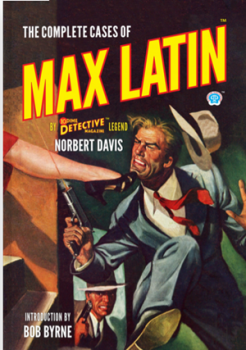
- Max Latin: Byrne’s profound admiration for Davis is most evident in his deep dives into the Max Latin stories, which he places among his "Top Five mystery series." Latin, a "shady PI" who incongruously operates from a restaurant booth, navigates a world filled with quirky, re-readable characters. These stories, while humorous, skillfully avoid slipping into outright screwball comedy, maintaining a hardboiled edge. Byrne’s privilege of writing a new introduction for these stories, succeeding John D. MacDonald’s own "cranky intro," speaks volumes about his recognized authority and the importance of preserving Davis’s unique voice. The audiobook format, as Byrne notes, offers a particularly immersive experience, making these tales a perennial favorite.
- Ben Shaley: Byrne also explored Davis’s contributions to Black Mask with the Ben Shaley tales. These stories presented a different facet of Davis’s talent, being "mostly ‘straight’ stories" with only "glimpses of the humor" that would later define his Max Latin series. Despite their scarcity (only two Shaley stories exist), their impact was considerable. Raymond Chandler, a titan of the hardboiled genre, credited Davis’s "Red Goose" with inspiring him to become a hardboiled writer, an immense accolade that Byrne ensures is highlighted. Davis’s tragically short career is a perennial source of regret for fans, making Steeger Books’ reissues and Byrne’s introductions crucial for appreciating his full range.
T.T. Flynn’s Diverse Contributions
T.T. Flynn was a prolific author in the pulp era, and Byrne’s introductions illuminate two distinct facets of his work.
- Mr. Maddox: The Mr. Maddox series offered a refreshing departure from typical private eye narratives. Maddox, a bookie on the thoroughbred racing circuit, functions as a de facto private eye, regularly stumbling into murders and being compelled to confront villains. Byrne emphasizes the unique setting, providing "an inside look at the horse-racing world of the forties." These stories are notable for their length, often reaching "legitimately novella length," offering substantial and intricate plots. This unique premise helped them "stand out from the more common PI/cop/reporter tales."
- Mike & Trixie: Byrne’s account of his "lost intro" for the Mike & Trixie series is a charming anecdote that underscores his dedication. Despite missing the deadline for the first book, he ensured his analysis reached readers via Black Gate. The existence of three volumes of Mike & Trixie from Steeger Books points to their popularity and Flynn’s skill in crafting engaging detective duos.
Dashiell Hammett’s Continental Op: The Architect of Hardboiled
Byrne’s introductions to Steeger Books’ reprinting of every Continental Op story by Dashiell Hammett are central to understanding the foundations of hardboiled fiction. Hammett, often considered the genre’s architect, introduced the "short, fat, honorable — and unnamed — private eye for the Continental Detective Agency" to the pages of Black Mask.
The Op embodies the nascent realism and cynicism that would define the genre, eschewing the moral certainties of earlier detective fiction. Byrne highlights that these stories "showcase the best of Hammett," laying the groundwork for his later, more famous novels. The anticipation for Volume 4, which will feature the groundbreaking novel Red Harvest, is palpable, as Byrne places it "right up there alongside Fast One for hardboiled action." Hammett’s influence is immeasurable, and Byrne’s intros provide essential context for appreciating his pioneering work.
John Lawrence’s Cass Blue: A Twist on Tough-Guy Tropes
Byrne’s introduction to John Lawrence’s Cass Blue – Vol 2 showcases another instance of pulp authors experimenting with genre conventions. Lawrence, a "prolific thirties Pulpster" known for his Dime Detective series featuring Sam Beckett and the Marquis of Broadway, crafted Cass Blue as a "tough guy" who nonetheless found himself in settings more commonly associated with British mysteries.
Byrne notes "something of an Agatha Christie ‘country manor’ vibe to several of the stories," a distinct change-up for Dime Detective readers accustomed to grittier, urban fare. This fusion of the hardboiled protagonist with classic mystery settings demonstrates the fluidity and experimental nature of pulp fiction, a aspect Byrne consistently highlights in his scholarly contributions.
The Enduring Allure of Pulp Fiction
The collective efforts of Steeger Books and scholars like Bob Byrne affirm that pulp fiction, despite its often-ephemeral origins, possesses a timeless quality. A "hundred-ish years into Pulp," its blend of rapid-fire action, terse dialogue, moral ambiguity, and vivid characterization continues to captivate. These stories, born from the need for cheap entertainment, often tackled complex social issues and psychological depths that resonate with contemporary readers, proving their enduring cultural and literary value.
Official Responses: Steeger Books’ Vision for Literary Preservation
Steeger Books stands as a paramount institution in the preservation and dissemination of classic pulp literature. Their commitment extends beyond mere reprints; it is a meticulous archaeological undertaking, bringing "more and more classic, and forgotten, Pulp… continually being brought back to print — and electronically as well." This endeavor is not merely commercial but a profound act of cultural stewardship, recognizing the historical and literary importance of these often-overlooked works.
The publisher’s collaboration with a "star-studded roster of writers" like Bob Byrne is integral to their mission. These scholars provide critical context, introduce new generations to the original works, and ensure that the legacy of these authors is properly understood and appreciated. By investing in high-quality reprints and engaging knowledgeable introducers, Steeger Books effectively serves as a bridge between the golden age of pulp and today’s diverse readership, transforming what might have been lost ephemera into accessible literary treasures. Their sustained output and dedication serve as a direct, ongoing "official response" to the demand for and enduring value of this rich literary heritage.
Implications: Shaping the Future of Pulp Scholarship and Appreciation
Bob Byrne’s decade of dedication to introducing classic pulp fiction, alongside the tireless work of Steeger Books, carries significant implications for the future of the genre. His efforts are not just about revisiting the past but actively shaping how new generations perceive and engage with these foundational narratives.
Firstly, the sustained reprinting of these works, complemented by Byrne’s insightful essays, ensures the preservation of a vital literary heritage. Many of these stories were once relegated to fragile, decaying pulp magazines, inaccessible to all but the most dedicated collectors. Their reappearance in durable print and digital formats guarantees their availability for future readers and scholars, preventing them from fading into obscurity.
Secondly, Byrne’s introductions act as crucial gateways for new readers. By providing context, highlighting literary significance, and sharing his personal enthusiasm, he guides novices through the often-unfamiliar landscape of early 20th-century genre fiction. His ability to connect with readers, as evidenced by his popular "A (Black) Gat in the Hand" column, transforms what might otherwise be academic exercises into engaging explorations.
The consistent output from Steeger Books, championed by voices like Byrne, also elevates the academic standing of pulp fiction. Once dismissed as mere entertainment, the genre is increasingly recognized for its innovative narrative techniques, social commentary, and profound influence on subsequent literary movements, including noir and modern crime fiction. The detailed analyses offered in these introductions contribute to a more nuanced understanding of pulp’s artistic merits.
Looking ahead, Byrne’s stated plans to delve deeper into authors like Frederick Nebel and Rex Sackler signal a continued commitment to unearthing and celebrating lesser-known but equally deserving voices. This ongoing exploration ensures that the "Summer of Pulp" remains a vibrant and expanding experience for enthusiasts.
In conclusion, Bob Byrne’s extensive contributions to Steeger Books and his consistent advocacy through Black Gate have cemented his status as a key figure in the contemporary pulp revival. His work underscores the enduring power of hardboiled narratives and the vital importance of preserving literary history. As the genre enters its second century, the collaborative efforts of publishers, scholars, and passionate readers ensure that the world of pulp fiction continues to lie, as Byrne aptly puts it, "at your feet."




Leave a Comment