
New Novel "The Skinny" Delves into 1990s New York’s Shadows, Exploring Immigration, Crime, and the Human Psyche
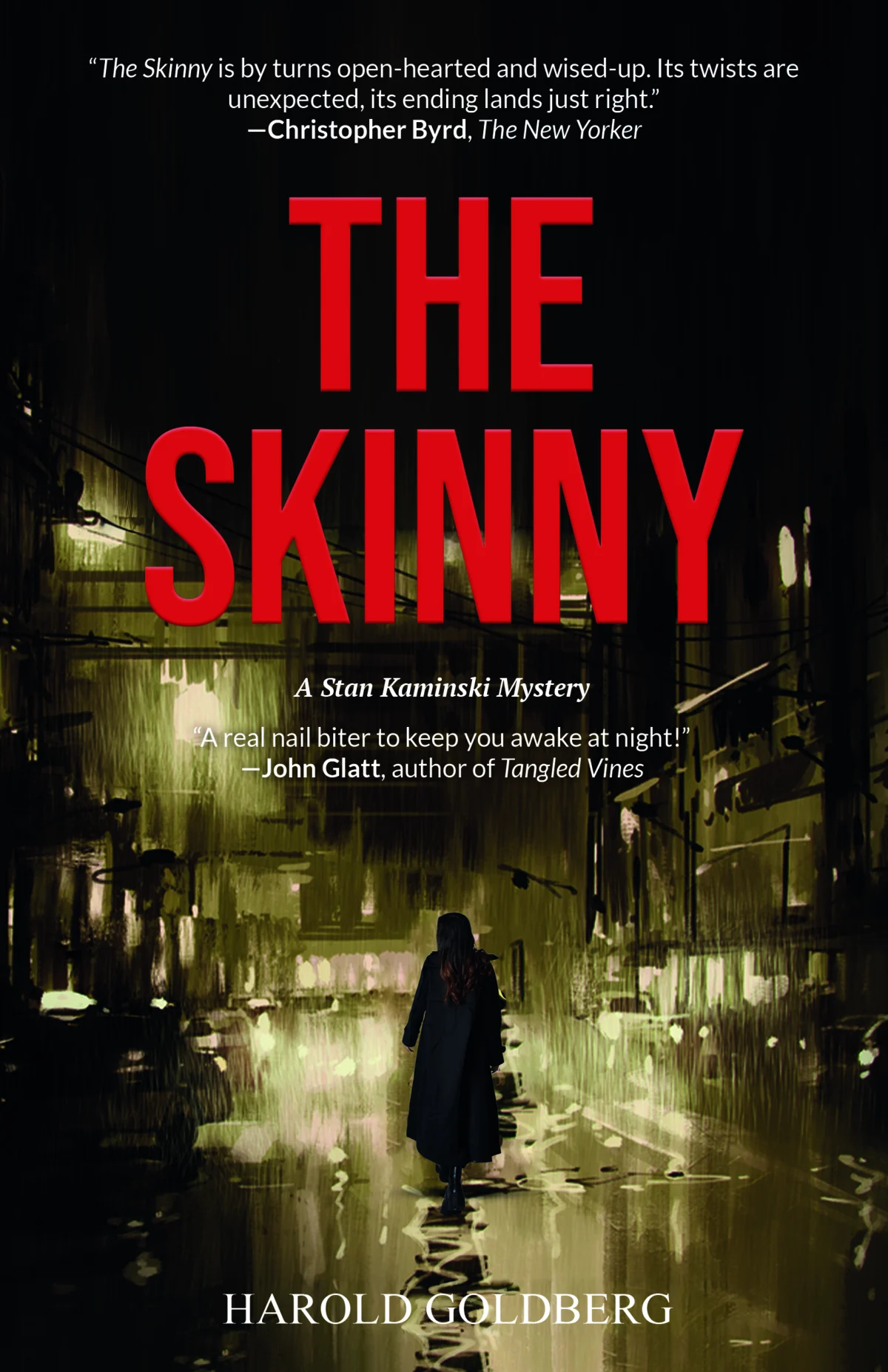
New York, NY – [Insert Date] – Harold Goldberg’s debut novel, "The Skinny," offers a gritty and atmospheric journey into the heart of 1990s New York City, weaving a compelling narrative of a Polish immigrant’s struggle for survival amidst a landscape rife with mystery, murder, and societal upheaval. The novel, which Goldberg describes as an exploration of the conflicts that arise during periods of intense change, introduces readers to Stan Kaminski, a man haunted by his past and navigating the treacherous underbelly of a city undergoing rapid transformation.
"The Skinny" is more than just a crime thriller; it’s a profound examination of the immigrant experience, the enduring allure of the past, and the psychological toll of confronting darkness. Goldberg, a seasoned journalist and author known for his work on video games and true crime, brings a unique perspective to this fictional world, drawing inspiration from historical figures, urban decay, and the immersive narratives of contemporary media.
The Core Narrative: A Man Caught in the Crosshairs
At its core, "The Skinny" centers on Stan Kaminski, a Polish immigrant scraping by in the bustling, often unforgiving, environment of 1990s New York. His existence is a daily dance with survival, a constant effort to avoid the "colorful, nefarious characters" who populate the city’s forgotten corners. Stan’s world is irrevocably altered when he’s approached by a wealthy Manhattan landlord with an unusual proposition: find a missing woman.
Initially reluctant, Stan is ultimately drawn into the mystery by the lure of money. His search for Charmaine Kasimierz, a brilliant yet troubled young woman, plunges him into a "waking nightmare" filled with intrigue, multiple homicides, and the looming threat of a serial killer. The narrative promises a relentless pace, a journey through the city’s darkest alleys and most opulent penthouses, where the line between victim and perpetrator becomes increasingly blurred.
Unpacking the Themes: A City in Flux
Goldberg articulates that "The Skinny" is deeply concerned with the "conflicts that come with change as one New York vanishes and another appears to take its place." This theme of transition is palpable throughout the novel’s synopsis, reflecting the gentrification and evolving social fabric of New York City in the 1990s. The narrative actively explores the perennial struggle between the affluent and the impoverished, a stark contrast that defines the urban landscape.
Furthermore, the novel delves into the internal battles of the "addicted mind" seeking answers, a powerful metaphor that could extend beyond literal addiction to encompass obsessions, guilt, and the relentless pursuit of truth. Goldberg also highlights the cyclical nature of mystery, where "one mystery is solved only to open the door to another," suggesting a complex and layered plot that keeps readers guessing. Central to the narrative is the exploration of "what hope actually means," a universal theme that grounds the darker elements of the story in a search for redemption and resilience.
Historical Echoes and Dark Inspirations
A significant and chilling influence on "The Skinny" is the historical figure of Gilles de Rais, a French nobleman and alleged serial killer who lived in the 15th century. Goldberg’s encounter with de Rais’s story, detailed in his co-authored book "My Life Among the Serial Killers," left a profound mark. The trial records, depicting horrific violence against children, deeply affected Goldberg, necessitating breaks and solace in a local bar.
This dark historical precedent directly informs the novel’s plot. The "short, sharp sword called a braquemard" wielded by de Rais becomes a pivotal element in "The Skinny." Goldberg hints at a "twist regarding the blade" that he hopes will surprise readers, indicating a clever integration of historical artifact into the contemporary narrative. The inclusion of such a brutal historical figure suggests that the novel will not shy away from exploring the depths of human depravity.
Christopher Byrd, writing for The New Yorker, has praised Goldberg’s ability to create a compelling narrative around flawed characters, noting that "The Skinny is a book about flawed, vulnerable people that is by turns open-hearted and wised-up. Its twists are unexpected, its ending lands just right." This endorsement underscores the novel’s literary merit beyond its genre classification.
New York City: A Character in its Own Right
Goldberg emphatically states that "New York City is full of dead bodies, everywhere." This assertion underscores the novel’s visceral portrayal of the city as not merely a setting, but a palpable character. Stan Kaminski’s experience of 1990s New York is one of sensory overload – the "grit and grossness," the "smell of Macanudo cigars" favored by the nouveau riche, and the ever-present fear of the city’s hidden dangers, like the possibility of a rat bite while waiting for Charmaine.
The novel grounds its narrative in specific, often historically charged, locations. Washington Square Park, with its rumored burial grounds and the iconic arch, becomes a site for a violent scene. The historical context of Corlears Hook Park along the East River, known for its past struggles with malaria, violence, and murder, further emphasizes the city’s enduring capacity for darkness. The memory of recent tragedies, like a car plowing through a park, serves as a stark reminder of the ever-present fragility of life.
Even a small Irish cemetery in Queens triggers Stan’s memories of his own past, recalling a time when he slept on a grave in a Jewish cemetery in Krakow, feeling utterly lost and devoid of hope. This poignant detail highlights the immigrant’s displacement and the enduring weight of personal history. Goldberg masterfully contrasts the city’s daytime beauty with its nighttime foreboding, where every rustle and footstep can evoke a sense of unease, transforming the familiar into the menacing.
Digital Dreams and Literary Landscapes: Video Game Inspirations
In a fascinating intersection of art forms, Goldberg reveals that video games have significantly influenced the narrative and atmosphere of "The Skinny." As a columnist for The New York Times covering video games, Goldberg draws parallels between the immersive storytelling found in compelling game narratives and his own fictional endeavors.
The "dark nature of New York City" is explicitly linked to Sam Lake’s "Alan Wake" horror series. While "The Skinny" is not a pure horror story, it aims to capture that distinctive "Sam Lake vibe," a style deeply rooted in the surreal and atmospheric work of David Lynch. Goldberg even notes his use of Angelo Badalamenti’s music, a composer famously associated with "Twin Peaks," to evoke the desired mood.
Beyond the atmospheric, the novel also incorporates elements of action and suspense inspired by other video games. A "frantic car chase" originating in Jersey City is attributed to the influence of Rockstar Games, the creators of the Grand Theft Auto series. The gritty realism and morally ambiguous characters of L.A. Noire, another Rockstar title, also contributed to the novel’s portrayal of a city where corruption is rampant.
The literary world also plays a role, with Walter Mosley’s "Devil in a Blue Dress" cited for its richly rendered characters, even those with minor roles. Goldberg expresses a personal hope that this influential novel might one day be adapted into a video game. This cross-pollination of influences suggests a multilayered narrative that engages with contemporary cultural touchstones.
The Enduring Power of Polish Culture
Stan Kaminski’s journey through the underbelly of New York City is deeply intertwined with his Polish heritage. The novel explores how his "Polish culture is so deep and compelling," serving as a constant reference point for his experiences. Even amidst the violence and hardship, Stan’s perspective is filtered through his cultural lens.
The narrative touches upon the darker aspects of Polish folklore and mythology, suggesting that they are even more unsettling than the tales of the Brothers Grimm. Yet, Stan also finds solace and connection in elements of Polish culture, from "polkas to Bobby Vinton," and uses the language of his homeland for emphasis. His affection for New York is tempered by a longing for Poland, underscoring the enduring ties of expatriates to their homeland.
The novel also provides historical context for Polish immigration in New York City, particularly the East Village, which served as a haven for Polish and Ukrainian immigrants. However, by the 1990s, this community was experiencing displacement due to rising real estate prices and gentrification, a phenomenon Stan himself is indirectly caught within.
Stan’s connection to Polish culture is further solidified through his appreciation for its cuisine, enjoying pierogi and sausage at his favorite East Village bar. The character of Bertha, the bar’s owner, adds a touch of warmth and resilience, embodying a certain spirit of the neighborhood.
Before arriving in New York, Stan’s past includes working security for the Polish movement Solidarity, notably for union leader Lech Wałęsa. This background hints at a history of political engagement and potential danger. Nightmares about a past event involving his wife reveal a deep personal trauma that contributed to his departure from Poland. Despite his imperfect English, Stan possesses a profound knowledge of his culture, from its literature to the unique salt mine sculptures of Wieliczka.
The "Going Small" Triumph: Independent Publishing and Future Aspirations
Goldberg’s journey to publishing "The Skinny" highlights a poignant struggle against artistic compromise. Two major publishers sought to "change Stan" by removing his occasional use of Polish words, suggesting a desire to homogenize the narrative for broader appeal. This request, which Goldberg perceived as prejudiced, led him to withdraw his manuscript.
Ultimately, Measure Publishing embraced the novel as it was written, recognizing the inherent value in its authentic voice. This decision allowed Goldberg to maintain the integrity of his protagonist and his cultural background. He was actively involved in the publication process, influencing aspects from the cover design to the paper quality and print run size. The contractual arrangement also offers more favorable and timely royalty payments, indicating a supportive partnership with the independent publisher.
"The Skinny" marks the beginning of what Goldberg hopes will be a trilogy. He expresses a deep affinity for Stan Kaminski and sees potential for further storytelling through his perspective. However, the second installment is slated to be told from the viewpoint of Charmaine Kasimierz, suggesting that her "real story" is even more compelling and complex than Stan’s observations reveal. This future direction promises to expand the novel’s universe and delve deeper into the lives of its characters.
Author’s Background and Connections
Harold Goldberg is a prolific writer with a distinguished career spanning various prestigious publications, including The New York Times, The New York Times Book Review, Vanity Fair, and Esquire. His previous works include the narrative history of video games, "All Your Base Are Belong to Us (How 50 Years of Videogames Conquered Pop Culture)," and the bestselling "My Life Among the Serial Killers," co-authored with Dr. Helen Morrison. "The Skinny" represents his foray into fiction, a genre he now appears poised to make a significant impact upon.
Links:
- Harold Goldberg: Website | Facebook | Bluesky
- "The Skinny": Bookshop | Indiebound | Barnes & Noble | Amazon
About the Author:
Harold Goldberg’s extensive journalistic background provides a solid foundation for his debut novel. His previous works demonstrate a keen interest in cultural phenomena and the darker aspects of human behavior. "The Skinny" promises to be a compelling addition to his literary portfolio, offering readers a dark, atmospheric, and thematically rich exploration of a city and its inhabitants at a pivotal moment in history.



Leave a Comment