
Flax Engine Ignites Innovation with 1.12 Release: DDGI, Jiggle Physics, and WebGPU Power Up Game Development
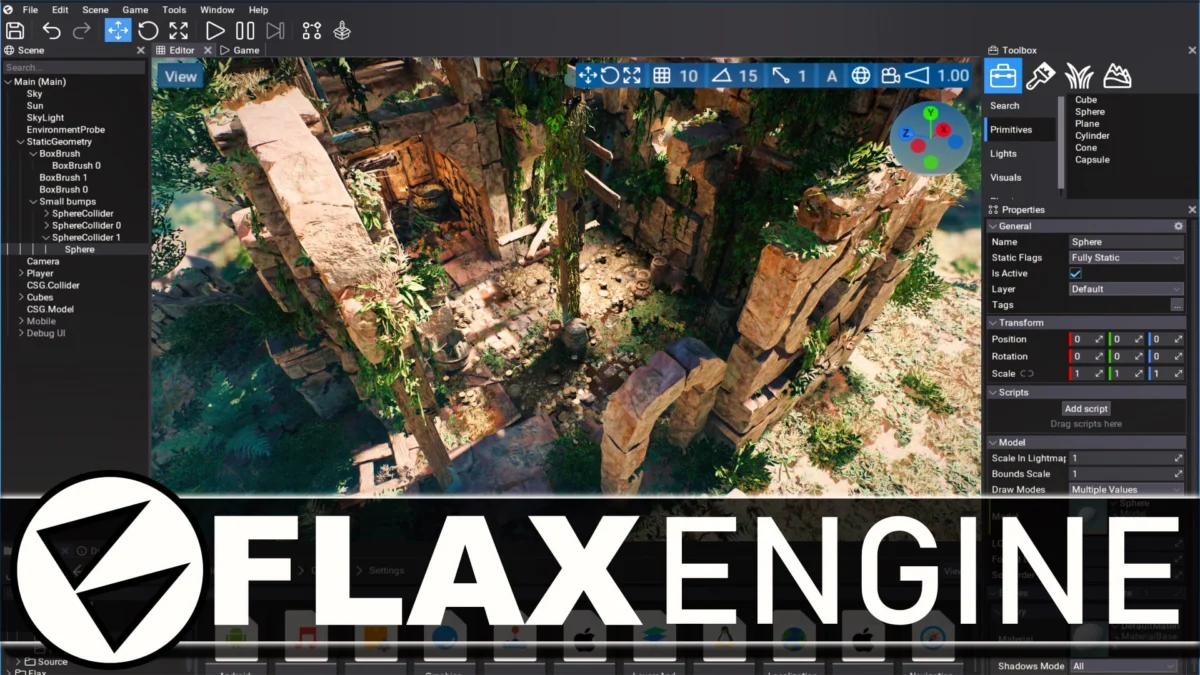
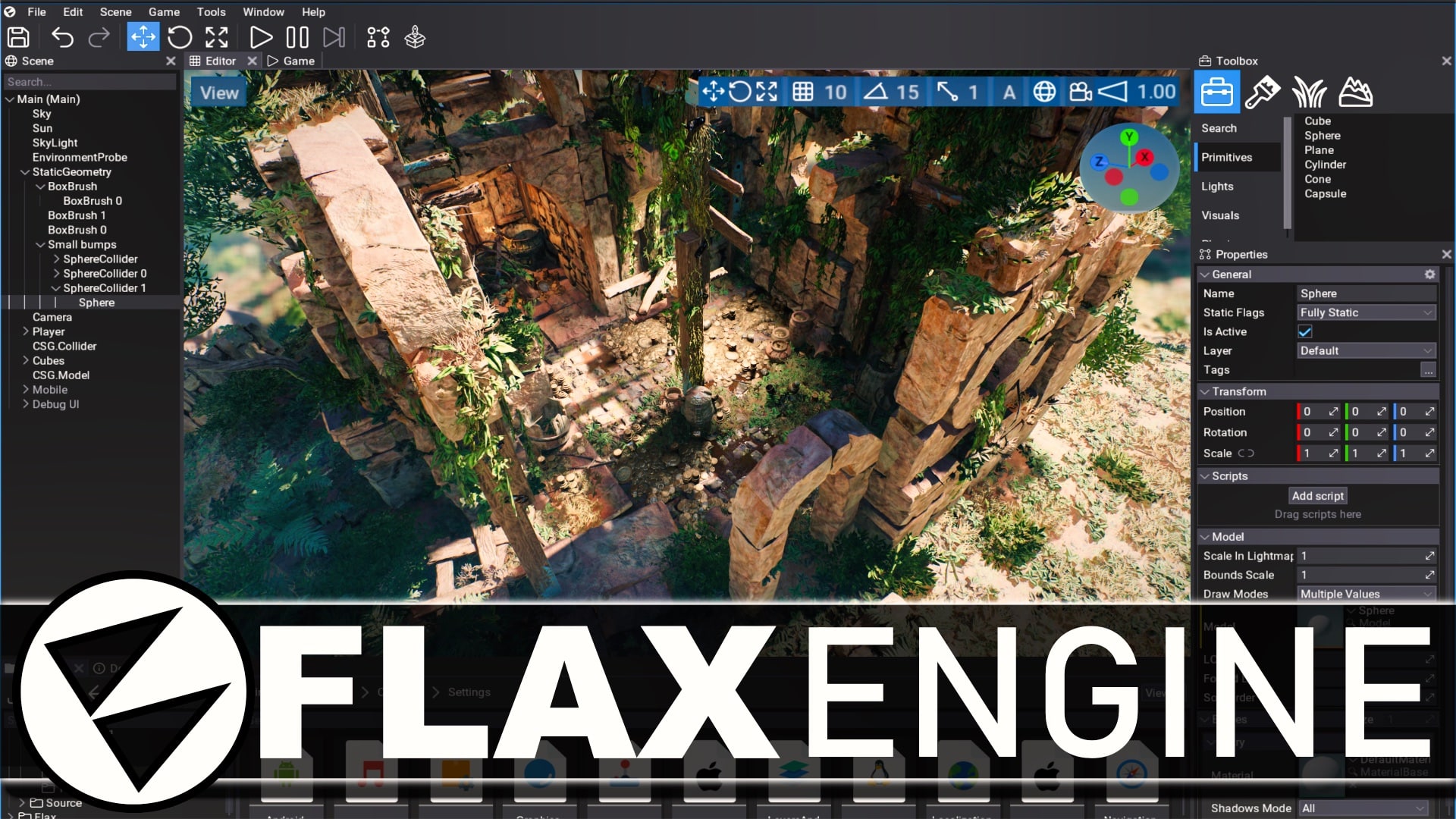
Flax Engine, a rapidly evolving cross-platform game development solution, has officially launched its latest major update, version 1.12. This significant release introduces a suite of powerful new features designed to enhance visual fidelity, streamline development workflows, and expand the engine’s reach into emerging platforms. Headlining the advancements are the implementation of Dynamic Diffuse Global Illumination (DDGI), sophisticated jiggle physics, and robust web support through WebGPU, promising a richer and more accessible game creation experience.
The Flax Engine team has consistently demonstrated a commitment to pushing the boundaries of what’s possible in game development, and version 1.12 is a testament to this dedication. The inclusion of DDGI, a cutting-edge rendering technique, marks a substantial leap forward in achieving realistic lighting and reflections within game environments. This technology allows for dynamic and believable global illumination, meaning that light bouncing off surfaces will realistically affect the lighting of other surfaces in real-time, creating a more immersive and visually stunning experience for players.
Beyond graphical enhancements, Flax 1.12 also introduces advanced jiggle physics, a feature that adds a touch of life and dynamism to in-game objects. This allows developers to simulate the natural, bouncy movement of soft objects, from character clothing and hair to environmental elements like foliage. The result is a more organic and engaging visual presentation, contributing to a higher level of polish and realism in game worlds.
Perhaps one of the most impactful additions in this release is the integration of web support via WebGPU. This opens up new avenues for developers to deploy their creations across a wider audience, enabling games to run directly in web browsers with near-native performance. This significantly lowers the barrier to entry for players, allowing them to experience high-quality games without the need for downloads or installations, and positions Flax Engine as a formidable contender in the burgeoning web game development space.
A Chronology of Advancement: Tracing the Evolution of Flax Engine
Flax Engine has been on a steady trajectory of growth and innovation since its inception. While specific release dates for earlier versions are not detailed in the provided content, the consistent development cycle suggests a proactive approach to incorporating industry-leading technologies. The journey to version 1.12 has undoubtedly involved iterative improvements and the integration of community feedback.
The introduction of DDGI in 1.12 represents a significant technical achievement. Previously, achieving such dynamic global illumination often required complex baking processes or was limited to less dynamic approximations. The real-time implementation within Flax Engine signifies a powerful tool for artists and designers to create more visually compelling and believable environments.
The addition of jiggle physics, while seemingly a smaller feature, speaks to the engine’s focus on detail and polish. These subtle touches can greatly enhance the overall player experience, contributing to a more polished and professional-looking game. This feature demonstrates Flax Engine’s attention to the finer aspects of game design that can elevate a project from good to exceptional.
The expansion into web deployment with WebGPU is a strategic move that aligns with current industry trends. The increasing popularity of browser-based gaming and the desire for instant accessibility have made web deployment a critical consideration for game developers. Flax Engine’s embrace of WebGPU positions it as a forward-thinking platform capable of catering to these evolving demands.
Supporting Data: Unpacking the Key Features of Flax 1.12
While the provided content is sparse on detailed technical specifications for each feature, the announcement of Flax 1.12 highlights several key areas of improvement and innovation:
-
Dynamic Diffuse Global Illumination (DDGI): This feature is a cornerstone of modern rendering, enabling realistic indirect lighting. DDGI allows light to bounce off surfaces and illuminate other parts of the scene dynamically, creating softer shadows, more natural ambient occlusion, and a generally more believable lighting environment. This can significantly reduce the need for pre-baked lighting solutions, offering greater flexibility during development and allowing for more dynamic environments.
-
Jiggle Physics: This refers to the simulation of soft-body dynamics, resulting in a bouncy, organic motion for objects. This can be applied to a wide range of in-game assets, from character apparel and hair to environmental elements like flags or loose cables. The inclusion of this feature suggests a focus on adding visual flair and realism to character and object interactions.
-
Web Support via WebGPU: This is a groundbreaking addition that allows Flax Engine projects to be deployed and run directly within web browsers. WebGPU is a modern graphics API for the web, offering significantly improved performance and capabilities compared to older web graphics technologies. This opens up opportunities for cross-platform game development where games can be played on desktops, laptops, and mobile devices through a web browser, without the need for dedicated installations.
-
Other Unspecified Features: The article mentions "and more," indicating that Flax 1.12 likely includes a range of other enhancements, bug fixes, and performance optimizations that contribute to a more robust and user-friendly development experience. These could range from improvements to the editor interface, new scripting functionalities, or enhanced asset pipeline tools.
Official Responses and Community Engagement
The release of Flax Engine 1.12 was accompanied by official announcements and readily available resources for developers to engage with the new features. The Flax Engine team has provided a direct link to their official blog post detailing the release notes, offering an in-depth look at the technical aspects and implementation of each new feature.
Furthermore, the inclusion of a link to the Flax Engine Discord server underscores the team’s commitment to fostering a strong and active community. This platform serves as a crucial hub for developers to share their work, ask questions, receive support, and collaborate with fellow users and the Flax Engine developers themselves. Such open communication channels are vital for the iterative improvement of any software development tool.
The provision of a "Flax Web Racing Sample" project is a particularly insightful move. By offering a practical, downloadable example of a game utilizing the new web capabilities, the Flax team empowers developers to quickly understand and experiment with WebGPU integration. This hands-on approach is invaluable for developers looking to leverage these new features in their own projects.
The inclusion of a YouTube video demonstrating Flax Engine 1.12 in action further solidifies the team’s dedication to transparency and accessibility. Visual demonstrations are often the most effective way for developers to grasp the capabilities of new features and to see the engine’s potential firsthand.
Implications for the Game Development Landscape
The release of Flax Engine 1.12 carries significant implications for both aspiring and established game developers. The inclusion of advanced features like DDGI and jiggle physics directly addresses the growing demand for visually impressive and polished game experiences. Developers can now achieve higher levels of realism and dynamism within their projects, potentially competing with offerings from more established, albeit often more complex, engines.
The strategic embrace of WebGPU is a game-changer. By making web deployment a first-class citizen, Flax Engine lowers the barrier to entry for players and broadens the potential reach of games developed with the engine. This is particularly advantageous for independent developers and smaller studios who may not have the resources to develop and maintain native applications across multiple platforms. The ability to deploy a single codebase to the web opens up vast possibilities for reaching a global audience with minimal friction.
Furthermore, the continuous development and feature-rich updates from Flax Engine signal its growing maturity as a viable alternative in the game development ecosystem. As the engine continues to evolve, it is likely to attract a larger user base, fostering a more robust community and a richer library of assets and tools. This increased adoption can lead to a virtuous cycle, where more users mean more contributions, more tutorials, and ultimately, a more powerful and versatile engine.
In conclusion, Flax Engine 1.12 represents a significant stride forward, equipping developers with cutting-edge tools to create more visually stunning, dynamically engaging, and broadly accessible games. The engine’s commitment to innovation, evident in features like DDGI and WebGPU support, positions it as a compelling choice for the next generation of game development.




Leave a Comment