
The Battle for Continuity: How Paramount’s Mandate Against Serialization Nearly Derailed Star Trek: The Next Generation’s Greatest Moments
The late 1980s and early 1990s represented a transformative era for American television, a period where the medium was caught between the rigid structures of the past and the burgeoning possibilities of long-form narrative. At the center of this transition was Star Trek: The Next Generation (TNG). While the series is now remembered for its deep character arcs and philosophical complexity, a look behind the scenes reveals a corporate environment that was aggressively hostile toward one of the most fundamental elements of modern television: serialized storytelling.
New insights from series veterans, documented in the oral history The Fifty-Year Mission: The Next 25 Years, highlight a recurring conflict between the show’s writers and Paramount Pictures. The studio’s insistence on a "reset button" philosophy—where every episode ends exactly where it began—was not merely a creative preference but a strict financial mandate designed to protect the show’s value in the lucrative syndication market.
Main Facts: The Financial Logic of the "Reset Button"
To understand why Paramount "hated" serialized storytelling, one must understand the economics of 1990s television. Unlike the streaming era, where "binge-watching" encourages chronological consumption, the goal for a prestige drama like TNG was "off-network syndication."
Paramount sold the rights to TNG to local television stations across the country. These stations typically aired the show in "strips"—one episode per day, Monday through Friday. For a station manager, the ideal show was one where an audience member could tune in on a Tuesday, miss Wednesday, and still perfectly understand Thursday’s episode.
Serialized storytelling was viewed as a liability. If the plot of Episode B depended on the events of Episode A, a viewer who missed the first part might feel alienated and change the channel. Consequently, Paramount’s executive leadership, alongside executive producer Rick Berman, enforced a strict episodic structure. This ensured that the 178 episodes of TNG could be aired in virtually any order, maximizing the show’s "shelf life" and its appeal to global broadcasters.
However, this commercial requirement ran directly into the creative ambitions of a new generation of writers, including Ronald D. Moore and Michael Piller, who believed that the characters could only grow if they were allowed to carry the scars and triumphs of previous adventures with them.
Chronology: The Evolution of Resistance
The struggle to introduce continuity into The Next Generation was not won in a single season but through a series of tactical skirmishes between the writers’ room and the executive offices.
The Early Seasons (1987–1989): Strict Episodic Purity
During the first two seasons, TNG largely adhered to the episodic format established by The Original Series. Characters remained static, and the status quo was rarely challenged. While this satisfied the studio, it often left the show feeling hollow, as life-altering events—such as the death of Tasha Yar—were rarely mentioned in subsequent weeks.
The Turning Point: "Sins of the Father" (1990)
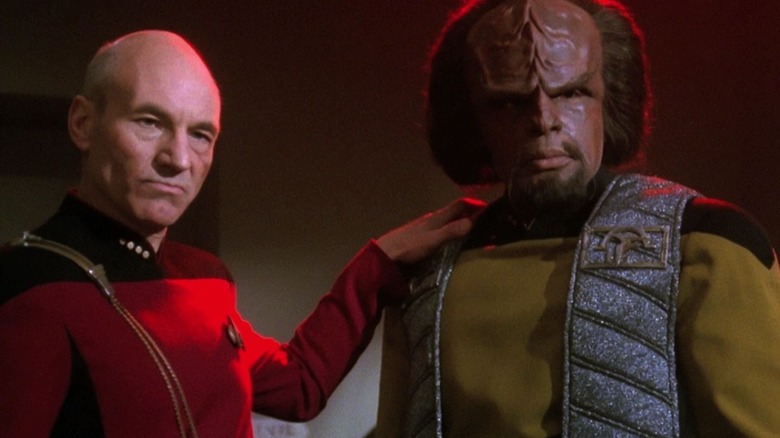
In the third season, writer Ronald D. Moore penned "Sins of the Father," an episode that delved into Worf’s Klingon heritage. The story concluded with Worf accepting "discommendation"—a form of social exile—to protect the Klingon Empire from civil war.
This was a radical departure. Moore deliberately chose not to resolve Worf’s status by the end of the hour. Worf remained an outcast, a plot point that would fundamentally alter his character for the rest of the series and into Star Trek: Deep Space Nine. This move was met with immediate skepticism from Rick Berman, who warned Moore that Paramount executives "hated" such open-ended narratives.
The Peak of Conflict: "The Best of Both Worlds" and "Family" (1990)
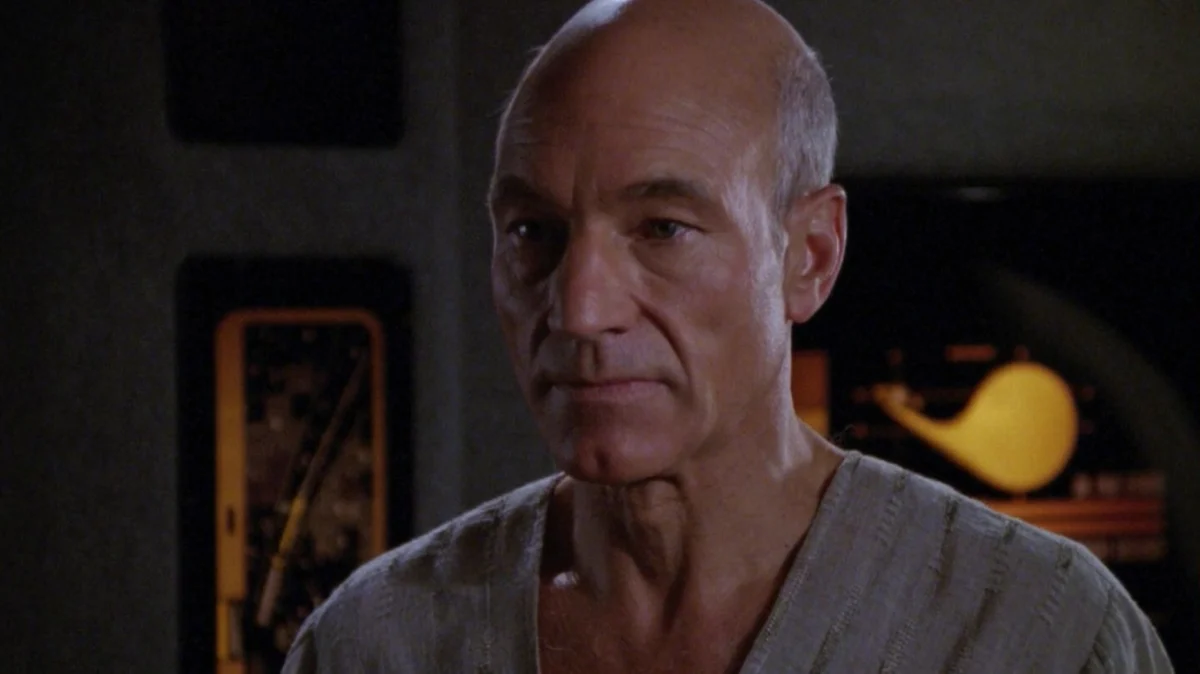
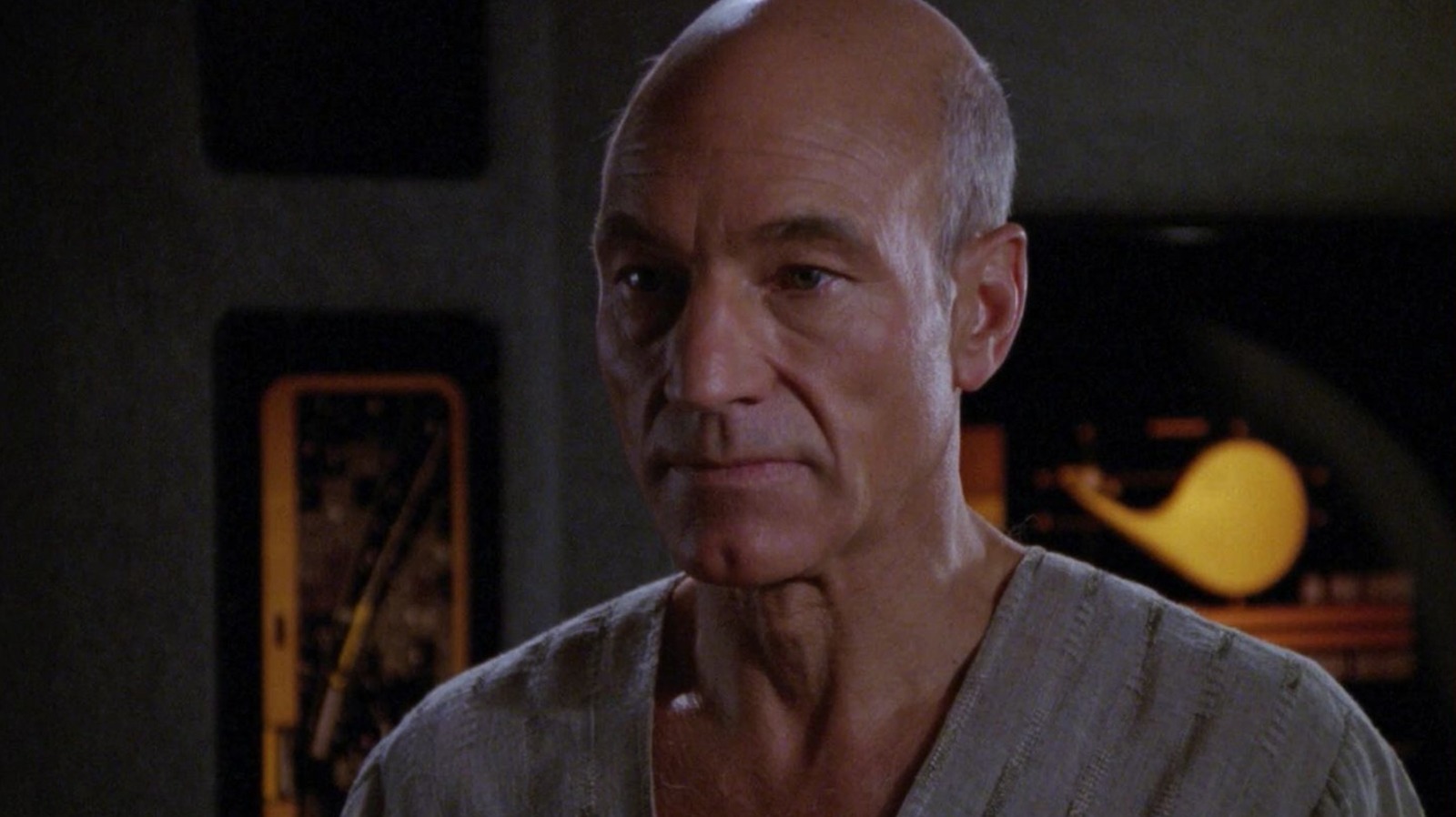
The Season 3 finale, "The Best of Both Worlds, Part I," changed the landscape of the franchise by turning Captain Jean-Luc Picard into the Borg drone "Locutus." While the two-part cliffhanger was a massive ratings success, the studio expected Picard to return to normal immediately in the Season 4 premiere.
Writer Michael Piller resisted this "business as usual" approach. He argued that after an experience as traumatic as being assimilated by a hive mind and forced to kill thousands of his own people, Picard could not simply return to the bridge and order "Earl Grey, hot." This led to the creation of "Family," the first episode in Star Trek history to feature no science-fiction B-plot and no scenes set on the bridge of the Enterprise.
Supporting Data: The Case for Psychological Realism
The push for serialization was driven by a desire for "psychological realism," a term frequently used by Michael Piller. According to the writers, the lack of continuity wasn’t just a stylistic choice; it was a threat to the show’s longevity. If the characters never changed, the audience would eventually lose interest in their journey.
In The Fifty-Year Mission, Piller recalled the difficulty of selling "Family" to the powers that be. He noted that the writers had become experts at the episodic "miniature drama," but he felt the show was at a breaking point regarding Picard’s character integrity.
"For a show that prides itself on a realistic approach to storytelling, how can you have a guy who’s basically been [assaulted] be fine the next week?" Piller argued. His persistence eventually won over both Rick Berman and series creator Gene Roddenberry, though the studio remained wary.
The data suggests the writers were correct. "The Best of Both Worlds" and "Family" are consistently ranked by fans and critics as the pinnacle of the series. By breaking the episodic mold, the writers created a sense of stakes that the show had previously lacked. The "Worf Arc" and the "Picard Trauma Arc" became the emotional backbone of the series, proving that audiences were more than capable of following complex, multi-episode narratives.
Official Responses: The Philosophy of Berman and Roddenberry
The resistance to serialization didn’t just come from the studio’s accountants; it was also baked into the philosophy of Gene Roddenberry. Roddenberry’s "vision" for the 24th century was one where humanity had evolved past petty interpersonal conflict. He famously discouraged writers from having the crew argue with one another.
Rick Berman, who took the helm of the franchise as Roddenberry’s health declined, acted as the bridge between Roddenberry’s idealism and Paramount’s commercialism. Berman was often the one who had to deliver the "bad news" to writers like Moore.
"Paramount doesn’t like that," became a common refrain in the writers’ room. Berman’s role was to ensure the show remained a "safe" investment for syndication. While he eventually allowed for "lite" serialization—recurring characters like Q, the Borg, or the Klingon political situation—he remained steadfast that the core of the show must remain accessible to the casual viewer.
Moore’s account of his time in Berman’s office reveals a producer who was often caught in the middle. While Berman "grumbled" about the open-ended nature of "Sins of the Father," he ultimately allowed it to proceed because the quality of the script was undeniable. This suggests that while the studio mandate was strict, it could be circumvented if the creative output was strong enough to justify the "risk" of continuity.
Implications: The Legacy of the TNG Serialization Struggle
The tension between Paramount and the TNG writers eventually paved the way for the future of the franchise. The frustrations experienced by Ronald D. Moore on The Next Generation directly influenced his work on Star Trek: Deep Space Nine (DS9).
Unlike TNG, DS9 eventually embraced full serialization, particularly during its later seasons’ "Dominion War" arc. Moore and his colleagues used DS9 as a laboratory to prove that a Star Trek show could maintain a complex, years-long narrative and still be successful. This, in turn, laid the groundwork for the "Golden Age of Television" and the highly serialized prestige dramas of the 2000s, such as The Sopranos, The Wire, and Moore’s own reimagined Battlestar Galactica.
Today, the Star Trek franchise has moved almost entirely away from the episodic constraints of the 1990s. Modern series like Star Trek: Discovery and Star Trek: Picard are designed as long-form "streaming movies," where the "reset button" is nonexistent.
However, the struggle of the TNG era serves as a reminder of a unique creative alchemy. The "hybrid" model that TNG eventually adopted—mostly episodic but with deep character continuity—is often cited as the reason the show remains so rewatchable today. By fighting for the right to let Picard grieve and Worf seek honor, the writers ensured that TNG was more than just a collection of space adventures; it was a human drama that resonated across generations, despite the best efforts of the studio to keep it in a vacuum.



Leave a Comment